Some data may have been extracted from scientific literature using a pipeline that uses large language models (LLMs). Source articles are cited where applicable to help verify the extracted relationships.
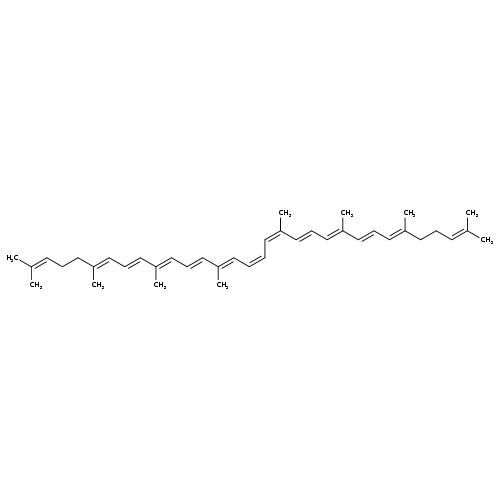
TOMATO LYCOPENE belongs to the tetraterpenoids, a subclass of prenol lipids within the organic compounds. With an average molecular weight of 536.89 g/mol, TOMATO LYCOPENE is a heavy molecule. It has the formula C40H56. Industrially, the compound is used as a dye, a food additive (PMC9818577 ), and as a flavouring and nutrient. It serves as an antioxidant in both biological and industrial contexts (PMC11125366 , PMC11765362 ) and acts as a biological inhibitor (PMC3257702 ). Environmentally, it is classified as a nutrient (PMC9818577 ). The compound is found in 19 recorded sources, including food processing and cookware, household cleaning and consumer products, electrical and electronic equipment, and building and construction materials.
Health effects associated with TOMATO LYCOPENE include a decrease in cancer (PMC10220911 , PMC3257702 ), breast cancer (PMC8869647 ), lung cancer (PMC5000748 ), squamous cell carcinoma (PMC5000748 ), atherosclerosis (PMC9818577 ), ischemic stroke (PMC9075393 ), and prostate cancer (PMC9988266 ), as well as an inverse relationship with prostate cancer (PMC3823537 ). It is also associated with periodontal disease (PMC12924582 ). The compound is used as a treatment for male infertility (PMC9005387 ), ovarian cancer (PMC12021792 ), and prostate cancer (PMC11306087 ). Therapeutic effects have been noted for inflammation (PMC13211753 ), osteoporosis (PMC11306087 ), renal fibrosis (PMC12287420 ), diabetic retinopathy (PMC5793074 ), glioblastoma (PMC12466395 ), blood pressure (PMC8869647 ), myocardial infarction (PMC8869647 ), male infertility (PMC12957189 ), atherosclerosis (PMC10334012 ), cancer (PMC10334012 , PMC11306087 ), and prostate cancer (PMC12924582 , PMC3823537 ) and breast cancer (PMC11306087 , PMC9818577 ). Additionally, blood levels of the compound are decreased in cases of diabetes mellitus (PMC5793074 ).
Belongs to the class of organic compounds known as carotenes. These are a type of unsaturated hydrocarbons containing eight consecutive isoprene units. They are characterized by the presence of two end-groups (mostly cyclohexene rings, but also cyclopentene rings or acyclic groups) linked by a long branched alkyl chain. Carotenes belonging form a subgroup of the carotenoids family.
A disorder characterized by a pathological increase in blood pressure; a repeatedly elevation in the blood pressure exceeding 140 over 90 mm Hg. (NCI CTCAE)
Cancer is a group of diseases involving abnormal cell growth with the potential to invade or spread to other parts of the body. Possible signs and symptoms include a lump, abnormal bleeding, prolonged cough, unexplained weight loss, and a change in bowel movements. There are over 100 types of cancers affect humans. The risk of developing certain cancers can be reduced by not smoking, maintaining a healthy weight, not drinking too much alcohol, eating plenty of vegetables, fruits and whole grains, vaccination against certain infectious diseases, not eating too much processed and red meat and avoiding too much sunlight exposure. Cancer is often treated with some combination of radiation therapy, surgery, chemotherapy and targeted therapy. The majority of cancers, some 90–95% of cases, are due to genetic mutations from environmental and lifestyle factors. The remaining 5–10% are due to inherited genetics.
Cancer is a group of diseases involving abnormal cell growth with the potential to invade or spread to other parts of the body. Possible signs and symptoms include a lump, abnormal bleeding, prolonged cough, unexplained weight loss, and a change in bowel movements. There are over 100 types of cancers affect humans. The risk of developing certain cancers can be reduced by not smoking, maintaining a healthy weight, not drinking too much alcohol, eating plenty of vegetables, fruits and whole grains, vaccination against certain infectious diseases, not eating too much processed and red meat and avoiding too much sunlight exposure. Cancer is often treated with some combination of radiation therapy, surgery, chemotherapy and targeted therapy. The majority of cancers, some 90–95% of cases, are due to genetic mutations from environmental and lifestyle factors. The remaining 5–10% are due to inherited genetics.
Cancer is a group of diseases involving abnormal cell growth with the potential to invade or spread to other parts of the body. Possible signs and symptoms include a lump, abnormal bleeding, prolonged cough, unexplained weight loss, and a change in bowel movements. There are over 100 types of cancers affect humans. The risk of developing certain cancers can be reduced by not smoking, maintaining a healthy weight, not drinking too much alcohol, eating plenty of vegetables, fruits and whole grains, vaccination against certain infectious diseases, not eating too much processed and red meat and avoiding too much sunlight exposure. Cancer is often treated with some combination of radiation therapy, surgery, chemotherapy and targeted therapy. The majority of cancers, some 90–95% of cases, are due to genetic mutations from environmental and lifestyle factors. The remaining 5–10% are due to inherited genetics.
Cancer is a group of diseases involving abnormal cell growth with the potential to invade or spread to other parts of the body. Possible signs and symptoms include a lump, abnormal bleeding, prolonged cough, unexplained weight loss, and a change in bowel movements. There are over 100 types of cancers affect humans. The risk of developing certain cancers can be reduced by not smoking, maintaining a healthy weight, not drinking too much alcohol, eating plenty of vegetables, fruits and whole grains, vaccination against certain infectious diseases, not eating too much processed and red meat and avoiding too much sunlight exposure. Cancer is often treated with some combination of radiation therapy, surgery, chemotherapy and targeted therapy. The majority of cancers, some 90–95% of cases, are due to genetic mutations from environmental and lifestyle factors. The remaining 5–10% are due to inherited genetics.
Cancer is a group of diseases involving abnormal cell growth with the potential to invade or spread to other parts of the body. Possible signs and symptoms include a lump, abnormal bleeding, prolonged cough, unexplained weight loss, and a change in bowel movements. There are over 100 types of cancers affect humans. The risk of developing certain cancers can be reduced by not smoking, maintaining a healthy weight, not drinking too much alcohol, eating plenty of vegetables, fruits and whole grains, vaccination against certain infectious diseases, not eating too much processed and red meat and avoiding too much sunlight exposure. Cancer is often treated with some combination of radiation therapy, surgery, chemotherapy and targeted therapy. The majority of cancers, some 90–95% of cases, are due to genetic mutations from environmental and lifestyle factors. The remaining 5–10% are due to inherited genetics.
A demyelinating disease that involves damage to the fatty myelin sheaths around the axons of the brain and spinal cord resulting in demyelination and scarring. (DO)
A disorder characterized by reduced bone mass, with a decrease in cortical thickness and in the number and size of the trabeculae of cancellous bone (but normal chemical composition), resulting in increased fracture incidence. (NCI CTCAE)
A disorder characterized by reduced bone mass, with a decrease in cortical thickness and in the number and size of the trabeculae of cancellous bone (but normal chemical composition), resulting in increased fracture incidence. (NCI CTCAE)
A disorder characterized by reduced bone mass, with a decrease in cortical thickness and in the number and size of the trabeculae of cancellous bone (but normal chemical composition), resulting in increased fracture incidence. (NCI CTCAE)
A glucose metabolism disease characterized by chronic hyperglycaemia with disturbances of carbohydrate, fat and protein metabolism resulting from defects in insulin secretion, insulin action, or both. (DO)
A disorder involving build-up of fatty material and calcium deposition in the arterial wall. It results in partial or complete occlusion of the arterial lumen.
A disorder involving build-up of fatty material and calcium deposition in the arterial wall. It results in partial or complete occlusion of the arterial lumen.
A disorder characterized by the inability of the heart to pump blood at an adequate volume to meet tissue metabolic requirements, or, the ability to do so only at an elevation in the filling pressure. (NCI CTCAE)
An artery disease that is characterized by plaque building up along the inner walls of the arteries of the heart resulting in a narrowing of the arteries and a reduced blood supply to the cardiac muscles. (DO)
Chronic inflammation is a slow, long-term inflammation lasting for prolonged periods of several months to years. Chronic inflammation can damage healthy cells, tissues, and organs. The main causes of the chronic inflammation includes the untreated causes of acute inflammation, such as an infection or injury, an autoimmune disorder and a long-term exposure to irritants, such as industrial chemicals or polluted air.
A brain disease that is characterized by the occurrance of at least two unprovoked seizures resulting from a persistent epileptogenic abnormality of the brain that is able to spontaneously generate paroxysmal activity and typically manifested by sudden brief episodes of altered or diminished consciousness, involuntary movements, or convulsions. (DO)
A retinal degeneration characterized by gradual deterioration of light-sensing cells in the tissues at the back of the eye and has symptom vision loss. (DO)
Brushes?Brushes used in personal care and cosmetics can be a source of synthetic chemical contamination due to the materials and coatings used in their manufacturing.
Tents Or Canopies?Tents and canopies used in various applications can be a source of synthetic chemical contamination primarily due to the materials from which they are made.
Antennas?Antennas, commonly used in communication technologies, can be a source of synthetic chemical contamination through the materials and coatings used in their construction.
Conductors Or Conductive Bodies Characterised By The Conductive Materials?Conductors, or conductive bodies, are materials that allow the flow of electrical current, typically made from metals such as copper, aluminum, or silver.
Electric Switches?Electric switches, integral components in numerous devices, can be a source of synthetic chemical contamination due to the materials and manufacturing processes involved in their production.
Electrically Stimulated Smoking Devices?Electrically stimulated smoking devices, commonly known as e-cigarettes or vape pens, utilize electrical components to heat a liquid solution, often containing nicotine, flavorings, and other additives, to produce an aerosol for inhalation.
Electrodes?Electrodes, used in various electrical and electronic applications, can be a source of synthetic chemical contamination due to the materials from which they are constructed and the processes involved in their manufacturing.
Emergency Protective Devices?Emergency protective devices, such as circuit breakers and surge protectors, are essential components in electrical systems designed to prevent damage from overcurrent and surges.
Fixed Capacitors And Their Manufacture?Fixed capacitors are passive electronic components used to store and release electrical energy, playing a critical role in various circuits.
Hybrid Capacitors?Hybrid capacitors are energy storage devices that combine the properties of electrolytic and supercapacitors, utilizing a combination of electrochemical principles to achieve higher energy density and power density.
Cellar Tools?Cellar tools, commonly used in wine production and other fermentation processes, may pose a risk of synthetic chemical contamination if not properly maintained or if manufactured from substandard materials.
Food Preservation?Food preservation often involves the use of synthetic chemicals, such as preservatives, flavor enhancers, and color additives, to extend shelf life and enhance the sensory qualities of food products.
Molasses And Treatment Of Molasses?Molasses is a thick, viscous byproduct of sugar production, derived from the extraction of sugar cane or sugar beet juice.
Preparation Of Malt?Malt preparation involves the germination and drying of cereal grains, primarily barley, to produce malt for brewing and food products.
Preparation Of Vinegar?Vinegar is produced through the fermentation of ethanol by acetic acid bacteria, resulting in a solution that typically contains 4-8% acetic acid.
Preparation Of Wine Or Sparkling Wine?The preparation of wine or sparkling wine involves various stages, including fermentation, aging, and bottling, which can introduce potential sources of synthetic chemical contamination.
Bleaching Agents?Bleaching agents are chemical substances used to whiten or lighten materials, often employed in various cleaning products for their stain removal and disinfecting properties.
Non Electric Simulated Smoking Devices?Non-electric simulated smoking devices, often designed to mimic the experience of smoking without combustion, can be sources of synthetic chemical contamination due to the materials and chemicals used in their construction and operation.
Other Smoking Requisites?Other smoking requisites, including items such as lighters, matches, and rolling papers, can introduce synthetic chemical contamination through various components and additives.
Perfumes Within Detergents And Soaps?Perfumes within detergents and soaps are synthetic fragrance compounds added to enhance the sensory experience of cleaning products.
Pipe Accessories?Pipe accessories, such as fittings, connectors, and seals, are components used in plumbing systems to facilitate the flow of liquids and gases.
Soap Detergents?Soap detergents are synthetic surfactants designed to enhance the cleaning efficacy of water by reducing surface tension, allowing for better interaction with dirt and grease.
Soap Dispensers?Soap dispensers, commonly used for dispensing liquid soaps and sanitizers, can become a source of synthetic chemical contamination due to the materials used in their construction and the products they dispense.
Tobacco Pipes?Tobacco pipes, often made from materials such as plastic, wood, or metal, can serve as sources of synthetic chemical contamination due to the residues left by tobacco products.
Tobacco Product Cases?Tobacco product cases can serve as a source of synthetic chemical contamination due to the presence of various additives and chemicals used in tobacco processing and product manufacturing.
Tobacco Smoke Filters?Tobacco smoke filters are designed to reduce the inhalation of harmful substances in cigarette smoke, including tar and other particulate matter.
Making Cigars?The process of making cigars involves several steps, including the cultivation of tobacco, fermentation, and the application of various additives to enhance flavor and preservation.
Manufacture Preparation Of Tobacco Products?The manufacture and preparation of tobacco products involve various processes that can result in the introduction of synthetic chemicals into the environment.
Paper Making Machines?Paper making machines utilize various synthetic chemicals throughout the production process, including additives, coatings, and bleaching agents.
Chemosterilants?Chemosterilants are synthetic chemicals designed to induce sterility in target pest populations, thereby controlling their reproduction and mitigating damage to crops.
Fertiliser Distributors?Fertiliser distributors play a critical role in the supply of synthetic fertilizers, which are widely used to enhance soil fertility and crop yield.
Molluscicides?Molluscicides are synthetic chemicals specifically designed to control and eliminate mollusks, such as snails and slugs, which can be detrimental to crops and agricultural productivity.
Nematocides?Nematocides are synthetic chemicals specifically designed to control nematodes, which are microscopic roundworms that can cause significant damage to crops and plants.
Rodenticides(1)?Rodenticides are synthetic chemicals specifically formulated to control rodent populations, serving as a crucial tool in managing pests that can damage crops and spread diseases.
Rodenticides?Rodenticides are chemical substances specifically designed to control rodent populations by causing death through various mechanisms, including anticoagulation or neurotoxicity.
Aftersun Products?Aftersun products are designed to soothe and hydrate the skin after sun exposure, often containing various synthetic chemicals such as emollients, preservatives, and fragrances.
Anti Perspirants Or Body Deoderants?Antiperspirants and body deodorants commonly contain synthetic chemicals such as aluminum compounds, parabens, and synthetic fragrances.
Body Washing Or Cleaning Implements?Body washing or cleaning implements, such as synthetic sponges, loofahs, and washcloths, can be sources of synthetic chemical contamination due to the materials used in their production.
Depilatories?Depilatories are products designed to remove unwanted hair through the application of synthetic chemicals that break down the protein structure of hair, facilitating its removal.
Essential Oils Or Perfumes?Essential oils and perfumes are complex mixtures of volatile compounds derived from natural or synthetic sources, commonly used for their aromatic properties.
Eye Makeup Products?Eye makeup products, including mascaras, eyeliners, and eyeshadows, often contain a variety of synthetic chemicals such as pigments, preservatives, and film-forming agents.
Face Mask Cosmetics?Face mask cosmetics often contain a variety of synthetic chemicals, including preservatives, emulsifiers, and fragrances, which can contribute to chemical contamination.
Lip Care Products?Lip care products, including lipsticks, balms, and glosses, often contain a variety of synthetic chemicals such as parabens, phthalates, and synthetic fragrances.
Lip Makeup Products?Lip makeup products, such as lipsticks, lip glosses, and lip liners, often contain a variety of synthetic chemicals, including pigments, preservatives, and emollients.
Manicure Pedicure?Manicure and pedicure procedures often involve the use of various synthetic chemicals, including solvents, nail polishes, and nail adhesives.
Card Games?Card games often utilize synthetic materials for playing cards and associated gaming equipment, which may contain various chemicals such as polyvinyl chloride (PVC), plastics, and dyes.
Toys?Toys, particularly those made from synthetic materials such as plastics, can be a source of chemical contamination due to the presence of various additives and compounds used in their production.
Footwear?Footwear production often involves the use of various synthetic chemicals, such as adhesives, dyes, and treatments, which can contribute to environmental contamination.
Headwear?Headwear made from synthetic materials often incorporates chemicals used in the manufacturing and finishing processes, such as dyes, flame retardants, and water repellents.
Purses Luggage Hand Bags?Purses, luggage, and handbags are often manufactured using synthetic materials such as polyvinyl chloride (PVC), polyurethane, and various types of nylon.
Surface Finishing Of Leather?Surface finishing of leather often involves the use of various synthetic chemicals, including dyes, resins, and finishing agents.
Yarns Or Threads?Yarns or threads used in textiles can be a source of synthetic chemical contamination due to the production processes and treatments they undergo.
Gaseous Fire Fighting?Gaseous fire fighting systems utilize synthetic chemicals, such as halocarbons and inert gases, to suppress fires through chemical and physical processes.
PFAS Fire Fighting Foam?PFAS fire fighting foam refers to a class of synthetic foams containing per- and polyfluoroalkyl substances (PFAS), which are designed to suppress flammable liquid fires.
Bridle Bits?Bridle bits, commonly used in equestrian activities, can be a source of synthetic chemical contamination primarily through the materials used in their manufacturing.
Horse Reins?Horse reins, often made from synthetic materials such as nylon or polyester, can be a source of chemical contamination due to their production and degradation processes.
Nitrogenous Fertilisers?Nitrogenous fertilizers are synthetic chemical compounds primarily used to enhance plant growth by supplying essential nitrogen, a crucial nutrient for photosynthesis and protein synthesis.
Cements?Cements are a composite material primarily used as a binding agent in construction applications, formed by the calcination of limestone and clay minerals at high temperatures.
Clay Wares?Clay wares are ceramic products made from natural clay, often utilized in various construction applications such as tiles, bricks, and sanitary ware.
Glass Coatings?Glass coatings are synthetic chemical formulations applied to glass surfaces to enhance properties such as durability, UV resistance, and aesthetic appeal.
Silica Glass?Silica glass, primarily composed of silicon dioxide (SiO2), is widely used in various applications, including windows, glass facades, and insulation materials.
Nanotechnology?Nanotechnology involves the manipulation of materials at the molecular or atomic level, typically within the range of 1 to 100 nanometers.
Mining Or Quarrying?Mining and quarrying operations can lead to synthetic chemical contamination through the release of various pollutants associated with the extraction and processing of minerals.
Fountain Pens?Fountain pens utilize a liquid ink that often contains synthetic chemicals, including dyes, pigments, and solvents, which can contribute to environmental contamination.
Ink Reservoir Pens2?Ink reservoir pens are writing instruments that utilize a reservoir to store ink, which is often composed of synthetic dyes, solvents, and additives.
Pens?Pens, commonly utilized for writing and marking, can be a source of synthetic chemical contamination primarily due to the materials used in their manufacturing.
Contact Lens Cases?Contact lens cases are small containers designed to store contact lenses in a sterile environment, typically made from various synthetic materials including plastics such as polypropylene or polycarbonate.
Coating Compositions?Coating compositions, which include paints, sealants, and varnishes, are formulated with a variety of synthetic chemicals such as solvents, resins, pigments, and additives.
Leather Tanning?Leather tanning is a process that transforms raw animal hides into durable leather through the application of various chemicals, including chromium salts, aldehydes, and vegetable tannins.
Sludge Treatment?Sludge treatment involves the processing of waste materials generated from wastewater treatment plants, which often contain a variety of organic and inorganic substances.
Water, Wastewater, & Sewage Treatment?Water, wastewater, and sewage treatment processes are critical for managing and mitigating pollutants in water systems.