Bis(2-(2-butoxyethoxy)ethoxy)methane (CED0035253)

Record Information
Version1.0
Creation Date2016-05-19 03:18:35 UTC
Update Date2026-08-19 22:32:01 UTC
SynCED IDCED0035253
Secondary Accession Numbers
  • CHEM010209
Identification
Common NameBis(2-(2-butoxyethoxy)ethoxy)methane
ClassSmall Molecule
Description
Bis(2-(2-butoxyethoxy)ethoxy)methane is an organic compound with the formula C17H36O6 and an average molecular weight of 336.47 g/mol. Bis(2-(2-butoxyethoxy)ethoxy)methane belongs to the ethers, a subclass of organooxygen compounds within the organic compounds. This substance has been identified in or released from seven recorded sources. These sources include drinking water and water supply, specifically drinking water. Additionally, it is associated with electrical and electronic equipment, including power cables, superconducting magnets, superconducting coils, electrodes, fixed capacitors and their manufacture, and conductors or conductive bodies characterised by the conductive materials. The recorded exposure route for this compound is oral.
Contaminant TypeNot Available
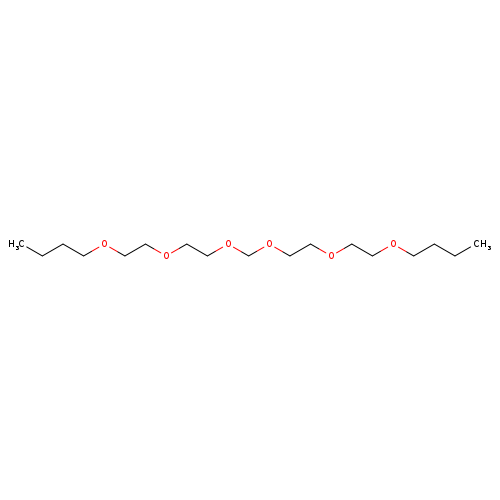
Chemical Structure
SynonymsNot Available
Chemical FormulaC17H36O6
Average Molecular Mass336.469 g/mol
Monoisotopic Mass336.251 g/mol
CAS Registry Number143-29-3
IUPAC Name5,8,11,13,16,19-hexaoxatricosane
Traditional Name5,8,11,13,16,19-hexaoxatricosane
SMILESCCCCOCCOCCOCOCCOCCOCCCC
InChI IdentifierInChI=1S/C17H36O6/c1-3-5-7-18-9-11-20-13-15-22-17-23-16-14-21-12-10-19-8-6-4-2/h3-17H2,1-2H3
InChI KeyDKWHHTWSTXZKDW-UHFFFAOYSA-N
Chemical Taxonomy
Description Belongs to the class of organic compounds known as acetals. Acetals are compounds having the structure R2C(OR')2 ( R' not Hydrogen) and thus diethers of geminal diols. Originally, the term was confined to derivatives of aldehydes (one R = H), but it now applies equally to derivatives of ketones (neither R = H ). Mixed acetals have different R' groups.
KingdomOrganic compounds
Super ClassOrganic oxygen compounds
ClassOrganooxygen compounds
Sub ClassEthers
Direct ParentAcetals
Alternative Parents
Substituents
  • Dialkyl ether
  • Acetal
  • Hydrocarbon derivative
  • Aliphatic acyclic compound
Molecular FrameworkAliphatic acyclic compounds
External DescriptorsNot Available
Biological Properties
StatusDetected and Not Quantified
OriginNot Available
Cellular LocationsNot Available
Biofluid LocationsNot Available
Tissue LocationsNot Available
ApplicationsNot Available
Biological RolesNot Available
Chemical RolesNot Available
Organoleptic EffectsNot Available
Physical Properties
StateNot Available
AppearanceNot Available
Experimental Properties
PropertyValue
Melting PointNot Available
Boiling PointNot Available
SolubilityNot Available
Predicted Properties
PropertyValueSource
Water Solubility0.042 g/LALOGPS
logP1.81ALOGPS
logP2.65ChemAxon
logS-3.9ALOGPS
pKa (Strongest Basic)-3.4ChemAxon
Physiological Charge0ChemAxon
Hydrogen Acceptor Count6ChemAxon
Hydrogen Donor Count0ChemAxon
Polar Surface Area55.38 ŲChemAxon
Rotatable Bond Count20ChemAxon
Refractivity90.79 m³·mol⁻¹ChemAxon
Polarizability42.27 ųChemAxon
Number of Rings0ChemAxon
BioavailabilityYesChemAxon
Rule of FiveYesChemAxon
Ghose FilterYesChemAxon
Veber's RuleNoChemAxon
MDDR-like RuleNoChemAxon
Spectra
Spectra
Spectrum TypeDescriptionSplash KeyDeposition DateView
Predicted LC-MS/MSPredicted LC-MS/MS Spectrumsplash10-000i-2509000000-e2e9202dedf54d0b3efbNot AvailableView Spectrum
Predicted LC-MS/MSPredicted LC-MS/MS Spectrumsplash10-0a4i-9611000000-a75dfa60e0ec3fadc4fdNot AvailableView Spectrum
Predicted LC-MS/MSPredicted LC-MS/MS Spectrumsplash10-0a4i-9100000000-248aa60959cbf826a6edNot AvailableView Spectrum
Predicted LC-MS/MSPredicted LC-MS/MS Spectrumsplash10-000i-1729000000-1a93b0c4841c49ca5cefNot AvailableView Spectrum
Predicted LC-MS/MSPredicted LC-MS/MS Spectrumsplash10-00dr-6912000000-0f89555599ea6f65a1dfNot AvailableView Spectrum
Predicted LC-MS/MSPredicted LC-MS/MS Spectrumsplash10-00xr-9800000000-bf75e1d237cc8e714ecbNot AvailableView Spectrum
Toxicity Profile
Toxicity Values
Toxicity ValueOrganismDose DescriptorRoute of ExposurePredicted or ExperimentalToxicity RatingReference
6373.0 Log mg/kg [3600:11000]RatLD50oralpredictedNot AvailableNot Available
Toxicity / Toxin ClassNot Available
Mechanism of ToxicityNot Available
Carcinogenicity (IARC Classification)Not Available
Minimum Risk LevelNot Available
SymptomsNot Available
TreatmentNot Available
Health Effects
Health EffectRelationshipDirectionDescriptionReference
Exposure Sources
Source IDSourceSectorReference
CEDs000115Drinking water?Drinking water can be a medium for synthetic chemical contamination, often originating from various industrial processes and agricultural practices.Drinking water & water supplyNot Available
CEDs000511Conductors Or Conductive Bodies Characterised By The Conductive Materials?Conductors, or conductive bodies, are materials that allow the flow of electrical current, typically made from metals such as copper, aluminum, or silver.Electrical & Electronic EquipmentPubChem
CEDs000519Electrodes?Electrodes, used in various electrical and electronic applications, can be a source of synthetic chemical contamination due to the materials from which they are constructed and the processes involved in their manufacturing.Electrical & Electronic EquipmentPubChem
CEDs000521Fixed Capacitors And Their Manufacture?Fixed capacitors are passive electronic components used to store and release electrical energy, playing a critical role in various circuits.Electrical & Electronic EquipmentPubChem
CEDs000529Power Cables?Power cables are used to transmit electrical energy and are typically composed of conductive materials, insulation, and protective coatings.Electrical & Electronic EquipmentPubChem
CEDs000535Superconducting Magnets And Superconducting Coils?Superconducting magnets and coils are utilized in various applications that require strong magnetic fields, such as magnetic resonance imaging (MRI) and particle accelerators.Electrical & Electronic EquipmentPubChem
CEDs000536Superconductive Or Hyperconductive Conductors Cables Or Transmission Lines?Superconductive or hyperconductive conductors, including cables and transmission lines, are materials that exhibit zero electrical resistance under specific conditions, typically at low temperatures.Electrical & Electronic EquipmentPubChem
CEDs000632Apparel?Apparel production often involves the use of various synthetic chemicals, including dyes, finishing agents, and preservatives.Textiles, leather & furnishingsPubChem
CEDs000642Footwear?Footwear production often involves the use of various synthetic chemicals, such as adhesives, dyes, and treatments, which can contribute to environmental contamination.Textiles, leather & furnishingsPubChem
CEDs000688Glass Coatings?Glass coatings are synthetic chemical formulations applied to glass surfaces to enhance properties such as durability, UV resistance, and aesthetic appeal.Building & ConstructionPubChem
CEDs000696Nanotechnology?Nanotechnology involves the manipulation of materials at the molecular or atomic level, typically within the range of 1 to 100 nanometers.Industrial manufacturing & chemical processingPubChem
CEDs000727Printing Machines Or Presses?Printing machines or presses commonly utilize synthetic chemicals such as inks, solvents, and cleaning agents.Paper, pulp & fiber productsPubChem
CEDs000735Explosives?Explosives are chemical compounds or mixtures designed to undergo rapid decomposition, releasing energy in the form of gas and heat.Defense & military infrastructurePubChem
CEDs000737Chemical Igniters?Chemical igniters are substances or devices designed to initiate combustion in various applications, often found in products like lighters, candles, and certain household cleaning agents.Household itemsPubChem
CEDs000741Pigment Pastes?Pigment pastes are concentrated dispersions of pigments used to impart color and properties to materials.Paper, pulp & fiber productsPubChem
CEDs000742Leather Tanning?Leather tanning is a process that transforms raw animal hides into durable leather through the application of various chemicals, including chromium salts, aldehydes, and vegetable tannins.Textiles, leather & furnishingsPubChem
Pathways
0 pathwaysPathway Source: PathBank

No pathways found

No metabolic pathways have been associated with this synthetic chemical

Targets
StructureProteinUniProt IDOrganismRelationshipDetails
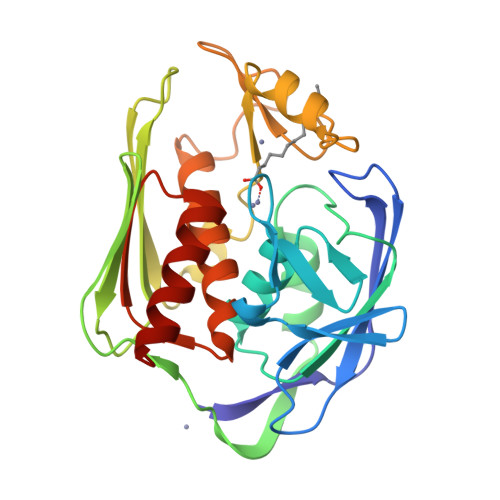
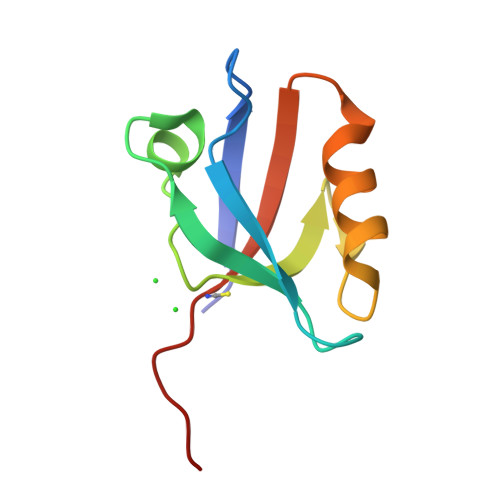
Click to view 3D structureCeramide glucosyltransferaseO88693Mus musculusPredicted (SEA)
Prediction Confidence Score
0.263
Applicability Domain
0.275 Low confidence
Statistical Significance
5.00e-04
Supporting Reference Compounds
14
E-value
3.89246
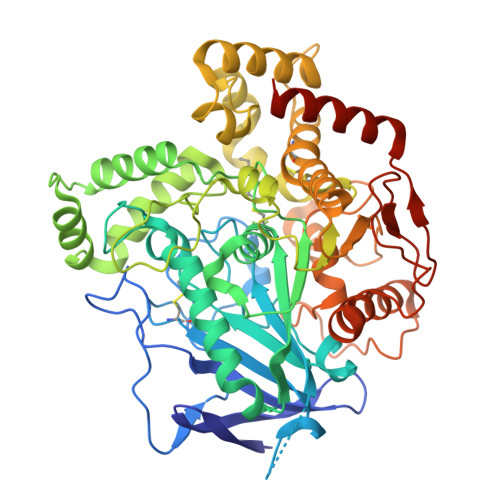
Acylcarnitine hydrolase structureClick to view 3D structureAcylcarnitine hydrolaseQ91WG0Mus musculusPredicted (SEA)
Prediction Confidence Score
0.261
Applicability Domain
0.323
Statistical Significance
5.40e-04
Supporting Reference Compounds
2
E-value
4.20386
Click to view 3D structureNon-lysosomal glucosylceramidaseQ9HCG7HumansPredicted (SEA)
Prediction Confidence Score
0.258
Applicability Domain
0.275 Low confidence
Statistical Significance
7.80e-04
Supporting Reference Compounds
21
E-value
6.07224
UDP-3-O-acyl-N-acetylglucosamine deacetylase structureClick to view 3D structureUDP-3-O-acyl-N-acetylglucosamine deacetylaseO67648Aquifex aeolicus (strain VF5)Predicted (SEA)
Prediction Confidence Score
0.257
Applicability Domain
0.257 Low confidence
Statistical Significance
0.0119
Supporting Reference Compounds
1
E-value
92.3292
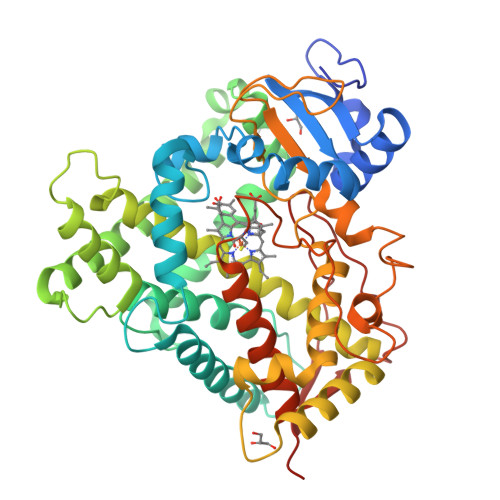
Cytochrome P450 2C19 structureClick to view 3D structureCytochrome P450 2C19P33261HumansPredicted (SEA)
Prediction Confidence Score
0.255
Applicability Domain
0.281 Low confidence
Statistical Significance
0.3103
Supporting Reference Compounds
825
E-value
2415.51
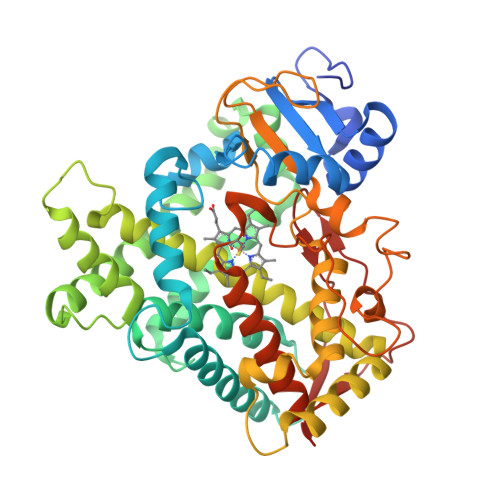
Cytochrome P450 1A2 structureClick to view 3D structureCytochrome P450 1A2P05177HumansPredicted (SEA)
Prediction Confidence Score
0.255
Applicability Domain
0.281 Low confidence
Statistical Significance
0.3019
Supporting Reference Compounds
793
E-value
2350.5
Click to view 3D structurePhospholipase BQ9P8P2Cryptococcus neoformansPredicted (SEA)
Prediction Confidence Score
0.25
Applicability Domain
0.25 Low confidence
Statistical Significance
3.80e-04
Supporting Reference Compounds
1
E-value
2.95827
Aromatase structureClick to view 3D structureAromataseP11511HumansPredicted (SEA)
Prediction Confidence Score
0.246
Applicability Domain
0.257 Low confidence
Statistical Significance
0.0354
Supporting Reference Compounds
127
E-value
275.353
Click to view 3D structurePutative inactive group IIC secretory phospholipase A2Q5R387HumansPredicted (SEA)
Prediction Confidence Score
0.244
Applicability Domain
0.244 Low confidence
Statistical Significance
0.0023
Supporting Reference Compounds
1
E-value
17.6718
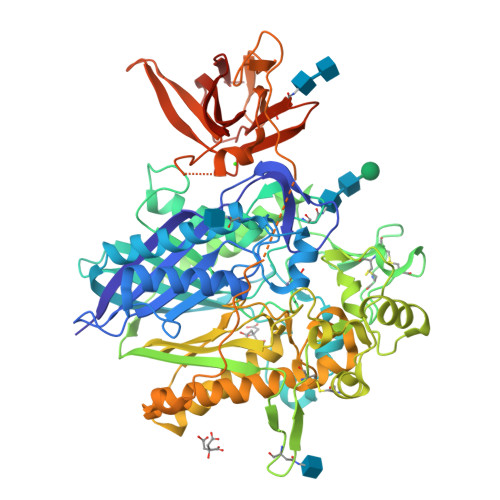
Click to view 3D structureSucrase-isomaltaseB5THE3Mus musculusPredicted (SEA)
Prediction Confidence Score
0.239
Applicability Domain
0.275 Low confidence
Statistical Significance
6.80e-04
Supporting Reference Compounds
7
E-value
5.29375
Click to view 3D structureCocaine esteraseO00748HumansPredicted (SEA)
Prediction Confidence Score
0.238
Applicability Domain
0.323
Statistical Significance
0.0083
Supporting Reference Compounds
40
E-value
64.7706
Cytochrome P450 2C9 structureClick to view 3D structureCytochrome P450 2C9P11712HumansPredicted (SEA)
Prediction Confidence Score
0.238
Applicability Domain
0.281 Low confidence
Statistical Significance
0.6522
Supporting Reference Compounds
1245
E-value
5077.48
Liver carboxylesterase structureClick to view 3D structureLiver carboxylesteraseQ29550Sus scrofaPredicted (SEA)
Prediction Confidence Score
0.234
Applicability Domain
0.323
Statistical Significance
0.0037
Supporting Reference Compounds
20
E-value
29.1935
Neutral ceramidase structureClick to view 3D structureNeutral ceramidaseQ9NR71HumansPredicted (SEA)
Prediction Confidence Score
0.232
Applicability Domain
0.232 Low confidence
Statistical Significance
0.0051
Supporting Reference Compounds
1
E-value
39.6253
Click to view 3D structureCG8425-PA [Drosophila melanogaster]A1ZA98Drosophila melanogasterPredicted (SEA)
Prediction Confidence Score
0.231
Applicability Domain
0.323
Statistical Significance
0.0016
Supporting Reference Compounds
4
E-value
12.4559
Click to view 3D structureFatty-acid amide hydrolase 1O08914Mus musculusPredicted (SEA)
Prediction Confidence Score
0.229
Applicability Domain
0.242 Low confidence
Statistical Significance
0.0568
Supporting Reference Compounds
46
E-value
442.573
Cytochrome P450 3A4 structureClick to view 3D structureCytochrome P450 3A4P08684HumansPredicted (SEA)
Prediction Confidence Score
0.228
Applicability Domain
0.361
Statistical Significance
0.7923
Supporting Reference Compounds
1538
E-value
6168.23
Carbonic anhydrase 12 structureClick to view 3D structureCarbonic anhydrase 12O43570HumansPredicted (SEA)
Prediction Confidence Score
0.223
Applicability Domain
0.276 Low confidence
Statistical Significance
0.2659
Supporting Reference Compounds
332
E-value
2069.85
Click to view 3D structureLysosomal alpha-glucosidaseP70699Mus musculusPredicted (SEA)
Prediction Confidence Score
0.22
Applicability Domain
0.275 Low confidence
Statistical Significance
9.40e-04
Supporting Reference Compounds
7
E-value
7.31783
Click to view 3D structureLysophosphatidic acid receptor 3Q9UBY5HumansPredicted (SEA)
Prediction Confidence Score
0.219
Applicability Domain
0.278 Low confidence
Statistical Significance
0.0156
Supporting Reference Compounds
21
E-value
121.133
Lysophosphatidic acid receptor 2 structureClick to view 3D structureLysophosphatidic acid receptor 2Q9HBW0HumansPredicted (SEA)
Prediction Confidence Score
0.219
Applicability Domain
0.278 Low confidence
Statistical Significance
0.0103
Supporting Reference Compounds
30
E-value
79.9511
Click to view 3D structureFatty-acid amide hydrolase 1O00519HumansPredicted (SEA)
Prediction Confidence Score
0.218
Applicability Domain
0.233 Low confidence
Statistical Significance
0.2378
Supporting Reference Compounds
106
E-value
1851.02
Juvenile hormone esterase structureClick to view 3D structureJuvenile hormone esteraseQ9GPG0Manduca sextaPredicted (SEA)
Prediction Confidence Score
0.217
Applicability Domain
0.233 Low confidence
Statistical Significance
0.0026
Supporting Reference Compounds
2
E-value
20.2408
Liver carboxylesterase 1 structureClick to view 3D structureLiver carboxylesterase 1P23141HumansPredicted (SEA)
Prediction Confidence Score
0.216
Applicability Domain
0.233 Low confidence
Statistical Significance
0.0488
Supporting Reference Compounds
55
E-value
380.293
Lysosomal acid glucosylceramidase structureClick to view 3D structureLysosomal acid glucosylceramidaseP04062HumansPredicted (SEA)
Prediction Confidence Score
0.215
Applicability Domain
0.275 Low confidence
Statistical Significance
0.0063
Supporting Reference Compounds
35
E-value
49.2007
Concentrations
Not Available
External Links
DrugBank IDNot Available
HMDB IDNot Available
FooDB IDNot Available
Phenol Explorer IDNot Available
KNApSAcK IDNot Available
BiGG IDNot Available
BioCyc IDNot Available
METLIN IDNot Available
PDB IDNot Available
Wikipedia LinkNot Available
Chemspider IDNot Available
ChEBI IDNot Available
PubChem Compound ID8928
Kegg Compound IDNot Available
YMDB IDNot Available
ECMDB IDNot Available
References
Synthesis ReferenceNot Available
MSDSNot Available
General ReferencesNot Available