4-butan-2-yl-2,6-ditert-butylphenol (CED0069289)

Record Information
Version1.0
Creation Date2016-05-19 03:25:45 UTC
Update Date2026-08-20 01:27:26 UTC
SynCED IDCED0069289
Secondary Accession Numbers
  • CHEM010637
Identification
Common Name4-butan-2-yl-2,6-ditert-butylphenol
ClassSmall Molecule
Description
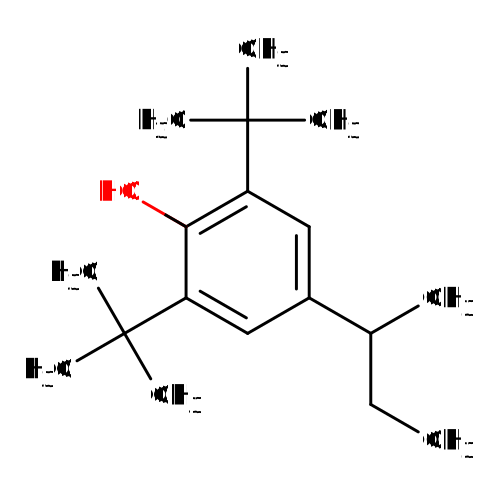
4-butan-2-yl-2,6-ditert-butylphenol (C18H30O) is an organic compound with an average molecular weight of 262.44 g/mol. 4-butan-2-yl-2,6-ditert-butylphenol belongs to the phenylpropanes, a subclass of benzene and substituted derivatives within the organic compounds. This compound is used as an industrial antioxidant. It has been recorded as being released from food contact materials used in food, food processing, and cookware. Exposure routes for this substance include touch, oral ingestion, and inhalation.
Contaminant Type
  • Tertiary butyl phenols
Chemical Structure
SynonymsNot Available
Chemical FormulaC18H30O
Average Molecular Mass262.437 g/mol
Monoisotopic Mass262.230 g/mol
CAS Registry Number17540-75-9
IUPAC Name4-(butan-2-yl)-2,6-di-tert-butylphenol
Traditional Name2,6-di-tert-butyl-4-(sec-butyl)phenol
SMILESCCC(C)C1=CC(=C(O)C(=C1)C(C)(C)C)C(C)(C)C
InChI IdentifierInChI=1S/C18H30O/c1-9-12(2)13-10-14(17(3,4)5)16(19)15(11-13)18(6,7)8/h10-12,19H,9H2,1-8H3
InChI KeyBFZOTKYPSZSDEV-UHFFFAOYSA-N
Chemical Taxonomy
Description Belongs to the class of organic compounds known as phenylpropanes. These are organic compounds containing a phenylpropane moiety.
KingdomOrganic compounds
Super ClassBenzenoids
ClassBenzene and substituted derivatives
Sub ClassPhenylpropanes
Direct ParentPhenylpropanes
Alternative Parents
Substituents
  • Phenylpropane
  • Phenol
  • Organic oxygen compound
  • Hydrocarbon derivative
  • Organooxygen compound
  • Aromatic homomonocyclic compound
Molecular FrameworkAromatic homomonocyclic compounds
External DescriptorsNot Available
Biological Properties
StatusDetected and Not Quantified
OriginNot Available
Cellular LocationsNot Available
Biofluid LocationsNot Available
Tissue LocationsNot Available
ApplicationsNot Available
Biological RolesNot Available
Chemical RolesNot Available
Organoleptic EffectsNot Available
Physical Properties
StateNot Available
AppearanceNot Available
Experimental Properties
PropertyValue
Melting PointNot Available
Boiling PointNot Available
SolubilityNot Available
Predicted Properties
PropertyValueSource
Water Solubility0.0016 g/LALOGPS
logP6.16ALOGPS
logP6.45ChemAxon
logS-5.2ALOGPS
pKa (Strongest Acidic)11.52ChemAxon
pKa (Strongest Basic)-4.6ChemAxon
Physiological Charge0ChemAxon
Hydrogen Acceptor Count1ChemAxon
Hydrogen Donor Count1ChemAxon
Polar Surface Area20.23 ŲChemAxon
Rotatable Bond Count4ChemAxon
Refractivity84.16 m³·mol⁻¹ChemAxon
Polarizability33.04 ųChemAxon
Number of Rings1ChemAxon
BioavailabilityYesChemAxon
Rule of FiveNoChemAxon
Ghose FilterNoChemAxon
Veber's RuleYesChemAxon
MDDR-like RuleNoChemAxon
Spectra
Spectra
Spectrum TypeDescriptionSplash KeyDeposition DateView
Predicted LC-MS/MSPredicted LC-MS/MS Spectrumsplash10-03di-0090000000-1afb2a297f05f039ef72Not AvailableView Spectrum
Predicted LC-MS/MSPredicted LC-MS/MS Spectrumsplash10-08fr-3190000000-e088ce379cf60d1b9b25Not AvailableView Spectrum
Predicted LC-MS/MSPredicted LC-MS/MS Spectrumsplash10-0a4i-9130000000-1e27fac006bf3aff64daNot AvailableView Spectrum
Predicted LC-MS/MSPredicted LC-MS/MS Spectrumsplash10-03di-0090000000-2fcd630a0949b4a3f7d6Not AvailableView Spectrum
Predicted LC-MS/MSPredicted LC-MS/MS Spectrumsplash10-03di-0090000000-a3f94995b47891591d7aNot AvailableView Spectrum
Predicted LC-MS/MSPredicted LC-MS/MS Spectrumsplash10-06u2-1190000000-3bfcea33ba3ad77aedb7Not AvailableView Spectrum
Toxicity Profile
Toxicity Values
Toxicity ValueOrganismDose DescriptorRoute of ExposurePredicted or ExperimentalToxicity RatingReference
1392.0 Log mg/kg [780:2500]RatLD50oralpredictedNot AvailableNot Available
Toxicity / Toxin ClassNot Available
Mechanism of ToxicityNot Available
Carcinogenicity (IARC Classification)Not Available
Minimum Risk LevelNot Available
SymptomsNot Available
TreatmentNot Available
Health Effects
Health EffectRelationshipDirectionDescriptionReference
Exposure Sources
Source IDSourceSectorReference
CEDs000491Industrial manufacturing & chemical processingNot Available
CEDs000494Food contact materials?Food contact materials refer to substances and products that are intended to come into contact with food during processing, packaging, or preparation.Food, food processing & cookwareNot Available
CEDs000519Electrodes?Electrodes, used in various electrical and electronic applications, can be a source of synthetic chemical contamination due to the materials from which they are constructed and the processes involved in their manufacturing.Electrical & Electronic EquipmentPubChem
CEDs000604Pest Attractants?Pest attractants are synthetic chemicals designed to lure specific pests for monitoring or control purposes.Agriculture & land managementPubChem
CEDs000611Anti Perspirants Or Body Deoderants?Antiperspirants and body deodorants commonly contain synthetic chemicals such as aluminum compounds, parabens, and synthetic fragrances.Personal care & cosmeticsPubChem
CEDs000632Apparel?Apparel production often involves the use of various synthetic chemicals, including dyes, finishing agents, and preservatives.Textiles, leather & furnishingsPubChem
CEDs000638Decorating Textiles?Decorating textiles often involves the use of synthetic chemicals such as dyes, finishes, and coatings.Textiles, leather & furnishingsPubChem
CEDs000642Footwear?Footwear production often involves the use of various synthetic chemicals, such as adhesives, dyes, and treatments, which can contribute to environmental contamination.Textiles, leather & furnishingsPubChem
CEDs000652Ropes?Ropes manufactured from synthetic fibers, such as polypropylene, nylon, and polyester, are widely used in various applications, including marine, construction, and outdoor activities.Textiles, leather & furnishingsPubChem
CEDs000657Surface Finishing Of Leather?Surface finishing of leather often involves the use of various synthetic chemicals, including dyes, resins, and finishing agents.Textiles, leather & furnishingsPubChem
CEDs000685Ceramics?Ceramics can be a source of synthetic chemical contamination through various additives and processing agents used in their production.Building & ConstructionPubChem
CEDs000696Nanotechnology?Nanotechnology involves the manipulation of materials at the molecular or atomic level, typically within the range of 1 to 100 nanometers.Industrial manufacturing & chemical processingPubChem
CEDs000739Inks?Inks are complex mixtures composed of pigments or dyes, solvents, resins, and additives used primarily for printing and writing applications.Paper, pulp & fiber productsPubChem
CEDs000741Pigment Pastes?Pigment pastes are concentrated dispersions of pigments used to impart color and properties to materials.Paper, pulp & fiber productsPubChem
Pathways
0 pathwaysPathway Source: PathBank

No pathways found

No metabolic pathways have been associated with this synthetic chemical

Targets
StructureProteinUniProt IDOrganismRelationshipDetails
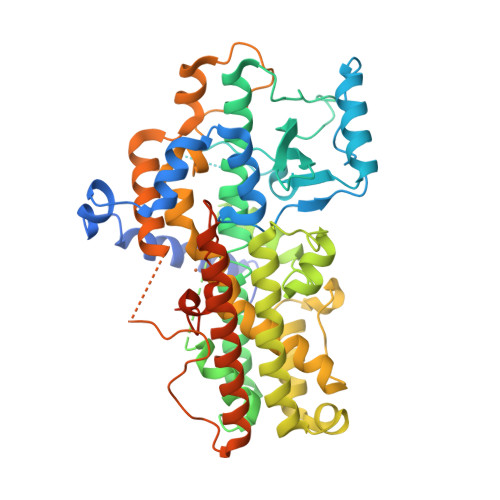
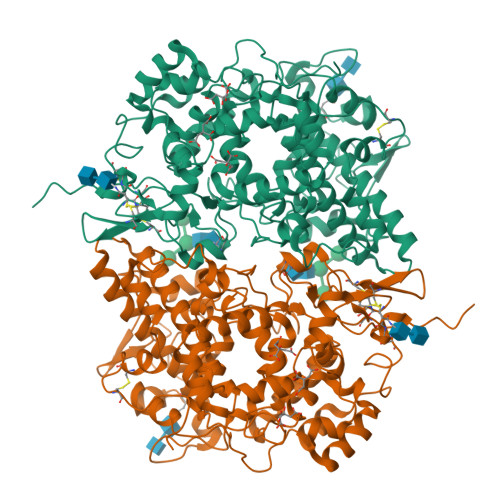
Prostaglandin G/H synthase 1 structureClick to view 3D structureProstaglandin G/H synthase 1P23219HumansPredicted (SEA)
Prediction Confidence Score
0.353
Applicability Domain
0.372
Statistical Significance
0.0029
Supporting Reference Compounds
136
E-value
22.732
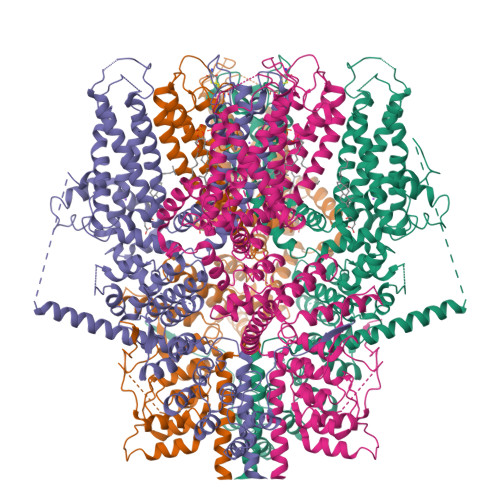
Prostaglandin G/H synthase 2 structureClick to view 3D structureProstaglandin G/H synthase 2Q05769Mus musculusPredicted (SEA)
Prediction Confidence Score
0.353
Applicability Domain
0.372
Statistical Significance
0.001
Supporting Reference Compounds
43
E-value
8.09632
Click to view 3D structurePolyunsaturated fatty acid 5-lipoxygenaseP12527Rattus norvegicusPredicted (SEA)
Prediction Confidence Score
0.35
Applicability Domain
0.368
Statistical Significance
0.0028
Supporting Reference Compounds
78
E-value
21.9535
Prostaglandin G/H synthase 2 structureClick to view 3D structureProstaglandin G/H synthase 2P35354HumansPredicted (SEA)
Prediction Confidence Score
0.307
Applicability Domain
0.372
Statistical Significance
0.0136
Supporting Reference Compounds
201
E-value
105.719
Prostaglandin G/H synthase 1 structureClick to view 3D structureProstaglandin G/H synthase 1P05979Ovis ariesPredicted (SEA)
Prediction Confidence Score
0.269
Applicability Domain
0.333
Statistical Significance
0.0197
Supporting Reference Compounds
106
E-value
153.674
Tyrosinase structureClick to view 3D structureTyrosinaseP14679HumansPredicted (SEA)
Prediction Confidence Score
0.264
Applicability Domain
0.483
Statistical Significance
0.0034
Supporting Reference Compounds
29
E-value
26.3909
Click to view 3D structurePolyunsaturated fatty acid lipoxygenase ALOX15P16050HumansPredicted (SEA)
Prediction Confidence Score
0.244
Applicability Domain
0.306
Statistical Significance
0.0103
Supporting Reference Compounds
46
E-value
80.029
Short transient receptor potential channel 4 structureClick to view 3D structureShort transient receptor potential channel 4Q9QUQ5Mus musculusPredicted (SEA)
Prediction Confidence Score
0.242
Applicability Domain
0.379
Statistical Significance
0.0905
Supporting Reference Compounds
128
E-value
704.925
Beta-2 adrenergic receptor structureClick to view 3D structureBeta-2 adrenergic receptorP07550HumansPredicted (SEA)
Prediction Confidence Score
0.24
Applicability Domain
0.275 Low confidence
Statistical Significance
0.1379
Supporting Reference Compounds
258
E-value
1073.23
Polyunsaturated fatty acid lipoxygenase ALOX12 structureClick to view 3D structurePolyunsaturated fatty acid lipoxygenase ALOX12P18054HumansPredicted (SEA)
Prediction Confidence Score
0.24
Applicability Domain
0.306
Statistical Significance
0.0079
Supporting Reference Compounds
31
E-value
61.5787
Sarcoplasmic/endoplasmic reticulum calcium ATPase 1 structureClick to view 3D structureSarcoplasmic/endoplasmic reticulum calcium ATPase 1P04191Oryctolagus cuniculusPredicted (SEA)
Prediction Confidence Score
0.239
Applicability Domain
0.379
Statistical Significance
6.60e-04
Supporting Reference Compounds
15
E-value
5.13805
Alpha-2A adrenergic receptor structureClick to view 3D structureAlpha-2A adrenergic receptorP08913HumansPredicted (SEA)
Prediction Confidence Score
0.238
Applicability Domain
0.286 Low confidence
Statistical Significance
0.2453
Supporting Reference Compounds
487
E-value
1909.88
Nuclear receptor subfamily 1 group I member 2 structureClick to view 3D structureNuclear receptor subfamily 1 group I member 2O75469HumansPredicted (SEA)
Prediction Confidence Score
0.237
Applicability Domain
0.372
Statistical Significance
0.0507
Supporting Reference Compounds
146
E-value
394.929
Click to view 3D structureBeta-2 adrenergic receptorQ28044Bos taurusPredicted (SEA)
Prediction Confidence Score
0.237
Applicability Domain
0.275 Low confidence
Statistical Significance
0.0025
Supporting Reference Compounds
16
E-value
19.1509
Carbonic anhydrase 2 structureClick to view 3D structureCarbonic anhydrase 2P00918HumansPredicted (SEA)
Prediction Confidence Score
0.236
Applicability Domain
0.483
Statistical Significance
0.2474
Supporting Reference Compounds
472
E-value
1925.99
Click to view 3D structureTaste receptor type 2 member 50P59544HumansPredicted (SEA)
Prediction Confidence Score
0.233
Applicability Domain
0.233 Low confidence
Statistical Significance
0.0016
Supporting Reference Compounds
1
E-value
12.378
Click to view 3D structureTaste receptor type 2 member 45P59539HumansPredicted (SEA)
Prediction Confidence Score
0.233
Applicability Domain
0.233 Low confidence
Statistical Significance
0.0016
Supporting Reference Compounds
1
E-value
12.378
Click to view 3D structureTaste receptor type 2 member 42Q7RTR8HumansPredicted (SEA)
Prediction Confidence Score
0.233
Applicability Domain
0.233 Low confidence
Statistical Significance
0.0016
Supporting Reference Compounds
1
E-value
12.378
Click to view 3D structureTaste receptor type 2 member 41P59536HumansPredicted (SEA)
Prediction Confidence Score
0.233
Applicability Domain
0.233 Low confidence
Statistical Significance
0.0016
Supporting Reference Compounds
1
E-value
12.378
Click to view 3D structureTaste receptor type 2 member 7Q9NYW3HumansPredicted (SEA)
Prediction Confidence Score
0.233
Applicability Domain
0.233 Low confidence
Statistical Significance
0.0016
Supporting Reference Compounds
1
E-value
12.378
Click to view 3D structureTaste receptor type 2 member 30P59541HumansPredicted (SEA)
Prediction Confidence Score
0.233
Applicability Domain
0.233 Low confidence
Statistical Significance
0.0016
Supporting Reference Compounds
1
E-value
12.378
Click to view 3D structureTaste receptor type 2 member 60P59551HumansPredicted (SEA)
Prediction Confidence Score
0.233
Applicability Domain
0.233 Low confidence
Statistical Significance
0.0016
Supporting Reference Compounds
1
E-value
12.378
Click to view 3D structureTaste receptor type 2 member 19P59542HumansPredicted (SEA)
Prediction Confidence Score
0.233
Applicability Domain
0.233 Low confidence
Statistical Significance
0.0016
Supporting Reference Compounds
1
E-value
12.378
Click to view 3D structureTaste receptor type 2 member 20P59543HumansPredicted (SEA)
Prediction Confidence Score
0.233
Applicability Domain
0.233 Low confidence
Statistical Significance
0.0016
Supporting Reference Compounds
1
E-value
12.378
Click to view 3D structureTaste receptor type 2 member 1Q9NYW7HumansPredicted (SEA)
Prediction Confidence Score
0.233
Applicability Domain
0.233 Low confidence
Statistical Significance
0.0016
Supporting Reference Compounds
1
E-value
12.378
Concentrations
Not Available
External Links
DrugBank IDNot Available
HMDB IDNot Available
FooDB IDNot Available
Phenol Explorer IDNot Available
KNApSAcK IDNot Available
BiGG IDNot Available
BioCyc IDNot Available
METLIN IDNot Available
PDB IDNot Available
Wikipedia LinkNot Available
Chemspider IDNot Available
ChEBI IDNot Available
PubChem Compound ID86583
Kegg Compound IDNot Available
YMDB IDNot Available
ECMDB IDNot Available
References
Synthesis ReferenceNot Available
MSDSNot Available
General ReferencesNot Available