2-(1,1-Dimethylethyl)-4,6-Dimethylphenol (CED0111476)

Record Information
Version1.0
Creation Date2016-05-19 03:27:35 UTC
Update Date2026-08-18 19:44:35 UTC
SynCED IDCED0111476
Secondary Accession Numbers
  • CHEM010756
Identification
Common Name2-(1,1-Dimethylethyl)-4,6-Dimethylphenol
ClassSmall Molecule
Description
2-(1,1-Dimethylethyl)-4,6-Dimethylphenol is an organic compound with the formula C12H18O and an average molecular weight of 178.28 g/mol. 2-(1,1-Dimethylethyl)-4,6-Dimethylphenol belongs to the xylenes, a subclass of benzene and substituted derivatives within the organic compounds. In industrial applications, this compound serves as an antioxidant and a stabilizing agent. It has been identified in ten recorded sources, including food contact materials and drinking water and water supply. It is also found in household cleaning and consumer products, specifically tobacco smoke filters and soap detergents. Additionally, it is released from electrical and electronic equipment, including electric switches, emergency protective devices, communication cables or conductors, fixed capacitors and their manufacture, and line transmission systems. Recorded exposure routes for the compound include oral, inhalation, and touch.
Contaminant TypeNot Available
Chemical Structure
Synonyms
ValueSource
Topanol aMeSH
Chemical FormulaC12H18O
Average Molecular Mass178.275 g/mol
Monoisotopic Mass178.136 g/mol
CAS Registry Number1879-09-0
IUPAC Name2-tert-butyl-4,6-dimethylphenol
Traditional Name2-tert-butyl-4,6-dimethylphenol
SMILESCC1=CC(C)=C(O)C(=C1)C(C)(C)C
InChI IdentifierInChI=1S/C12H18O/c1-8-6-9(2)11(13)10(7-8)12(3,4)5/h6-7,13H,1-5H3
InChI KeyOPLCSTZDXXUYDU-UHFFFAOYSA-N
Chemical Taxonomy
Description Belongs to the class of organic compounds known as xylenols. These are aromatic compounds that contain a xylene moiety, which is a monocyclic benzene carrying exactly two methyl groups, and at least one hydroxyl group.
KingdomOrganic compounds
Super ClassBenzenoids
ClassBenzene and substituted derivatives
Sub ClassXylenes
Direct ParentXylenols
Alternative Parents
Substituents
  • Xylenol
  • Phenylpropane
  • M-xylene
  • P-cresol
  • O-cresol
  • Phenol
  • Organic oxygen compound
  • Hydrocarbon derivative
  • Organooxygen compound
  • Aromatic homomonocyclic compound
Molecular FrameworkAromatic homomonocyclic compounds
External DescriptorsNot Available
Biological Properties
StatusDetected and Not Quantified
OriginNot Available
Cellular LocationsNot Available
Biofluid LocationsNot Available
Tissue LocationsNot Available
ApplicationsNot Available
Biological RolesNot Available
Chemical RolesNot Available
Organoleptic EffectsNot Available
Physical Properties
StateNot Available
AppearanceNot Available
Experimental Properties
PropertyValue
Melting PointNot Available
Boiling PointNot Available
SolubilityNot Available
Predicted Properties
PropertyValueSource
Water Solubility0.11 g/LALOGPS
logP4.06ALOGPS
logP4.24ChemAxon
logS-3.2ALOGPS
pKa (Strongest Acidic)11.34ChemAxon
pKa (Strongest Basic)-5ChemAxon
Physiological Charge0ChemAxon
Hydrogen Acceptor Count1ChemAxon
Hydrogen Donor Count1ChemAxon
Polar Surface Area20.23 ŲChemAxon
Rotatable Bond Count1ChemAxon
Refractivity56.79 m³·mol⁻¹ChemAxon
Polarizability21.69 ųChemAxon
Number of Rings1ChemAxon
BioavailabilityYesChemAxon
Rule of FiveYesChemAxon
Ghose FilterYesChemAxon
Veber's RuleYesChemAxon
MDDR-like RuleNoChemAxon
Spectra
Spectra
Spectrum TypeDescriptionSplash KeyDeposition DateView
Predicted LC-MS/MSPredicted LC-MS/MS Spectrumsplash10-004i-0900000000-82723f638619d47a1d65Not AvailableView Spectrum
Predicted LC-MS/MSPredicted LC-MS/MS Spectrumsplash10-004i-1900000000-0705a76c8eaf60940065Not AvailableView Spectrum
Predicted LC-MS/MSPredicted LC-MS/MS Spectrumsplash10-0ce9-5900000000-906426a9d0f5b0f264abNot AvailableView Spectrum
Predicted LC-MS/MSPredicted LC-MS/MS Spectrumsplash10-004i-0900000000-fc23e6efca3d9230f306Not AvailableView Spectrum
Predicted LC-MS/MSPredicted LC-MS/MS Spectrumsplash10-004i-0900000000-a7c41cc5deda59541450Not AvailableView Spectrum
Predicted LC-MS/MSPredicted LC-MS/MS Spectrumsplash10-03fs-1900000000-b81686ac5d1e1c2634c7Not AvailableView Spectrum
Toxicity Profile
Toxicity Values
Toxicity ValueOrganismDose DescriptorRoute of ExposurePredicted or ExperimentalToxicity RatingReference
1202.0 Log mg/kg [680:2100]RatLD50oralpredictedNot AvailableNot Available
Toxicity / Toxin ClassNot Available
Mechanism of ToxicityNot Available
Carcinogenicity (IARC Classification)Not Available
Minimum Risk LevelNot Available
SymptomsNot Available
TreatmentNot Available
Health Effects
Health EffectRelationshipDirectionDescriptionReference
Exposure Sources
Source IDSourceSectorReference
CEDs000010Insecticides?Insecticides are synthetic chemicals designed to control or eliminate insect pests that threaten crops and other agricultural products.Agriculture & land managementPubChem
CEDs000115Drinking water?Drinking water can be a medium for synthetic chemical contamination, often originating from various industrial processes and agricultural practices.Drinking water & water supplyNot Available
CEDs000494Food contact materials?Food contact materials refer to substances and products that are intended to come into contact with food during processing, packaging, or preparation.Food, food processing & cookwareNot Available
CEDs000510Communication Cables Or Conductors?Communication cables or conductors are essential components in the transmission of data and signals in various applications, including telecommunications and networking.Electrical & Electronic EquipmentPubChem
CEDs000511Conductors Or Conductive Bodies Characterised By The Conductive Materials?Conductors, or conductive bodies, are materials that allow the flow of electrical current, typically made from metals such as copper, aluminum, or silver.Electrical & Electronic EquipmentPubChem
CEDs000517Electric Switches?Electric switches, integral components in numerous devices, can be a source of synthetic chemical contamination due to the materials and manufacturing processes involved in their production.Electrical & Electronic EquipmentPubChem
CEDs000519Electrodes?Electrodes, used in various electrical and electronic applications, can be a source of synthetic chemical contamination due to the materials from which they are constructed and the processes involved in their manufacturing.Electrical & Electronic EquipmentPubChem
CEDs000520Emergency Protective Devices?Emergency protective devices, such as circuit breakers and surge protectors, are essential components in electrical systems designed to prevent damage from overcurrent and surges.Electrical & Electronic EquipmentPubChem
CEDs000521Fixed Capacitors And Their Manufacture?Fixed capacitors are passive electronic components used to store and release electrical energy, playing a critical role in various circuits.Electrical & Electronic EquipmentPubChem
CEDs000524Hybrid Capacitors?Hybrid capacitors are energy storage devices that combine the properties of electrolytic and supercapacitors, utilizing a combination of electrochemical principles to achieve higher energy density and power density.Electrical & Electronic EquipmentPubChem
CEDs000525Line Transmission Systems?Line Transmission Systems, commonly used for the distribution of electrical energy, can be a source of synthetic chemical contamination through the insulation materials and coatings utilized in their construction.Electrical & Electronic EquipmentPubChem
CEDs000529Power Cables?Power cables are used to transmit electrical energy and are typically composed of conductive materials, insulation, and protective coatings.Electrical & Electronic EquipmentPubChem
CEDs000545Food Preservation?Food preservation often involves the use of synthetic chemicals, such as preservatives, flavor enhancers, and color additives, to extend shelf life and enhance the sensory qualities of food products.Food, food processing & cookwarePubChem
CEDs000561Perfumes Within Detergents And Soaps?Perfumes within detergents and soaps are synthetic fragrance compounds added to enhance the sensory experience of cleaning products.Household cleaning & consumer productsPubChem
CEDs000563Soap Detergents?Soap detergents are synthetic surfactants designed to enhance the cleaning efficacy of water by reducing surface tension, allowing for better interaction with dirt and grease.Household cleaning & consumer productsPubChem
CEDs000569Tobacco Smoke Filters?Tobacco smoke filters are designed to reduce the inhalation of harmful substances in cigarette smoke, including tar and other particulate matter.Household cleaning & consumer productsPubChem
CEDs000580Manufacture Preparation Of Tobacco Products?The manufacture and preparation of tobacco products involve various processes that can result in the introduction of synthetic chemicals into the environment.Industrial manufacturing & chemical processingPubChem
CEDs000589Life Buoys?Life buoys, commonly used in marine environments for safety and rescue operations, can be a source of synthetic chemical contamination due to the materials used in their production.Marine, shipping & aquaculturePubChem
CEDs000591Lifeboats?Lifeboats, used for emergency evacuation at sea, can be a source of synthetic chemical contamination due to the materials and substances used in their construction and maintenance.Marine, shipping & aquaculturePubChem
CEDs000600Herbicides And Algicides?Herbicides and algicides are synthetic chemicals primarily used to control unwanted plants and algae in various environments.Agriculture & land managementPubChem
CEDs000605Pest Repellants?Pest repellents, often formulated from synthetic chemicals, are widely used to protect crops from insect infestations and other pests.Agriculture & land managementPubChem
CEDs000610Aftersun Products?Aftersun products are designed to soothe and hydrate the skin after sun exposure, often containing various synthetic chemicals such as emollients, preservatives, and fragrances.Personal care & cosmeticsPubChem
CEDs000611Anti Perspirants Or Body Deoderants?Antiperspirants and body deodorants commonly contain synthetic chemicals such as aluminum compounds, parabens, and synthetic fragrances.Personal care & cosmeticsPubChem
CEDs000614Essential Oils Or Perfumes?Essential oils and perfumes are complex mixtures of volatile compounds derived from natural or synthetic sources, commonly used for their aromatic properties.Personal care & cosmeticsPubChem
CEDs000615Eye Makeup Products?Eye makeup products, including mascaras, eyeliners, and eyeshadows, often contain a variety of synthetic chemicals such as pigments, preservatives, and film-forming agents.Personal care & cosmeticsPubChem
CEDs000618Lip Makeup Products?Lip makeup products, such as lipsticks, lip glosses, and lip liners, often contain a variety of synthetic chemicals, including pigments, preservatives, and emollients.Personal care & cosmeticsPubChem
CEDs000619Manicure Pedicure?Manicure and pedicure procedures often involve the use of various synthetic chemicals, including solvents, nail polishes, and nail adhesives.Personal care & cosmeticsPubChem
CEDs000632Apparel?Apparel production often involves the use of various synthetic chemicals, including dyes, finishing agents, and preservatives.Textiles, leather & furnishingsPubChem
CEDs000642Footwear?Footwear production often involves the use of various synthetic chemicals, such as adhesives, dyes, and treatments, which can contribute to environmental contamination.Textiles, leather & furnishingsPubChem
CEDs000657Surface Finishing Of Leather?Surface finishing of leather often involves the use of various synthetic chemicals, including dyes, resins, and finishing agents.Textiles, leather & furnishingsPubChem
CEDs000662Yarns Or Threads?Yarns or threads used in textiles can be a source of synthetic chemical contamination due to the production processes and treatments they undergo.Textiles, leather & furnishingsPubChem
CEDs000669PFAS Fire Fighting Foam?PFAS fire fighting foam refers to a class of synthetic foams containing per- and polyfluoroalkyl substances (PFAS), which are designed to suppress flammable liquid fires.Fire suppression systems & agentsPubChem
CEDs000679Phosphatic Fertilisers?Phosphatic fertilizers are synthetic chemical products primarily composed of phosphorus, which is essential for plant growth.Agriculture & land managementPubChem
CEDs000684Cements?Cements are a composite material primarily used as a binding agent in construction applications, formed by the calcination of limestone and clay minerals at high temperatures.Building & ConstructionPubChem
CEDs000685Ceramics?Ceramics can be a source of synthetic chemical contamination through various additives and processing agents used in their production.Building & ConstructionPubChem
CEDs000688Glass Coatings?Glass coatings are synthetic chemical formulations applied to glass surfaces to enhance properties such as durability, UV resistance, and aesthetic appeal.Building & ConstructionPubChem
CEDs000689Glass Fibres?Glass fibres are composed of fine strands of glass, commonly utilized for their tensile strength and lightweight properties.Building & ConstructionPubChem
CEDs000693Silica Glass?Silica glass, primarily composed of silicon dioxide (SiO2), is widely used in various applications, including windows, glass facades, and insulation materials.Building & ConstructionPubChem
CEDs000696Nanotechnology?Nanotechnology involves the manipulation of materials at the molecular or atomic level, typically within the range of 1 to 100 nanometers.Industrial manufacturing & chemical processingPubChem
CEDs000717Fountain Pens?Fountain pens utilize a liquid ink that often contains synthetic chemicals, including dyes, pigments, and solvents, which can contribute to environmental contamination.Paper, pulp & fiber productsPubChem
CEDs000720Ink Reservoir Pens2?Ink reservoir pens are writing instruments that utilize a reservoir to store ink, which is often composed of synthetic dyes, solvents, and additives.Paper, pulp & fiber productsPubChem
CEDs000727Printing Machines Or Presses?Printing machines or presses commonly utilize synthetic chemicals such as inks, solvents, and cleaning agents.Paper, pulp & fiber productsPubChem
CEDs000735Explosives?Explosives are chemical compounds or mixtures designed to undergo rapid decomposition, releasing energy in the form of gas and heat.Defense & military infrastructurePubChem
CEDs000739Inks?Inks are complex mixtures composed of pigments or dyes, solvents, resins, and additives used primarily for printing and writing applications.Paper, pulp & fiber productsPubChem
CEDs000740Paper?Paper production involves the processing of wood fibers and the use of various chemicals, which can lead to synthetic chemical contamination.Paper, pulp & fiber productsPubChem
CEDs000741Pigment Pastes?Pigment pastes are concentrated dispersions of pigments used to impart color and properties to materials.Paper, pulp & fiber productsPubChem
CEDs000744Water, Wastewater, & Sewage Treatment?Water, wastewater, and sewage treatment processes are critical for managing and mitigating pollutants in water systems.Wastewater, sanitation & biosolidsPubChem
Pathways
0 pathwaysPathway Source: PathBank

No pathways found

No metabolic pathways have been associated with this synthetic chemical

Targets
StructureProteinUniProt IDOrganismRelationshipDetails
Click to view 3D structurePolyunsaturated fatty acid 5-lipoxygenaseP12527Rattus norvegicusPredicted (SEA)
Prediction Confidence Score
0.352
Applicability Domain
0.371
Statistical Significance
0.0027
Supporting Reference Compounds
78
E-value
21.2528
Prostaglandin G/H synthase 2 structureClick to view 3D structureProstaglandin G/H synthase 2Q05769Mus musculusPredicted (SEA)
Prediction Confidence Score
0.342
Applicability Domain
0.371
Statistical Significance
0.0012
Supporting Reference Compounds
43
E-value
9.03051
Prostaglandin G/H synthase 1 structureClick to view 3D structureProstaglandin G/H synthase 1P23219HumansPredicted (SEA)
Prediction Confidence Score
0.337
Applicability Domain
0.371
Statistical Significance
0.0041
Supporting Reference Compounds
136
E-value
31.8403
Carbonic anhydrase 2 structureClick to view 3D structureCarbonic anhydrase 2P00918HumansPredicted (SEA)
Prediction Confidence Score
0.302
Applicability Domain
0.773
Statistical Significance
0.0437
Supporting Reference Compounds
472
E-value
340.512
Prostaglandin G/H synthase 2 structureClick to view 3D structureProstaglandin G/H synthase 2P35354HumansPredicted (SEA)
Prediction Confidence Score
0.292
Applicability Domain
0.351
Statistical Significance
0.0208
Supporting Reference Compounds
201
E-value
161.771
Tyrosinase structureClick to view 3D structureTyrosinaseP14679HumansPredicted (SEA)
Prediction Confidence Score
0.276
Applicability Domain
0.773
Statistical Significance
0.0024
Supporting Reference Compounds
29
E-value
18.9952
Short transient receptor potential channel 4 structureClick to view 3D structureShort transient receptor potential channel 4Q9QUQ5Mus musculusPredicted (SEA)
Prediction Confidence Score
0.268
Applicability Domain
0.44
Statistical Significance
0.0267
Supporting Reference Compounds
128
E-value
207.546
Prostaglandin G/H synthase 1 structureClick to view 3D structureProstaglandin G/H synthase 1P05979Ovis ariesPredicted (SEA)
Prediction Confidence Score
0.248
Applicability Domain
0.333
Statistical Significance
0.0468
Supporting Reference Compounds
106
E-value
364.49
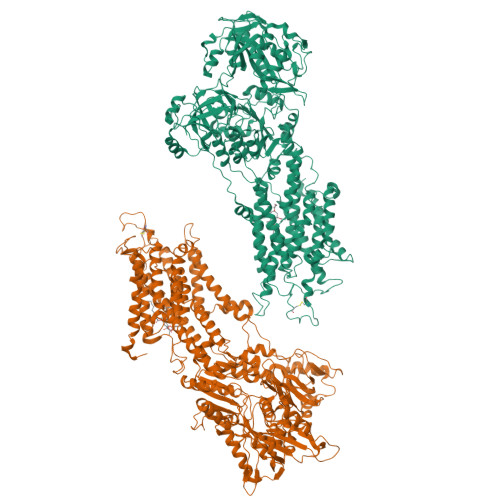
Sarcoplasmic/endoplasmic reticulum calcium ATPase 1 structureClick to view 3D structureSarcoplasmic/endoplasmic reticulum calcium ATPase 1P04191Oryctolagus cuniculusPredicted (SEA)
Prediction Confidence Score
0.245
Applicability Domain
0.44
Statistical Significance
5.30e-04
Supporting Reference Compounds
15
E-value
4.12601
Alpha-2A adrenergic receptor structureClick to view 3D structureAlpha-2A adrenergic receptorP08913HumansPredicted (SEA)
Prediction Confidence Score
0.239
Applicability Domain
0.341
Statistical Significance
0.2353
Supporting Reference Compounds
487
E-value
1831.64
Click to view 3D structureSarcoplasmic/endoplasmic reticulum calcium ATPase 2P11507Rattus norvegicusPredicted (SEA)
Prediction Confidence Score
0.233
Applicability Domain
0.233 Low confidence
Statistical Significance
9.30e-04
Supporting Reference Compounds
1
E-value
7.23998
Click to view 3D structureBeta-ketoacyl-ACP-synthase IIIO77078Plasmodium falciparumPredicted (SEA)
Prediction Confidence Score
0.233
Applicability Domain
0.233 Low confidence
Statistical Significance
0.0048
Supporting Reference Compounds
1
E-value
37.0562
5-hydroxytryptamine receptor 2B structureClick to view 3D structure5-hydroxytryptamine receptor 2BP41595HumansPredicted (SEA)
Prediction Confidence Score
0.231
Applicability Domain
0.341
Statistical Significance
0.4279
Supporting Reference Compounds
686
E-value
3331.56
Nuclear receptor subfamily 1 group I member 2 structureClick to view 3D structureNuclear receptor subfamily 1 group I member 2O75469HumansPredicted (SEA)
Prediction Confidence Score
0.226
Applicability Domain
0.367
Statistical Significance
0.0954
Supporting Reference Compounds
146
E-value
742.604
CDGSH iron-sulfur domain-containing protein 1 structureClick to view 3D structureCDGSH iron-sulfur domain-containing protein 1Q9NZ45HumansPredicted (SEA)
Prediction Confidence Score
0.222
Applicability Domain
0.325
Statistical Significance
0.0057
Supporting Reference Compounds
22
E-value
44.1405
Glutathione reductase structureClick to view 3D structureGlutathione reductaseP41921Saccharomyces cerevisiae S288cPredicted (SEA)
Prediction Confidence Score
0.221
Applicability Domain
0.229 Low confidence
Statistical Significance
4.10e-04
Supporting Reference Compounds
2
E-value
3.19182
Transthyretin structureClick to view 3D structureTransthyretinP02766HumansPredicted (SEA)
Prediction Confidence Score
0.218
Applicability Domain
0.238 Low confidence
Statistical Significance
0.0475
Supporting Reference Compounds
55
E-value
369.55
5-hydroxytryptamine receptor 6 structureClick to view 3D structure5-hydroxytryptamine receptor 6P50406HumansPredicted (SEA)
Prediction Confidence Score
0.217
Applicability Domain
0.341
Statistical Significance
0.4706
Supporting Reference Compounds
536
E-value
3663.27
Click to view 3D structureSarcoplasmic/endoplasmic reticulum calcium ATPase 3Q93084HumansPredicted (SEA)
Prediction Confidence Score
0.216
Applicability Domain
0.44
Statistical Significance
4.20e-04
Supporting Reference Compounds
3
E-value
3.26967
Amine oxidase [flavin-containing] B structureClick to view 3D structureAmine oxidase [flavin-containing] BP27338HumansPredicted (SEA)
Prediction Confidence Score
0.214
Applicability Domain
0.302
Statistical Significance
0.3762
Supporting Reference Compounds
315
E-value
2929.08
Click to view 3D structureThioredoxin reductase 2, mitochondrialQ9Z0J5Rattus norvegicusPredicted (SEA)
Prediction Confidence Score
0.214
Applicability Domain
0.214 Low confidence
Statistical Significance
3.90e-04
Supporting Reference Compounds
1
E-value
3.03612
Cytochrome P450 2D6 structureClick to view 3D structureCytochrome P450 2D6P10635HumansPredicted (SEA)
Prediction Confidence Score
0.212
Applicability Domain
0.341
Statistical Significance
0.8545
Supporting Reference Compounds
1130
E-value
6651.9
Alpha-1A adrenergic receptor structureClick to view 3D structureAlpha-1A adrenergic receptorP35348HumansPredicted (SEA)
Prediction Confidence Score
0.211
Applicability Domain
0.341
Statistical Significance
0.4873
Supporting Reference Compounds
376
E-value
3793.44
5-hydroxytryptamine receptor 2C structureClick to view 3D structure5-hydroxytryptamine receptor 2CP28335HumansPredicted (SEA)
Prediction Confidence Score
0.21
Applicability Domain
0.341
Statistical Significance
0.7044
Supporting Reference Compounds
823
E-value
5483.93
5-hydroxytryptamine receptor 1B structureClick to view 3D structure5-hydroxytryptamine receptor 1BP28222HumansPredicted (SEA)
Prediction Confidence Score
0.208
Applicability Domain
0.341
Statistical Significance
0.5191
Supporting Reference Compounds
337
E-value
4040.92
Concentrations
Not Available
External Links
DrugBank IDNot Available
HMDB IDNot Available
FooDB IDNot Available
Phenol Explorer IDNot Available
KNApSAcK IDNot Available
BiGG IDNot Available
BioCyc IDNot Available
METLIN IDNot Available
PDB IDNot Available
Wikipedia LinkNot Available
Chemspider IDNot Available
ChEBI IDNot Available
PubChem Compound ID15884
Kegg Compound IDNot Available
YMDB IDNot Available
ECMDB IDNot Available
References
Synthesis ReferenceNot Available
MSDSNot Available
General ReferencesNot Available