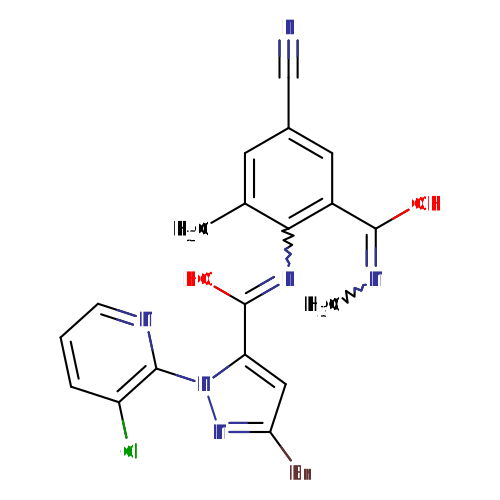
1H-Pyrazole-5-carboxamide, 3-bromo-1-(3-chloro-2-pyridinyl)-N-[4-cyano-2-methyl-6-[(methylamino)carbonyl]phenyl]- (CED0114381)

Record Information
Version1.0
Creation Date2016-05-19 04:37:21 UTC
Update Date2026-08-20 01:51:54 UTC
SynCED IDCED0114381
Secondary Accession Numbers
  • CHEM014858
Identification
Common Name1H-Pyrazole-5-carboxamide, 3-bromo-1-(3-chloro-2-pyridinyl)-N-[4-cyano-2-methyl-6-[(methylamino)carbonyl]phenyl]-
ClassSmall Molecule
Description
1H-Pyrazole-5-carboxamide, 3-bromo-1-(3-chloro-2-pyridinyl)-N-[4-cyano-2-methyl-6-[(methylamino)carbonyl]phenyl]- is an organic compound with the formula C19H14BrClN6O2 and an average molecular weight of 473.72 g/mol. It is utilized as an industrial biocide. 1H-Pyrazole-5-carboxamide, 3-bromo-1-(3-chloro-2-pyridinyl)-N-[4-cyano-2-methyl-6-[(methylamino)carbonyl]phenyl]- belongs to the anilides, a subclass of benzene and substituted derivatives within the organic compounds.
Contaminant TypeNot Available
Chemical Structure
Synonyms
ValueSource
3-Bromo-1-(3-chloro-2-pyridinyl)-N-[4-cyano-2-methyl-6-[(methylamino)carbonyl]phenyl]-1H-pyrazole-5-carboxamideChEBI
3-Bromo-1-(3-chloro-2-pyridyl)-4'-cyano-2'-methyl-6'-(methylcarbamoyl)pyrazole-5-carboxanilideChEBI
ZyroxChEBI
CyantraniliproleMeSH
Chemical FormulaC19H14BrClN6O2
Average Molecular Mass473.720 g/mol
Monoisotopic Mass472.005 g/mol
CAS Registry Number736994-63-1
IUPAC Name3-bromo-1-(3-chloropyridin-2-yl)-N-[4-cyano-2-methyl-6-(methyl-C-hydroxycarbonimidoyl)phenyl]-1H-pyrazole-5-carboximidic acid
Traditional Name5-bromo-2-(3-chloropyridin-2-yl)-N-[4-cyano-2-methyl-6-(methyl-C-hydroxycarbonimidoyl)phenyl]pyrazole-3-carboximidic acid
SMILESCN=C(O)C1=C(N=C(O)C2=CC(Br)=NN2C2=C(Cl)C=CC=N2)C(C)=CC(=C1)C#N
InChI IdentifierInChI=1S/C19H14BrClN6O2/c1-10-6-11(9-22)7-12(18(28)23-2)16(10)25-19(29)14-8-15(20)26-27(14)17-13(21)4-3-5-24-17/h3-8H,1-2H3,(H,23,28)(H,25,29)
InChI KeyDVBUIBGJRQBEDP-UHFFFAOYSA-N
Chemical Taxonomy
Description Belongs to the class of organic compounds known as aromatic anilides. These are aromatic compounds containing an anilide group in which the carboxamide group is substituted with an aromatic group. They have the general structure RNC(=O)R', where R= benzene, and R = aryl group.
KingdomOrganic compounds
Super ClassBenzenoids
ClassBenzene and substituted derivatives
Sub ClassAnilides
Direct ParentAromatic anilides
Alternative Parents
Substituents
  • Aromatic anilide
  • 2-pyrazolylpyridine
  • Benzoic acid or derivatives
  • M-toluamide
  • Toluamide
  • Benzamide
  • 2-heteroaryl carboxamide
  • Benzoyl
  • Benzonitrile
  • Pyrazole-5-carboxamide
  • Toluene
  • Aryl halide
  • Aryl chloride
  • Pyridine
  • Aryl bromide
  • Azole
  • Vinylogous amide
  • Pyrazole
  • Heteroaromatic compound
  • Secondary carboxylic acid amide
  • Carboxamide group
  • Nitrile
  • Carbonitrile
  • Carboxylic acid derivative
  • Organoheterocyclic compound
  • Azacycle
  • Organochloride
  • Organobromide
  • Organohalogen compound
  • Organic nitrogen compound
  • Hydrocarbon derivative
  • Organic oxide
  • Organopnictogen compound
  • Organic oxygen compound
  • Organonitrogen compound
  • Organooxygen compound
  • Aromatic heteromonocyclic compound
Molecular FrameworkAromatic heteromonocyclic compounds
External DescriptorsNot Available
Biological Properties
StatusDetected and Not Quantified
OriginNot Available
Cellular LocationsNot Available
Biofluid LocationsNot Available
Tissue LocationsNot Available
ApplicationsNot Available
Biological Roles
Chemical RolesNot Available
Organoleptic EffectsNot Available
Physical Properties
StateNot Available
AppearanceNot Available
Experimental Properties
PropertyValue
Melting PointNot Available
Boiling PointNot Available
SolubilityNot Available
Predicted Properties
PropertyValueSource
Water Solubility0.056 g/LALOGPS
logP3.3ALOGPS
logP4.58ChemAxon
logS-3.9ALOGPS
pKa (Strongest Acidic)4.07ChemAxon
pKa (Strongest Basic)3.31ChemAxon
Physiological Charge0ChemAxon
Hydrogen Acceptor Count7ChemAxon
Hydrogen Donor Count2ChemAxon
Polar Surface Area119.68 ŲChemAxon
Rotatable Bond Count4ChemAxon
Refractivity117.27 m³·mol⁻¹ChemAxon
Polarizability42.46 ųChemAxon
Number of Rings3ChemAxon
BioavailabilityYesChemAxon
Rule of FiveYesChemAxon
Ghose FilterYesChemAxon
Veber's RuleNoChemAxon
MDDR-like RuleNoChemAxon
Spectra
Spectra
Spectrum TypeDescriptionSplash KeyDeposition DateView
Predicted GC-MSPredicted GC-MS SpectrumNot AvailableNot AvailableView Spectrum
Predicted LC-MS/MSPredicted LC-MS/MS Spectrumsplash10-00dr-0500900000-258728f1250dbcc02752Not AvailableView Spectrum
Predicted LC-MS/MSPredicted LC-MS/MS Spectrumsplash10-000i-0900300000-394753366834fe6910d8Not AvailableView Spectrum
Predicted LC-MS/MSPredicted LC-MS/MS Spectrumsplash10-0a7i-1900000000-7a06760d2677fd04ed3dNot AvailableView Spectrum
Predicted LC-MS/MSPredicted LC-MS/MS Spectrumsplash10-00di-0023900000-ad31576d027b59669d20Not AvailableView Spectrum
Predicted LC-MS/MSPredicted LC-MS/MS Spectrumsplash10-0006-0129300000-191e9eae2822800d35e9Not AvailableView Spectrum
Predicted LC-MS/MSPredicted LC-MS/MS Spectrumsplash10-014l-3911000000-c79515a82da06db02bdbNot AvailableView Spectrum
Toxicity Profile
Toxicity Values
Toxicity ValueOrganismDose DescriptorRoute of ExposurePredicted or ExperimentalToxicity RatingReference
1367.0 Log mg/kg [770:2400]RatLD50oralpredictedNot AvailableNot Available
Toxicity / Toxin ClassNot Available
Mechanism of ToxicityNot Available
Carcinogenicity (IARC Classification)Not Available
Minimum Risk LevelNot Available
SymptomsNot Available
TreatmentNot Available
Health Effects
Health EffectRelationshipDirectionDescriptionReference
Exposure Sources
Source IDSourceSectorReference
CEDs000010Insecticides?Insecticides are synthetic chemicals designed to control or eliminate insect pests that threaten crops and other agricultural products.Agriculture & land managementPubChem
CEDs000013Soil?Soil serves as a critical medium for plant growth and sustains various ecological functions; however, it can become a reservoir for synthetic chemical contamination.Agriculture & land managementPMC13026720 , PMC13302911
CEDs000051Surface water?Surface water can serve as a significant vector for the introduction of synthetic chemical contaminants into aquatic ecosystems.Aquatic systems & sedimentsPMC13026720
CEDs000517Electric Switches?Electric switches, integral components in numerous devices, can be a source of synthetic chemical contamination due to the materials and manufacturing processes involved in their production.Electrical & Electronic EquipmentPubChem
CEDs000537Television Systems?Television systems can be a source of synthetic chemical contamination due to the various materials and components used in their manufacture and operation.Electrical & Electronic EquipmentPubChem
CEDs000545Food Preservation?Food preservation often involves the use of synthetic chemicals, such as preservatives, flavor enhancers, and color additives, to extend shelf life and enhance the sensory qualities of food products.Food, food processing & cookwarePubChem
CEDs000556Cigar Cigarettes?Cigar cigarettes are a source of synthetic chemical contamination due to the combustion of various tobacco blends and additives.Household cleaning & consumer productsPubChem
CEDs000561Perfumes Within Detergents And Soaps?Perfumes within detergents and soaps are synthetic fragrance compounds added to enhance the sensory experience of cleaning products.Household cleaning & consumer productsPubChem
CEDs000596Acaricides?Acaricides are synthetic chemicals specifically designed to target and control mite populations that can damage crops and plants.Agriculture & land managementPubChem
CEDs000597Chemosterilants?Chemosterilants are synthetic chemicals designed to induce sterility in target pest populations, thereby controlling their reproduction and mitigating damage to crops.Agriculture & land managementPubChem
CEDs000598Fertiliser Distributors?Fertiliser distributors play a critical role in the supply of synthetic fertilizers, which are widely used to enhance soil fertility and crop yield.Agriculture & land managementPubChem
CEDs000600Herbicides And Algicides?Herbicides and algicides are synthetic chemicals primarily used to control unwanted plants and algae in various environments.Agriculture & land managementPubChem
CEDs000602Molluscicides?Molluscicides are synthetic chemicals specifically designed to control and eliminate mollusks, such as snails and slugs, which can be detrimental to crops and agricultural productivity.Agriculture & land managementPubChem
CEDs000603Nematocides?Nematocides are synthetic chemicals specifically designed to control nematodes, which are microscopic roundworms that can cause significant damage to crops and plants.Agriculture & land managementPubChem
CEDs000604Pest Attractants?Pest attractants are synthetic chemicals designed to lure specific pests for monitoring or control purposes.Agriculture & land managementPubChem
CEDs000605Pest Repellants?Pest repellents, often formulated from synthetic chemicals, are widely used to protect crops from insect infestations and other pests.Agriculture & land managementPubChem
CEDs000606Plant Growth Regulators?Plant Growth Regulators (PGRs) are synthetic chemicals designed to influence the growth and development of plants.Agriculture & land managementPubChem
CEDs000607Rodenticides(1)?Rodenticides are synthetic chemicals specifically formulated to control rodent populations, serving as a crucial tool in managing pests that can damage crops and spread diseases.Agriculture & land managementPubChem
CEDs000608Rodenticides?Rodenticides are chemical substances specifically designed to control rodent populations by causing death through various mechanisms, including anticoagulation or neurotoxicity.Agriculture & land managementPubChem
CEDs000614Essential Oils Or Perfumes?Essential oils and perfumes are complex mixtures of volatile compounds derived from natural or synthetic sources, commonly used for their aromatic properties.Personal care & cosmeticsPubChem
CEDs000671Airplanes And Helicopters?Airplanes and helicopters are significant sources of synthetic chemical contamination primarily through the use of aviation fuels, lubricants, and de-icing agents.Aviation & AerospacePubChem
CEDs000673Unmanned Aerial Vehicles?Unmanned Aerial Vehicles (UAVs), commonly known as drones, utilize various synthetic chemicals in their manufacturing, operation, and maintenance processes.Aviation & AerospacePubChem
CEDs000678Nitrogenous Fertilisers?Nitrogenous fertilizers are synthetic chemical compounds primarily used to enhance plant growth by supplying essential nitrogen, a crucial nutrient for photosynthesis and protein synthesis.Agriculture & land managementPubChem
CEDs000679Phosphatic Fertilisers?Phosphatic fertilizers are synthetic chemical products primarily composed of phosphorus, which is essential for plant growth.Agriculture & land managementPubChem
CEDs000686Clay Wares?Clay wares are ceramic products made from natural clay, often utilized in various construction applications such as tiles, bricks, and sanitary ware.Building & ConstructionPubChem
CEDs000696Nanotechnology?Nanotechnology involves the manipulation of materials at the molecular or atomic level, typically within the range of 1 to 100 nanometers.Industrial manufacturing & chemical processingPubChem
CEDs000735Explosives?Explosives are chemical compounds or mixtures designed to undergo rapid decomposition, releasing energy in the form of gas and heat.Defense & military infrastructurePubChem
CEDs000739Inks?Inks are complex mixtures composed of pigments or dyes, solvents, resins, and additives used primarily for printing and writing applications.Paper, pulp & fiber productsPubChem
CEDs000741Pigment Pastes?Pigment pastes are concentrated dispersions of pigments used to impart color and properties to materials.Paper, pulp & fiber productsPubChem
CEDs000744Water, Wastewater, & Sewage Treatment?Water, wastewater, and sewage treatment processes are critical for managing and mitigating pollutants in water systems.Wastewater, sanitation & biosolidsPubChem
CEDs00773CropAgriculture & land managementPMC13026720 , PMC13026720
CEDs01151FruitsFood, food processing & cookwarePMC13114842 , PMC13026720
CEDs01200VegetablesFood, food processing & cookwarePMC8861570
CEDs01399Food CropsFood, food processing & cookwarePMC13026720
CEDs02255WaterAquatic systems & sedimentsPMC13106716 , PMC13302911
CEDs02264SedimentAquatic systems & sedimentsPMC13026720 , PMC13026720
Pathways
0 pathwaysPathway Source: PathBank

No pathways found

No metabolic pathways have been associated with this synthetic chemical

Targets
StructureProteinUniProt IDOrganismRelationshipDetails
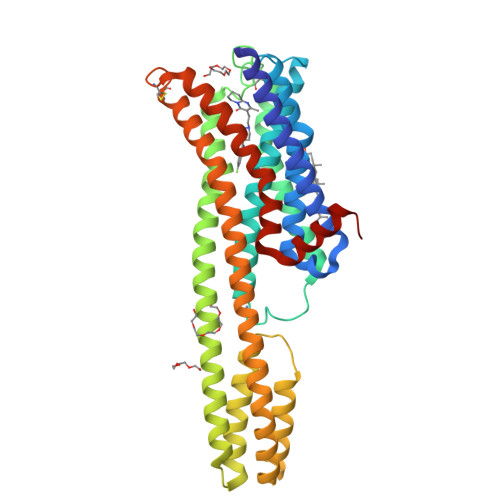
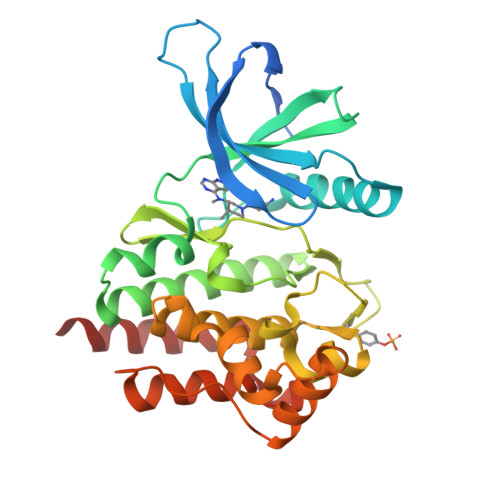
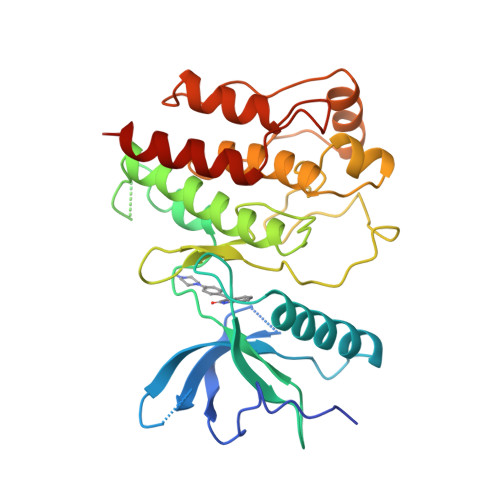
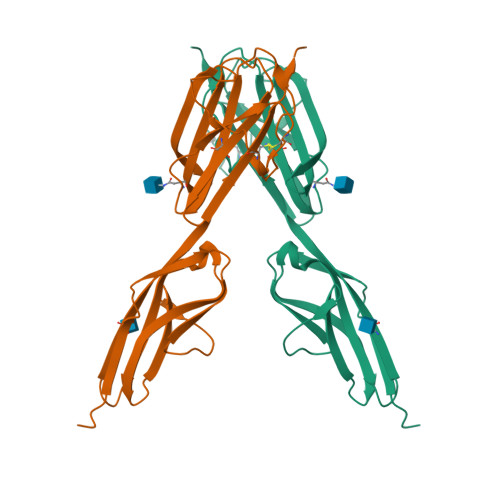
Click to view 3D structureRyanodine receptorI3VR33Bemisia tabaciPredicted (SEA)
Prediction Confidence Score
0.442
Applicability Domain
0.442
Statistical Significance
1.00e-05
Supporting Reference Compounds
1
E-value
0.0778492
Click to view 3D structureRyanodine receptorQ24498Drosophila melanogasterPredicted (SEA)
Prediction Confidence Score
0.442
Applicability Domain
0.442
Statistical Significance
1.00e-05
Supporting Reference Compounds
1
E-value
0.0778492
Reverse transcriptase/RNaseH structureClick to view 3D structureReverse transcriptase/RNaseHQ72547Human immunodeficiency virus 1Predicted (SEA)
Prediction Confidence Score
0.219
Applicability Domain
0.23 Low confidence
Statistical Significance
0.0475
Supporting Reference Compounds
79
E-value
370.173
Voltage-gated inwardly rectifying potassium channel KCNH2 structureClick to view 3D structureVoltage-gated inwardly rectifying potassium channel KCNH2Q12809HumansPredicted (SEA)
Prediction Confidence Score
0.216
Applicability Domain
0.244 Low confidence
Statistical Significance
0.8725
Supporting Reference Compounds
1498
E-value
6792.42
Transient receptor potential cation channel subfamily V member 1 structureClick to view 3D structureTransient receptor potential cation channel subfamily V member 1Q8NER1HumansPredicted (SEA)
Prediction Confidence Score
0.214
Applicability Domain
0.244 Low confidence
Statistical Significance
0.2325
Supporting Reference Compounds
104
E-value
1810.23
Kappa-type opioid receptor structureClick to view 3D structureKappa-type opioid receptorP41145HumansPredicted (SEA)
Prediction Confidence Score
0.212
Applicability Domain
0.228 Low confidence
Statistical Significance
0.5963
Supporting Reference Compounds
532
E-value
4642.46
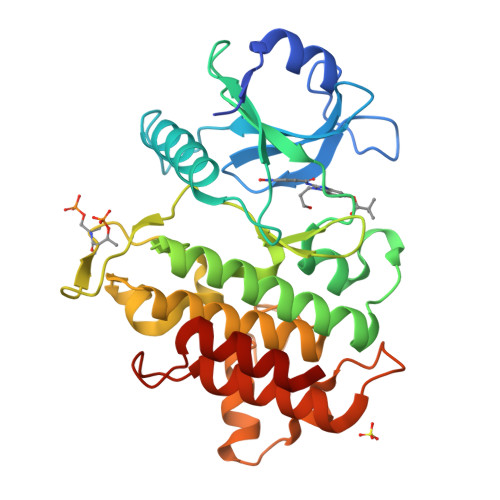
Tyrosine-protein kinase JAK2 structureClick to view 3D structureTyrosine-protein kinase JAK2O60674HumansPredicted (SEA)
Prediction Confidence Score
0.203
Applicability Domain
0.229 Low confidence
Statistical Significance
0.8432
Supporting Reference Compounds
1022
E-value
6564.64
Transient receptor potential cation channel subfamily A member 1 structureClick to view 3D structureTransient receptor potential cation channel subfamily A member 1O75762HumansPredicted (SEA)
Prediction Confidence Score
0.201
Applicability Domain
0.244 Low confidence
Statistical Significance
0.1685
Supporting Reference Compounds
70
E-value
1311.45
Cytochrome P450 2C9 structureClick to view 3D structureCytochrome P450 2C9P11712HumansPredicted (SEA)
Prediction Confidence Score
0.201
Applicability Domain
0.217 Low confidence
Statistical Significance
0.9339
Supporting Reference Compounds
1245
E-value
7270.18
5-hydroxytryptamine receptor 2A structureClick to view 3D structure5-hydroxytryptamine receptor 2AP28223HumansPredicted (SEA)
Prediction Confidence Score
0.199
Applicability Domain
0.241 Low confidence
Statistical Significance
0.8326
Supporting Reference Compounds
955
E-value
6482.04
High affinity nerve growth factor receptor structureClick to view 3D structureHigh affinity nerve growth factor receptorP04629HumansPredicted (SEA)
Prediction Confidence Score
0.199
Applicability Domain
0.221 Low confidence
Statistical Significance
0.8489
Supporting Reference Compounds
869
E-value
6608.31
Interleukin-1 receptor-associated kinase 4 structureClick to view 3D structureInterleukin-1 receptor-associated kinase 4Q9NWZ3HumansPredicted (SEA)
Prediction Confidence Score
0.199
Applicability Domain
0.229 Low confidence
Statistical Significance
0.8094
Supporting Reference Compounds
682
E-value
6301.12
Tyrosine-protein kinase Lyn structureClick to view 3D structureTyrosine-protein kinase LynP07948HumansPredicted (SEA)
Prediction Confidence Score
0.199
Applicability Domain
0.228 Low confidence
Statistical Significance
0.8108
Supporting Reference Compounds
666
E-value
6312.17
Serine/threonine-protein kinase pim-1 structureClick to view 3D structureSerine/threonine-protein kinase pim-1P11309HumansPredicted (SEA)
Prediction Confidence Score
0.199
Applicability Domain
0.221 Low confidence
Statistical Significance
0.8604
Supporting Reference Compounds
967
E-value
6698.23
Receptor-type tyrosine-protein kinase FLT3 structureClick to view 3D structureReceptor-type tyrosine-protein kinase FLT3P36888HumansPredicted (SEA)
Prediction Confidence Score
0.198
Applicability Domain
0.229 Low confidence
Statistical Significance
0.8823
Supporting Reference Compounds
1274
E-value
6868.87
Vascular endothelial growth factor receptor 2 structureClick to view 3D structureVascular endothelial growth factor receptor 2P35968HumansPredicted (SEA)
Prediction Confidence Score
0.198
Applicability Domain
0.228 Low confidence
Statistical Significance
0.9026
Supporting Reference Compounds
1660
E-value
7026.75
Fibroblast growth factor receptor 3 structureClick to view 3D structureFibroblast growth factor receptor 3P22607HumansPredicted (SEA)
Prediction Confidence Score
0.198
Applicability Domain
0.228 Low confidence
Statistical Significance
0.8047
Supporting Reference Compounds
616
E-value
6264.6
Aurora kinase A structureClick to view 3D structureAurora kinase AO14965HumansPredicted (SEA)
Prediction Confidence Score
0.198
Applicability Domain
0.229 Low confidence
Statistical Significance
0.8593
Supporting Reference Compounds
996
E-value
6689.97
Click to view 3D structureProline--tRNA ligase, cytoplasmicP78600Candida albicansPredicted (SEA)
Prediction Confidence Score
0.198
Applicability Domain
0.198 Low confidence
Statistical Significance
0.0199
Supporting Reference Compounds
1
E-value
154.842
Non-receptor tyrosine-protein kinase TYK2 structureClick to view 3D structureNon-receptor tyrosine-protein kinase TYK2P29597HumansPredicted (SEA)
Prediction Confidence Score
0.197
Applicability Domain
0.213 Low confidence
Statistical Significance
0.8221
Supporting Reference Compounds
657
E-value
6400.37
Fibroblast growth factor receptor 1 structureClick to view 3D structureFibroblast growth factor receptor 1P11362HumansPredicted (SEA)
Prediction Confidence Score
0.197
Applicability Domain
0.228 Low confidence
Statistical Significance
0.8714
Supporting Reference Compounds
1010
E-value
6784.09
Vascular endothelial growth factor receptor 3 structureClick to view 3D structureVascular endothelial growth factor receptor 3P35916HumansPredicted (SEA)
Prediction Confidence Score
0.197
Applicability Domain
0.228 Low confidence
Statistical Significance
0.8333
Supporting Reference Compounds
687
E-value
6487.41
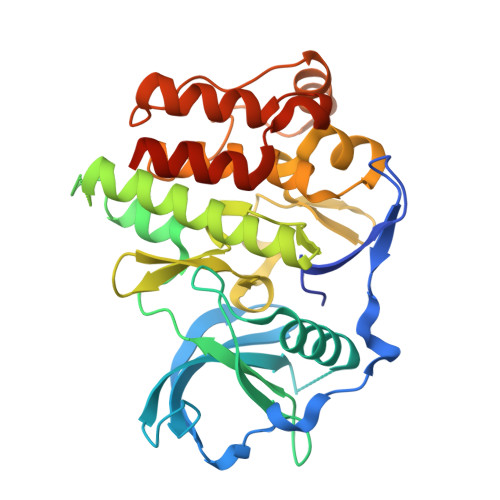
Cyclin-dependent kinase 2 structureClick to view 3D structureCyclin-dependent kinase 2P24941HumansPredicted (SEA)
Prediction Confidence Score
0.196
Applicability Domain
0.213 Low confidence
Statistical Significance
0.8764
Supporting Reference Compounds
1029
E-value
6822.78
Click to view 3D structureStreptokinase AP10520Streptococcus pyogenes serotype M1Predicted (SEA)
Prediction Confidence Score
0.194
Applicability Domain
0.213 Low confidence
Statistical Significance
0.6783
Supporting Reference Compounds
425
E-value
5280.82
Tyrosine-protein kinase JAK3 structureClick to view 3D structureTyrosine-protein kinase JAK3P52333HumansPredicted (SEA)
Prediction Confidence Score
0.194
Applicability Domain
0.213 Low confidence
Statistical Significance
0.8884
Supporting Reference Compounds
961
E-value
6916.36
Click to view 3D structureRyanodine receptorQ8TA74Hemicentrotus pulcherrimusKnownNot Available
Alkaline phosphatase structureClick to view 3D structureAlkaline phosphataseP00634Escherichia coli (strain K12)KnownNot Available
Concentrations
Not Available
External Links
DrugBank IDNot Available
HMDB IDNot Available
FooDB IDNot Available
Phenol Explorer IDNot Available
KNApSAcK IDNot Available
BiGG IDNot Available
BioCyc IDNot Available
METLIN IDNot Available
PDB IDNot Available
Wikipedia LinkCyantraniliprole
Chemspider IDNot Available
ChEBI ID132300
PubChem Compound ID11578610
Kegg Compound IDNot Available
YMDB IDNot Available
ECMDB IDNot Available
References
Synthesis ReferenceNot Available
MSDSNot Available
General ReferencesNot Available