Trichlormethine (Trimustine hydrochloride) (CED0051096)

Record Information
Version1.0
Creation Date2016-05-20 16:14:10 UTC
Update Date2026-08-23 05:45:32 UTC
SynCED IDCED0051096
Secondary Accession Numbers
  • CHEM016091
Identification
Common NameTrichlormethine (Trimustine hydrochloride)
ClassSmall Molecule
Description
Trichlormethine (Trimustine hydrochloride) is an organic compound with the chemical formula C6H13Cl4N and an average molecular weight of 240.98 g/mol. Trichlormethine (Trimustine hydrochloride) belongs to the nitrogen mustard compounds, a subclass of organonitrogen compounds within the organic compounds. It is further categorized under the superclass of organic nitrogen compounds and the class of organonitrogen compounds. This substance has been identified in or released from six recorded sources across various industries. Within the building and construction sector, it is associated with tents or canopies. In the realm of food, food processing and cookware, it is used in food preservation. It is also found in household cleaning and consumer products, specifically within bleaching agents and perfumes used in soaps and detergents. Additionally, the compound is linked to electrical and electronic equipment, appearing in auxiliary devices as well as superconductive or hyperconductive conductors, cables, or transmission lines.
Contaminant Type
  • Human Neurotoxin
Chemical Structure
Synonyms
ValueSource
2,2',2''-Trichlorotriethylamine hydrochlorideKegg
2,2',2''-Trichlorotriethylamine monopicrateMeSH
HN-3MeSH
2,2',2''-TrichlorotriethylamineMeSH
HN 3MeSH
TrichloromethineMeSH
2,2',2''-TrichloroethylamineMeSH
Tris(beta-chloroethyl)amineMeSH
Tris(2-chloroethyl)amineMeSH
TrichlorotriethylamineMeSH
Chemical FormulaC6H13Cl4N
Average Molecular Mass240.980 g/mol
Monoisotopic Mass238.980 g/mol
CAS Registry Number817-09-4
IUPAC Nametris(2-chloroethyl)amine hydrochloride
Traditional NameHN3 (nitrogen mustard) hydrochloride
SMILESCl.ClCCN(CCCl)CCCl
InChI IdentifierInChI=1S/C6H12Cl3N.ClH/c7-1-4-10(5-2-8)6-3-9;/h1-6H2;1H
InChI KeyVEAUDLLZYJVHRI-UHFFFAOYSA-N
Chemical Taxonomy
Description Belongs to the class of organic compounds known as nitrogen mustard compounds. Nitrogen mustard compounds are compounds having two beta-haloalkyl groups bound to a nitrogen atom.
KingdomOrganic compounds
Super ClassOrganic nitrogen compounds
ClassOrganonitrogen compounds
Sub ClassNitrogen mustard compounds
Direct ParentNitrogen mustard compounds
Alternative Parents
Substituents
  • Nitrogen mustard
  • Tertiary aliphatic amine
  • Tertiary amine
  • Organopnictogen compound
  • Hydrocarbon derivative
  • Hydrochloride
  • Organochloride
  • Organohalogen compound
  • Amine
  • Alkyl halide
  • Alkyl chloride
  • Aliphatic acyclic compound
Molecular FrameworkAliphatic acyclic compounds
External Descriptors
Biological Properties
StatusDetected and Not Quantified
OriginNot Available
Cellular LocationsNot Available
Biofluid LocationsNot Available
Tissue LocationsNot Available
ApplicationsNot Available
Biological RolesNot Available
Chemical RolesNot Available
Organoleptic EffectsNot Available
Physical Properties
StateNot Available
AppearanceNot Available
Experimental Properties
PropertyValue
Melting PointNot Available
Boiling PointNot Available
SolubilityNot Available
Predicted Properties
PropertyValueSource
Water Solubility3.45 g/LALOGPS
logP1.95ALOGPS
logP2.18ChemAxon
logS-1.8ALOGPS
pKa (Strongest Basic)4.83ChemAxon
Physiological Charge0ChemAxon
Hydrogen Acceptor Count1ChemAxon
Hydrogen Donor Count0ChemAxon
Polar Surface Area3.24 ŲChemAxon
Rotatable Bond Count6ChemAxon
Refractivity48.02 m³·mol⁻¹ChemAxon
Polarizability20.05 ųChemAxon
Number of Rings0ChemAxon
BioavailabilityYesChemAxon
Rule of FiveYesChemAxon
Ghose FilterYesChemAxon
Veber's RuleYesChemAxon
MDDR-like RuleNoChemAxon
Spectra
Spectra
Spectrum TypeDescriptionSplash KeyDeposition DateView
Predicted LC-MS/MSPredicted LC-MS/MS Spectrumsplash10-000i-0090000000-96f8f30ea9fdc0ca201aNot AvailableView Spectrum
Predicted LC-MS/MSPredicted LC-MS/MS Spectrumsplash10-000i-0090000000-6f352c9997fa581fd9f7Not AvailableView Spectrum
Toxicity Profile
Toxicity Values
Toxicity ValueOrganismDose DescriptorRoute of ExposurePredicted or ExperimentalToxicity RatingReference
19.0 Log mg/kg [10:34]RatLD50oralpredictedNot AvailableNot Available
Toxicity / Toxin ClassNot Available
Mechanism of ToxicityNot Available
Carcinogenicity (IARC Classification)Not Available
Minimum Risk LevelNot Available
SymptomsNot Available
TreatmentNot Available
Health Effects
Health EffectRelationshipDirectionDescriptionReference
Exposure Sources
Source IDSourceSectorReference
CEDs000181Ballast water?Ballast water, taken on by ships to maintain stability and balance, often contains a diverse array of microorganisms, including bacteria, viruses, and plankton.Marine, shipping & aquaculturePubChem
CEDs000182Bilge water?Bilge water is a byproduct generated from the accumulation of water in the lowest part of a ship's hull, which may include a mixture of seawater, oil, fuel residues, and various contaminants.Marine, shipping & aquaculturePubChem
CEDs000503Tents Or Canopies?Tents and canopies used in various applications can be a source of synthetic chemical contamination primarily due to the materials from which they are made.Building & ConstructionPubChem
CEDs000507Auxiliary Devices?Auxiliary devices, such as capacitors, transformers, and circuit breakers, are integral components in various electronic systems.Electrical & Electronic EquipmentPubChem
CEDs000536Superconductive Or Hyperconductive Conductors Cables Or Transmission Lines?Superconductive or hyperconductive conductors, including cables and transmission lines, are materials that exhibit zero electrical resistance under specific conditions, typically at low temperatures.Electrical & Electronic EquipmentPubChem
CEDs000545Food Preservation?Food preservation often involves the use of synthetic chemicals, such as preservatives, flavor enhancers, and color additives, to extend shelf life and enhance the sensory qualities of food products.Food, food processing & cookwarePubChem
CEDs000555Bleaching Agents?Bleaching agents are chemical substances used to whiten or lighten materials, often employed in various cleaning products for their stain removal and disinfecting properties.Household cleaning & consumer productsPubChem
CEDs000561Perfumes Within Detergents And Soaps?Perfumes within detergents and soaps are synthetic fragrance compounds added to enhance the sensory experience of cleaning products.Household cleaning & consumer productsPubChem
CEDs000579Manufacture Of Iron Or Steel?The manufacture of iron or steel involves various processes, including smelting, refining, and alloying, which can result in the release of synthetic chemicals and contaminants.Industrial manufacturing & chemical processingPubChem
CEDs000580Manufacture Preparation Of Tobacco Products?The manufacture and preparation of tobacco products involve various processes that can result in the introduction of synthetic chemicals into the environment.Industrial manufacturing & chemical processingPubChem
CEDs000600Herbicides And Algicides?Herbicides and algicides are synthetic chemicals primarily used to control unwanted plants and algae in various environments.Agriculture & land managementPubChem
CEDs000606Plant Growth Regulators?Plant Growth Regulators (PGRs) are synthetic chemicals designed to influence the growth and development of plants.Agriculture & land managementPubChem
CEDs000632Apparel?Apparel production often involves the use of various synthetic chemicals, including dyes, finishing agents, and preservatives.Textiles, leather & furnishingsPubChem
CEDs000642Footwear?Footwear production often involves the use of various synthetic chemicals, such as adhesives, dyes, and treatments, which can contribute to environmental contamination.Textiles, leather & furnishingsPubChem
CEDs000678Nitrogenous Fertilisers?Nitrogenous fertilizers are synthetic chemical compounds primarily used to enhance plant growth by supplying essential nitrogen, a crucial nutrient for photosynthesis and protein synthesis.Agriculture & land managementPubChem
CEDs000679Phosphatic Fertilisers?Phosphatic fertilizers are synthetic chemical products primarily composed of phosphorus, which is essential for plant growth.Agriculture & land managementPubChem
CEDs000685Ceramics?Ceramics can be a source of synthetic chemical contamination through various additives and processing agents used in their production.Building & ConstructionPubChem
CEDs000688Glass Coatings?Glass coatings are synthetic chemical formulations applied to glass surfaces to enhance properties such as durability, UV resistance, and aesthetic appeal.Building & ConstructionPubChem
CEDs000696Nanotechnology?Nanotechnology involves the manipulation of materials at the molecular or atomic level, typically within the range of 1 to 100 nanometers.Industrial manufacturing & chemical processingPubChem
CEDs000699Mining Or Quarrying?Mining and quarrying operations can lead to synthetic chemical contamination through the release of various pollutants associated with the extraction and processing of minerals.Mining & metal processingPubChem
CEDs000735Explosives?Explosives are chemical compounds or mixtures designed to undergo rapid decomposition, releasing energy in the form of gas and heat.Defense & military infrastructurePubChem
CEDs000739Inks?Inks are complex mixtures composed of pigments or dyes, solvents, resins, and additives used primarily for printing and writing applications.Paper, pulp & fiber productsPubChem
CEDs000740Paper?Paper production involves the processing of wood fibers and the use of various chemicals, which can lead to synthetic chemical contamination.Paper, pulp & fiber productsPubChem
CEDs000743Sludge Treatment?Sludge treatment involves the processing of waste materials generated from wastewater treatment plants, which often contain a variety of organic and inorganic substances.Wastewater, sanitation & biosolidsPubChem
CEDs000744Water, Wastewater, & Sewage Treatment?Water, wastewater, and sewage treatment processes are critical for managing and mitigating pollutants in water systems.Wastewater, sanitation & biosolidsPubChem
CEDs02255WaterAquatic systems & sedimentsPMC8201930
Pathways
0 pathwaysPathway Source: PathBank

No pathways found

No metabolic pathways have been associated with this synthetic chemical

Targets
StructureProteinUniProt IDOrganismRelationshipDetails
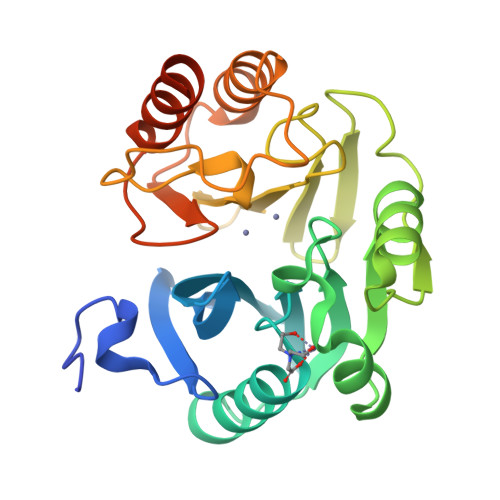
Beta-lactamase VIM-1 structureClick to view 3D structureBeta-lactamase VIM-1Q9XAY4Pseudomonas aeruginosaPredicted (SEA)
Prediction Confidence Score
0.19
Applicability Domain
0.19 Low confidence
Statistical Significance
7.60e-04
Supporting Reference Compounds
1
E-value
5.91654
Click to view 3D structureLarge neutral amino acids transporter small subunit 1Q63016Rattus norvegicusPredicted (SEA)
Prediction Confidence Score
0.159
Applicability Domain
0.159 Low confidence
Statistical Significance
0.0415
Supporting Reference Compounds
1
E-value
322.919
Click to view 3D structure3-ketoacyl-CoA synthase 20Q9FG87Arabidopsis thalianaPredicted (SEA)
Prediction Confidence Score
0.148
Applicability Domain
0.148 Low confidence
Statistical Significance
0.0011
Supporting Reference Compounds
1
E-value
8.71911
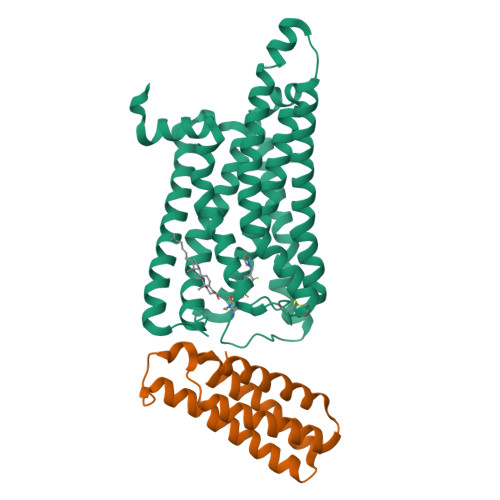
D(2) dopamine receptor structureClick to view 3D structureD(2) dopamine receptorP14416HumansPredicted (SEA)
Prediction Confidence Score
0.127
Applicability Domain
0.135 Low confidence
Statistical Significance
0.9988
Supporting Reference Compounds
1103
E-value
7775.35
D(3) dopamine receptor structureClick to view 3D structureD(3) dopamine receptorP35462HumansPredicted (SEA)
Prediction Confidence Score
0.125
Applicability Domain
0.135 Low confidence
Statistical Significance
0.9986
Supporting Reference Compounds
861
E-value
7774.1
Sigma non-opioid intracellular receptor 1 structureClick to view 3D structureSigma non-opioid intracellular receptor 1Q99720HumansPredicted (SEA)
Prediction Confidence Score
0.122
Applicability Domain
0.133 Low confidence
Statistical Significance
0.999
Supporting Reference Compounds
562
E-value
7777.53
5-hydroxytryptamine receptor 6 structureClick to view 3D structure5-hydroxytryptamine receptor 6P50406HumansPredicted (SEA)
Prediction Confidence Score
0.122
Applicability Domain
0.14 Low confidence
Statistical Significance
0.9984
Supporting Reference Compounds
536
E-value
7772.39
Click to view 3D structureD(2) dopamine receptorP61169RatPredicted (SEA)
Prediction Confidence Score
0.121
Applicability Domain
0.133 Low confidence
Statistical Significance
0.9974
Supporting Reference Compounds
528
E-value
7764.37
Click to view 3D structureSigma non-opioid intracellular receptor 1Q9R0C9Rattus norvegicusPredicted (SEA)
Prediction Confidence Score
0.119
Applicability Domain
0.133 Low confidence
Statistical Significance
0.991
Supporting Reference Compounds
207
E-value
7714.78
Click to view 3D structure5-hydroxytryptamine receptor 1AP19327Rattus norvegicusPredicted (SEA)
Prediction Confidence Score
0.118
Applicability Domain
0.133 Low confidence
Statistical Significance
0.9987
Supporting Reference Compounds
541
E-value
7774.57
D(1A) dopamine receptor structureClick to view 3D structureD(1A) dopamine receptorP21728HumansPredicted (SEA)
Prediction Confidence Score
0.117
Applicability Domain
0.135 Low confidence
Statistical Significance
0.9988
Supporting Reference Compounds
425
E-value
7775.97
Histamine H3 receptor structureClick to view 3D structureHistamine H3 receptorQ9Y5N1HumansPredicted (SEA)
Prediction Confidence Score
0.113
Applicability Domain
0.185 Low confidence
Statistical Significance
0.9989
Supporting Reference Compounds
294
E-value
7776.12
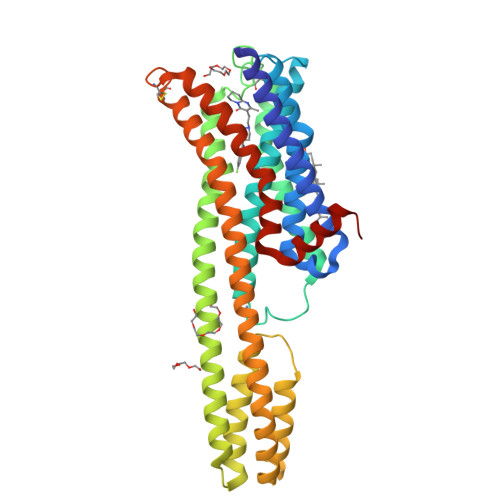
5-hydroxytryptamine receptor 2A structureClick to view 3D structure5-hydroxytryptamine receptor 2AP28223HumansPredicted (SEA)
Prediction Confidence Score
0.113
Applicability Domain
0.122 Low confidence
Statistical Significance
0.9997
Supporting Reference Compounds
955
E-value
7782.98
Click to view 3D structureSodium-dependent dopamine transporterP23977Rattus norvegicusPredicted (SEA)
Prediction Confidence Score
0.112
Applicability Domain
0.133 Low confidence
Statistical Significance
0.9964
Supporting Reference Compounds
203
E-value
7757.05
Kappa-type opioid receptor structureClick to view 3D structureKappa-type opioid receptorP41145HumansPredicted (SEA)
Prediction Confidence Score
0.112
Applicability Domain
0.135 Low confidence
Statistical Significance
0.9995
Supporting Reference Compounds
532
E-value
7780.87
Muscarinic acetylcholine receptor M2 structureClick to view 3D structureMuscarinic acetylcholine receptor M2P08172HumansPredicted (SEA)
Prediction Confidence Score
0.112
Applicability Domain
0.122 Low confidence
Statistical Significance
0.9997
Supporting Reference Compounds
373
E-value
7782.43
Sodium-dependent dopamine transporter structureClick to view 3D structureSodium-dependent dopamine transporterQ01959HumansPredicted (SEA)
Prediction Confidence Score
0.111
Applicability Domain
0.12 Low confidence
Statistical Significance
0.9997
Supporting Reference Compounds
506
E-value
7782.66
Muscarinic acetylcholine receptor M1 structureClick to view 3D structureMuscarinic acetylcholine receptor M1P11229HumansPredicted (SEA)
Prediction Confidence Score
0.11
Applicability Domain
0.122 Low confidence
Statistical Significance
0.9996
Supporting Reference Compounds
385
E-value
7782.04
Sodium-dependent serotonin transporter structureClick to view 3D structureSodium-dependent serotonin transporterP31645HumansPredicted (SEA)
Prediction Confidence Score
0.11
Applicability Domain
0.12 Low confidence
Statistical Significance
0.9995
Supporting Reference Compounds
593
E-value
7781.11
5-hydroxytryptamine receptor 2B structureClick to view 3D structure5-hydroxytryptamine receptor 2BP41595HumansPredicted (SEA)
Prediction Confidence Score
0.109
Applicability Domain
0.122 Low confidence
Statistical Significance
0.9996
Supporting Reference Compounds
686
E-value
7782.12
Folliculin-interacting protein 1 structureClick to view 3D structureFolliculin-interacting protein 1Q8TF40HumansPredicted (SEA)
Prediction Confidence Score
0.109
Applicability Domain
0.109 Low confidence
Statistical Significance
0.2941
Supporting Reference Compounds
1
E-value
2289.31
Mu-type opioid receptor structureClick to view 3D structureMu-type opioid receptorP35372HumansPredicted (SEA)
Prediction Confidence Score
0.109
Applicability Domain
0.135 Low confidence
Statistical Significance
0.9995
Supporting Reference Compounds
527
E-value
7780.72
5-hydroxytryptamine receptor 2C structureClick to view 3D structure5-hydroxytryptamine receptor 2CP28335HumansPredicted (SEA)
Prediction Confidence Score
0.109
Applicability Domain
0.122 Low confidence
Statistical Significance
0.9997
Supporting Reference Compounds
823
E-value
7782.82
Sodium-dependent noradrenaline transporter structureClick to view 3D structureSodium-dependent noradrenaline transporterP23975HumansPredicted (SEA)
Prediction Confidence Score
0.108
Applicability Domain
0.12 Low confidence
Statistical Significance
0.9997
Supporting Reference Compounds
451
E-value
7782.74
Muscarinic acetylcholine receptor M3 structureClick to view 3D structureMuscarinic acetylcholine receptor M3P20309HumansPredicted (SEA)
Prediction Confidence Score
0.108
Applicability Domain
0.122 Low confidence
Statistical Significance
0.9996
Supporting Reference Compounds
310
E-value
7781.57
Concentrations
Not Available
External Links
DrugBank IDNot Available
HMDB IDNot Available
FooDB IDNot Available
Phenol Explorer IDNot Available
KNApSAcK IDNot Available
BiGG IDNot Available
BioCyc IDNot Available
METLIN IDNot Available
PDB IDNot Available
Wikipedia LinkNot Available
Chemspider IDNot Available
ChEBI IDNot Available
PubChem Compound ID61220
Kegg Compound IDC19305
YMDB IDNot Available
ECMDB IDNot Available
References
Synthesis ReferenceNot Available
MSDSNot Available
General ReferencesNot Available