Cefpodoxime proxetil (CED0009602)

Record Information
Version1.0
Creation Date2016-05-22 03:38:36 UTC
Update Date2026-08-21 19:32:55 UTC
SynCED IDCED0009602
Secondary Accession Numbers
  • CHEM016618
Identification
Common NameCefpodoxime proxetil
ClassSmall Molecule
Description
Cefpodoxime proxetil (C21H27N5O9S2) is an organoheterocyclic compound. Cefpodoxime proxetil belongs to the beta lactams, a subclass of lactams within the organic compounds. With an average molecular weight of 557.59 g/mol, Cefpodoxime proxetil is a heavy molecule. This compound is found in or released from seven recorded sources. Within the category of healthcare, pharmaceuticals, and veterinary products, it is used as an antibiotic. It is also associated with food, food processing, and cookware, specifically in the processing of fish. Additionally, it is recorded in electrical and electronic equipment, including antennas, colour television systems, emergency protective devices, relays, and video games. Recorded exposure routes for this substance include oral and inhalation.
Contaminant TypeNot Available
Chemical Structure
Synonyms
ValueSource
(RS)-1-((Isopropoxycarbonyl)oxy)ethyl (+)-(6R,7R)-7-(2-(2-amino-4-thiazolyl)-2-((Z)-methoxyimino)acetamido)-3-(methoxymethyl)-8-oxo-5-thia-1-azabicyclo(4.2.0)oct-2-ene-2-carboxylateChEBI
Cefpodoxime 1-(isopropyloxycarbonyloxy)ethyl esterChEBI
CPDX-PRKegg
VantinKegg
(RS)-1-((Isopropoxycarbonyl)oxy)ethyl (+)-(6R,7R)-7-(2-(2-amino-4-thiazolyl)-2-((Z)-methoxyimino)acetamido)-3-(methoxymethyl)-8-oxo-5-thia-1-azabicyclo(4.2.0)oct-2-ene-2-carboxylic acidGenerator
1-Propan-2-yloxycarbonyloxyethyl (6R,7R)-7-[[(2Z)-2-(2-amino-1,3-thiazol-4-yl)-2-methoxyiminoacetyl]amino]-3-(methoxymethyl)-8-oxo-5-thia-1-azabicyclo[4.2.0]oct-2-ene-2-carboxylic acidGenerator
1-(Isopropoxycarbonyloxy)ethyl-7-(2-(2-amino-4-thiazolyl)-2-(methoxyimino)acetamido)-3-methoxymethyl-8-oxo-5-thia-1-azabicyclo(4,2,0)-oct-2-ene-2-carboxylateMeSH
DoxefMeSH
Cefpodoxime proxetilMeSH
Cephalosporin 807MeSH
Chemical FormulaC21H27N5O9S2
Average Molecular Mass557.590 g/mol
Monoisotopic Mass557.125 g/mol
CAS Registry Number87239-81-4
IUPAC Name(2Z)-2-(2-imino-2,3-dihydro-1,3-thiazol-4-yl)-2-(methoxyimino)-N-[(6R,7R)-3-(methoxymethyl)-8-oxo-2-[(1-{[(propan-2-yloxy)carbonyl]oxy}ethoxy)carbonyl]-5-thia-1-azabicyclo[4.2.0]oct-2-en-7-yl]ethanimidic acid
Traditional Namesimplicef
SMILES[H]C(C)(OC(=O)OC(C)C)OC(=O)C1=C(COC)CS[C@@]2([H])N1C(=O)[C@@]2([H])N=C(O)C(=N/OC)\C1=CSC(=N)N1
InChI IdentifierInChI=1S/C21H27N5O9S2/c1-9(2)33-21(30)35-10(3)34-19(29)15-11(6-31-4)7-36-18-14(17(28)26(15)18)24-16(27)13(25-32-5)12-8-37-20(22)23-12/h8-10,14,18H,6-7H2,1-5H3,(H2,22,23)(H,24,27)/b25-13-/t10?,14-,18-/m1/s1
InChI KeyLTINZAODLRIQIX-FBXRGJNPSA-N
Chemical Taxonomy
Description Belongs to the class of organic compounds known as cephalosporins. Cephalosporins are compounds containing a 1,2-thiazine fused to a 2-azetidinone to for a oxo-5-thia-1-azabicyclo[4.2.0]Oct-2-ene-2-carboxylic acid moiety or a derivative thereof.
KingdomOrganic compounds
Super ClassOrganoheterocyclic compounds
ClassLactams
Sub ClassBeta lactams
Direct ParentCephalosporins
Alternative Parents
Substituents
  • Cephalosporin
  • N-acyl-alpha amino acid or derivatives
  • Alpha-amino acid or derivatives
  • 2,4-disubstituted 1,3-thiazole
  • Meta-thiazine
  • Carbonic acid diester
  • 1,3-thiazol-2-amine
  • Azole
  • Heteroaromatic compound
  • Tertiary carboxylic acid amide
  • Thiazole
  • Enoate ester
  • Alpha,beta-unsaturated carboxylic ester
  • Amino acid or derivatives
  • Azetidine
  • Carboxamide group
  • Carboxylic acid ester
  • Carbonic acid derivative
  • Secondary carboxylic acid amide
  • Hemithioaminal
  • Acetal
  • Monocarboxylic acid or derivatives
  • Ether
  • Dialkyl ether
  • Thioether
  • Dialkylthioether
  • Carboxylic acid derivative
  • Azacycle
  • Organopnictogen compound
  • Carbonyl group
  • Organic oxide
  • Organic nitrogen compound
  • Amine
  • Organonitrogen compound
  • Organooxygen compound
  • Primary amine
  • Hydrocarbon derivative
  • Organic oxygen compound
  • Aromatic heteropolycyclic compound
Molecular FrameworkAromatic heteropolycyclic compounds
External Descriptors
Biological Properties
StatusDetected and Not Quantified
OriginNot Available
Cellular LocationsNot Available
Biofluid LocationsNot Available
Tissue LocationsNot Available
ApplicationsNot Available
Biological Roles
Chemical RolesNot Available
Organoleptic Effects
  • bitter taste ?
Physical Properties
StateNot Available
AppearanceNot Available
Experimental Properties
PropertyValue
Melting PointNot Available
Boiling PointNot Available
SolubilityNot Available
Predicted Properties
PropertyValueSource
Water Solubility0.1 g/LALOGPS
logP1.7ALOGPS
logP2.17ChemAxon
logS-3.7ALOGPS
pKa (Strongest Acidic)3.73ChemAxon
pKa (Strongest Basic)0.72ChemAxon
Physiological Charge0ChemAxon
Hydrogen Acceptor Count11ChemAxon
Hydrogen Donor Count3ChemAxon
Polar Surface Area181.43 ŲChemAxon
Rotatable Bond Count13ChemAxon
Refractivity144.67 m³·mol⁻¹ChemAxon
Polarizability55.21 ųChemAxon
Number of Rings3ChemAxon
BioavailabilityNoChemAxon
Rule of FiveNoChemAxon
Ghose FilterNoChemAxon
Veber's RuleNoChemAxon
MDDR-like RuleYesChemAxon
Spectra
Spectra
Spectrum TypeDescriptionSplash KeyDeposition DateView
Predicted LC-MS/MSPredicted LC-MS/MS Spectrumsplash10-0a4l-3964730000-4e8ad0fd8f67da24074bNot AvailableView Spectrum
Predicted LC-MS/MSPredicted LC-MS/MS Spectrumsplash10-0bta-9343200000-8483a91d8746ea61095aNot AvailableView Spectrum
Predicted LC-MS/MSPredicted LC-MS/MS Spectrumsplash10-06r2-9121000000-1fb85b89298bd5010a21Not AvailableView Spectrum
Predicted LC-MS/MSPredicted LC-MS/MS Spectrumsplash10-052r-1490310000-60fd46d5bad5c738d801Not AvailableView Spectrum
Predicted LC-MS/MSPredicted LC-MS/MS Spectrumsplash10-0a4r-9770210000-d111259b323589c04a12Not AvailableView Spectrum
Predicted LC-MS/MSPredicted LC-MS/MS Spectrumsplash10-052f-9400000000-9b94fc90c16f14088a99Not AvailableView Spectrum
Toxicity Profile
Toxicity Values
Toxicity ValueOrganismDose DescriptorRoute of ExposurePredicted or ExperimentalToxicity RatingReference
6993.0 Log mg/kg [3900:12000]RatLD50oralpredictedNot AvailableNot Available
Toxicity / Toxin ClassNot Available
Mechanism of ToxicityNot Available
Carcinogenicity (IARC Classification)Not Available
Minimum Risk LevelNot Available
SymptomsNot Available
TreatmentNot Available
Health Effects
Health EffectRelationshipDirectionDescriptionReference
Exposure Sources
Source IDSourceSectorReference
CEDs000010Insecticides?Insecticides are synthetic chemicals designed to control or eliminate insect pests that threaten crops and other agricultural products.Agriculture & land managementPubChem
CEDs000306Antibiotics?Antibiotics are synthetic or semi-synthetic compounds used to treat bacterial infections in humans and animals.Healthcare, pharmaceuticals & veterinary productsNot Available
CEDs000506Antennas?Antennas, commonly used in communication technologies, can be a source of synthetic chemical contamination through the materials and coatings used in their construction.Electrical & Electronic EquipmentPubChem
CEDs000509Colour Television Systems?Colour television systems contain various synthetic chemicals that can lead to environmental contamination.Electrical & Electronic EquipmentPubChem
CEDs000517Electric Switches?Electric switches, integral components in numerous devices, can be a source of synthetic chemical contamination due to the materials and manufacturing processes involved in their production.Electrical & Electronic EquipmentPubChem
CEDs000518Electrically Stimulated Smoking Devices?Electrically stimulated smoking devices, commonly known as e-cigarettes or vape pens, utilize electrical components to heat a liquid solution, often containing nicotine, flavorings, and other additives, to produce an aerosol for inhalation.Electrical & Electronic EquipmentPubChem
CEDs000519Electrodes?Electrodes, used in various electrical and electronic applications, can be a source of synthetic chemical contamination due to the materials from which they are constructed and the processes involved in their manufacturing.Electrical & Electronic EquipmentPubChem
CEDs000520Emergency Protective Devices?Emergency protective devices, such as circuit breakers and surge protectors, are essential components in electrical systems designed to prevent damage from overcurrent and surges.Electrical & Electronic EquipmentPubChem
CEDs000530Radio Transmission Systems?Radio transmission systems utilize a variety of synthetic chemicals in their manufacturing and maintenance processes.Electrical & Electronic EquipmentPubChem
CEDs000531Relays?Relays are electromechanical switches used to control circuits and manage electrical loads.Electrical & Electronic EquipmentPubChem
CEDs000537Television Systems?Television systems can be a source of synthetic chemical contamination due to the various materials and components used in their manufacture and operation.Electrical & Electronic EquipmentPubChem
CEDs000539Video Games?Video games, through their production and disposal processes, can be a source of synthetic chemical contamination.Electrical & Electronic EquipmentPubChem
CEDs000544Fermentation Processes For Beer?Fermentation processes for beer involve the conversion of sugars into alcohol and carbon dioxide by yeast.Food, food processing & cookwarePubChem
CEDs000545Food Preservation?Food preservation often involves the use of synthetic chemicals, such as preservatives, flavor enhancers, and color additives, to extend shelf life and enhance the sensory qualities of food products.Food, food processing & cookwarePubChem
CEDs000551Processing Fish?Processing fish can lead to synthetic chemical contamination through various stages of production and preservation.Food, food processing & cookwarePubChem
CEDs000552Processing Meats?Processing meats can lead to synthetic chemical contamination primarily through the use of additives and preservatives.Food, food processing & cookwarePubChem
CEDs000559Non Electric Simulated Smoking Devices?Non-electric simulated smoking devices, often designed to mimic the experience of smoking without combustion, can be sources of synthetic chemical contamination due to the materials and chemicals used in their construction and operation.Household cleaning & consumer productsPubChem
CEDs000569Tobacco Smoke Filters?Tobacco smoke filters are designed to reduce the inhalation of harmful substances in cigarette smoke, including tar and other particulate matter.Household cleaning & consumer productsPubChem
CEDs000580Manufacture Preparation Of Tobacco Products?The manufacture and preparation of tobacco products involve various processes that can result in the introduction of synthetic chemicals into the environment.Industrial manufacturing & chemical processingPubChem
CEDs000581Paper Making Machines?Paper making machines utilize various synthetic chemicals throughout the production process, including additives, coatings, and bleaching agents.Industrial manufacturing & chemical processingPubChem
CEDs000596Acaricides?Acaricides are synthetic chemicals specifically designed to target and control mite populations that can damage crops and plants.Agriculture & land managementPubChem
CEDs000600Herbicides And Algicides?Herbicides and algicides are synthetic chemicals primarily used to control unwanted plants and algae in various environments.Agriculture & land managementPubChem
CEDs000605Pest Repellants?Pest repellents, often formulated from synthetic chemicals, are widely used to protect crops from insect infestations and other pests.Agriculture & land managementPubChem
CEDs000611Anti Perspirants Or Body Deoderants?Antiperspirants and body deodorants commonly contain synthetic chemicals such as aluminum compounds, parabens, and synthetic fragrances.Personal care & cosmeticsPubChem
CEDs000617Lip Care Products?Lip care products, including lipsticks, balms, and glosses, often contain a variety of synthetic chemicals such as parabens, phthalates, and synthetic fragrances.Personal care & cosmeticsPubChem
CEDs000632Apparel?Apparel production often involves the use of various synthetic chemicals, including dyes, finishing agents, and preservatives.Textiles, leather & furnishingsPubChem
CEDs000642Footwear?Footwear production often involves the use of various synthetic chemicals, such as adhesives, dyes, and treatments, which can contribute to environmental contamination.Textiles, leather & furnishingsPubChem
CEDs000650Purses Luggage Hand Bags?Purses, luggage, and handbags are often manufactured using synthetic materials such as polyvinyl chloride (PVC), polyurethane, and various types of nylon.Textiles, leather & furnishingsPubChem
CEDs000653Sewing?Sewing processes often involve the use of various synthetic chemicals, which can become sources of contamination in the environment.Textiles, leather & furnishingsPubChem
CEDs000655Slide Fasteners?Slide fasteners, commonly known as zippers, are mechanical devices used to join two edges of fabric or other materials.Textiles, leather & furnishingsPubChem
CEDs000661Umbrellas?Umbrellas are commonly manufactured using synthetic materials such as polyester, nylon, and polyvinyl chloride (PVC), which can contribute to synthetic chemical contamination.Textiles, leather & furnishingsPubChem
CEDs000662Yarns Or Threads?Yarns or threads used in textiles can be a source of synthetic chemical contamination due to the production processes and treatments they undergo.Textiles, leather & furnishingsPubChem
CEDs000671Airplanes And Helicopters?Airplanes and helicopters are significant sources of synthetic chemical contamination primarily through the use of aviation fuels, lubricants, and de-icing agents.Aviation & AerospacePubChem
CEDs000685Ceramics?Ceramics can be a source of synthetic chemical contamination through various additives and processing agents used in their production.Building & ConstructionPubChem
CEDs000693Silica Glass?Silica glass, primarily composed of silicon dioxide (SiO2), is widely used in various applications, including windows, glass facades, and insulation materials.Building & ConstructionPubChem
CEDs000696Nanotechnology?Nanotechnology involves the manipulation of materials at the molecular or atomic level, typically within the range of 1 to 100 nanometers.Industrial manufacturing & chemical processingPubChem
CEDs000698Jewellery?Jewellery production often involves the use of various synthetic chemicals during the extraction and processing of metals.Mining & metal processingPubChem
CEDs000740Paper?Paper production involves the processing of wood fibers and the use of various chemicals, which can lead to synthetic chemical contamination.Paper, pulp & fiber productsPubChem
CEDs000744Water, Wastewater, & Sewage Treatment?Water, wastewater, and sewage treatment processes are critical for managing and mitigating pollutants in water systems.Wastewater, sanitation & biosolidsPubChem
CEDs01081TabletsHealthcare, pharmaceuticals & veterinary productsPMC11010712
Pathways
0 pathwaysPathway Source: PathBank

No pathways found

No metabolic pathways have been associated with this synthetic chemical

Targets
StructureProteinUniProt IDOrganismRelationshipDetails
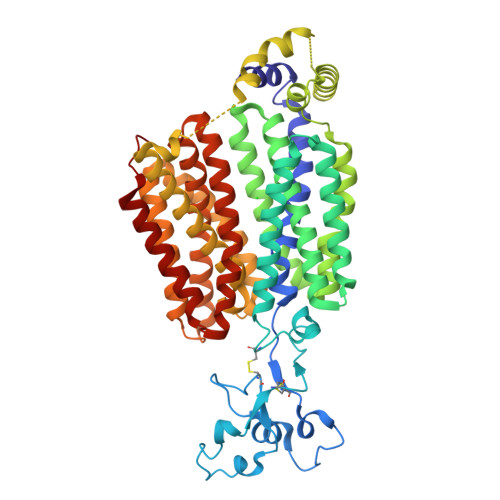
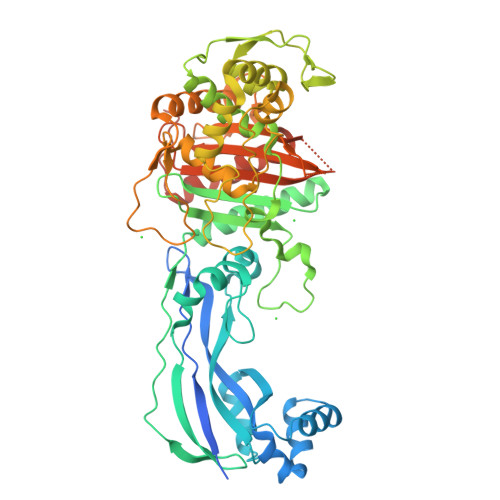
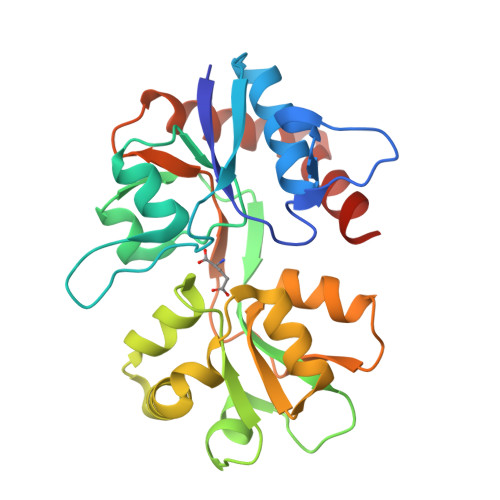
Click to view 3D structureSolute carrier family 22 member 6Q4U2R8HumansPredicted (SEA)
Prediction Confidence Score
0.273
Applicability Domain
0.353
Statistical Significance
8.10e-04
Supporting Reference Compounds
26
E-value
6.30579
Click to view 3D structureOrganic anion transporter 3Q8TCC7HumansPredicted (SEA)
Prediction Confidence Score
0.273
Applicability Domain
0.353
Statistical Significance
5.30e-04
Supporting Reference Compounds
20
E-value
4.12601
Solute carrier family 22 member 11 structureClick to view 3D structureSolute carrier family 22 member 11Q9NSA0HumansPredicted (SEA)
Prediction Confidence Score
0.272
Applicability Domain
0.353
Statistical Significance
1.30e-04
Supporting Reference Compounds
9
E-value
1.01204
Click to view 3D structureBeta-lactamaseB2ZTR6Acinetobacter baumanniiPredicted (SEA)
Prediction Confidence Score
0.248
Applicability Domain
0.353
Statistical Significance
1.20e-04
Supporting Reference Compounds
3
E-value
0.934191
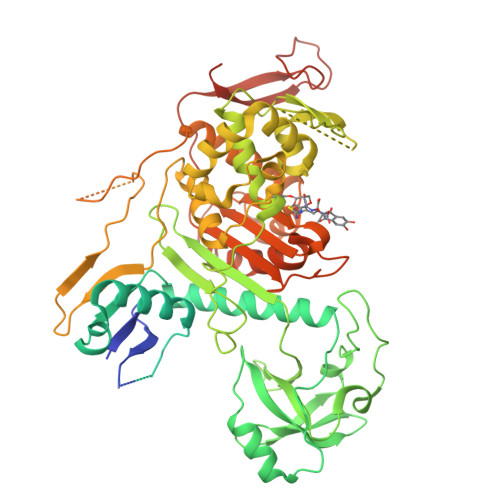
Click to view 3D structureADC-11D6NSM8Acinetobacter baumanniiPredicted (SEA)
Prediction Confidence Score
0.248
Applicability Domain
0.353
Statistical Significance
1.20e-04
Supporting Reference Compounds
3
E-value
0.934191
Click to view 3D structureStreptokinase AP10520Streptococcus pyogenes serotype M1Predicted (SEA)
Prediction Confidence Score
0.225
Applicability Domain
0.255 Low confidence
Statistical Significance
0.3217
Supporting Reference Compounds
425
E-value
2504.49
Speckle-type POZ protein structureClick to view 3D structureSpeckle-type POZ proteinO43791HumansPredicted (SEA)
Prediction Confidence Score
0.2
Applicability Domain
0.2 Low confidence
Statistical Significance
0.0144
Supporting Reference Compounds
1
E-value
112.025
72 kDa type IV collagenase structureClick to view 3D structure72 kDa type IV collagenaseP08253HumansPredicted (SEA)
Prediction Confidence Score
0.198
Applicability Domain
0.255 Low confidence
Statistical Significance
0.6252
Supporting Reference Compounds
400
E-value
4867.44
Carboxy-terminal domain RNA polymerase II polypeptide A small phosphatase 1 structureClick to view 3D structureCarboxy-terminal domain RNA polymerase II polypeptide A small phosphatase 1Q9GZU7HumansPredicted (SEA)
Prediction Confidence Score
0.194
Applicability Domain
0.267 Low confidence
Statistical Significance
0.371
Supporting Reference Compounds
128
E-value
2888.21
DNA (cytosine-5)-methyltransferase 1 structureClick to view 3D structureDNA (cytosine-5)-methyltransferase 1P26358HumansPredicted (SEA)
Prediction Confidence Score
0.185
Applicability Domain
0.267 Low confidence
Statistical Significance
0.5083
Supporting Reference Compounds
116
E-value
3956.76
Apoptotic protease-activating factor 1 structureClick to view 3D structureApoptotic protease-activating factor 1O14727HumansPredicted (SEA)
Prediction Confidence Score
0.185
Applicability Domain
0.257 Low confidence
Statistical Significance
0.4286
Supporting Reference Compounds
112
E-value
3336.54
Click to view 3D structureSHV-5 extended spectrum beta-lactamaseQ6REX6Escherichia coliPredicted (SEA)
Prediction Confidence Score
0.178
Applicability Domain
0.178 Low confidence
Statistical Significance
0.0044
Supporting Reference Compounds
1
E-value
34.2537
Click to view 3D structureAmpCQ83TT7Escherichia coliPredicted (SEA)
Prediction Confidence Score
0.173
Applicability Domain
0.174 Low confidence
Statistical Significance
0.0019
Supporting Reference Compounds
2
E-value
14.7914
Nuclear receptor subfamily 1 group I member 2 structureClick to view 3D structureNuclear receptor subfamily 1 group I member 2O75469HumansPredicted (SEA)
Prediction Confidence Score
0.172
Applicability Domain
0.229 Low confidence
Statistical Significance
0.8166
Supporting Reference Compounds
146
E-value
6356.93
26S proteasome non-ATPase regulatory subunit 14 structureClick to view 3D structure26S proteasome non-ATPase regulatory subunit 14O00487HumansPredicted (SEA)
Prediction Confidence Score
0.17
Applicability Domain
0.255 Low confidence
Statistical Significance
0.3255
Supporting Reference Compounds
39
E-value
2533.91
Glutamate receptor 2 structureClick to view 3D structureGlutamate receptor 2P19491Rattus norvegicusPredicted (SEA)
Prediction Confidence Score
0.169
Applicability Domain
0.183 Low confidence
Statistical Significance
0.0522
Supporting Reference Compounds
34
E-value
406.217
Prostaglandin E2 receptor EP2 subtype structureClick to view 3D structureProstaglandin E2 receptor EP2 subtypeP43116HumansPredicted (SEA)
Prediction Confidence Score
0.169
Applicability Domain
0.18 Low confidence
Statistical Significance
0.701
Supporting Reference Compounds
95
E-value
5457.54
Prostaglandin E2 receptor EP4 subtype structureClick to view 3D structureProstaglandin E2 receptor EP4 subtypeP35408HumansPredicted (SEA)
Prediction Confidence Score
0.169
Applicability Domain
0.18 Low confidence
Statistical Significance
0.7132
Supporting Reference Compounds
92
E-value
5552.36
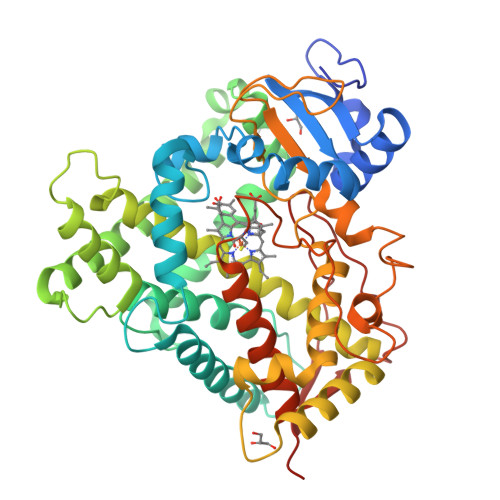
Cytochrome P450 2C9 structureClick to view 3D structureCytochrome P450 2C9P11712HumansPredicted (SEA)
Prediction Confidence Score
0.169
Applicability Domain
0.183 Low confidence
Statistical Significance
0.9896
Supporting Reference Compounds
1245
E-value
7704.11
Sodium/iodide cotransporter structureClick to view 3D structureSodium/iodide cotransporterQ63008Rattus norvegicusPredicted (SEA)
Prediction Confidence Score
0.168
Applicability Domain
0.168 Low confidence
Statistical Significance
0.1696
Supporting Reference Compounds
1
E-value
1320.71
Peptidoglycan D,D-transpeptidase FtsI structureClick to view 3D structurePeptidoglycan D,D-transpeptidase FtsIQ51504Pseudomonas aeruginosaPredicted (SEA)
Prediction Confidence Score
0.168
Applicability Domain
0.168 Low confidence
Statistical Significance
0.0142
Supporting Reference Compounds
1
E-value
110.468
Cytochrome P450 2C19 structureClick to view 3D structureCytochrome P450 2C19P33261HumansPredicted (SEA)
Prediction Confidence Score
0.167
Applicability Domain
0.183 Low confidence
Statistical Significance
0.9853
Supporting Reference Compounds
825
E-value
7670.72
Penicillin-binding protein 1A structureClick to view 3D structurePenicillin-binding protein 1AQ07806Pseudomonas aeruginosa (strain ATCC 15692 / PAO1 / 1C / PRS 101 / LMG 12228)Predicted (SEA)
Prediction Confidence Score
0.166
Applicability Domain
0.174 Low confidence
Statistical Significance
0.0042
Supporting Reference Compounds
2
E-value
32.6188
Click to view 3D structureProstaglandin D2 receptorQ13258HumansPredicted (SEA)
Prediction Confidence Score
0.166
Applicability Domain
0.18 Low confidence
Statistical Significance
0.7237
Supporting Reference Compounds
81
E-value
5634.34
Glutamate receptor ionotropic, kainate 1 structureClick to view 3D structureGlutamate receptor ionotropic, kainate 1P22756Rattus norvegicusPredicted (SEA)
Prediction Confidence Score
0.166
Applicability Domain
0.183 Low confidence
Statistical Significance
0.1511
Supporting Reference Compounds
45
E-value
1176.3
Concentrations
Not Available
External Links
DrugBank IDDBSALT001354
HMDB IDNot Available
FooDB IDNot Available
Phenol Explorer IDNot Available
KNApSAcK IDNot Available
BiGG IDNot Available
BioCyc IDNot Available
METLIN IDNot Available
PDB IDNot Available
Wikipedia LinkCefpodoxime
Chemspider IDNot Available
ChEBI ID3505
PubChem Compound ID6526396
Kegg Compound IDC08115
YMDB IDNot Available
ECMDB IDNot Available
References
Synthesis ReferenceNot Available
MSDSNot Available
General ReferencesNot Available