Kanamycin B (CED0011570)

Record Information
Version1.0
Creation Date2016-05-22 03:42:15 UTC
Update Date2026-05-14 19:35:54 UTC
SynCED IDCED0011570
Secondary Accession Numbers
  • CHEM016746
Identification
Common NameKanamycin B
ClassSmall Molecule
Description
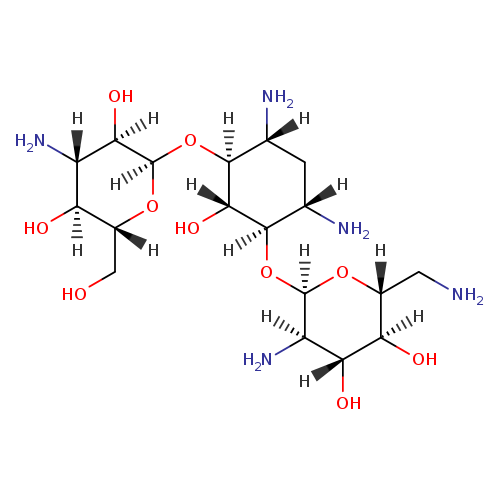
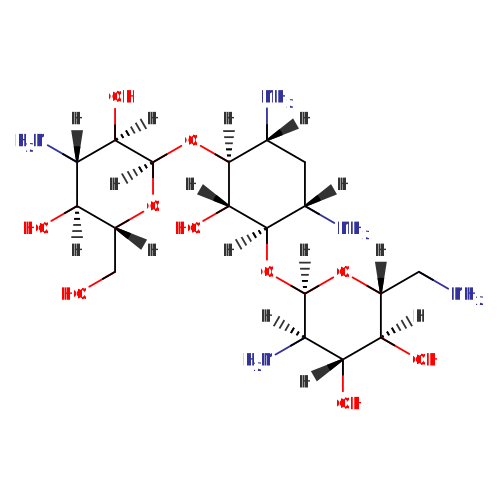
Kanamycin B is an organic compound with the formula C18H37N5O10 and an average molecular weight of 483.51 g/mol. Kanamycin B belongs to the carbohydrates and carbohydrate conjugates, a subclass of organooxygen compounds within the organic compounds. It is found in or released from one recorded source: healthcare, pharmaceuticals & veterinary products (Antibiotics). Recorded exposure routes for this compound include inhalation and oral administration.
Contaminant TypeNot Available
Chemical Structure
Synonyms
ValueSource
2'-Amino-2'-deoxykanamycinChEBI
Nebramycin factor 5ChEBI
Nebramycin VChEBI
O-3-Amino-3-deoxy-alpha-D-glucopyranosyl-(1->4)-O-(2,6-diamino-2,6-dideoxy-alpha-D-glucopyranosyl-(1->6))-2-deoxy-D-streptamineChEBI
Kanamycin bKegg
O-3-Amino-3-deoxy-a-D-glucopyranosyl-(1->4)-O-(2,6-diamino-2,6-dideoxy-a-D-glucopyranosyl-(1->6))-2-deoxy-D-streptamineGenerator
O-3-Amino-3-deoxy-α-D-glucopyranosyl-(1->4)-O-(2,6-diamino-2,6-dideoxy-α-D-glucopyranosyl-(1->6))-2-deoxy-D-streptamineGenerator
BekanamycinChEBI
KanendomycinMeSH
Bekanamycin sulfate (1:1)MeSH
AminodeoxykanamycinMeSH
Bekanamycin sulfateMeSH
Chemical FormulaC18H37N5O10
Average Molecular Mass483.514 g/mol
Monoisotopic Mass483.254 g/mol
CAS Registry Number4696-76-8
IUPAC Name(2S,3R,4S,5S,6R)-4-amino-2-{[(1S,2S,3R,4S,6R)-4,6-diamino-3-{[(2R,3R,4R,5S,6R)-3-amino-6-(aminomethyl)-4,5-dihydroxyoxan-2-yl]oxy}-2-hydroxycyclohexyl]oxy}-6-(hydroxymethyl)oxane-3,5-diol
Traditional Name(2S,3R,4S,5S,6R)-4-amino-2-{[(1S,2S,3R,4S,6R)-4,6-diamino-3-{[(2R,3R,4R,5S,6R)-3-amino-6-(aminomethyl)-4,5-dihydroxyoxan-2-yl]oxy}-2-hydroxycyclohexyl]oxy}-6-(hydroxymethyl)oxane-3,5-diol
SMILES[H][C@]1(N)C[C@@]([H])(N)[C@]([H])(O[C@@]2([H])O[C@]([H])(CO)[C@@]([H])(O)[C@]([H])(N)[C@@]2([H])O)[C@@]([H])(O)[C@]1([H])O[C@@]1([H])O[C@]([H])(CN)[C@@]([H])(O)[C@]([H])(O)[C@@]1([H])N
InChI IdentifierInChI=1S/C18H37N5O10/c19-2-6-11(26)12(27)9(23)17(30-6)32-15-4(20)1-5(21)16(14(15)29)33-18-13(28)8(22)10(25)7(3-24)31-18/h4-18,24-29H,1-3,19-23H2/t4-,5+,6+,7+,8-,9+,10+,11+,12+,13+,14-,15+,16-,17+,18+/m0/s1
InChI KeySKKLOUVUUNMCJE-FQSMHNGLSA-N
Chemical Taxonomy
Description Belongs to the class of organic compounds known as 4,6-disubstituted 2-deoxystreptamines. These are 2-deoxystreptamine aminoglycosides that are glycosidically linked to a pyranose of furanose unit at the C4- and C6-positions.
KingdomOrganic compounds
Super ClassOrganic oxygen compounds
ClassOrganooxygen compounds
Sub ClassCarbohydrates and carbohydrate conjugates
Direct Parent4,6-disubstituted 2-deoxystreptamines
Alternative Parents
Substituents
  • 4,6-disubstituted 2-deoxystreptamine
  • Glycosyl compound
  • O-glycosyl compound
  • Aminocyclitol or derivatives
  • Cyclohexanol
  • Cyclohexylamine
  • Cyclitol or derivatives
  • Monosaccharide
  • Oxane
  • Cyclic alcohol
  • 1,2-aminoalcohol
  • Secondary alcohol
  • Organoheterocyclic compound
  • Acetal
  • Oxacycle
  • Alcohol
  • Organonitrogen compound
  • Primary aliphatic amine
  • Hydrocarbon derivative
  • Organopnictogen compound
  • Organic nitrogen compound
  • Amine
  • Primary alcohol
  • Primary amine
  • Aliphatic heteromonocyclic compound
Molecular FrameworkAliphatic heteromonocyclic compounds
External Descriptors
Biological Properties
StatusDetected and Not Quantified
OriginNot Available
Cellular LocationsNot Available
Biofluid LocationsNot Available
Tissue LocationsNot Available
ApplicationsNot Available
Biological RolesNot Available
Chemical RolesNot Available
Organoleptic EffectsNot Available
Physical Properties
StateNot Available
AppearanceNot Available
Experimental Properties
PropertyValue
Melting PointNot Available
Boiling PointNot Available
SolubilityNot Available
Predicted Properties
PropertyValueSource
Water Solubility75.9 g/LALOGPS
logP-3ALOGPS
logP-7.2ChemAxon
logS-0.8ALOGPS
pKa (Strongest Acidic)12.49ChemAxon
pKa (Strongest Basic)9.76ChemAxon
Physiological Charge5ChemAxon
Hydrogen Acceptor Count15ChemAxon
Hydrogen Donor Count11ChemAxon
Polar Surface Area288.4 ŲChemAxon
Rotatable Bond Count6ChemAxon
Refractivity107.79 m³·mol⁻¹ChemAxon
Polarizability47.72 ųChemAxon
Number of Rings3ChemAxon
BioavailabilityNoChemAxon
Rule of FiveNoChemAxon
Ghose FilterNoChemAxon
Veber's RuleNoChemAxon
MDDR-like RuleYesChemAxon
Spectra
Spectra
Spectrum TypeDescriptionSplash KeyDeposition DateView
Predicted GC-MSPredicted GC-MS SpectrumNot AvailableNot AvailableView Spectrum
Predicted LC-MS/MSPredicted LC-MS/MS Spectrumsplash10-0aw9-0219800000-8bffd56b3f946b4cdee9Not AvailableView Spectrum
Predicted LC-MS/MSPredicted LC-MS/MS Spectrumsplash10-08fr-0917100000-f152e80b7cd2e86983e6Not AvailableView Spectrum
Predicted LC-MS/MSPredicted LC-MS/MS Spectrumsplash10-08fv-5914000000-9311fd0d8e2f4f2007c8Not AvailableView Spectrum
Predicted LC-MS/MSPredicted LC-MS/MS Spectrumsplash10-001r-9366600000-242a7eebeb0e0273b309Not AvailableView Spectrum
Predicted LC-MS/MSPredicted LC-MS/MS Spectrumsplash10-006x-9536300000-520e4218f16dc8c4b90dNot AvailableView Spectrum
Predicted LC-MS/MSPredicted LC-MS/MS Spectrumsplash10-0udi-5793000000-2ae8be694bf4f51aa2b2Not AvailableView Spectrum
1D NMR13C NMR Spectrum (1D, H2O, predicted)Not AvailableNot AvailableView Spectrum
1D NMR1H NMR Spectrum (1D, H2O, predicted)Not AvailableNot AvailableView Spectrum
Toxicity Profile
Toxicity Values
Toxicity ValueOrganismDose DescriptorRoute of ExposurePredicted or ExperimentalToxicity RatingReference
7602.0 Log mg/kg [4300:14000]RatLD50oralpredictedNot AvailableNot Available
Toxicity / Toxin ClassNot Available
Mechanism of ToxicityNot Available
Carcinogenicity (IARC Classification)Not Available
Minimum Risk LevelNot Available
SymptomsNot Available
TreatmentNot Available
Health Effects
Health EffectRelationshipDirectionDescriptionReference
Exposure Sources
Source IDSourceSectorReference
CEDs000306Antibiotics?Antibiotics are synthetic or semi-synthetic compounds used to treat bacterial infections in humans and animals.Healthcare, pharmaceuticals & veterinary productsNot Available
CEDs000511Conductors Or Conductive Bodies Characterised By The Conductive Materials?Conductors, or conductive bodies, are materials that allow the flow of electrical current, typically made from metals such as copper, aluminum, or silver.Electrical & Electronic EquipmentPubChem
CEDs000518Electrically Stimulated Smoking Devices?Electrically stimulated smoking devices, commonly known as e-cigarettes or vape pens, utilize electrical components to heat a liquid solution, often containing nicotine, flavorings, and other additives, to produce an aerosol for inhalation.Electrical & Electronic EquipmentPubChem
CEDs000545Food Preservation?Food preservation often involves the use of synthetic chemicals, such as preservatives, flavor enhancers, and color additives, to extend shelf life and enhance the sensory qualities of food products.Food, food processing & cookwarePubChem
CEDs000569Tobacco Smoke Filters?Tobacco smoke filters are designed to reduce the inhalation of harmful substances in cigarette smoke, including tar and other particulate matter.Household cleaning & consumer productsPubChem
CEDs000580Manufacture Preparation Of Tobacco Products?The manufacture and preparation of tobacco products involve various processes that can result in the introduction of synthetic chemicals into the environment.Industrial manufacturing & chemical processingPubChem
CEDs000581Paper Making Machines?Paper making machines utilize various synthetic chemicals throughout the production process, including additives, coatings, and bleaching agents.Industrial manufacturing & chemical processingPubChem
CEDs000632Apparel?Apparel production often involves the use of various synthetic chemicals, including dyes, finishing agents, and preservatives.Textiles, leather & furnishingsPubChem
CEDs000696Nanotechnology?Nanotechnology involves the manipulation of materials at the molecular or atomic level, typically within the range of 1 to 100 nanometers.Industrial manufacturing & chemical processingPubChem
CEDs000740Paper?Paper production involves the processing of wood fibers and the use of various chemicals, which can lead to synthetic chemical contamination.Paper, pulp & fiber productsPubChem
CEDs000744Water, Wastewater, & Sewage Treatment?Water, wastewater, and sewage treatment processes are critical for managing and mitigating pollutants in water systems.Wastewater, sanitation & biosolidsPubChem
Pathways
0 pathwaysPathway Source: PathBank

No pathways found

No metabolic pathways have been associated with this synthetic chemical

Targets
StructureProteinUniProt IDOrganismRelationshipDetails
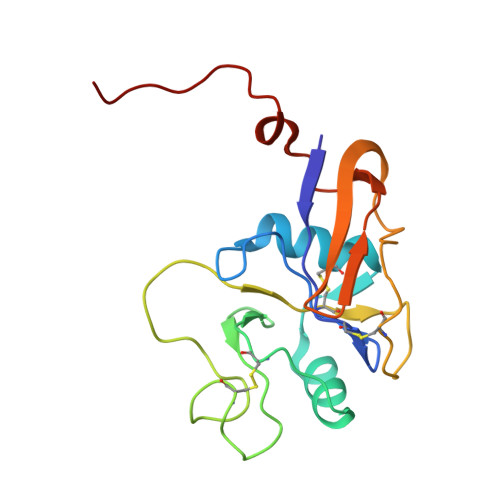
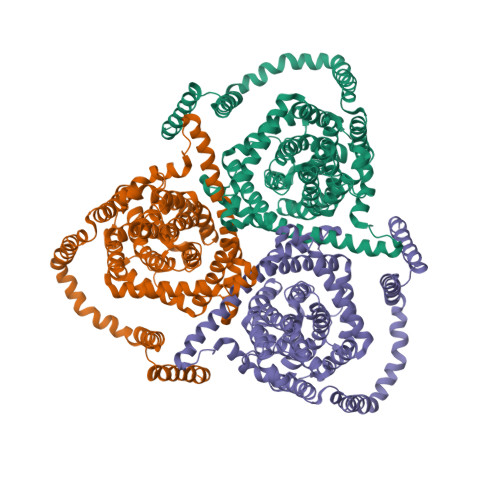
Gap junction beta-2 protein structureClick to view 3D structureGap junction beta-2 proteinP29033HumansPredicted (SEA)
Prediction Confidence Score
0.687
Applicability Domain
0.881
Statistical Significance
1.00e-05
Supporting Reference Compounds
2
E-value
0.0778492
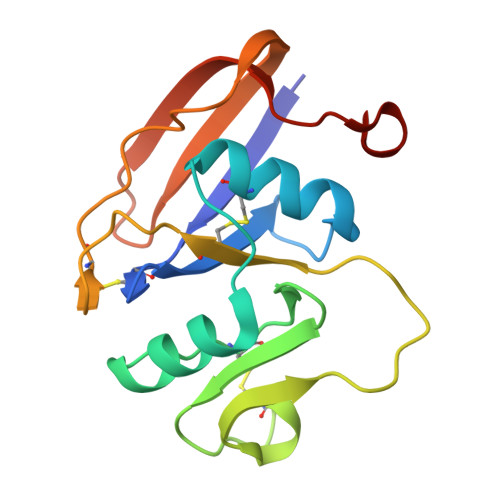
Beta-ketoacyl-[acyl-carrier-protein] synthase III structureClick to view 3D structureBeta-ketoacyl-[acyl-carrier-protein] synthase IIIP0A6R0Escherichia coli (strain K12)Predicted (SEA)
Prediction Confidence Score
0.644
Applicability Domain
1.0
Statistical Significance
1.00e-05
Supporting Reference Compounds
3
E-value
0.0778492
Click to view 3D structureHuman immunodeficiency virus type 1 REVQ77Y21Human immunodeficiency virus 1Predicted (SEA)
Prediction Confidence Score
0.583
Applicability Domain
0.761
Statistical Significance
1.00e-05
Supporting Reference Compounds
4
E-value
0.0778492
Click to view 3D structure3-oxoacyl-[acyl-carrier-protein] synthase 3C3TDZ2Escherichia coliPredicted (SEA)
Prediction Confidence Score
0.517
Applicability Domain
1.0
Statistical Significance
1.00e-05
Supporting Reference Compounds
2
E-value
0.0778492
Gap junction alpha-1 protein structureClick to view 3D structureGap junction alpha-1 proteinP17302HumansPredicted (SEA)
Prediction Confidence Score
0.477
Applicability Domain
0.477
Statistical Significance
5.00e-05
Supporting Reference Compounds
1
E-value
0.389246
CD44 antigen structureClick to view 3D structureCD44 antigenP16070HumansPredicted (SEA)
Prediction Confidence Score
0.299
Applicability Domain
0.299 Low confidence
Statistical Significance
2.00e-04
Supporting Reference Compounds
1
E-value
1.55698
CD44 antigen structureClick to view 3D structureCD44 antigenP15379Mus musculusPredicted (SEA)
Prediction Confidence Score
0.299
Applicability Domain
0.299 Low confidence
Statistical Significance
2.00e-04
Supporting Reference Compounds
1
E-value
1.55698
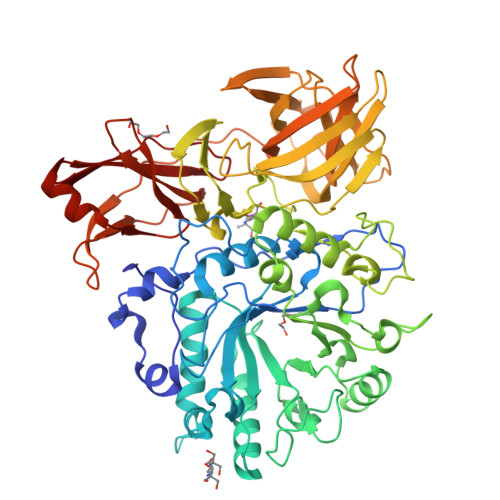
Endo-beta-N-acetylglucosaminidase structureClick to view 3D structureEndo-beta-N-acetylglucosaminidaseQ9ZB22Arthrobacter protophormiaePredicted (SEA)
Prediction Confidence Score
0.292
Applicability Domain
0.292 Low confidence
Statistical Significance
1.30e-04
Supporting Reference Compounds
1
E-value
1.01204
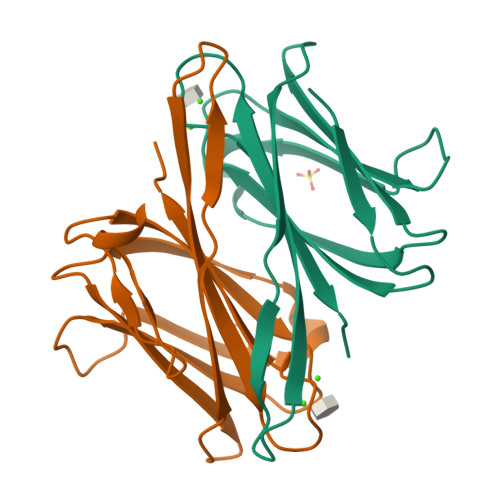
Lectin structureClick to view 3D structureLectinB4EH87Burkholderia cenocepacia (strain ATCC BAA-245 / DSM 16553 / LMG 16656/ NCTC 13227 / J2315 / CF5610) (Burkholderia cepacia (strain J2315))Predicted (SEA)
Prediction Confidence Score
0.289
Applicability Domain
0.34
Statistical Significance
5.50e-04
Supporting Reference Compounds
3
E-value
4.28171
Type 1 fimbrin D-mannose specific adhesin structureClick to view 3D structureType 1 fimbrin D-mannose specific adhesinP08191Escherichia coli K-12Predicted (SEA)
Prediction Confidence Score
0.286
Applicability Domain
0.34
Statistical Significance
7.10e-04
Supporting Reference Compounds
4
E-value
5.52729
Heparanase structureClick to view 3D structureHeparanaseQ9Y251HumansPredicted (SEA)
Prediction Confidence Score
0.284
Applicability Domain
0.761
Statistical Significance
1.40e-04
Supporting Reference Compounds
11
E-value
1.08989
Click to view 3D structureAlpha-amylaseQ7M328Sus scrofa domesticusPredicted (SEA)
Prediction Confidence Score
0.268
Applicability Domain
0.268 Low confidence
Statistical Significance
1.50e-04
Supporting Reference Compounds
1
E-value
1.16774
Click to view 3D structureN-acetyllactosaminide alpha-1,3-galactosyltransferaseP50127Sus scrofaPredicted (SEA)
Prediction Confidence Score
0.267
Applicability Domain
0.267 Low confidence
Statistical Significance
6.80e-04
Supporting Reference Compounds
1
E-value
5.29375
Click to view 3D structureKiller cell lectin-like receptor subfamily B member 1AP27471Rattus norvegicusPredicted (SEA)
Prediction Confidence Score
0.265
Applicability Domain
0.303
Statistical Significance
2.00e-04
Supporting Reference Compounds
2
E-value
1.55698
Galectin-3 structureClick to view 3D structureGalectin-3P17931HumansPredicted (SEA)
Prediction Confidence Score
0.258
Applicability Domain
0.345
Statistical Significance
0.0017
Supporting Reference Compounds
23
E-value
13.5458
Click to view 3D structureAminoglycoside acetyltransferaseQ70E71Enterococcus duransPredicted (SEA)
Prediction Confidence Score
0.231
Applicability Domain
0.231 Low confidence
Statistical Significance
0.0022
Supporting Reference Compounds
1
E-value
17.5161
Cytidine deaminase structureClick to view 3D structureCytidine deaminaseP56389Mus musculusPredicted (SEA)
Prediction Confidence Score
0.222
Applicability Domain
0.241 Low confidence
Statistical Significance
0.0039
Supporting Reference Compounds
5
E-value
30.2833
Click to view 3D structureSucrase-isomaltase, intestinalP23739Rattus norvegicusPredicted (SEA)
Prediction Confidence Score
0.221
Applicability Domain
0.291 Low confidence
Statistical Significance
0.0012
Supporting Reference Compounds
25
E-value
9.49761
Carbonic anhydrase 12 structureClick to view 3D structureCarbonic anhydrase 12O43570HumansPredicted (SEA)
Prediction Confidence Score
0.219
Applicability Domain
0.235 Low confidence
Statistical Significance
0.2971
Supporting Reference Compounds
332
E-value
2313.13
Transient receptor potential cation channel subfamily V member 1 structureClick to view 3D structureTransient receptor potential cation channel subfamily V member 1Q8NER1HumansPredicted (SEA)
Prediction Confidence Score
0.219
Applicability Domain
0.723
Statistical Significance
0.1918
Supporting Reference Compounds
104
E-value
1493.3
PA-I galactophilic lectin structureClick to view 3D structurePA-I galactophilic lectinQ05097Pseudomonas aeruginosa (strain ATCC 15692 / PAO1 / 1C / PRS 101 / LMG12228)Predicted (SEA)
Prediction Confidence Score
0.219
Applicability Domain
0.34
Statistical Significance
9.60e-04
Supporting Reference Compounds
4
E-value
7.47353
Ribonuclease pancreatic structureClick to view 3D structureRibonuclease pancreaticP61823Bos taurusPredicted (SEA)
Prediction Confidence Score
0.217
Applicability Domain
0.217 Low confidence
Statistical Significance
0.0032
Supporting Reference Compounds
1
E-value
24.6782
Solute carrier family 28 member 3 structureClick to view 3D structureSolute carrier family 28 member 3Q9HAS3HumansPredicted (SEA)
Prediction Confidence Score
0.217
Applicability Domain
0.225 Low confidence
Statistical Significance
0.0054
Supporting Reference Compounds
3
E-value
42.2721
Adenosine deaminase structureClick to view 3D structureAdenosine deaminaseP56658Bos taurusPredicted (SEA)
Prediction Confidence Score
0.216
Applicability Domain
0.242 Low confidence
Statistical Significance
0.0079
Supporting Reference Compounds
17
E-value
61.8123
Cytidine deaminase structureClick to view 3D structureCytidine deaminaseP32320HumansPredicted (SEA)
Prediction Confidence Score
0.215
Applicability Domain
0.23 Low confidence
Statistical Significance
0.0038
Supporting Reference Compounds
4
E-value
29.5049
Concentrations
Not Available
External Links
DrugBank IDDB13673
HMDB IDNot Available
FooDB IDNot Available
Phenol Explorer IDNot Available
KNApSAcK IDC00018692
BiGG IDNot Available
BioCyc IDNot Available
METLIN IDNot Available
PDB IDNot Available
Wikipedia LinkBekanamycin
Chemspider IDNot Available
ChEBI ID28098
PubChem Compound ID439318
Kegg Compound IDC00825
YMDB IDNot Available
ECMDB IDM2MDB005485
References
Synthesis ReferenceNot Available
MSDSNot Available
General ReferencesNot Available