Troxipide (CED0022403)

Record Information
Version1.0
Creation Date2016-05-22 03:47:53 UTC
Update Date2026-08-19 12:09:34 UTC
SynCED IDCED0022403
Secondary Accession Numbers
  • CHEM016928
Identification
Common NameTroxipide
ClassSmall Molecule
Description
Troxipide is an organic compound with the chemical formula C15H22N2O4 and an average molecular weight of 294.35 g/mol. Troxipide belongs to the anisoles, a subclass of phenol ethers within the organic compounds. It is further classified within the superclass of benzenoids. The compound is found in or released from 13 recorded sources across several categories. Within electrical and electronic equipment, it is associated with antennas, discharge lamps, discharge tubes with liquid pool cathodes, electric switches, and electrodes, among two other sources. In the sector of building and construction, it is linked to fencing as well as floors, stairs, and ramps. Additionally, troxipide is identified in food, food processing, and cookware, specifically regarding food preservation and the processing of meats. It is also found in household cleaning and consumer products, specifically in match receptacles or boxes.
Contaminant TypeNot Available
Chemical Structure
Synonyms
ValueSource
AplaceKegg
Troxipide hydrochlorideMeSH
3-(3,4,5-trimethoxybenzamido)PiperidineMeSH
KU 54MeSH
KU-54MeSH
3,4,5-Trimethoxy-N-(piperidin-3-yl)benzene-1-carboximidateGenerator
Chemical FormulaC15H22N2O4
Average Molecular Mass294.351 g/mol
Monoisotopic Mass294.158 g/mol
CAS Registry Number30751-05-4
IUPAC Name3,4,5-trimethoxy-N-(piperidin-3-yl)benzene-1-carboximidic acid
Traditional Nameaplace
SMILESCOC1=CC(=CC(OC)=C1OC)C(O)=NC1CCCNC1
InChI IdentifierInChI=1S/C15H22N2O4/c1-19-12-7-10(8-13(20-2)14(12)21-3)15(18)17-11-5-4-6-16-9-11/h7-8,11,16H,4-6,9H2,1-3H3,(H,17,18)
InChI KeyYSIITVVESCNIPR-UHFFFAOYSA-N
Chemical Taxonomy
Description Belongs to the class of organic compounds known as anisoles. These are organic compounds containing a methoxybenzene or a derivative thereof.
KingdomOrganic compounds
Super ClassBenzenoids
ClassPhenol ethers
Sub ClassAnisoles
Direct ParentAnisoles
Alternative Parents
Substituents
  • Phenoxy compound
  • Anisole
  • Methoxybenzene
  • Alkyl aryl ether
  • Monocyclic benzene moiety
  • Piperidine
  • Azacycle
  • Carboximidic acid
  • Carboximidic acid derivative
  • Secondary aliphatic amine
  • Ether
  • Secondary amine
  • Propargyl-type 1,3-dipolar organic compound
  • Organic 1,3-dipolar compound
  • Organoheterocyclic compound
  • Organonitrogen compound
  • Organooxygen compound
  • Amine
  • Hydrocarbon derivative
  • Organic oxygen compound
  • Organic nitrogen compound
  • Organopnictogen compound
  • Aromatic heteromonocyclic compound
Molecular FrameworkAromatic heteromonocyclic compounds
External DescriptorsNot Available
Biological Properties
StatusDetected and Not Quantified
OriginNot Available
Cellular LocationsNot Available
Biofluid LocationsNot Available
Tissue LocationsNot Available
ApplicationsNot Available
Biological RolesNot Available
Chemical RolesNot Available
Organoleptic EffectsNot Available
Physical Properties
StateNot Available
AppearanceNot Available
Experimental Properties
PropertyValue
Melting PointNot Available
Boiling PointNot Available
SolubilityNot Available
Predicted Properties
PropertyValueSource
Water Solubility0.33 g/LALOGPS
logP1.4ALOGPS
logP-0.24ChemAxon
logS-3ALOGPS
pKa (Strongest Acidic)7.58ChemAxon
pKa (Strongest Basic)9.79ChemAxon
Physiological Charge2ChemAxon
Hydrogen Acceptor Count6ChemAxon
Hydrogen Donor Count2ChemAxon
Polar Surface Area72.31 ŲChemAxon
Rotatable Bond Count5ChemAxon
Refractivity79.88 m³·mol⁻¹ChemAxon
Polarizability32.1 ųChemAxon
Number of Rings2ChemAxon
BioavailabilityYesChemAxon
Rule of FiveYesChemAxon
Ghose FilterYesChemAxon
Veber's RuleNoChemAxon
MDDR-like RuleNoChemAxon
Spectra
Spectra
Spectrum TypeDescriptionSplash KeyDeposition DateView
Predicted LC-MS/MSPredicted LC-MS/MS Spectrumsplash10-0002-3090000000-a2892a3be98188a419d4Not AvailableView Spectrum
Predicted LC-MS/MSPredicted LC-MS/MS Spectrumsplash10-001j-9140000000-81c13fccf2f72337a5a9Not AvailableView Spectrum
Predicted LC-MS/MSPredicted LC-MS/MS Spectrumsplash10-001l-9200000000-ae03a360e84a10a97928Not AvailableView Spectrum
Predicted LC-MS/MSPredicted LC-MS/MS Spectrumsplash10-0006-0090000000-d4219ae88556f5dae426Not AvailableView Spectrum
Predicted LC-MS/MSPredicted LC-MS/MS Spectrumsplash10-002f-0290000000-c73813f200d6b6cf9cebNot AvailableView Spectrum
Predicted LC-MS/MSPredicted LC-MS/MS Spectrumsplash10-0ffw-9840000000-9a5323ed6e53cb879299Not AvailableView Spectrum
Toxicity Profile
Toxicity Values
Toxicity ValueOrganismDose DescriptorRoute of ExposurePredicted or ExperimentalToxicity RatingReference
1151.0 Log mg/kg [650:2000]RatLD50oralpredictedNot AvailableNot Available
Toxicity / Toxin ClassNot Available
Mechanism of ToxicityNot Available
Carcinogenicity (IARC Classification)Not Available
Minimum Risk LevelNot Available
SymptomsNot Available
TreatmentNot Available
Health Effects
Health EffectRelationshipDirectionDescriptionReference
Exposure Sources
Source IDSourceSectorReference
CEDs000496Fencing?Fencing materials, particularly those used in construction and landscaping, can be a source of synthetic chemical contamination due to the treatments and coatings applied for durability and weather resistance.Building & ConstructionPubChem
CEDs000497Floors?Floors in built environments can be a significant source of synthetic chemical contamination due to the materials and finishes used in their construction.Building & ConstructionPubChem
CEDs000500Stairs And Ramps?Stairs and ramps in construction are often treated with various synthetic chemicals to enhance durability, slip resistance, and weather resistance.Building & ConstructionPubChem
CEDs000506Antennas?Antennas, commonly used in communication technologies, can be a source of synthetic chemical contamination through the materials and coatings used in their construction.Electrical & Electronic EquipmentPubChem
CEDs000514Discharge Lamps?Discharge lamps, including fluorescent and high-intensity discharge (HID) lamps, are commonly used for lighting applications due to their energy efficiency and brightness.Electrical & Electronic EquipmentPubChem
CEDs000515Discharge Tubes With Liquid Pool Cathodes?Discharge tubes with liquid pool cathodes are devices that utilize a liquid metal as the cathode in gas discharge applications.Electrical & Electronic EquipmentPubChem
CEDs000517Electric Switches?Electric switches, integral components in numerous devices, can be a source of synthetic chemical contamination due to the materials and manufacturing processes involved in their production.Electrical & Electronic EquipmentPubChem
CEDs000519Electrodes?Electrodes, used in various electrical and electronic applications, can be a source of synthetic chemical contamination due to the materials from which they are constructed and the processes involved in their manufacturing.Electrical & Electronic EquipmentPubChem
CEDs000525Line Transmission Systems?Line Transmission Systems, commonly used for the distribution of electrical energy, can be a source of synthetic chemical contamination through the insulation materials and coatings utilized in their construction.Electrical & Electronic EquipmentPubChem
CEDs000530Radio Transmission Systems?Radio transmission systems utilize a variety of synthetic chemicals in their manufacturing and maintenance processes.Electrical & Electronic EquipmentPubChem
CEDs000545Food Preservation?Food preservation often involves the use of synthetic chemicals, such as preservatives, flavor enhancers, and color additives, to extend shelf life and enhance the sensory qualities of food products.Food, food processing & cookwarePubChem
CEDs000552Processing Meats?Processing meats can lead to synthetic chemical contamination primarily through the use of additives and preservatives.Food, food processing & cookwarePubChem
CEDs000558Match Receptables Or Boxes?Match receptacles or boxes, commonly used for storing matches, can be a source of synthetic chemical contamination due to the materials used in their construction and the chemicals involved in match production.Household cleaning & consumer productsPubChem
CEDs000579Manufacture Of Iron Or Steel?The manufacture of iron or steel involves various processes, including smelting, refining, and alloying, which can result in the release of synthetic chemicals and contaminants.Industrial manufacturing & chemical processingPubChem
CEDs000580Manufacture Preparation Of Tobacco Products?The manufacture and preparation of tobacco products involve various processes that can result in the introduction of synthetic chemicals into the environment.Industrial manufacturing & chemical processingPubChem
CEDs000581Paper Making Machines?Paper making machines utilize various synthetic chemicals throughout the production process, including additives, coatings, and bleaching agents.Industrial manufacturing & chemical processingPubChem
CEDs000589Life Buoys?Life buoys, commonly used in marine environments for safety and rescue operations, can be a source of synthetic chemical contamination due to the materials used in their production.Marine, shipping & aquaculturePubChem
CEDs000630Toys?Toys, particularly those made from synthetic materials such as plastics, can be a source of chemical contamination due to the presence of various additives and compounds used in their production.Recreation & sports surfacesPubChem
CEDs000632Apparel?Apparel production often involves the use of various synthetic chemicals, including dyes, finishing agents, and preservatives.Textiles, leather & furnishingsPubChem
CEDs000642Footwear?Footwear production often involves the use of various synthetic chemicals, such as adhesives, dyes, and treatments, which can contribute to environmental contamination.Textiles, leather & furnishingsPubChem
CEDs000650Purses Luggage Hand Bags?Purses, luggage, and handbags are often manufactured using synthetic materials such as polyvinyl chloride (PVC), polyurethane, and various types of nylon.Textiles, leather & furnishingsPubChem
CEDs000651Purses Money Bags Wallets?Purses, money bags, and wallets are often manufactured using synthetic materials, including plastics, polyurethanes, and various treated fabrics.Textiles, leather & furnishingsPubChem
CEDs000653Sewing?Sewing processes often involve the use of various synthetic chemicals, which can become sources of contamination in the environment.Textiles, leather & furnishingsPubChem
CEDs000671Airplanes And Helicopters?Airplanes and helicopters are significant sources of synthetic chemical contamination primarily through the use of aviation fuels, lubricants, and de-icing agents.Aviation & AerospacePubChem
CEDs000685Ceramics?Ceramics can be a source of synthetic chemical contamination through various additives and processing agents used in their production.Building & ConstructionPubChem
CEDs000695Treatment Of Milk Or Cream?The treatment of milk or cream involves various processes such as pasteurization, homogenization, and the addition of preservatives to enhance shelf life and safety.Food, food processing & cookwarePubChem
CEDs000696Nanotechnology?Nanotechnology involves the manipulation of materials at the molecular or atomic level, typically within the range of 1 to 100 nanometers.Industrial manufacturing & chemical processingPubChem
CEDs000697Submarines?Submarines, while essential for military and research purposes, can be a source of synthetic chemical contamination due to their use of various industrial chemicals.Marine, shipping & aquaculturePubChem
CEDs000705Bookbinding?Bookbinding involves the use of various synthetic chemicals, including adhesives, inks, and coatings, which can contribute to environmental contamination.Paper, pulp & fiber productsPubChem
CEDs000717Fountain Pens?Fountain pens utilize a liquid ink that often contains synthetic chemicals, including dyes, pigments, and solvents, which can contribute to environmental contamination.Paper, pulp & fiber productsPubChem
CEDs000720Ink Reservoir Pens2?Ink reservoir pens are writing instruments that utilize a reservoir to store ink, which is often composed of synthetic dyes, solvents, and additives.Paper, pulp & fiber productsPubChem
CEDs000739Inks?Inks are complex mixtures composed of pigments or dyes, solvents, resins, and additives used primarily for printing and writing applications.Paper, pulp & fiber productsPubChem
CEDs000740Paper?Paper production involves the processing of wood fibers and the use of various chemicals, which can lead to synthetic chemical contamination.Paper, pulp & fiber productsPubChem
CEDs000744Water, Wastewater, & Sewage Treatment?Water, wastewater, and sewage treatment processes are critical for managing and mitigating pollutants in water systems.Wastewater, sanitation & biosolidsPubChem
Pathways
0 pathwaysPathway Source: PathBank

No pathways found

No metabolic pathways have been associated with this synthetic chemical

Targets
StructureProteinUniProt IDOrganismRelationshipDetails
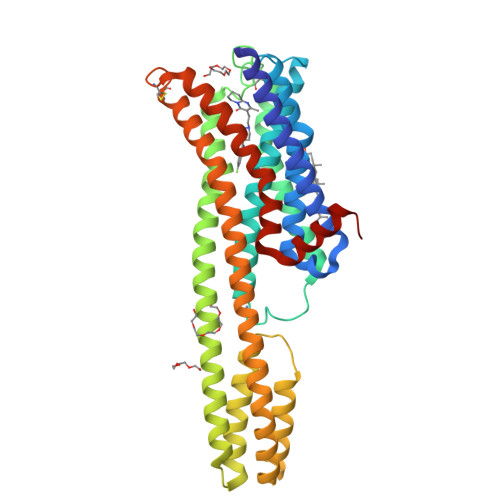
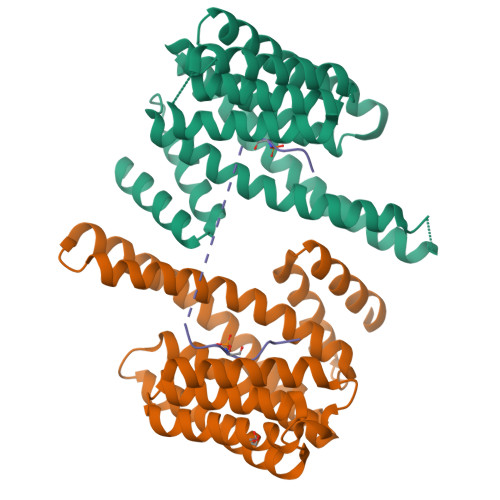
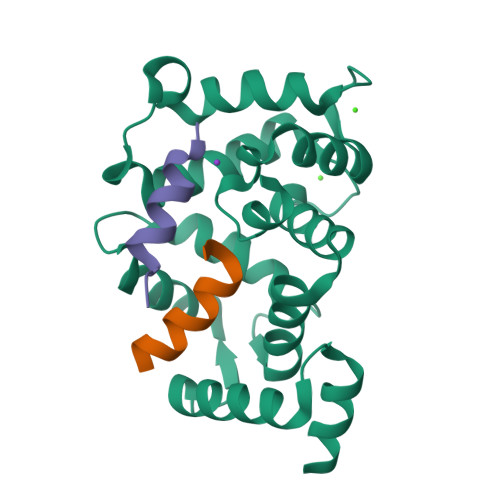
Click to view 3D structureEquilibrative nucleoside transporter 2O54699Rattus norvegicusPredicted (SEA)
Prediction Confidence Score
0.321
Applicability Domain
0.321
Statistical Significance
1.00e-03
Supporting Reference Compounds
1
E-value
7.78492
5-hydroxytryptamine receptor 2C structureClick to view 3D structure5-hydroxytryptamine receptor 2CP28335HumansPredicted (SEA)
Prediction Confidence Score
0.288
Applicability Domain
0.364
Statistical Significance
0.0904
Supporting Reference Compounds
823
E-value
703.679
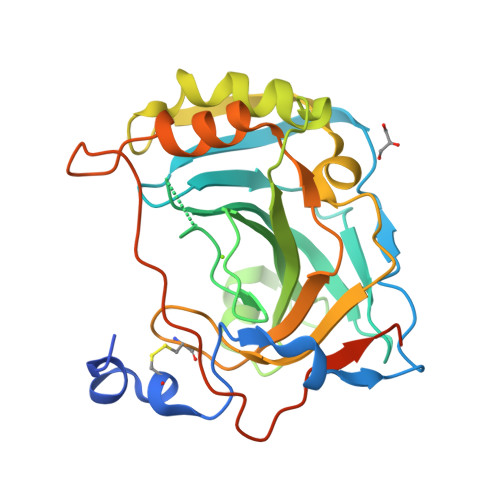
Carbonic anhydrase 2 structureClick to view 3D structureCarbonic anhydrase 2P00918HumansPredicted (SEA)
Prediction Confidence Score
0.285
Applicability Domain
0.316
Statistical Significance
0.0655
Supporting Reference Compounds
472
E-value
510.146
5-hydroxytryptamine receptor 2B structureClick to view 3D structure5-hydroxytryptamine receptor 2BP41595HumansPredicted (SEA)
Prediction Confidence Score
0.283
Applicability Domain
0.364
Statistical Significance
0.0824
Supporting Reference Compounds
686
E-value
641.244
5-hydroxytryptamine receptor 2A structureClick to view 3D structure5-hydroxytryptamine receptor 2AP28223HumansPredicted (SEA)
Prediction Confidence Score
0.283
Applicability Domain
0.364
Statistical Significance
0.1213
Supporting Reference Compounds
955
E-value
944.467
Protein kinase C epsilon type structureClick to view 3D structureProtein kinase C epsilon typeQ02156HumansPredicted (SEA)
Prediction Confidence Score
0.279
Applicability Domain
0.329
Statistical Significance
0.0351
Supporting Reference Compounds
189
E-value
273.484
Click to view 3D structureTubulin beta-1 chainQ9H4B7HumansPredicted (SEA)
Prediction Confidence Score
0.278
Applicability Domain
0.298 Low confidence
Statistical Significance
0.0017
Supporting Reference Compounds
3
E-value
13.5458
5-hydroxytryptamine receptor 1A structureClick to view 3D structure5-hydroxytryptamine receptor 1AP08908HumansPredicted (SEA)
Prediction Confidence Score
0.276
Applicability Domain
0.364
Statistical Significance
0.1292
Supporting Reference Compounds
953
E-value
1005.97
5-hydroxytryptamine receptor 7 structureClick to view 3D structure5-hydroxytryptamine receptor 7P34969HumansPredicted (SEA)
Prediction Confidence Score
0.276
Applicability Domain
0.364
Statistical Significance
0.0872
Supporting Reference Compounds
565
E-value
679.234
Carbonic anhydrase 1 structureClick to view 3D structureCarbonic anhydrase 1P00915HumansPredicted (SEA)
Prediction Confidence Score
0.272
Applicability Domain
0.316
Statistical Significance
0.0754
Supporting Reference Compounds
407
E-value
587.139
5-hydroxytryptamine receptor 6 structureClick to view 3D structure5-hydroxytryptamine receptor 6P50406HumansPredicted (SEA)
Prediction Confidence Score
0.272
Applicability Domain
0.364
Statistical Significance
0.0891
Supporting Reference Compounds
536
E-value
693.559
Activin receptor type-1 structureClick to view 3D structureActivin receptor type-1Q04771HumansPredicted (SEA)
Prediction Confidence Score
0.267
Applicability Domain
0.288 Low confidence
Statistical Significance
0.1215
Supporting Reference Compounds
346
E-value
945.79
TGF-beta receptor type-1 structureClick to view 3D structureTGF-beta receptor type-1P36897HumansPredicted (SEA)
Prediction Confidence Score
0.267
Applicability Domain
0.288 Low confidence
Statistical Significance
0.0685
Supporting Reference Compounds
218
E-value
533.189
D(1A) dopamine receptor structureClick to view 3D structureD(1A) dopamine receptorP21728HumansPredicted (SEA)
Prediction Confidence Score
0.263
Applicability Domain
0.364
Statistical Significance
0.0953
Supporting Reference Compounds
425
E-value
741.825
D(3) dopamine receptor structureClick to view 3D structureD(3) dopamine receptorP35462HumansPredicted (SEA)
Prediction Confidence Score
0.263
Applicability Domain
0.364
Statistical Significance
0.1815
Supporting Reference Compounds
861
E-value
1413.27
D(2) dopamine receptor structureClick to view 3D structureD(2) dopamine receptorP14416HumansPredicted (SEA)
Prediction Confidence Score
0.261
Applicability Domain
0.364
Statistical Significance
0.2262
Supporting Reference Compounds
1103
E-value
1761.34
D(4) dopamine receptor structureClick to view 3D structureD(4) dopamine receptorP21917HumansPredicted (SEA)
Prediction Confidence Score
0.259
Applicability Domain
0.364
Statistical Significance
0.156
Supporting Reference Compounds
524
E-value
1214.68
Sodium-dependent serotonin transporter structureClick to view 3D structureSodium-dependent serotonin transporterP31645HumansPredicted (SEA)
Prediction Confidence Score
0.259
Applicability Domain
0.273 Low confidence
Statistical Significance
0.1462
Supporting Reference Compounds
593
E-value
1138.39
Beta-2 adrenergic receptor structureClick to view 3D structureBeta-2 adrenergic receptorP07550HumansPredicted (SEA)
Prediction Confidence Score
0.259
Applicability Domain
0.305
Statistical Significance
0.0637
Supporting Reference Compounds
258
E-value
495.977
5-hydroxytryptamine receptor 1D structureClick to view 3D structure5-hydroxytryptamine receptor 1DP28221HumansPredicted (SEA)
Prediction Confidence Score
0.257
Applicability Domain
0.364
Statistical Significance
0.1059
Supporting Reference Compounds
365
E-value
824.112
Carbonic anhydrase 6 structureClick to view 3D structureCarbonic anhydrase 6P23280HumansPredicted (SEA)
Prediction Confidence Score
0.256
Applicability Domain
0.316
Statistical Significance
0.0359
Supporting Reference Compounds
151
E-value
279.245
3',5'-cyclic-AMP phosphodiesterase 4D structureClick to view 3D structure3',5'-cyclic-AMP phosphodiesterase 4DQ08499HumansPredicted (SEA)
Prediction Confidence Score
0.256
Applicability Domain
0.282 Low confidence
Statistical Significance
0.0395
Supporting Reference Compounds
170
E-value
307.504
Beta-1 adrenergic receptor structureClick to view 3D structureBeta-1 adrenergic receptorP08588HumansPredicted (SEA)
Prediction Confidence Score
0.255
Applicability Domain
0.305
Statistical Significance
0.0498
Supporting Reference Compounds
180
E-value
387.689
D(1B) dopamine receptor structureClick to view 3D structureD(1B) dopamine receptorP21918HumansPredicted (SEA)
Prediction Confidence Score
0.253
Applicability Domain
0.364
Statistical Significance
0.0791
Supporting Reference Compounds
209
E-value
616.177
Beta-3 adrenergic receptor structureClick to view 3D structureBeta-3 adrenergic receptorP13945HumansPredicted (SEA)
Prediction Confidence Score
0.253
Applicability Domain
0.305
Statistical Significance
0.0366
Supporting Reference Compounds
145
E-value
284.772
Concentrations
Not Available
External Links
DrugBank IDDB13419
HMDB IDNot Available
FooDB IDNot Available
Phenol Explorer IDNot Available
KNApSAcK IDNot Available
BiGG IDNot Available
BioCyc IDNot Available
METLIN IDNot Available
PDB IDNot Available
Wikipedia LinkTroxipide
Chemspider IDNot Available
ChEBI IDNot Available
PubChem Compound ID5597
Kegg Compound IDNot Available
YMDB IDNot Available
ECMDB IDNot Available
References
Synthesis ReferenceNot Available
MSDSNot Available
General ReferencesNot Available