Closantel (CED0009611)

Record Information
Version1.0
Creation Date2016-05-22 04:28:06 UTC
Update Date2026-08-21 20:36:13 UTC
SynCED IDCED0009611
Secondary Accession Numbers
  • CHEM017568
Identification
Common NameClosantel
ClassSmall Molecule
Description
Closantel is an organic compound with the chemical formula C22H14Cl2I2N2O2. Closantel belongs to the diphenylacetonitriles, a subclass of benzene and substituted derivatives within the organic compounds. With an average molecular weight of 663.07 g/mol, Closantel is a heavy molecule. This substance is found in or released from two recorded sources: household cleaning and consumer products, specifically non electric simulated smoking devices, and electrical and electronic equipment, specifically electrically stimulated smoking devices.
Contaminant Type
  • Human Neurotoxin
Chemical Structure
Synonyms
ValueSource
N-(5-chloro-4((4-Chlorophenyl)cyanomethyl)-2-methylphenyl)-2-hydroxy-3,5-diiodobenzamideMeSH
Chemical FormulaC22H14Cl2I2N2O2
Average Molecular Mass663.070 g/mol
Monoisotopic Mass661.852 g/mol
CAS Registry Number57808-65-8
IUPAC NameN-{5-chloro-4-[(4-chlorophenyl)(cyano)methyl]-2-methylphenyl}-2-hydroxy-3,5-diiodobenzamide
Traditional Nameclosantel
SMILESCC1=C(NC(=O)C2=C(O)C(I)=CC(I)=C2)C=C(Cl)C(=C1)C(C#N)C1=CC=C(Cl)C=C1
InChI IdentifierInChI=1S/C22H14Cl2I2N2O2/c1-11-6-15(17(10-27)12-2-4-13(23)5-3-12)18(24)9-20(11)28-22(30)16-7-14(25)8-19(26)21(16)29/h2-9,17,29H,1H3,(H,28,30)
InChI KeyJMPFSEBWVLAJKM-UHFFFAOYSA-N
Chemical Taxonomy
Description Belongs to the class of organic compounds known as 2-benzimidazolylcarbamic acid esters. These are aromatic heteropolycyclic compounds that contain a carbamic acid ester group, which is N-linked to the C2-atom of a benzimidazole moiety.
KingdomOrganic compounds
Super ClassOrganoheterocyclic compounds
ClassBenzimidazoles
Sub Class2-benzimidazolylcarbamic acid esters
Direct Parent2-benzimidazolylcarbamic acid esters
Alternative Parents
Substituents
  • 2-benzimidazolylcarbamic acid ester
  • Diarylthioether
  • Aryl thioether
  • Thiophenol ether
  • Monocyclic benzene moiety
  • Benzenoid
  • Azole
  • Imidazole
  • Heteroaromatic compound
  • Carbamic acid ester
  • Carbonic acid derivative
  • Thioether
  • Azacycle
  • Sulfenyl compound
  • Organic nitrogen compound
  • Hydrocarbon derivative
  • Organosulfur compound
  • Organooxygen compound
  • Organonitrogen compound
  • Organic oxide
  • Organopnictogen compound
  • Carbonyl group
  • Organic oxygen compound
  • Aromatic heteropolycyclic compound
Molecular FrameworkAromatic heteropolycyclic compounds
External Descriptors
Biological Properties
StatusDetected and Not Quantified
OriginNot Available
Cellular LocationsNot Available
Biofluid LocationsNot Available
Tissue LocationsNot Available
ApplicationsNot Available
Biological Roles
Chemical RolesNot Available
Organoleptic EffectsNot Available
Physical Properties
StateNot Available
AppearanceNot Available
Experimental Properties
PropertyValue
Melting PointNot Available
Boiling PointNot Available
SolubilityNot Available
Predicted Properties
PropertyValueSource
Water Solubility0.0016 g/LALOGPS
logP6.37ALOGPS
logP7.71ChemAxon
logS-5.6ALOGPS
pKa (Strongest Acidic)6.41ChemAxon
pKa (Strongest Basic)-4ChemAxon
Physiological Charge-1ChemAxon
Hydrogen Acceptor Count3ChemAxon
Hydrogen Donor Count2ChemAxon
Polar Surface Area73.12 ŲChemAxon
Rotatable Bond Count4ChemAxon
Refractivity139.9 m³·mol⁻¹ChemAxon
Polarizability53.1 ųChemAxon
Number of Rings3ChemAxon
BioavailabilityNoChemAxon
Rule of FiveNoChemAxon
Ghose FilterNoChemAxon
Veber's RuleNoChemAxon
MDDR-like RuleNoChemAxon
Spectra
Spectra
Spectrum TypeDescriptionSplash KeyDeposition DateView
Predicted GC-MSPredicted GC-MS SpectrumNot AvailableNot AvailableView Spectrum
Predicted LC-MS/MSPredicted LC-MS/MS Spectrumsplash10-03di-0003009000-283b0a36cb8f81594869Not AvailableView Spectrum
Predicted LC-MS/MSPredicted LC-MS/MS Spectrumsplash10-00di-0009003000-1f0b9b938b3a69e13990Not AvailableView Spectrum
Predicted LC-MS/MSPredicted LC-MS/MS Spectrumsplash10-00di-0019000000-4e3080aeb0648c4fbc32Not AvailableView Spectrum
Predicted LC-MS/MSPredicted LC-MS/MS Spectrumsplash10-03di-0000009000-73e509aefc9771f7102eNot AvailableView Spectrum
Predicted LC-MS/MSPredicted LC-MS/MS Spectrumsplash10-03di-0114019000-7625797ed0f657736129Not AvailableView Spectrum
Predicted LC-MS/MSPredicted LC-MS/MS Spectrumsplash10-0udl-0497022000-3cb623108c2a9f59bbeaNot AvailableView Spectrum
Predicted LC-MS/MSPredicted LC-MS/MS Spectrumsplash10-03di-0001009000-b416d9122e0dc4168bacNot AvailableView Spectrum
Predicted LC-MS/MSPredicted LC-MS/MS Spectrumsplash10-0229-0009007000-b43a4b5fc32302c34e7eNot AvailableView Spectrum
Predicted LC-MS/MSPredicted LC-MS/MS Spectrumsplash10-00di-0019000000-8302faa6cc93a8369384Not AvailableView Spectrum
Predicted LC-MS/MSPredicted LC-MS/MS Spectrumsplash10-03di-0010009000-6f17dc503aafe9c84465Not AvailableView Spectrum
Predicted LC-MS/MSPredicted LC-MS/MS Spectrumsplash10-01q9-3200009000-aceb77a2cfd2c2dc0b5aNot AvailableView Spectrum
Predicted LC-MS/MSPredicted LC-MS/MS Spectrumsplash10-001i-9100000000-91e044eb55829054a9abNot AvailableView Spectrum
Toxicity Profile
Toxicity Values
Toxicity ValueOrganismDose DescriptorRoute of ExposurePredicted or ExperimentalToxicity RatingReference
252.0 Log mg/kg [140:450]RatLD50oralpredictedNot AvailableNot Available
Toxicity / Toxin ClassNot Available
Mechanism of ToxicityNot Available
Carcinogenicity (IARC Classification)Not Available
Minimum Risk LevelNot Available
SymptomsNot Available
TreatmentNot Available
Health Effects
Health EffectRelationshipDirectionDescriptionReference
Exposure Sources
Source IDSourceSectorReference
CEDs000010Insecticides?Insecticides are synthetic chemicals designed to control or eliminate insect pests that threaten crops and other agricultural products.Agriculture & land managementPubChem
CEDs000518Electrically Stimulated Smoking Devices?Electrically stimulated smoking devices, commonly known as e-cigarettes or vape pens, utilize electrical components to heat a liquid solution, often containing nicotine, flavorings, and other additives, to produce an aerosol for inhalation.Electrical & Electronic EquipmentPubChem
CEDs000545Food Preservation?Food preservation often involves the use of synthetic chemicals, such as preservatives, flavor enhancers, and color additives, to extend shelf life and enhance the sensory qualities of food products.Food, food processing & cookwarePubChem
CEDs000559Non Electric Simulated Smoking Devices?Non-electric simulated smoking devices, often designed to mimic the experience of smoking without combustion, can be sources of synthetic chemical contamination due to the materials and chemicals used in their construction and operation.Household cleaning & consumer productsPubChem
CEDs000569Tobacco Smoke Filters?Tobacco smoke filters are designed to reduce the inhalation of harmful substances in cigarette smoke, including tar and other particulate matter.Household cleaning & consumer productsPubChem
CEDs000596Acaricides?Acaricides are synthetic chemicals specifically designed to target and control mite populations that can damage crops and plants.Agriculture & land managementPubChem
CEDs000598Fertiliser Distributors?Fertiliser distributors play a critical role in the supply of synthetic fertilizers, which are widely used to enhance soil fertility and crop yield.Agriculture & land managementPubChem
CEDs000600Herbicides And Algicides?Herbicides and algicides are synthetic chemicals primarily used to control unwanted plants and algae in various environments.Agriculture & land managementPubChem
CEDs000602Molluscicides?Molluscicides are synthetic chemicals specifically designed to control and eliminate mollusks, such as snails and slugs, which can be detrimental to crops and agricultural productivity.Agriculture & land managementPubChem
CEDs000603Nematocides?Nematocides are synthetic chemicals specifically designed to control nematodes, which are microscopic roundworms that can cause significant damage to crops and plants.Agriculture & land managementPubChem
CEDs000604Pest Attractants?Pest attractants are synthetic chemicals designed to lure specific pests for monitoring or control purposes.Agriculture & land managementPubChem
CEDs000605Pest Repellants?Pest repellents, often formulated from synthetic chemicals, are widely used to protect crops from insect infestations and other pests.Agriculture & land managementPubChem
CEDs000606Plant Growth Regulators?Plant Growth Regulators (PGRs) are synthetic chemicals designed to influence the growth and development of plants.Agriculture & land managementPubChem
CEDs000632Apparel?Apparel production often involves the use of various synthetic chemicals, including dyes, finishing agents, and preservatives.Textiles, leather & furnishingsPubChem
CEDs000671Airplanes And Helicopters?Airplanes and helicopters are significant sources of synthetic chemical contamination primarily through the use of aviation fuels, lubricants, and de-icing agents.Aviation & AerospacePubChem
CEDs000678Nitrogenous Fertilisers?Nitrogenous fertilizers are synthetic chemical compounds primarily used to enhance plant growth by supplying essential nitrogen, a crucial nutrient for photosynthesis and protein synthesis.Agriculture & land managementPubChem
CEDs000679Phosphatic Fertilisers?Phosphatic fertilizers are synthetic chemical products primarily composed of phosphorus, which is essential for plant growth.Agriculture & land managementPubChem
CEDs000696Nanotechnology?Nanotechnology involves the manipulation of materials at the molecular or atomic level, typically within the range of 1 to 100 nanometers.Industrial manufacturing & chemical processingPubChem
CEDs000739Inks?Inks are complex mixtures composed of pigments or dyes, solvents, resins, and additives used primarily for printing and writing applications.Paper, pulp & fiber productsPubChem
CEDs000741Pigment Pastes?Pigment pastes are concentrated dispersions of pigments used to impart color and properties to materials.Paper, pulp & fiber productsPubChem
CEDs000744Water, Wastewater, & Sewage Treatment?Water, wastewater, and sewage treatment processes are critical for managing and mitigating pollutants in water systems.Wastewater, sanitation & biosolidsPubChem
CEDs01148MilkFood, food processing & cookwarePMC11054271
Pathways
0 pathwaysPathway Source: PathBank

No pathways found

No metabolic pathways have been associated with this synthetic chemical

Targets
StructureProteinUniProt IDOrganismRelationshipDetails
Long-chain-fatty-acid--AMP ligase FadD32 structureClick to view 3D structureLong-chain-fatty-acid--AMP ligase FadD32O53580Mycobacterium tuberculosis (strain ATCC 25618 / H37Rv)Predicted (SEA)
Prediction Confidence Score
0.529
Applicability Domain
1.0
Statistical Significance
1.00e-05
Supporting Reference Compounds
2
E-value
0.0778492
Click to view 3D structureStreptokinase AP10520Streptococcus pyogenes serotype M1Predicted (SEA)
Prediction Confidence Score
0.429
Applicability Domain
1.0
Statistical Significance
0.001
Supporting Reference Compounds
425
E-value
7.94062
Mitogen-activated protein kinase 1 structureClick to view 3D structureMitogen-activated protein kinase 1P28482HumansPredicted (SEA)
Prediction Confidence Score
0.402
Applicability Domain
1.0
Statistical Significance
0.0133
Supporting Reference Compounds
763
E-value
103.617
Click to view 3D structureChitinaseQ25615Onchocerca volvulusPredicted (SEA)
Prediction Confidence Score
0.399
Applicability Domain
1.0
Statistical Significance
2.00e-05
Supporting Reference Compounds
7
E-value
0.155698
Mitogen-activated protein kinase 14 structureClick to view 3D structureMitogen-activated protein kinase 14Q16539HumansPredicted (SEA)
Prediction Confidence Score
0.397
Applicability Domain
1.0
Statistical Significance
0.0157
Supporting Reference Compounds
668
E-value
122.457
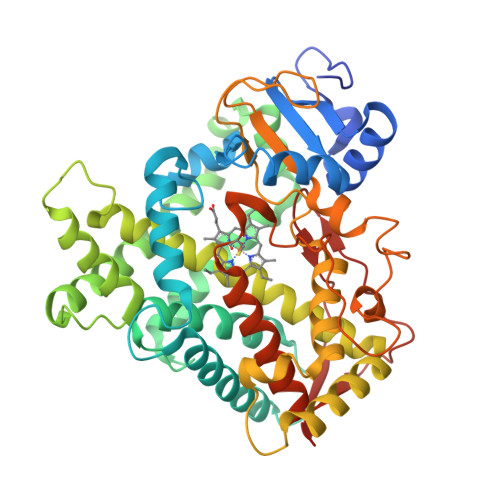
Cytochrome P450 2C9 structureClick to view 3D structureCytochrome P450 2C9P11712HumansPredicted (SEA)
Prediction Confidence Score
0.394
Applicability Domain
1.0
Statistical Significance
0.0195
Supporting Reference Compounds
1245
E-value
151.572
Cytochrome P450 3A4 structureClick to view 3D structureCytochrome P450 3A4P08684HumansPredicted (SEA)
Prediction Confidence Score
0.39
Applicability Domain
1.0
Statistical Significance
0.0252
Supporting Reference Compounds
1538
E-value
196.102
Tyrosine-protein kinase Fyn structureClick to view 3D structureTyrosine-protein kinase FynP06241HumansPredicted (SEA)
Prediction Confidence Score
0.386
Applicability Domain
1.0
Statistical Significance
0.0206
Supporting Reference Compounds
707
E-value
160.369
Epidermal growth factor receptor structureClick to view 3D structureEpidermal growth factor receptorP00533HumansPredicted (SEA)
Prediction Confidence Score
0.386
Applicability Domain
1.0
Statistical Significance
0.0358
Supporting Reference Compounds
1301
E-value
278.622
Tyrosine-protein kinase Lck structureClick to view 3D structureTyrosine-protein kinase LckP06239HumansPredicted (SEA)
Prediction Confidence Score
0.386
Applicability Domain
1.0
Statistical Significance
0.0325
Supporting Reference Compounds
1130
E-value
253.01
Prostaglandin G/H synthase 2 structureClick to view 3D structureProstaglandin G/H synthase 2P35354HumansPredicted (SEA)
Prediction Confidence Score
0.385
Applicability Domain
1.0
Statistical Significance
0.003
Supporting Reference Compounds
201
E-value
23.5883
Receptor tyrosine-protein kinase erbB-2 structureClick to view 3D structureReceptor tyrosine-protein kinase erbB-2P04626HumansPredicted (SEA)
Prediction Confidence Score
0.379
Applicability Domain
1.0
Statistical Significance
0.0218
Supporting Reference Compounds
674
E-value
170.023
Cyclin-dependent kinase 2 structureClick to view 3D structureCyclin-dependent kinase 2P24941HumansPredicted (SEA)
Prediction Confidence Score
0.379
Applicability Domain
1.0
Statistical Significance
0.0255
Supporting Reference Compounds
1029
E-value
198.36
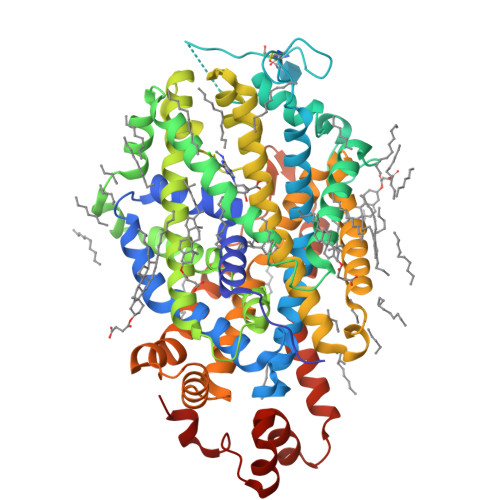
Sodium-dependent dopamine transporter structureClick to view 3D structureSodium-dependent dopamine transporterQ01959HumansPredicted (SEA)
Prediction Confidence Score
0.377
Applicability Domain
1.0
Statistical Significance
0.0082
Supporting Reference Compounds
506
E-value
63.9142
Click to view 3D structureThromboxane-A synthaseP24557HumansPredicted (SEA)
Prediction Confidence Score
0.366
Applicability Domain
1.0
Statistical Significance
5.00e-04
Supporting Reference Compounds
66
E-value
3.89246
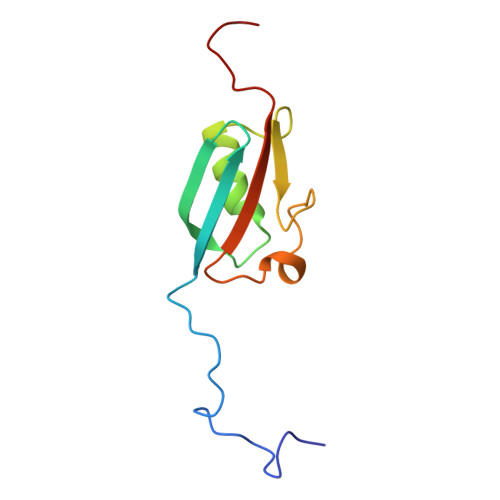
Small ubiquitin-related modifier 1 structureClick to view 3D structureSmall ubiquitin-related modifier 1P63165HumansPredicted (SEA)
Prediction Confidence Score
0.365
Applicability Domain
1.0
Statistical Significance
3.30e-04
Supporting Reference Compounds
95
E-value
2.56902
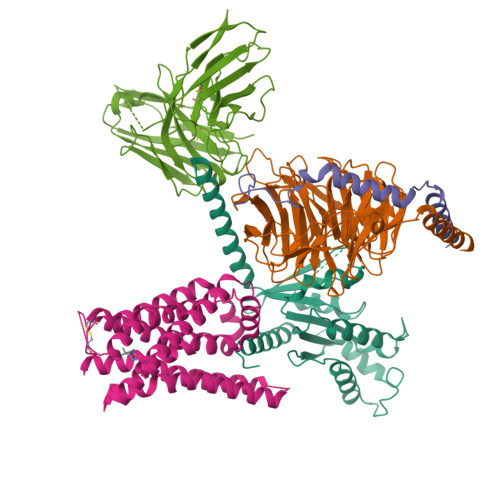
Alpha-2B adrenergic receptor structureClick to view 3D structureAlpha-2B adrenergic receptorP18089HumansPredicted (SEA)
Prediction Confidence Score
0.358
Applicability Domain
1.0
Statistical Significance
0.0074
Supporting Reference Compounds
340
E-value
57.9977
Adenosine receptor A3 structureClick to view 3D structureAdenosine receptor A3P0DMS8HumansPredicted (SEA)
Prediction Confidence Score
0.358
Applicability Domain
1.0
Statistical Significance
0.0112
Supporting Reference Compounds
391
E-value
86.9576
Acetylcholinesterase structureClick to view 3D structureAcetylcholinesteraseP22303HumansPredicted (SEA)
Prediction Confidence Score
0.342
Applicability Domain
1.0
Statistical Significance
0.0177
Supporting Reference Compounds
406
E-value
138.182
Alpha-2C adrenergic receptor structureClick to view 3D structureAlpha-2C adrenergic receptorP18825HumansPredicted (SEA)
Prediction Confidence Score
0.341
Applicability Domain
1.0
Statistical Significance
0.0129
Supporting Reference Compounds
386
E-value
100.737
Solute carrier family 22 member 1 structureClick to view 3D structureSolute carrier family 22 member 1O15245HumansPredicted (SEA)
Prediction Confidence Score
0.329
Applicability Domain
1.0
Statistical Significance
2.30e-04
Supporting Reference Compounds
30
E-value
1.79053
NAD-dependent protein deacylase sirtuin-5, mitochondrial structureClick to view 3D structureNAD-dependent protein deacylase sirtuin-5, mitochondrialQ9NXA8HumansPredicted (SEA)
Prediction Confidence Score
0.323
Applicability Domain
1.0
Statistical Significance
1.00e-05
Supporting Reference Compounds
14
E-value
0.0778492
Click to view 3D structureTransmembrane protease serine 4Q9NRS4HumansPredicted (SEA)
Prediction Confidence Score
0.29
Applicability Domain
0.29 Low confidence
Statistical Significance
0.0023
Supporting Reference Compounds
1
E-value
18.061
Click to view 3D structureRyanodien receptorH9CNL0Spodoptera exiguaPredicted (SEA)
Prediction Confidence Score
0.273
Applicability Domain
0.273 Low confidence
Statistical Significance
9.60e-04
Supporting Reference Compounds
1
E-value
7.47353
Tyrosine-protein kinase JAK2 structureClick to view 3D structureTyrosine-protein kinase JAK2O60674HumansPredicted (SEA)
Prediction Confidence Score
0.255
Applicability Domain
0.286 Low confidence
Statistical Significance
0.3393
Supporting Reference Compounds
1022
E-value
2641.42
Concentrations
Not Available
External Links
DrugBank IDNot Available
HMDB IDNot Available
FooDB IDNot Available
Phenol Explorer IDNot Available
KNApSAcK IDNot Available
BiGG IDNot Available
BioCyc IDNot Available
METLIN IDNot Available
PDB IDNot Available
Wikipedia LinkNot Available
Chemspider IDNot Available
ChEBI ID77054
PubChem Compound ID42574
Kegg Compound IDNot Available
YMDB IDNot Available
ECMDB IDNot Available
References
Synthesis ReferenceNot Available
MSDSNot Available
General ReferencesNot Available