SynCED
Browse
Browse Contaminants
Browse By Sources
Search
ChemQuery Structure Search
Molecular Weight Search
Text Query
Downloads
About
About SynCED
Other Databases
Documentation
Data Sources
Statistics
Wishart Research Group
TMIC Wishart Node
Contact Us
(-)-Epicatechin (CHEM018153)
Identification
Taxonomy
Biological Properties
Physical Properties
Toxicity Profile
Spectra
Concentrations
Links
References
Targets (1)
XML
Record Information
Version
1.0
Creation Date
2016-05-22 05:01:59 UTC
Update Date
2026-05-14 19:16:23 UTC
Accession Number
CHEM018153
Identification
Common Name
(-)-Epicatechin
Class
Small Molecule
Description
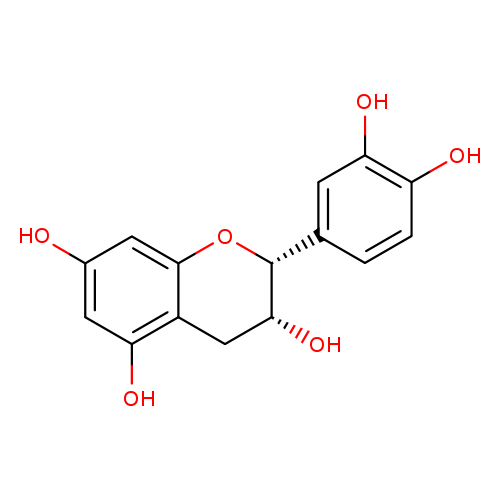
A catechin with (2R,3R)-configuration.
Read more
Contaminant Sources
FooDB Chemicals
HMDB Contaminants - Feces
HMDB Contaminants - Urine
ToxCast & Tox21 Chemicals
Contaminant Type
PFAS
Phytotoxin
Chemical Structure
MOL
SDF
PDB
SMILES
InChI
×
Structure for CHEM018153: (-)-Epicatechin
Synonyms
Value
Source
(-)-Epicatechin
HMDB
(-)-Epicatechol
HMDB
(2R,3R)-(-)-Epicatechin
HMDB
3,3',4',5,7-Pentahydroxyflavane
HMDB
alpha-Catechin
HMDB
Epicatechol
HMDB
Epigallocatechin
HMDB
L(-)-Epicatechin
HMDB
L-Acacatechin
HMDB
L-Epicatechin
HMDB
L-Epicatechol
HMDB
3,3',4',5,7-Flavanpentol
HMDB
Cyanidanol 3
HMDB
Cyanidanol-3
HMDB
(+)-Catechin
HMDB
(+)-Cyanidanol
HMDB
Acid, catechuic
HMDB
Cianidanol
HMDB
Acid, catechinic
HMDB
Catechin
HMDB
Catechinic acid
HMDB
Catechuic acid
HMDB
Catergen
HMDB
KB-53
HMDB
Zyma
HMDB
(+)-Cyanidanol-3
HMDB
KB 53
HMDB
Epi-catechin
HMDB
Epicatechin
PhytoBank
Chemical Formula
C
15
H
14
O
6
Average Molecular Mass
290.268 g/mol
Monoisotopic Mass
290.079 g/mol
CAS Registry Number
490-46-0
IUPAC Name
(2R,3R)-2-(3,4-dihydroxyphenyl)-3,4-dihydro-2H-1-benzopyran-3,5,7-triol
Traditional Name
ent-epicatechin
SMILES
O[C@@H]1CC2=C(O)C=C(O)C=C2O[C@@H]1C1=CC(O)=C(O)C=C1
InChI Identifier
InChI=1S/C15H14O6/c16-8-4-11(18)9-6-13(20)15(21-14(9)5-8)7-1-2-10(17)12(19)3-7/h1-5,13,15-20H,6H2/t13-,15-/m1/s1
InChI Key
PFTAWBLQPZVEMU-UKRRQHHQSA-N
Chemical Taxonomy
Description
Belongs to the class of organic compounds known as catechins. Catechins are compounds containing a catechin moiety, which is a 3,4-dihydro-2-chromene-3,5.7-Tiol.
Kingdom
Organic compounds
Super Class
Phenylpropanoids and polyketides
Class
Flavonoids
Sub Class
Flavans
Direct Parent
Catechins
Alternative Parents
7-hydroxyflavonoids
5-hydroxyflavonoids
4'-hydroxyflavonoids
3-hydroxyflavonoids
3'-hydroxyflavonoids
1-benzopyrans
Catechols
Alkyl aryl ethers
1-hydroxy-4-unsubstituted benzenoids
1-hydroxy-2-unsubstituted benzenoids
Benzene and substituted derivatives
Secondary alcohols
Polyols
Oxacyclic compounds
Hydrocarbon derivatives
Substituents
Catechin
3'-hydroxyflavonoid
3-hydroxyflavonoid
4'-hydroxyflavonoid
5-hydroxyflavonoid
7-hydroxyflavonoid
Hydroxyflavonoid
Chromane
Benzopyran
1-benzopyran
Catechol
1-hydroxy-4-unsubstituted benzenoid
1-hydroxy-2-unsubstituted benzenoid
Alkyl aryl ether
Phenol
Benzenoid
Monocyclic benzene moiety
Secondary alcohol
Organoheterocyclic compound
Oxacycle
Polyol
Ether
Organic oxygen compound
Alcohol
Hydrocarbon derivative
Organooxygen compound
Aromatic heteropolycyclic compound
Molecular Framework
Aromatic heteropolycyclic compounds
External Descriptors
polyphenol (
CHEBI:90
)
catechin (
CHEBI:90
)
Flavans, Flavanols and Leucoanthocyanidins (
C09727
)
Flavan 3-ols (
C09727
)
Condensed tannins (Proanthocyanidins) (
C09727
)
Flavans, Flavanols and Leucoanthocyanidins (
LMPK12020003
)
Biological Properties
Status
Detected and Not Quantified
Origin
Not Available
Cellular Locations
Not Available
Biofluid Locations
Not Available
Tissue Locations
Not Available
Pathways
Not Available
Applications
Not Available
Biological Roles
Not Available
Chemical Roles
Not Available
Physical Properties
State
Not Available
Appearance
Not Available
Experimental Properties
Property
Value
Melting Point
Not Available
Boiling Point
Not Available
Solubility
Not Available
Predicted Properties
Property
Value
Source
Water Solubility
0.64 g/L
ALOGPS
logP
1.02
ALOGPS
logP
1.8
ChemAxon
logS
-2.6
ALOGPS
pKa (Strongest Acidic)
9
ChemAxon
pKa (Strongest Basic)
-3.3
ChemAxon
Physiological Charge
0
ChemAxon
Hydrogen Acceptor Count
6
ChemAxon
Hydrogen Donor Count
5
ChemAxon
Polar Surface Area
110.38 Ų
ChemAxon
Rotatable Bond Count
1
ChemAxon
Refractivity
74 m³·mol⁻¹
ChemAxon
Polarizability
28.13 ų
ChemAxon
Number of Rings
3
ChemAxon
Bioavailability
Yes
ChemAxon
Rule of Five
Yes
ChemAxon
Ghose Filter
Yes
ChemAxon
Veber's Rule
No
ChemAxon
MDDR-like Rule
No
ChemAxon
Spectra
Spectra
Toxicity Profile
Route of Exposure
Not Available
Mechanism of Toxicity
Not Available
Metabolism
Not Available
Toxicity Values
Not Available
Lethal Dose
Not Available
Carcinogenicity (
IARC Classification
)
Not Available
Uses/Sources
Not Available
Minimum Risk Level
Not Available
Health Effects
Not Available
Symptoms
Not Available
Treatment
Not Available
Concentrations
Not Available
External Links
DrugBank ID
DB12039
HMDB ID
HMDB0001871
FooDB ID
FDB003761
Phenol Explorer ID
125
KNApSAcK ID
C00000956
BiGG ID
Not Available
BioCyc ID
CPD-7630
METLIN ID
3420
PDB ID
Not Available
Wikipedia Link
Catechin
Chemspider ID
65230
ChEBI ID
90
PubChem Compound ID
72276
Kegg Compound ID
C09727
YMDB ID
Not Available
ECMDB ID
Not Available
References
Synthesis Reference
Not Available
MSDS
Not Available
General References
1
.
https://www.ncbi.nlm.nih.gov/pubmed/?term=10427682
2
.
https://www.ncbi.nlm.nih.gov/pubmed/?term=7655336
3
.
Law, Khoon Huat; Das, Nagaratnam P. Production of (-)-epicatechin by Uncaria elliptica callus cultures. Phytochemistry (1989), 28(4), 1099-100.
4
.
Li C, Meng X, Winnik B, Lee MJ, Lu H, Sheng S, Buckley B, Yang CS: Analysis of urinary metabolites of tea catechins by liquid chromatography/electrospray ionization mass spectrometry. Chem Res Toxicol. 2001 Jun;14(6):702-7.
5
.
Yang CS, Lee MJ, Chen L: Human salivary tea catechin levels and catechin esterase activities: implication in human cancer prevention studies. Cancer Epidemiol Biomarkers Prev. 1999 Jan;8(1):83-9.
6
.
Henning SM, Aronson W, Niu Y, Conde F, Lee NH, Seeram NP, Lee RP, Lu J, Harris DM, Moro A, Hong J, Pak-Shan L, Barnard RJ, Ziaee HG, Csathy G, Go VL, Wang H, Heber D: Tea polyphenols and theaflavins are present in prostate tissue of humans and mice after green and black tea consumption. J Nutr. 2006 Jul;136(7):1839-43.
7
.
Lill G, Voit S, Schror K, Weber AA: Complex effects of different green tea catechins on human platelets. FEBS Lett. 2003 Jul 10;546(2-3):265-70.
8
.
Murphy KJ, Chronopoulos AK, Singh I, Francis MA, Moriarty H, Pike MJ, Turner AH, Mann NJ, Sinclair AJ: Dietary flavanols and procyanidin oligomers from cocoa (Theobroma cacao) inhibit platelet function. Am J Clin Nutr. 2003 Jun;77(6):1466-73.
9
.
Meng X, Lee MJ, Li C, Sheng S, Zhu N, Sang S, Ho CT, Yang CS: Formation and identification of 4'-O-methyl-(-)-epigallocatechin in humans. Drug Metab Dispos. 2001 Jun;29(6):789-93.
10
.
Sano A, Yamakoshi J, Tokutake S, Tobe K, Kubota Y, Kikuchi M: Procyanidin B1 is detected in human serum after intake of proanthocyanidin-rich grape seed extract. Biosci Biotechnol Biochem. 2003 May;67(5):1140-3.
11
.
Babich H, Krupka ME, Nissim HA, Zuckerbraun HL: Differential in vitro cytotoxicity of (-)-epicatechin gallate (ECG) to cancer and normal cells from the human oral cavity. Toxicol In Vitro. 2005 Mar;19(2):231-42.
12
.
Holt RR, Lazarus SA, Sullards MC, Zhu QY, Schramm DD, Hammerstone JF, Fraga CG, Schmitz HH, Keen CL: Procyanidin dimer B2 [epicatechin-(4beta-8)-epicatechin] in human plasma after the consumption of a flavanol-rich cocoa. Am J Clin Nutr. 2002 Oct;76(4):798-804.
13
.
Spencer JP, Schroeter H, Crossthwaithe AJ, Kuhnle G, Williams RJ, Rice-Evans C: Contrasting influences of glucuronidation and O-methylation of epicatechin on hydrogen peroxide-induced cell death in neurons and fibroblasts. Free Radic Biol Med. 2001 Nov 1;31(9):1139-46.
14
.
DuPont MS, Bennett RN, Mellon FA, Williamson G: Polyphenols from alcoholic apple cider are absorbed, metabolized and excreted by humans. J Nutr. 2002 Feb;132(2):172-5.
15
.
Vinson JA, Proch J, Bose P: MegaNatural((R)) Gold Grapeseed Extract: In Vitro Antioxidant and In Vivo Human Supplementation Studies. J Med Food. 2001 Spring;4(1):17-26.
16
.
Lhoste EF, Ouriet V, Bruel S, Flinois JP, Brezillon C, Magdalou J, Cheze C, Nugon-Baudon L: The human colonic microflora influences the alterations of xenobiotic-metabolizing enzymes by catechins in male F344 rats. Food Chem Toxicol. 2003 May;41(5):695-702.
17
.
Keen CL: Chocolate: food as medicine/medicine as food. J Am Coll Nutr. 2001 Oct;20(5 Suppl):436S-439S; discussion 440S-442S.