Tenoxicam (CED0006738)

Record Information
Version1.0
Creation Date2016-05-22 05:10:47 UTC
Update Date2026-08-18 22:43:35 UTC
SynCED IDCED0006738
Secondary Accession Numbers
  • CHEM018350
Identification
Common NameTenoxicam
ClassSmall Molecule
Description
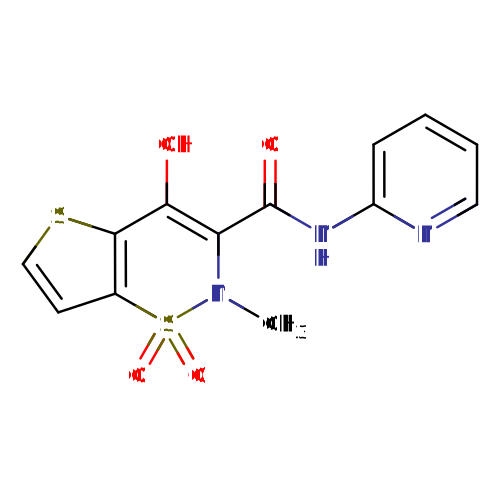
Tenoxicam is an organic compound with the chemical formula C13H11N3O4S2 and an average molecular weight of 337.37 g/mol. Tenoxicam belongs to the amino acids, peptides, and analogues, a subclass of carboxylic acids and derivatives within the organic compounds. This compound is recorded as being found in or released from six distinct sources. These include healthcare, pharmaceuticals, and veterinary products, specifically antiinflammatory and antirheumatic products, as well as household cleaning and consumer products such as tobacco product cases and pipe accessories. Additionally, it is associated with electrical and electronic equipment, including antennas, video games, and line transmission systems. The recorded route of exposure for this substance is oral. In terms of biological activity, tenoxicam acts on two recorded protein targets. It functions as an inhibitor of Prostaglandin G/H synthase 1 (PTGS1) and Prostaglandin G/H synthase 2 (PTGS2).
Contaminant TypeNot Available
Chemical Structure
Synonyms
ValueSource
MobiflexChEBI
TenoxicamumChEBI
TilcotilChEBI
4-Hydroxy-2-methyl-N-2-pyridyl-2H-thieno(2,3-e)-1,2-thiazine-3-carboxamide 1,1-dioxideMeSH
TenoxicamMeSH
ArtriunicMeSH
apo-TenoxicamMeSH
ReutenoxMeSH
novo-TenoxicamMeSH
Chemical FormulaC13H11N3O4S2
Average Molecular Mass337.370 g/mol
Monoisotopic Mass337.019 g/mol
CAS Registry Number59804-37-4
IUPAC Name4-hydroxy-2-methyl-1,1-dioxo-N-(pyridin-2-yl)-2H-1λ⁶-thieno[2,3-e][1,2]thiazine-3-carboxamide
Traditional Nametenoxicam
SMILESCN1C(C(=O)NC2=CC=CC=N2)=C(O)C2=C(C=CS2)S1(=O)=O
InChI IdentifierInChI=1S/C13H11N3O4S2/c1-16-10(13(18)15-9-4-2-3-6-14-9)11(17)12-8(5-7-21-12)22(16,19)20/h2-7,17H,1H3,(H,14,15,18)
InChI KeyLZNWYQJJBLGYLT-UHFFFAOYSA-N
Chemical Taxonomy
Description Belongs to the class of organic compounds known as alpha amino acids and derivatives. These are amino acids in which the amino group is attached to the carbon atom immediately adjacent to the carboxylate group (alpha carbon), or a derivative thereof.
KingdomOrganic compounds
Super ClassOrganic acids and derivatives
ClassCarboxylic acids and derivatives
Sub ClassAmino acids, peptides, and analogues
Direct ParentAlpha amino acids and derivatives
Alternative Parents
Substituents
  • Alpha-amino acid or derivatives
  • Thienothiazine
  • N-arylamide
  • Ortho-thiazine
  • Pyridine
  • Imidolactam
  • Organosulfonic acid amide
  • Heteroaromatic compound
  • Organic sulfonic acid or derivatives
  • Organosulfonic acid or derivatives
  • Vinylogous acid
  • Thiophene
  • Carboxamide group
  • Secondary carboxylic acid amide
  • Azacycle
  • Organoheterocyclic compound
  • Hydrocarbon derivative
  • Organic oxide
  • Organooxygen compound
  • Organonitrogen compound
  • Organopnictogen compound
  • Carbonyl group
  • Organic nitrogen compound
  • Organic oxygen compound
  • Aromatic heteropolycyclic compound
Molecular FrameworkAromatic heteropolycyclic compounds
External Descriptors
Biological Properties
StatusDetected and Not Quantified
OriginNot Available
Cellular LocationsNot Available
Biofluid LocationsNot Available
Tissue LocationsNot Available
ApplicationsNot Available
Biological RolesNot Available
Chemical RolesNot Available
Organoleptic EffectsNot Available
Physical Properties
StateNot Available
AppearanceNot Available
Experimental Properties
PropertyValue
Melting PointNot Available
Boiling PointNot Available
SolubilityNot Available
Predicted Properties
PropertyValueSource
Water Solubility0.26 g/LALOGPS
logP2.42ALOGPS
logP-0.12ChemAxon
logS-3.1ALOGPS
pKa (Strongest Acidic)2.21ChemAxon
pKa (Strongest Basic)4.26ChemAxon
Physiological Charge-1ChemAxon
Hydrogen Acceptor Count5ChemAxon
Hydrogen Donor Count2ChemAxon
Polar Surface Area99.6 ŲChemAxon
Rotatable Bond Count2ChemAxon
Refractivity83.93 m³·mol⁻¹ChemAxon
Polarizability31.96 ųChemAxon
Number of Rings3ChemAxon
BioavailabilityYesChemAxon
Rule of FiveYesChemAxon
Ghose FilterYesChemAxon
Veber's RuleNoChemAxon
MDDR-like RuleNoChemAxon
Spectra
Spectra
Spectrum TypeDescriptionSplash KeyDeposition DateView
LC-MS/MSLC-MS/MS Spectrumsplash10-00di-4920000000-4540501176aeb1563469Not AvailableView Spectrum
Predicted LC-MS/MSPredicted LC-MS/MS Spectrumsplash10-000i-1109000000-4e49ea87c4da7f125434Not AvailableView Spectrum
Predicted LC-MS/MSPredicted LC-MS/MS Spectrumsplash10-022a-5901000000-221f5db96a0a4740df54Not AvailableView Spectrum
Predicted LC-MS/MSPredicted LC-MS/MS Spectrumsplash10-00di-9710000000-0ea85b746c1d6efc9716Not AvailableView Spectrum
Predicted LC-MS/MSPredicted LC-MS/MS Spectrumsplash10-000i-2019000000-ff016e456f3a43874f57Not AvailableView Spectrum
Predicted LC-MS/MSPredicted LC-MS/MS Spectrumsplash10-000i-2901000000-85940eb98baa2df9464bNot AvailableView Spectrum
Predicted LC-MS/MSPredicted LC-MS/MS Spectrumsplash10-0592-6900000000-9f826c9f9ef2fcb12ab1Not AvailableView Spectrum
Toxicity Profile
Toxicity Values
Toxicity ValueOrganismDose DescriptorRoute of ExposurePredicted or ExperimentalToxicity RatingReference
42.0 Log mg/kg [20:74]RatLD50oralpredictedNot AvailableNot Available
Toxicity / Toxin ClassNot Available
Mechanism of ToxicityNot Available
Carcinogenicity (IARC Classification)Not Available
Minimum Risk LevelNot Available
SymptomsNot Available
TreatmentNot Available
Health Effects
Health EffectRelationshipDirectionDescriptionReference
Exposure Sources
Source IDSourceSectorReference
CEDs000233Brushes?Brushes used in personal care and cosmetics can be a source of synthetic chemical contamination due to the materials and coatings used in their manufacturing.Personal care & cosmeticsPubChem
CEDs000363Antiinflammatory and antirheumatic products?Anti-inflammatory and antirheumatic products are synthetic chemicals commonly used to alleviate pain, reduce inflammation, and manage conditions such as arthritis.Healthcare, pharmaceuticals & veterinary productsNot Available
CEDs000506Antennas?Antennas, commonly used in communication technologies, can be a source of synthetic chemical contamination through the materials and coatings used in their construction.Electrical & Electronic EquipmentPubChem
CEDs000507Auxiliary Devices?Auxiliary devices, such as capacitors, transformers, and circuit breakers, are integral components in various electronic systems.Electrical & Electronic EquipmentPubChem
CEDs000511Conductors Or Conductive Bodies Characterised By The Conductive Materials?Conductors, or conductive bodies, are materials that allow the flow of electrical current, typically made from metals such as copper, aluminum, or silver.Electrical & Electronic EquipmentPubChem
CEDs000518Electrically Stimulated Smoking Devices?Electrically stimulated smoking devices, commonly known as e-cigarettes or vape pens, utilize electrical components to heat a liquid solution, often containing nicotine, flavorings, and other additives, to produce an aerosol for inhalation.Electrical & Electronic EquipmentPubChem
CEDs000519Electrodes?Electrodes, used in various electrical and electronic applications, can be a source of synthetic chemical contamination due to the materials from which they are constructed and the processes involved in their manufacturing.Electrical & Electronic EquipmentPubChem
CEDs000524Hybrid Capacitors?Hybrid capacitors are energy storage devices that combine the properties of electrolytic and supercapacitors, utilizing a combination of electrochemical principles to achieve higher energy density and power density.Electrical & Electronic EquipmentPubChem
CEDs000525Line Transmission Systems?Line Transmission Systems, commonly used for the distribution of electrical energy, can be a source of synthetic chemical contamination through the insulation materials and coatings utilized in their construction.Electrical & Electronic EquipmentPubChem
CEDs000530Radio Transmission Systems?Radio transmission systems utilize a variety of synthetic chemicals in their manufacturing and maintenance processes.Electrical & Electronic EquipmentPubChem
CEDs000537Television Systems?Television systems can be a source of synthetic chemical contamination due to the various materials and components used in their manufacture and operation.Electrical & Electronic EquipmentPubChem
CEDs000539Video Games?Video games, through their production and disposal processes, can be a source of synthetic chemical contamination.Electrical & Electronic EquipmentPubChem
CEDs000545Food Preservation?Food preservation often involves the use of synthetic chemicals, such as preservatives, flavor enhancers, and color additives, to extend shelf life and enhance the sensory qualities of food products.Food, food processing & cookwarePubChem
CEDs000559Non Electric Simulated Smoking Devices?Non-electric simulated smoking devices, often designed to mimic the experience of smoking without combustion, can be sources of synthetic chemical contamination due to the materials and chemicals used in their construction and operation.Household cleaning & consumer productsPubChem
CEDs000560Other Smoking Requisites?Other smoking requisites, including items such as lighters, matches, and rolling papers, can introduce synthetic chemical contamination through various components and additives.Household cleaning & consumer productsPubChem
CEDs000561Perfumes Within Detergents And Soaps?Perfumes within detergents and soaps are synthetic fragrance compounds added to enhance the sensory experience of cleaning products.Household cleaning & consumer productsPubChem
CEDs000562Pipe Accessories?Pipe accessories, such as fittings, connectors, and seals, are components used in plumbing systems to facilitate the flow of liquids and gases.Household cleaning & consumer productsPubChem
CEDs000567Tobacco Product Cases?Tobacco product cases can serve as a source of synthetic chemical contamination due to the presence of various additives and chemicals used in tobacco processing and product manufacturing.Household cleaning & consumer productsPubChem
CEDs000569Tobacco Smoke Filters?Tobacco smoke filters are designed to reduce the inhalation of harmful substances in cigarette smoke, including tar and other particulate matter.Household cleaning & consumer productsPubChem
CEDs000580Manufacture Preparation Of Tobacco Products?The manufacture and preparation of tobacco products involve various processes that can result in the introduction of synthetic chemicals into the environment.Industrial manufacturing & chemical processingPubChem
CEDs000584Buoys?Buoys, often used for navigation and marine monitoring, can be sources of synthetic chemical contamination due to the materials and coatings employed in their construction.Marine, shipping & aquaculturePubChem
CEDs000596Acaricides?Acaricides are synthetic chemicals specifically designed to target and control mite populations that can damage crops and plants.Agriculture & land managementPubChem
CEDs000605Pest Repellants?Pest repellents, often formulated from synthetic chemicals, are widely used to protect crops from insect infestations and other pests.Agriculture & land managementPubChem
CEDs000606Plant Growth Regulators?Plant Growth Regulators (PGRs) are synthetic chemicals designed to influence the growth and development of plants.Agriculture & land managementPubChem
CEDs000607Rodenticides(1)?Rodenticides are synthetic chemicals specifically formulated to control rodent populations, serving as a crucial tool in managing pests that can damage crops and spread diseases.Agriculture & land managementPubChem
CEDs000608Rodenticides?Rodenticides are chemical substances specifically designed to control rodent populations by causing death through various mechanisms, including anticoagulation or neurotoxicity.Agriculture & land managementPubChem
CEDs000609Aftershave?Aftershave is a grooming product typically used to soothe and protect the skin following shaving.Personal care & cosmeticsPubChem
CEDs000610Aftersun Products?Aftersun products are designed to soothe and hydrate the skin after sun exposure, often containing various synthetic chemicals such as emollients, preservatives, and fragrances.Personal care & cosmeticsPubChem
CEDs000611Anti Perspirants Or Body Deoderants?Antiperspirants and body deodorants commonly contain synthetic chemicals such as aluminum compounds, parabens, and synthetic fragrances.Personal care & cosmeticsPubChem
CEDs000613Depilatories?Depilatories are products designed to remove unwanted hair through the application of synthetic chemicals that break down the protein structure of hair, facilitating its removal.Personal care & cosmeticsPubChem
CEDs000614Essential Oils Or Perfumes?Essential oils and perfumes are complex mixtures of volatile compounds derived from natural or synthetic sources, commonly used for their aromatic properties.Personal care & cosmeticsPubChem
CEDs000615Eye Makeup Products?Eye makeup products, including mascaras, eyeliners, and eyeshadows, often contain a variety of synthetic chemicals such as pigments, preservatives, and film-forming agents.Personal care & cosmeticsPubChem
CEDs000617Lip Care Products?Lip care products, including lipsticks, balms, and glosses, often contain a variety of synthetic chemicals such as parabens, phthalates, and synthetic fragrances.Personal care & cosmeticsPubChem
CEDs000618Lip Makeup Products?Lip makeup products, such as lipsticks, lip glosses, and lip liners, often contain a variety of synthetic chemicals, including pigments, preservatives, and emollients.Personal care & cosmeticsPubChem
CEDs000620Card Games?Card games often utilize synthetic materials for playing cards and associated gaming equipment, which may contain various chemicals such as polyvinyl chloride (PVC), plastics, and dyes.Recreation & sports surfacesPubChem
CEDs000632Apparel?Apparel production often involves the use of various synthetic chemicals, including dyes, finishing agents, and preservatives.Textiles, leather & furnishingsPubChem
CEDs000635Buttons?Buttons, often made from synthetic materials such as polyester, nylon, or polycarbonate, can be a source of synthetic chemical contamination during their production, use, and disposal.Textiles, leather & furnishingsPubChem
CEDs000642Footwear?Footwear production often involves the use of various synthetic chemicals, such as adhesives, dyes, and treatments, which can contribute to environmental contamination.Textiles, leather & furnishingsPubChem
CEDs000650Purses Luggage Hand Bags?Purses, luggage, and handbags are often manufactured using synthetic materials such as polyvinyl chloride (PVC), polyurethane, and various types of nylon.Textiles, leather & furnishingsPubChem
CEDs000661Umbrellas?Umbrellas are commonly manufactured using synthetic materials such as polyester, nylon, and polyvinyl chloride (PVC), which can contribute to synthetic chemical contamination.Textiles, leather & furnishingsPubChem
CEDs000665Fire Extinguishers?Fire extinguishers contain various synthetic chemicals designed to suppress flames and prevent the spread of fire.Fire suppression systems & agentsPubChem
CEDs000671Airplanes And Helicopters?Airplanes and helicopters are significant sources of synthetic chemical contamination primarily through the use of aviation fuels, lubricants, and de-icing agents.Aviation & AerospacePubChem
CEDs000673Unmanned Aerial Vehicles?Unmanned Aerial Vehicles (UAVs), commonly known as drones, utilize various synthetic chemicals in their manufacturing, operation, and maintenance processes.Aviation & AerospacePubChem
CEDs000678Nitrogenous Fertilisers?Nitrogenous fertilizers are synthetic chemical compounds primarily used to enhance plant growth by supplying essential nitrogen, a crucial nutrient for photosynthesis and protein synthesis.Agriculture & land managementPubChem
CEDs000685Ceramics?Ceramics can be a source of synthetic chemical contamination through various additives and processing agents used in their production.Building & ConstructionPubChem
CEDs000696Nanotechnology?Nanotechnology involves the manipulation of materials at the molecular or atomic level, typically within the range of 1 to 100 nanometers.Industrial manufacturing & chemical processingPubChem
CEDs000697Submarines?Submarines, while essential for military and research purposes, can be a source of synthetic chemical contamination due to their use of various industrial chemicals.Marine, shipping & aquaculturePubChem
CEDs000739Inks?Inks are complex mixtures composed of pigments or dyes, solvents, resins, and additives used primarily for printing and writing applications.Paper, pulp & fiber productsPubChem
CEDs000740Paper?Paper production involves the processing of wood fibers and the use of various chemicals, which can lead to synthetic chemical contamination.Paper, pulp & fiber productsPubChem
CEDs000743Sludge Treatment?Sludge treatment involves the processing of waste materials generated from wastewater treatment plants, which often contain a variety of organic and inorganic substances.Wastewater, sanitation & biosolidsPubChem
CEDs000744Water, Wastewater, & Sewage Treatment?Water, wastewater, and sewage treatment processes are critical for managing and mitigating pollutants in water systems.Wastewater, sanitation & biosolidsPubChem
CEDs02298Aquatic EcosystemAquatic systems & sedimentsPMC13417642
Pathways
3 pathwaysPathway Source: PathBank
Targets
StructureProteinUniProt IDOrganismRelationshipDetails
Cytochrome P450 2C8 structureClick to view 3D structureCytochrome P450 2C8P10632HumansKnownNot Available
Cytochrome P450 2C9 structureClick to view 3D structureCytochrome P450 2C9P11712HumansKnownNot Available
Prostaglandin G/H synthase 1 structureClick to view 3D structureProstaglandin G/H synthase 1P23219HumansPredicted (SEA)
Prediction Confidence Score
0.335
Applicability Domain
0.692
Statistical Significance
0.0042
Supporting Reference Compounds
136
E-value
33.0081
Click to view 3D structureDNA damage-inducible transcript 3 proteinP35639Mus musculusPredicted (SEA)
Prediction Confidence Score
0.272
Applicability Domain
0.295 Low confidence
Statistical Significance
0.0287
Supporting Reference Compounds
226
E-value
223.661
X-box-binding protein 1 structureClick to view 3D structureX-box-binding protein 1P17861HumansPredicted (SEA)
Prediction Confidence Score
0.272
Applicability Domain
0.295 Low confidence
Statistical Significance
0.0287
Supporting Reference Compounds
227
E-value
223.661
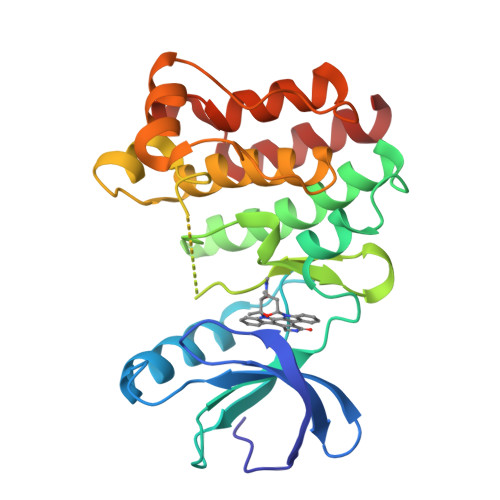
Proto-oncogene tyrosine-protein kinase Src structureClick to view 3D structureProto-oncogene tyrosine-protein kinase SrcP12931HumansPredicted (SEA)
Prediction Confidence Score
0.265
Applicability Domain
0.284 Low confidence
Statistical Significance
0.2638
Supporting Reference Compounds
1158
E-value
2053.51
Click to view 3D structureOrganic anion transporter 3Q8TCC7HumansPredicted (SEA)
Prediction Confidence Score
0.261
Applicability Domain
0.692
Statistical Significance
8.10e-04
Supporting Reference Compounds
20
E-value
6.30579
Tyrosine-protein kinase Lck structureClick to view 3D structureTyrosine-protein kinase LckP06239HumansPredicted (SEA)
Prediction Confidence Score
0.26
Applicability Domain
0.284 Low confidence
Statistical Significance
0.3217
Supporting Reference Compounds
1130
E-value
2504.41
Methionine aminopeptidase 1 structureClick to view 3D structureMethionine aminopeptidase 1Q01662Saccharomyces cerevisiae S288cPredicted (SEA)
Prediction Confidence Score
0.259
Applicability Domain
0.271 Low confidence
Statistical Significance
7.90e-04
Supporting Reference Compounds
2
E-value
6.15009
Click to view 3D structureStreptokinase AP10520Streptococcus pyogenes serotype M1Predicted (SEA)
Prediction Confidence Score
0.259
Applicability Domain
0.269 Low confidence
Statistical Significance
0.0986
Supporting Reference Compounds
425
E-value
767.36
5-hydroxytryptamine receptor 1F structureClick to view 3D structure5-hydroxytryptamine receptor 1FP30939HumansPredicted (SEA)
Prediction Confidence Score
0.256
Applicability Domain
0.286 Low confidence
Statistical Significance
0.0149
Supporting Reference Compounds
45
E-value
116.385
Protein deacetylase HDAC6 structureClick to view 3D structureProtein deacetylase HDAC6Q9UBN7HumansPredicted (SEA)
Prediction Confidence Score
0.254
Applicability Domain
0.307
Statistical Significance
0.2382
Supporting Reference Compounds
553
E-value
1854.37
Kappa-type opioid receptor structureClick to view 3D structureKappa-type opioid receptorP41145HumansPredicted (SEA)
Prediction Confidence Score
0.254
Applicability Domain
0.278 Low confidence
Statistical Significance
0.1927
Supporting Reference Compounds
532
E-value
1500.08
Tyrosine-protein kinase BTK structureClick to view 3D structureTyrosine-protein kinase BTKQ06187HumansPredicted (SEA)
Prediction Confidence Score
0.252
Applicability Domain
0.284 Low confidence
Statistical Significance
0.311
Supporting Reference Compounds
798
E-value
2421.27
Tyrosine-protein kinase Fyn structureClick to view 3D structureTyrosine-protein kinase FynP06241HumansPredicted (SEA)
Prediction Confidence Score
0.249
Applicability Domain
0.284 Low confidence
Statistical Significance
0.3181
Supporting Reference Compounds
707
E-value
2476.38
Tyrosine-protein kinase Lyn structureClick to view 3D structureTyrosine-protein kinase LynP07948HumansPredicted (SEA)
Prediction Confidence Score
0.249
Applicability Domain
0.284 Low confidence
Statistical Significance
0.3018
Supporting Reference Compounds
666
E-value
2349.41
5-hydroxytryptamine receptor 1A structureClick to view 3D structure5-hydroxytryptamine receptor 1AP08908HumansPredicted (SEA)
Prediction Confidence Score
0.249
Applicability Domain
0.278 Low confidence
Statistical Significance
0.2768
Supporting Reference Compounds
953
E-value
2155.26
Cyclin-dependent kinase 1 structureClick to view 3D structureCyclin-dependent kinase 1P06493HumansPredicted (SEA)
Prediction Confidence Score
0.249
Applicability Domain
0.274 Low confidence
Statistical Significance
0.3113
Supporting Reference Compounds
715
E-value
2423.21
Tyrosine-protein kinase ITK/TSK structureClick to view 3D structureTyrosine-protein kinase ITK/TSKQ08881HumansPredicted (SEA)
Prediction Confidence Score
0.249
Applicability Domain
0.284 Low confidence
Statistical Significance
0.2768
Supporting Reference Compounds
570
E-value
2154.87
Click to view 3D structureATP-dependent molecular chaperone HSP82C4YTQ8Candida albicans (strain WO-1) (Yeast)Predicted (SEA)
Prediction Confidence Score
0.248
Applicability Domain
0.258 Low confidence
Statistical Significance
0.0712
Supporting Reference Compounds
205
E-value
554.209
Vascular endothelial growth factor receptor 2 structureClick to view 3D structureVascular endothelial growth factor receptor 2P35968HumansPredicted (SEA)
Prediction Confidence Score
0.248
Applicability Domain
0.258 Low confidence
Statistical Significance
0.4604
Supporting Reference Compounds
1660
E-value
3584.1
Tyrosine-protein kinase JAK3 structureClick to view 3D structureTyrosine-protein kinase JAK3P52333HumansPredicted (SEA)
Prediction Confidence Score
0.248
Applicability Domain
0.284 Low confidence
Statistical Significance
0.3833
Supporting Reference Compounds
961
E-value
2984.04
Fibroblast growth factor receptor 1 structureClick to view 3D structureFibroblast growth factor receptor 1P11362HumansPredicted (SEA)
Prediction Confidence Score
0.247
Applicability Domain
0.274 Low confidence
Statistical Significance
0.3853
Supporting Reference Compounds
1010
E-value
2999.69
5-hydroxytryptamine receptor 1B structureClick to view 3D structure5-hydroxytryptamine receptor 1BP28222HumansPredicted (SEA)
Prediction Confidence Score
0.246
Applicability Domain
0.278 Low confidence
Statistical Significance
0.1508
Supporting Reference Compounds
337
E-value
1173.81
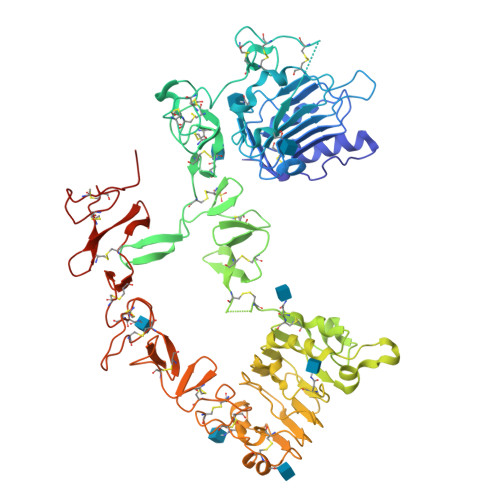
Epidermal growth factor receptor structureClick to view 3D structureEpidermal growth factor receptorP00533HumansPredicted (SEA)
Prediction Confidence Score
0.245
Applicability Domain
0.284 Low confidence
Statistical Significance
0.457
Supporting Reference Compounds
1301
E-value
3558.02
Receptor tyrosine-protein kinase erbB-2 structureClick to view 3D structureReceptor tyrosine-protein kinase erbB-2P04626HumansPredicted (SEA)
Prediction Confidence Score
0.245
Applicability Domain
0.284 Low confidence
Statistical Significance
0.3291
Supporting Reference Compounds
674
E-value
2562.17
Receptor tyrosine-protein kinase erbB-4 structureClick to view 3D structureReceptor tyrosine-protein kinase erbB-4Q15303HumansPredicted (SEA)
Prediction Confidence Score
0.245
Applicability Domain
0.284 Low confidence
Statistical Significance
0.306
Supporting Reference Compounds
591
E-value
2381.87
Concentrations
Not Available
External Links
DrugBank IDDB00469
HMDB IDNot Available
FooDB IDNot Available
Phenol Explorer IDNot Available
KNApSAcK IDNot Available
BiGG IDNot Available
BioCyc IDNot Available
METLIN IDNot Available
PDB IDNot Available
Wikipedia LinkTenoxicam
Chemspider IDNot Available
ChEBI ID32192
PubChem Compound ID54677971
Kegg Compound IDNot Available
YMDB IDNot Available
ECMDB IDNot Available
References
Synthesis ReferenceNot Available
MSDSNot Available
General ReferencesNot Available