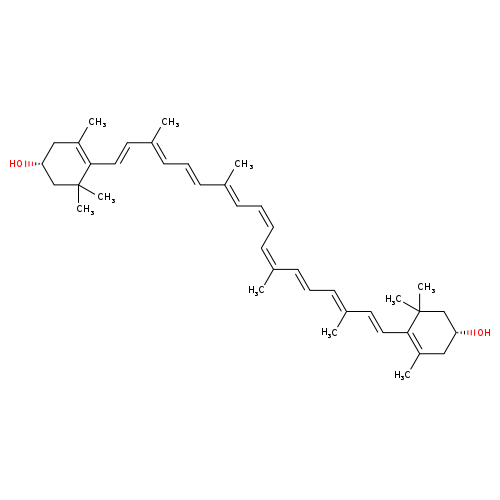
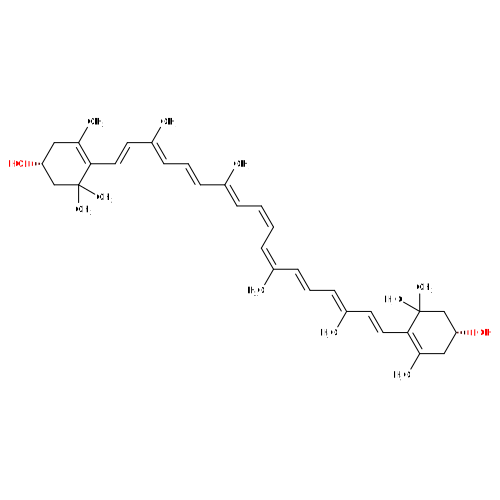
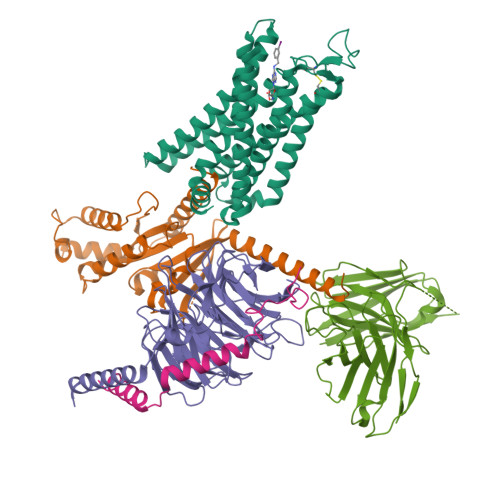
Zeaxanthin (C40H56O2) belongs to the tetraterpenoids, a subclass of prenol lipids within the organic compounds. With an average molecular weight of 568.89 g/mol, Zeaxanthin is a heavy molecule. This compound serves as an industrial and biological antioxidant (PMC12157995) and is utilized industrially as a food additive (PMC13340296). Zeaxanthin is found in five recorded sources, including electrical and electronic equipment such as video games, as well as food, food processing, and cookware, specifically in the processing of fish and the preparation of malt, vinegar, and wine or sparkling wine.
Regarding health effects, Zeaxanthin is associated with a decrease in cases of obesity (PMC12732708) and breast cancer (PMC10220911), though it is associated with an increase in atherosclerosis (PMC4626686). It has been observed to decrease in the blood of individuals with diabetes mellitus (PMC5793074). Furthermore, the compound exhibits therapeutic effects on lung cancer (PMC11729017) and diabetic retinopathy (PMC5793074).
Belongs to the class of organic compounds known as xanthophylls. These are carotenoids containing an oxygenated carotene backbone. Carotenes are characterized by the presence of two end-groups (mostly cyclohexene rings, but also cyclopentene rings or acyclic groups) linked by a long branched alkyl chain. Carotenes belonging form a subgroup of the carotenoids family. Xanthophylls arise by oxygenation of the carotene backbone.