3,5-Di-tert-butyl-4-hydroxybenzaldehyde (CED0017018)

Record Information
Version1.0
Creation Date2016-05-22 07:18:16 UTC
Update Date2026-08-19 12:14:00 UTC
SynCED IDCED0017018
Secondary Accession Numbers
  • CHEM020657
Identification
Common Name3,5-Di-tert-butyl-4-hydroxybenzaldehyde
ClassSmall Molecule
Description
3,5-Di-tert-butyl-4-hydroxybenzaldehyde is an organic compound with the chemical formula C15H22O2 and an average molecular weight of 234.34 g/mol. 3,5-Di-tert-butyl-4-hydroxybenzaldehyde belongs to the carbonyl compounds, a subclass of organooxygen compounds within the organic compounds. This compound is associated with food, food processing, and cookware, specifically as a food contact material. Recorded exposure routes for this substance include inhalation, oral ingestion, and touch. In the context of plastics, 3,5-Di-tert-butyl-4-hydroxybenzaldehyde is released from polypropylene, polyamide, and polycarbonate. It is also present in polyvinyl chloride and polyethylene terephthalate. Findings regarding its presence or release in polyurethane and poly(ether-sulfone) remain inconclusive.
Contaminant TypeNot Available
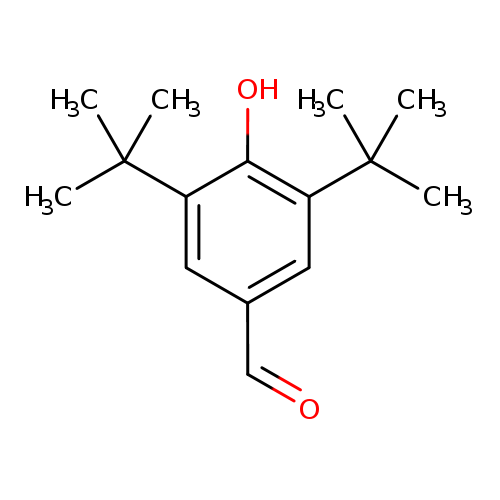
Chemical Structure
Synonyms
ValueSource
BHT-CHOHMDB
2,6-Di-tert-butyl-4-formylphenolHMDB
3,5-Bis(1,1-dimethylethyl)-4-hydroxybenzaldehydeHMDB
4-Formyl-2,6-di-tert-butylphenolHMDB
4-Hydroxy-3,5-di-tert-butylbenzaldehydeHMDB
3,5-Di-tert-butyl-4-hydroxybenzaldehydeHMDB
Chemical FormulaC15H22O2
Average Molecular Mass234.339 g/mol
Monoisotopic Mass234.162 g/mol
CAS Registry Number1620-98-0
IUPAC Name3,5-di-tert-butyl-4-hydroxybenzaldehyde
Traditional Name3,5-di-tert-butyl-4-hydroxybenzaldehyde
SMILESCC(C)(C)C1=CC(C=O)=CC(=C1O)C(C)(C)C
InChI IdentifierInChI=1S/C15H22O2/c1-14(2,3)11-7-10(9-16)8-12(13(11)17)15(4,5)6/h7-9,17H,1-6H3
InChI KeyDOZRDZLFLOODMB-UHFFFAOYSA-N
Chemical Taxonomy
Description Belongs to the class of organic compounds known as hydroxybenzaldehydes. These are organic aromatic compounds containing a benzene ring carrying an aldehyde group and a hydroxyl group.
KingdomOrganic compounds
Super ClassOrganic oxygen compounds
ClassOrganooxygen compounds
Sub ClassCarbonyl compounds
Direct ParentHydroxybenzaldehydes
Alternative Parents
Substituents
  • Hydroxybenzaldehyde
  • Phenylpropane
  • Benzoyl
  • Phenol
  • Benzenoid
  • Monocyclic benzene moiety
  • Organic oxide
  • Hydrocarbon derivative
  • Aromatic homomonocyclic compound
Molecular FrameworkAromatic homomonocyclic compounds
External DescriptorsNot Available
Biological Properties
StatusDetected and Not Quantified
OriginNot Available
Cellular LocationsNot Available
Biofluid LocationsNot Available
Tissue LocationsNot Available
ApplicationsNot Available
Biological RolesNot Available
Chemical RolesNot Available
Organoleptic EffectsNot Available
Physical Properties
StateNot Available
AppearanceNot Available
Experimental Properties
PropertyValue
Melting PointNot Available
Boiling PointNot Available
SolubilityNot Available
Predicted Properties
PropertyValueSource
Water Solubility0.042 g/LALOGPS
logP4.47ALOGPS
logP4.47ChemAxon
logS-3.8ALOGPS
pKa (Strongest Acidic)8.59ChemAxon
pKa (Strongest Basic)-6.5ChemAxon
Physiological Charge0ChemAxon
Hydrogen Acceptor Count2ChemAxon
Hydrogen Donor Count1ChemAxon
Polar Surface Area37.3 ŲChemAxon
Rotatable Bond Count3ChemAxon
Refractivity71.95 m³·mol⁻¹ChemAxon
Polarizability27.43 ųChemAxon
Number of Rings1ChemAxon
BioavailabilityYesChemAxon
Rule of FiveYesChemAxon
Ghose FilterYesChemAxon
Veber's RuleYesChemAxon
MDDR-like RuleNoChemAxon
Spectra
Spectra
Spectrum TypeDescriptionSplash KeyDeposition DateView
Predicted GC-MSPredicted GC-MS SpectrumNot AvailableNot AvailableView Spectrum
Predicted LC-MS/MSPredicted LC-MS/MS Spectrumsplash10-000i-0090000000-2c991b2e45e9d7f068ecNot AvailableView Spectrum
Predicted LC-MS/MSPredicted LC-MS/MS Spectrumsplash10-002r-1690000000-d79b8ed5d047d3b089e4Not AvailableView Spectrum
Predicted LC-MS/MSPredicted LC-MS/MS Spectrumsplash10-0a5i-9880000000-90b4746c09e146631cd0Not AvailableView Spectrum
Predicted LC-MS/MSPredicted LC-MS/MS Spectrumsplash10-001i-0090000000-fad9e20ea6c96fddad43Not AvailableView Spectrum
Predicted LC-MS/MSPredicted LC-MS/MS Spectrumsplash10-001i-0190000000-8f081ea411cd3c3ae483Not AvailableView Spectrum
Predicted LC-MS/MSPredicted LC-MS/MS Spectrumsplash10-0fc0-2970000000-55d230157bae7438bf58Not AvailableView Spectrum
Predicted LC-MS/MSPredicted LC-MS/MS Spectrumsplash10-001i-0090000000-9087f47ed0ae51229a17Not AvailableView Spectrum
Predicted LC-MS/MSPredicted LC-MS/MS Spectrumsplash10-001i-0090000000-400e602157ce1eab0ce2Not AvailableView Spectrum
Predicted LC-MS/MSPredicted LC-MS/MS Spectrumsplash10-00kr-0950000000-c2fdca009d989142e2dfNot AvailableView Spectrum
Predicted LC-MS/MSPredicted LC-MS/MS Spectrumsplash10-000i-1490000000-2635b56a0da1455cd7bdNot AvailableView Spectrum
Predicted LC-MS/MSPredicted LC-MS/MS Spectrumsplash10-0a4r-3890000000-f40569a3b6711fb5bb6cNot AvailableView Spectrum
Predicted LC-MS/MSPredicted LC-MS/MS Spectrumsplash10-05ai-6900000000-b42c795013899011a284Not AvailableView Spectrum
Toxicity Profile
Toxicity Values
Toxicity ValueOrganismDose DescriptorRoute of ExposurePredicted or ExperimentalToxicity RatingReference
1599.0 Log mg/kg [900:2800]RatLD50oralpredictedNot AvailableNot Available
Toxicity / Toxin ClassNot Available
Mechanism of ToxicityNot Available
Carcinogenicity (IARC Classification)Not Available
Minimum Risk LevelNot Available
SymptomsNot Available
TreatmentNot Available
Health Effects
Health EffectRelationshipDirectionDescriptionReference
Exposure Sources
Source IDSourceSectorReference
CEDs000010Insecticides?Insecticides are synthetic chemicals designed to control or eliminate insect pests that threaten crops and other agricultural products.Agriculture & land managementPubChem
CEDs000494Food contact materials?Food contact materials refer to substances and products that are intended to come into contact with food during processing, packaging, or preparation.Food, food processing & cookwareNot Available
CEDs000511Conductors Or Conductive Bodies Characterised By The Conductive Materials?Conductors, or conductive bodies, are materials that allow the flow of electrical current, typically made from metals such as copper, aluminum, or silver.Electrical & Electronic EquipmentPubChem
CEDs000545Food Preservation?Food preservation often involves the use of synthetic chemicals, such as preservatives, flavor enhancers, and color additives, to extend shelf life and enhance the sensory qualities of food products.Food, food processing & cookwarePubChem
CEDs000578Making Cigars?The process of making cigars involves several steps, including the cultivation of tobacco, fermentation, and the application of various additives to enhance flavor and preservation.Industrial manufacturing & chemical processingPubChem
CEDs000580Manufacture Preparation Of Tobacco Products?The manufacture and preparation of tobacco products involve various processes that can result in the introduction of synthetic chemicals into the environment.Industrial manufacturing & chemical processingPubChem
CEDs000600Herbicides And Algicides?Herbicides and algicides are synthetic chemicals primarily used to control unwanted plants and algae in various environments.Agriculture & land managementPubChem
CEDs000604Pest Attractants?Pest attractants are synthetic chemicals designed to lure specific pests for monitoring or control purposes.Agriculture & land managementPubChem
CEDs000605Pest Repellants?Pest repellents, often formulated from synthetic chemicals, are widely used to protect crops from insect infestations and other pests.Agriculture & land managementPubChem
CEDs000614Essential Oils Or Perfumes?Essential oils and perfumes are complex mixtures of volatile compounds derived from natural or synthetic sources, commonly used for their aromatic properties.Personal care & cosmeticsPubChem
CEDs000618Lip Makeup Products?Lip makeup products, such as lipsticks, lip glosses, and lip liners, often contain a variety of synthetic chemicals, including pigments, preservatives, and emollients.Personal care & cosmeticsPubChem
CEDs000630Toys?Toys, particularly those made from synthetic materials such as plastics, can be a source of chemical contamination due to the presence of various additives and compounds used in their production.Recreation & sports surfacesPubChem
CEDs000652Ropes?Ropes manufactured from synthetic fibers, such as polypropylene, nylon, and polyester, are widely used in various applications, including marine, construction, and outdoor activities.Textiles, leather & furnishingsPubChem
CEDs000685Ceramics?Ceramics can be a source of synthetic chemical contamination through various additives and processing agents used in their production.Building & ConstructionPubChem
CEDs000696Nanotechnology?Nanotechnology involves the manipulation of materials at the molecular or atomic level, typically within the range of 1 to 100 nanometers.Industrial manufacturing & chemical processingPubChem
CEDs000739Inks?Inks are complex mixtures composed of pigments or dyes, solvents, resins, and additives used primarily for printing and writing applications.Paper, pulp & fiber productsPubChem
CEDs000740Paper?Paper production involves the processing of wood fibers and the use of various chemicals, which can lead to synthetic chemical contamination.Paper, pulp & fiber productsPubChem
CEDs02593House DustAir, dust & atmospheric transportPMC10116588
Pathways
0 pathwaysPathway Source: PathBank

No pathways found

No metabolic pathways have been associated with this synthetic chemical

Targets
StructureProteinUniProt IDOrganismRelationshipDetails
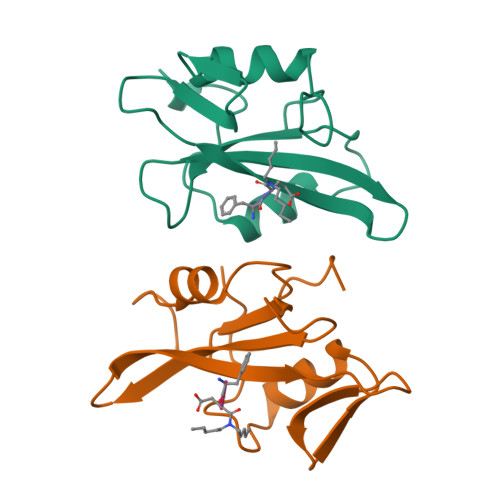
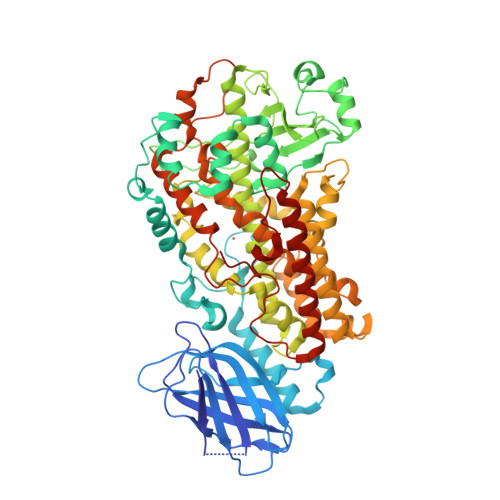
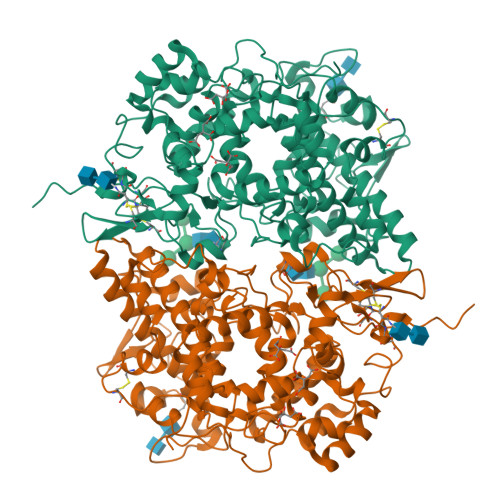
Prostaglandin G/H synthase 1 structureClick to view 3D structureProstaglandin G/H synthase 1P23219HumansPredicted (SEA)
Prediction Confidence Score
0.413
Applicability Domain
0.45
Statistical Significance
0.0012
Supporting Reference Compounds
136
E-value
9.03051
Prostaglandin G/H synthase 2 structureClick to view 3D structureProstaglandin G/H synthase 2Q05769Mus musculusPredicted (SEA)
Prediction Confidence Score
0.411
Applicability Domain
0.45
Statistical Significance
6.30e-04
Supporting Reference Compounds
43
E-value
4.9045
Click to view 3D structurePolyunsaturated fatty acid 5-lipoxygenaseP12527Rattus norvegicusPredicted (SEA)
Prediction Confidence Score
0.403
Applicability Domain
0.429
Statistical Significance
0.0013
Supporting Reference Compounds
78
E-value
10.1982
Prostaglandin G/H synthase 2 structureClick to view 3D structureProstaglandin G/H synthase 2P35354HumansPredicted (SEA)
Prediction Confidence Score
0.346
Applicability Domain
0.429
Statistical Significance
0.0056
Supporting Reference Compounds
201
E-value
43.5956
Click to view 3D structureCatechol O-methyltransferaseQ99028Sus scrofaPredicted (SEA)
Prediction Confidence Score
0.301
Applicability Domain
0.371
Statistical Significance
2.80e-04
Supporting Reference Compounds
2
E-value
2.17978
Prostaglandin G/H synthase 1 structureClick to view 3D structureProstaglandin G/H synthase 1P05979Ovis ariesPredicted (SEA)
Prediction Confidence Score
0.293
Applicability Domain
0.4
Statistical Significance
0.0082
Supporting Reference Compounds
106
E-value
63.525
Carbonic anhydrase 2 structureClick to view 3D structureCarbonic anhydrase 2P00918HumansPredicted (SEA)
Prediction Confidence Score
0.28
Applicability Domain
0.538
Statistical Significance
0.0754
Supporting Reference Compounds
472
E-value
586.905
Proto-oncogene tyrosine-protein kinase Src structureClick to view 3D structureProto-oncogene tyrosine-protein kinase SrcP12931HumansPredicted (SEA)
Prediction Confidence Score
0.27
Applicability Domain
0.563
Statistical Significance
0.2321
Supporting Reference Compounds
1158
E-value
1806.65
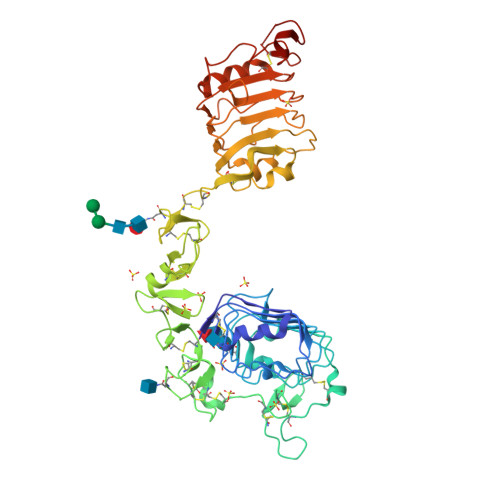
Epidermal growth factor receptor structureClick to view 3D structureEpidermal growth factor receptorP00533HumansPredicted (SEA)
Prediction Confidence Score
0.265
Applicability Domain
0.429
Statistical Significance
0.291
Supporting Reference Compounds
1301
E-value
2265.33
Tyrosinase structureClick to view 3D structureTyrosinaseP14679HumansPredicted (SEA)
Prediction Confidence Score
0.265
Applicability Domain
0.538
Statistical Significance
0.0033
Supporting Reference Compounds
29
E-value
25.6124
CDGSH iron-sulfur domain-containing protein 1 structureClick to view 3D structureCDGSH iron-sulfur domain-containing protein 1Q9NZ45HumansPredicted (SEA)
Prediction Confidence Score
0.264
Applicability Domain
0.421
Statistical Significance
0.002
Supporting Reference Compounds
22
E-value
15.4141
Nuclear receptor subfamily 1 group I member 2 structureClick to view 3D structureNuclear receptor subfamily 1 group I member 2O75469HumansPredicted (SEA)
Prediction Confidence Score
0.257
Applicability Domain
0.474
Statistical Significance
0.0201
Supporting Reference Compounds
146
E-value
156.71
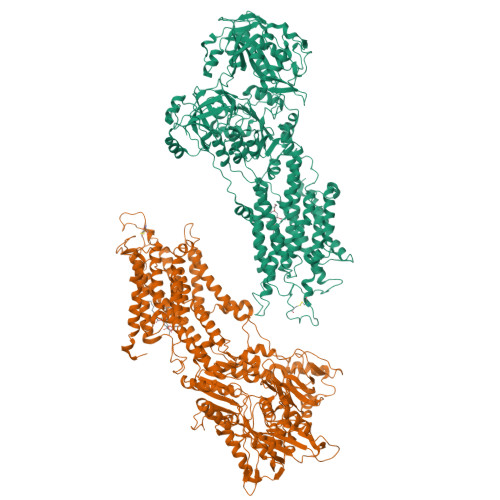
Sarcoplasmic/endoplasmic reticulum calcium ATPase 1 structureClick to view 3D structureSarcoplasmic/endoplasmic reticulum calcium ATPase 1P04191Oryctolagus cuniculusPredicted (SEA)
Prediction Confidence Score
0.256
Applicability Domain
0.423
Statistical Significance
3.00e-04
Supporting Reference Compounds
15
E-value
2.33548
Amine oxidase [flavin-containing] B structureClick to view 3D structureAmine oxidase [flavin-containing] BP27338HumansPredicted (SEA)
Prediction Confidence Score
0.256
Applicability Domain
0.357
Statistical Significance
0.1132
Supporting Reference Compounds
315
E-value
880.942
Click to view 3D structureL-lactate dehydrogenase B chainP16125Mus musculusPredicted (SEA)
Prediction Confidence Score
0.25
Applicability Domain
0.25 Low confidence
Statistical Significance
1.50e-04
Supporting Reference Compounds
1
E-value
1.16774
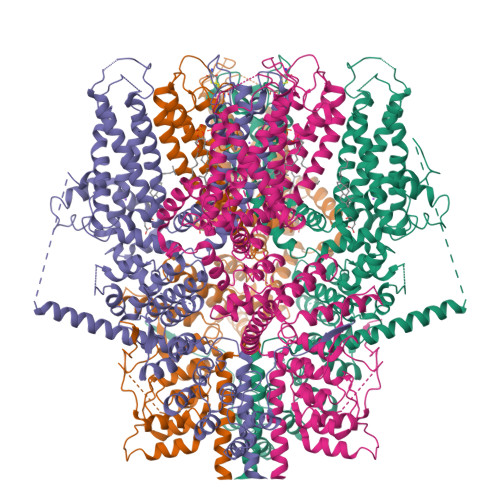
Short transient receptor potential channel 4 structureClick to view 3D structureShort transient receptor potential channel 4Q9QUQ5Mus musculusPredicted (SEA)
Prediction Confidence Score
0.249
Applicability Domain
0.423
Statistical Significance
0.0672
Supporting Reference Compounds
128
E-value
523.069
Induced myeloid leukemia cell differentiation protein Mcl-1 structureClick to view 3D structureInduced myeloid leukemia cell differentiation protein Mcl-1Q07820HumansPredicted (SEA)
Prediction Confidence Score
0.243
Applicability Domain
0.25 Low confidence
Statistical Significance
0.1292
Supporting Reference Compounds
343
E-value
1005.97
Receptor tyrosine-protein kinase erbB-2 structureClick to view 3D structureReceptor tyrosine-protein kinase erbB-2P04626HumansPredicted (SEA)
Prediction Confidence Score
0.243
Applicability Domain
0.459
Statistical Significance
0.3518
Supporting Reference Compounds
674
E-value
2738.81
Click to view 3D structureSarcoplasmic/endoplasmic reticulum calcium ATPase 3Q93084HumansPredicted (SEA)
Prediction Confidence Score
0.24
Applicability Domain
0.423
Statistical Significance
2.50e-04
Supporting Reference Compounds
3
E-value
1.94623
Insulin-like growth factor 1 receptor structureClick to view 3D structureInsulin-like growth factor 1 receptorP08069HumansPredicted (SEA)
Prediction Confidence Score
0.239
Applicability Domain
0.421
Statistical Significance
0.4186
Supporting Reference Compounds
785
E-value
3258.85
Catechol O-methyltransferase structureClick to view 3D structureCatechol O-methyltransferaseP22734Rattus norvegicusPredicted (SEA)
Prediction Confidence Score
0.235
Applicability Domain
0.371
Statistical Significance
0.0036
Supporting Reference Compounds
15
E-value
28.3371
Eukaryotic elongation factor 2 kinase structureClick to view 3D structureEukaryotic elongation factor 2 kinaseO00418HumansPredicted (SEA)
Prediction Confidence Score
0.229
Applicability Domain
0.563
Statistical Significance
0.2757
Supporting Reference Compounds
263
E-value
2146.15
Xanthine dehydrogenase/oxidase structureClick to view 3D structureXanthine dehydrogenase/oxidaseP80457Bos taurusPredicted (SEA)
Prediction Confidence Score
0.228
Applicability Domain
0.371
Statistical Significance
0.0106
Supporting Reference Compounds
29
E-value
82.2866
Polyunsaturated fatty acid 5-lipoxygenase structureClick to view 3D structurePolyunsaturated fatty acid 5-lipoxygenaseP09917HumansPredicted (SEA)
Prediction Confidence Score
0.226
Applicability Domain
0.233 Low confidence
Statistical Significance
0.1506
Supporting Reference Compounds
182
E-value
1172.72
Click to view 3D structureProstaglandin G/H synthase 2P79208Ovis ariesPredicted (SEA)
Prediction Confidence Score
0.226
Applicability Domain
0.45
Statistical Significance
0.0362
Supporting Reference Compounds
50
E-value
282.126
Concentrations
Not Available
External Links
DrugBank IDNot Available
HMDB IDHMDB0240643
FooDB IDNot Available
Phenol Explorer IDNot Available
KNApSAcK IDNot Available
BiGG IDNot Available
BioCyc IDNot Available
METLIN IDNot Available
PDB IDNot Available
Wikipedia LinkNot Available
Chemspider ID65974
ChEBI IDNot Available
PubChem Compound ID73219
Kegg Compound IDNot Available
YMDB IDNot Available
ECMDB IDNot Available
References
Synthesis ReferenceNot Available
MSDSNot Available
General ReferencesNot Available