Phenylethyl resorcinol (CED0017146)

Record Information
Version1.0
Creation Date2016-05-25 02:59:27 UTC
Update Date2026-08-19 05:28:41 UTC
SynCED IDCED0017146
Secondary Accession Numbers
  • CHEM021147
Identification
Common NamePhenylethyl resorcinol
ClassSmall Molecule
Description
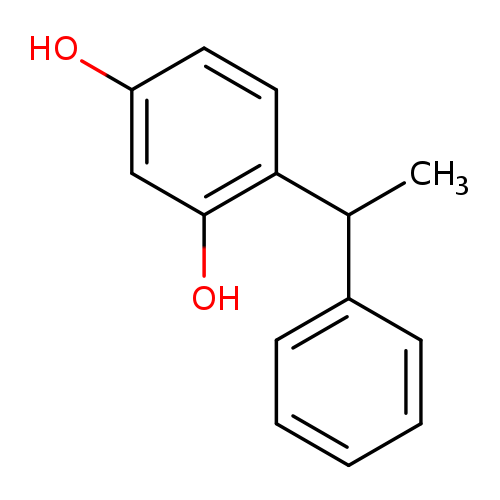
Phenylethyl resorcinol is an organic compound with the formula C14H14O2 and an average molecular weight of 214.26 g/mol. Phenylethyl resorcinol belongs to the diphenylmethanes, a subclass of benzene and substituted derivatives within the organic compounds. Industrially, the compound is utilized as an antioxidant. This substance has been identified in 19 recorded sources across several sectors. Within aquatic systems and sediments, it is found in groundwater, surface water, seawater, and freshwater. It is present in drinking water and water supply sources, including tap water, bottled water, and desalinated water. The compound is also detected in wastewater, sanitation, and biosolids, specifically in industrial wastewater, wastewater treatment effluent, mine wastewater, and unspecified wastewater. Additionally, it is found in appliances, HVAC, and refrigerants, such as water coolers and water heaters. In the marine, shipping, and aquaculture sectors, it occurs in ballast water and bilge water, while agriculture and land management sources include irrigation water. Exposure to phenylethyl resorcinol can occur through inhalation, oral ingestion, and touch.
Contaminant Type
  • PMT
Chemical Structure
Synonyms
ValueSource
4-(1-Phenylethyl)-1,3-benzenediolMeSH
4-(1-Phenylethyl)resorcinolMeSH
Chemical FormulaC14H14O2
Average Molecular Mass214.264 g/mol
Monoisotopic Mass214.099 g/mol
CAS Registry Number85-27-8
IUPAC Name4-(1-phenylethyl)benzene-1,3-diol
Traditional Name4-(1-phenylethyl)benzene-1,3-diol
SMILESCC(C1=CC=CC=C1)C1=C(O)C=C(O)C=C1
InChI IdentifierInChI=1S/C14H14O2/c1-10(11-5-3-2-4-6-11)13-8-7-12(15)9-14(13)16/h2-10,15-16H,1H3
InChI KeyPQSXNIMHIHYFEE-UHFFFAOYSA-N
Chemical Taxonomy
Description Belongs to the class of organic compounds known as diphenylmethanes. Diphenylmethanes are compounds containing a diphenylmethane moiety, which consists of a methane wherein two hydrogen atoms are replaced by two phenyl groups.
KingdomOrganic compounds
Super ClassBenzenoids
ClassBenzene and substituted derivatives
Sub ClassDiphenylmethanes
Direct ParentDiphenylmethanes
Alternative Parents
Substituents
  • Diphenylmethane
  • Resorcinol
  • 1-hydroxy-4-unsubstituted benzenoid
  • 1-hydroxy-2-unsubstituted benzenoid
  • Phenol
  • Organic oxygen compound
  • Hydrocarbon derivative
  • Organooxygen compound
  • Aromatic homomonocyclic compound
Molecular FrameworkAromatic homomonocyclic compounds
External DescriptorsNot Available
Biological Properties
StatusDetected and Not Quantified
OriginNot Available
Cellular LocationsNot Available
Biofluid LocationsNot Available
Tissue LocationsNot Available
ApplicationsNot Available
Biological RolesNot Available
Chemical RolesNot Available
Organoleptic EffectsNot Available
Physical Properties
StateNot Available
AppearanceNot Available
Experimental Properties
PropertyValue
Melting PointNot Available
Boiling PointNot Available
SolubilityNot Available
Predicted Properties
PropertyValueSource
Water Solubility0.16 g/LALOGPS
logP3.02ALOGPS
logP3.74ChemAxon
logS-3.1ALOGPS
pKa (Strongest Acidic)9.46ChemAxon
pKa (Strongest Basic)-5.4ChemAxon
Physiological Charge0ChemAxon
Hydrogen Acceptor Count2ChemAxon
Hydrogen Donor Count2ChemAxon
Polar Surface Area40.46 ŲChemAxon
Rotatable Bond Count2ChemAxon
Refractivity64.31 m³·mol⁻¹ChemAxon
Polarizability23.37 ųChemAxon
Number of Rings2ChemAxon
BioavailabilityYesChemAxon
Rule of FiveYesChemAxon
Ghose FilterYesChemAxon
Veber's RuleNoChemAxon
MDDR-like RuleNoChemAxon
Spectra
Spectra
Spectrum TypeDescriptionSplash KeyDeposition DateView
Predicted LC-MS/MSPredicted LC-MS/MS Spectrumsplash10-014i-0190000000-55368b38511a75aa7abaNot AvailableView Spectrum
Predicted LC-MS/MSPredicted LC-MS/MS Spectrumsplash10-014i-0890000000-c7b9ce8c1331c925f60fNot AvailableView Spectrum
Predicted LC-MS/MSPredicted LC-MS/MS Spectrumsplash10-102a-2900000000-1a905a37c34d6733c0cbNot AvailableView Spectrum
Predicted LC-MS/MSPredicted LC-MS/MS Spectrumsplash10-03di-0190000000-db9761e78167a81cd124Not AvailableView Spectrum
Predicted LC-MS/MSPredicted LC-MS/MS Spectrumsplash10-03di-0490000000-c88172bd3361fe95e995Not AvailableView Spectrum
Predicted LC-MS/MSPredicted LC-MS/MS Spectrumsplash10-0a6u-5900000000-aef24991a9631395c920Not AvailableView Spectrum
Toxicity Profile
Toxicity Values
Toxicity ValueOrganismDose DescriptorRoute of ExposurePredicted or ExperimentalToxicity RatingReference
2629.0 Log mg/kg [1500:4700]RatLD50oralpredictedNot AvailableNot Available
Toxicity / Toxin ClassNot Available
Mechanism of ToxicityNot Available
Carcinogenicity (IARC Classification)Not Available
Minimum Risk LevelNot Available
SymptomsNot Available
TreatmentNot Available
Health Effects
Health EffectRelationshipDirectionDescriptionReference
Exposure Sources
Source IDSourceSectorReference
CEDs000003Irrigation water?Irrigation water can serve as a vector for synthetic chemical contamination due to its potential exposure to agricultural inputs such as fertilizers, pesticides, and herbicides.Agriculture & land managementNot Available
CEDs000027Water Coolers?Water coolers can be a source of synthetic chemical contamination due to various materials used in their construction and operation.Appliances, HVAC & refrigerantsNot Available
CEDs000043Water heaters?Water heaters can be a source of synthetic chemical contamination primarily through the materials and coatings used in their construction.Appliances, HVAC & refrigerantsNot Available
CEDs000050Groundwater?Groundwater serves as a vital resource for drinking water and agricultural irrigation but is increasingly susceptible to contamination from synthetic chemicals.Aquatic systems & sedimentsNot Available
CEDs000051Surface water?Surface water can serve as a significant vector for the introduction of synthetic chemical contaminants into aquatic ecosystems.Aquatic systems & sedimentsNot Available
CEDs000052Seawater?Seawater can serve as a significant reservoir for synthetic chemical contamination due to various industrial activities, including shipping, oil drilling, and coastal manufacturing.Aquatic systems & sedimentsNot Available
CEDs000053Freshwater?Freshwater bodies, including rivers, lakes, and reservoirs, can serve as significant sources of synthetic chemical contamination due to various anthropogenic activities.Aquatic systems & sedimentsNot Available
CEDs000070Stormwater runoff?Stormwater runoff refers to the flow of rainwater or melted snow that does not soak into the ground and instead collects pollutants as it travels over impervious surfaces such as roads and parking lots.Automotive & urban infrastructureNot Available
CEDs000088Waterproofing sprays?Waterproofing sprays are synthetic chemical formulations designed to create a protective barrier against moisture on various surfaces, including fabrics, wood, and masonry.Building & ConstructionNot Available
CEDs000115Drinking water?Drinking water can be a medium for synthetic chemical contamination, often originating from various industrial processes and agricultural practices.Drinking water & water supplyNot Available
CEDs000116Tap water?Tap water can be a potential source of synthetic chemical contamination due to various industrial processes and agricultural runoff.Drinking water & water supplyNot Available
CEDs000117Bottled water?Bottled water, while perceived as a safe and convenient alternative to tap water, can be a source of synthetic chemical contamination.Drinking water & water supplyNot Available
CEDs000118Desalinated water?Desalinated water, produced through processes such as reverse osmosis or distillation, is increasingly utilized to meet freshwater demands in various regions.Drinking water & water supplyNot Available
CEDs000181Ballast water?Ballast water, taken on by ships to maintain stability and balance, often contains a diverse array of microorganisms, including bacteria, viruses, and plankton.Marine, shipping & aquacultureNot Available
CEDs000182Bilge water?Bilge water is a byproduct generated from the accumulation of water in the lowest part of a ship's hull, which may include a mixture of seawater, oil, fuel residues, and various contaminants.Marine, shipping & aquacultureNot Available
CEDs000468Industrial wastewater?Industrial wastewater is a byproduct generated during various manufacturing and processing activities, which often contains a complex mixture of organic and inorganic synthetic chemicals.Wastewater, sanitation & biosolidsNot Available
CEDs000470Wastewater treatment effluent?Wastewater treatment effluent is the liquid byproduct discharged from the treatment processes designed to remove contaminants from wastewater.Wastewater, sanitation & biosolidsNot Available
CEDs000475Mine wastewater?Mine wastewater refers to the liquid waste generated during the extraction and processing of minerals.Wastewater, sanitation & biosolidsNot Available
CEDs000477Wastewater, unspecified?Wastewater refers to water that has been adversely affected in quality by anthropogenic influence, typically through domestic, industrial, or agricultural activities.Wastewater, sanitation & biosolidsNot Available
CEDs000545Food Preservation?Food preservation often involves the use of synthetic chemicals, such as preservatives, flavor enhancers, and color additives, to extend shelf life and enhance the sensory qualities of food products.Food, food processing & cookwarePubChem
CEDs000552Processing Meats?Processing meats can lead to synthetic chemical contamination primarily through the use of additives and preservatives.Food, food processing & cookwarePubChem
CEDs000555Bleaching Agents?Bleaching agents are chemical substances used to whiten or lighten materials, often employed in various cleaning products for their stain removal and disinfecting properties.Household cleaning & consumer productsPubChem
CEDs000561Perfumes Within Detergents And Soaps?Perfumes within detergents and soaps are synthetic fragrance compounds added to enhance the sensory experience of cleaning products.Household cleaning & consumer productsPubChem
CEDs000563Soap Detergents?Soap detergents are synthetic surfactants designed to enhance the cleaning efficacy of water by reducing surface tension, allowing for better interaction with dirt and grease.Household cleaning & consumer productsPubChem
CEDs000609Aftershave?Aftershave is a grooming product typically used to soothe and protect the skin following shaving.Personal care & cosmeticsPubChem
CEDs000610Aftersun Products?Aftersun products are designed to soothe and hydrate the skin after sun exposure, often containing various synthetic chemicals such as emollients, preservatives, and fragrances.Personal care & cosmeticsPubChem
CEDs000611Anti Perspirants Or Body Deoderants?Antiperspirants and body deodorants commonly contain synthetic chemicals such as aluminum compounds, parabens, and synthetic fragrances.Personal care & cosmeticsPubChem
CEDs000613Depilatories?Depilatories are products designed to remove unwanted hair through the application of synthetic chemicals that break down the protein structure of hair, facilitating its removal.Personal care & cosmeticsPubChem
CEDs000614Essential Oils Or Perfumes?Essential oils and perfumes are complex mixtures of volatile compounds derived from natural or synthetic sources, commonly used for their aromatic properties.Personal care & cosmeticsPubChem
CEDs000615Eye Makeup Products?Eye makeup products, including mascaras, eyeliners, and eyeshadows, often contain a variety of synthetic chemicals such as pigments, preservatives, and film-forming agents.Personal care & cosmeticsPubChem
CEDs000616Face Mask Cosmetics?Face mask cosmetics often contain a variety of synthetic chemicals, including preservatives, emulsifiers, and fragrances, which can contribute to chemical contamination.Personal care & cosmeticsPubChem
CEDs000617Lip Care Products?Lip care products, including lipsticks, balms, and glosses, often contain a variety of synthetic chemicals such as parabens, phthalates, and synthetic fragrances.Personal care & cosmeticsPubChem
CEDs000618Lip Makeup Products?Lip makeup products, such as lipsticks, lip glosses, and lip liners, often contain a variety of synthetic chemicals, including pigments, preservatives, and emollients.Personal care & cosmeticsPubChem
CEDs000650Purses Luggage Hand Bags?Purses, luggage, and handbags are often manufactured using synthetic materials such as polyvinyl chloride (PVC), polyurethane, and various types of nylon.Textiles, leather & furnishingsPubChem
CEDs000730Contact Lens Cases?Contact lens cases are small containers designed to store contact lenses in a sterile environment, typically made from various synthetic materials including plastics such as polypropylene or polycarbonate.Healthcare, pharmaceuticals & veterinary productsPubChem
CEDs000735Explosives?Explosives are chemical compounds or mixtures designed to undergo rapid decomposition, releasing energy in the form of gas and heat.Defense & military infrastructurePubChem
CEDs000740Paper?Paper production involves the processing of wood fibers and the use of various chemicals, which can lead to synthetic chemical contamination.Paper, pulp & fiber productsPubChem
CEDs000744Water, Wastewater, & Sewage Treatment?Water, wastewater, and sewage treatment processes are critical for managing and mitigating pollutants in water systems.Wastewater, sanitation & biosolidsPubChem
Pathways
1 pathwayPathway Source: PathBank
Targets
StructureProteinUniProt IDOrganismRelationshipDetails
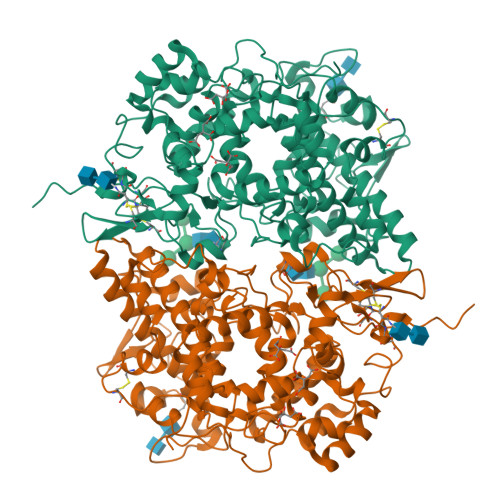
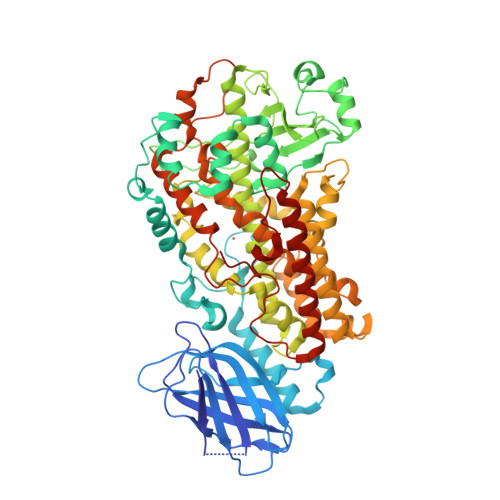
Click to view 3D structurePolyphenol oxidase 1Q00024Agaricus bisporusPredicted (SEA)
Prediction Confidence Score
0.395
Applicability Domain
0.474
Statistical Significance
2.00e-05
Supporting Reference Compounds
2
E-value
0.155698
5,6-dihydroxyindole-2-carboxylic acid oxidase structureClick to view 3D structure5,6-dihydroxyindole-2-carboxylic acid oxidaseP07147Mus musculusPredicted (SEA)
Prediction Confidence Score
0.344
Applicability Domain
0.373
Statistical Significance
2.00e-05
Supporting Reference Compounds
2
E-value
0.155698
Tyrosinase structureClick to view 3D structureTyrosinaseP14679HumansPredicted (SEA)
Prediction Confidence Score
0.317
Applicability Domain
0.351
Statistical Significance
9.00e-04
Supporting Reference Compounds
29
E-value
7.00643
Estrogen receptor beta structureClick to view 3D structureEstrogen receptor betaQ92731HumansPredicted (SEA)
Prediction Confidence Score
0.315
Applicability Domain
0.448
Statistical Significance
0.008
Supporting Reference Compounds
174
E-value
62.6686
Click to view 3D structureTyrosinaseO42713Agaricus bisporusPredicted (SEA)
Prediction Confidence Score
0.304
Applicability Domain
0.351
Statistical Significance
0.0015
Supporting Reference Compounds
39
E-value
12.0666
Estrogen receptor structureClick to view 3D structureEstrogen receptorP03372HumansPredicted (SEA)
Prediction Confidence Score
0.302
Applicability Domain
0.448
Statistical Significance
0.0128
Supporting Reference Compounds
201
E-value
99.8806
N1L structureClick to view 3D structureN1LQ49PX0Vaccinia virusPredicted (SEA)
Prediction Confidence Score
0.302
Applicability Domain
0.326
Statistical Significance
2.00e-05
Supporting Reference Compounds
2
E-value
0.155698
Click to view 3D structureKynureninaseP70712Rattus norvegicusPredicted (SEA)
Prediction Confidence Score
0.295
Applicability Domain
0.295 Low confidence
Statistical Significance
5.20e-04
Supporting Reference Compounds
1
E-value
4.04816
Prostaglandin G/H synthase 1 structureClick to view 3D structureProstaglandin G/H synthase 1P23219HumansPredicted (SEA)
Prediction Confidence Score
0.295
Applicability Domain
0.317
Statistical Significance
0.0117
Supporting Reference Compounds
136
E-value
91.0836
Carbonic anhydrase 2 structureClick to view 3D structureCarbonic anhydrase 2P00918HumansPredicted (SEA)
Prediction Confidence Score
0.292
Applicability Domain
0.321
Statistical Significance
0.0554
Supporting Reference Compounds
472
E-value
431.44
Carbonic anhydrase 12 structureClick to view 3D structureCarbonic anhydrase 12O43570HumansPredicted (SEA)
Prediction Confidence Score
0.292
Applicability Domain
0.321
Statistical Significance
0.0375
Supporting Reference Compounds
332
E-value
292.168
Click to view 3D structureReverse transcriptaseQ06347Human immunodeficiency virus 2Predicted (SEA)
Prediction Confidence Score
0.289
Applicability Domain
0.289 Low confidence
Statistical Significance
1.30e-04
Supporting Reference Compounds
1
E-value
1.01204
Carbonic anhydrase 1 structureClick to view 3D structureCarbonic anhydrase 1P00915HumansPredicted (SEA)
Prediction Confidence Score
0.285
Applicability Domain
0.351
Statistical Significance
0.0548
Supporting Reference Compounds
407
E-value
427.003
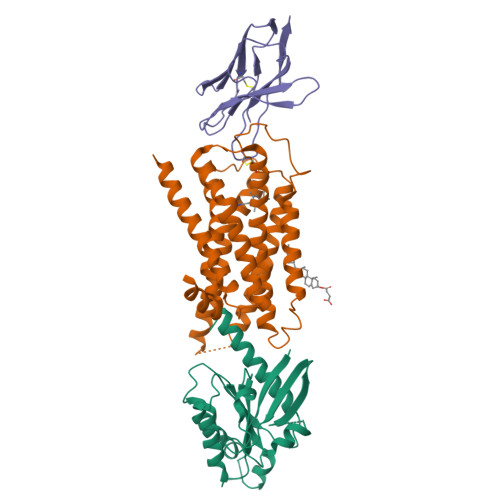
5-hydroxytryptamine receptor 7 structureClick to view 3D structure5-hydroxytryptamine receptor 7P34969HumansPredicted (SEA)
Prediction Confidence Score
0.285
Applicability Domain
0.325
Statistical Significance
0.069
Supporting Reference Compounds
565
E-value
537.16
Alpha-2A adrenergic receptor structureClick to view 3D structureAlpha-2A adrenergic receptorP08913HumansPredicted (SEA)
Prediction Confidence Score
0.285
Applicability Domain
0.325
Statistical Significance
0.0608
Supporting Reference Compounds
487
E-value
473.713
Alpha-1A adrenergic receptor structureClick to view 3D structureAlpha-1A adrenergic receptorP35348HumansPredicted (SEA)
Prediction Confidence Score
0.285
Applicability Domain
0.325
Statistical Significance
0.0525
Supporting Reference Compounds
376
E-value
408.397
Click to view 3D structureLignostilbene alpha, beta-dioxygenaseO87171Sphingomonas paucimobilisPredicted (SEA)
Prediction Confidence Score
0.282
Applicability Domain
0.282 Low confidence
Statistical Significance
4.90e-04
Supporting Reference Compounds
1
E-value
3.81461
5-hydroxytryptamine receptor 2B structureClick to view 3D structure5-hydroxytryptamine receptor 2BP41595HumansPredicted (SEA)
Prediction Confidence Score
0.282
Applicability Domain
0.303
Statistical Significance
0.0859
Supporting Reference Compounds
686
E-value
668.88
Histone deacetylase 4 structureClick to view 3D structureHistone deacetylase 4P56524HumansPredicted (SEA)
Prediction Confidence Score
0.282
Applicability Domain
0.351
Statistical Significance
0.0383
Supporting Reference Compounds
185
E-value
298.163
Voltage-gated inwardly rectifying potassium channel KCNH2 structureClick to view 3D structureVoltage-gated inwardly rectifying potassium channel KCNH2Q12809HumansPredicted (SEA)
Prediction Confidence Score
0.281
Applicability Domain
0.348
Statistical Significance
0.2624
Supporting Reference Compounds
1498
E-value
2042.76
5-hydroxytryptamine receptor 2C structureClick to view 3D structure5-hydroxytryptamine receptor 2CP28335HumansPredicted (SEA)
Prediction Confidence Score
0.28
Applicability Domain
0.303
Statistical Significance
0.1114
Supporting Reference Compounds
823
E-value
867.63
Polyunsaturated fatty acid 5-lipoxygenase structureClick to view 3D structurePolyunsaturated fatty acid 5-lipoxygenaseP09917HumansPredicted (SEA)
Prediction Confidence Score
0.279
Applicability Domain
0.31
Statistical Significance
0.0222
Supporting Reference Compounds
182
E-value
172.592
Carbonic anhydrase 9 structureClick to view 3D structureCarbonic anhydrase 9Q16790HumansPredicted (SEA)
Prediction Confidence Score
0.279
Applicability Domain
0.321
Statistical Significance
0.0601
Supporting Reference Compounds
372
E-value
468.107
Protein deacetylase HDAC6 structureClick to view 3D structureProtein deacetylase HDAC6Q9UBN7HumansPredicted (SEA)
Prediction Confidence Score
0.278
Applicability Domain
0.351
Statistical Significance
0.1254
Supporting Reference Compounds
553
E-value
976.307
Mandelate racemase structureClick to view 3D structureMandelate racemaseP11444Pseudomonas putidaPredicted (SEA)
Prediction Confidence Score
0.278
Applicability Domain
0.278 Low confidence
Statistical Significance
4.50e-04
Supporting Reference Compounds
1
E-value
3.50322
Concentrations
Not Available
External Links
DrugBank IDNot Available
HMDB IDNot Available
FooDB IDNot Available
Phenol Explorer IDNot Available
KNApSAcK IDNot Available
BiGG IDNot Available
BioCyc IDNot Available
METLIN IDNot Available
PDB IDNot Available
Wikipedia LinkNot Available
Chemspider IDNot Available
ChEBI IDNot Available
PubChem Compound ID11171903
Kegg Compound IDNot Available
YMDB IDNot Available
ECMDB IDNot Available
References
Synthesis ReferenceNot Available
MSDSNot Available
General ReferencesNot Available