2-Hydroxy-Benzothiazole (CED0026795)

Record Information
Version1.0
Creation Date2016-05-25 03:13:40 UTC
Update Date2026-08-24 03:37:05 UTC
SynCED IDCED0026795
Secondary Accession Numbers
  • CHEM021195
Identification
Common Name2-Hydroxy-Benzothiazole
ClassSmall Molecule
Description
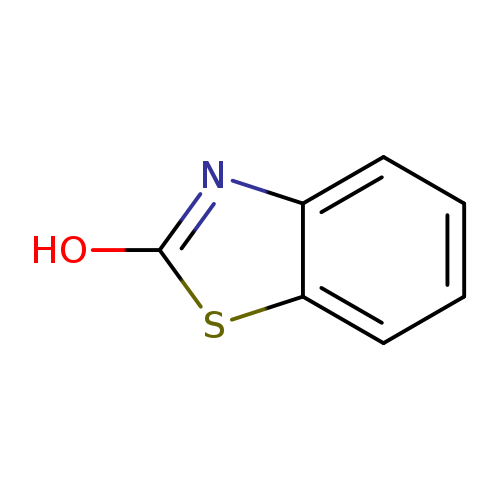
2-Hydroxy-Benzothiazole belongs to the benzothiazoles, a class of organoheterocyclic compounds within the organic compounds. This compound has the chemical formula C7H5NOS and an average molecular weight of 151.18 g/mol. The substance has been identified in nine recorded sources. Within the category of food, food processing, and cookware, it is found in the treatment of hops, the preparation of wort, the preparation of malt, and fermentation processes for beer. It is also present in household cleaning and consumer products, specifically in soap detergents and perfumes within detergents and soaps. In the context of electrical and electronic equipment, it has been detected in television systems and amplifiers. Additionally, it is found in indoor air, which is categorized under air, dust, and atmospheric transport. The recorded route of exposure for this compound is inhalation.
Contaminant TypeNot Available
Chemical Structure
Synonyms
ValueSource
(2-Mercatophenyl)carbamothioic acid gamma-lactoneChEBI
2(3H)-BenzothiazoloneChEBI
2-BenzothiazololChEBI
2-BenzothiazoloneChEBI
2-Hydroxy-1,3-benzothiazoleChEBI
3H-Benzothiazol-2-oneChEBI
HBTChEBI
HOBTChEBI
(2-Mercatophenyl)carbamothioate g-lactoneGenerator
(2-Mercatophenyl)carbamothioate gamma-lactoneGenerator
(2-Mercatophenyl)carbamothioate γ-lactoneGenerator
(2-Mercatophenyl)carbamothioic acid g-lactoneGenerator
(2-Mercatophenyl)carbamothioic acid γ-lactoneGenerator
Chemical FormulaC7H5NOS
Average Molecular Mass151.180 g/mol
Monoisotopic Mass151.009 g/mol
CAS Registry Number934-34-9
IUPAC Name1,3-benzothiazol-2-ol
Traditional Name2-benzothiazolone
SMILESOC1=NC2=CC=CC=C2S1
InChI IdentifierInChI=1S/C7H5NOS/c9-7-8-5-3-1-2-4-6(5)10-7/h1-4H,(H,8,9)
InChI KeyYEDUAINPPJYDJZ-UHFFFAOYSA-N
Chemical Taxonomy
Description Belongs to the class of organic compounds known as benzothiazoles. These are organic compounds containing a benzene fused to a thiazole ring (a five-membered ring with four carbon atoms, one nitrogen atom and one sulfur atom).
KingdomOrganic compounds
Super ClassOrganoheterocyclic compounds
ClassBenzothiazoles
Sub ClassNot Available
Direct ParentBenzothiazoles
Alternative Parents
Substituents
  • 1,3-benzothiazole
  • Benzenoid
  • Heteroaromatic compound
  • Thiazole
  • Azole
  • Azacycle
  • Organic nitrogen compound
  • Organic oxygen compound
  • Organopnictogen compound
  • Organic oxide
  • Hydrocarbon derivative
  • Organooxygen compound
  • Organonitrogen compound
  • Aromatic heteropolycyclic compound
Molecular FrameworkAromatic heteropolycyclic compounds
External Descriptors
Biological Properties
StatusDetected and Not Quantified
OriginNot Available
Cellular LocationsNot Available
Biofluid LocationsNot Available
Tissue LocationsNot Available
ApplicationsNot Available
Biological RolesNot Available
Chemical RolesNot Available
Organoleptic EffectsNot Available
Physical Properties
StateNot Available
AppearanceNot Available
Experimental Properties
PropertyValue
Melting PointNot Available
Boiling PointNot Available
SolubilityNot Available
Predicted Properties
PropertyValueSource
Water Solubility1.71 g/LALOGPS
logP2.12ALOGPS
logP2.49ChemAxon
logS-2ALOGPS
pKa (Strongest Acidic)8.44ChemAxon
pKa (Strongest Basic)0.027ChemAxon
Physiological Charge0ChemAxon
Hydrogen Acceptor Count2ChemAxon
Hydrogen Donor Count1ChemAxon
Polar Surface Area33.12 ŲChemAxon
Rotatable Bond Count0ChemAxon
Refractivity38.58 m³·mol⁻¹ChemAxon
Polarizability14.67 ųChemAxon
Number of Rings2ChemAxon
BioavailabilityYesChemAxon
Rule of FiveYesChemAxon
Ghose FilterNoChemAxon
Veber's RuleYesChemAxon
MDDR-like RuleNoChemAxon
Spectra
Spectra
Spectrum TypeDescriptionSplash KeyDeposition DateView
Predicted GC-MSPredicted GC-MS Spectrumsplash10-0uk9-1900000000-ab1f6c8df999bd3a475fNot AvailableView Spectrum
Predicted GC-MSPredicted GC-MS SpectrumNot AvailableNot AvailableView Spectrum
LC-MS/MSLC-MS/MS Spectrumsplash10-0udi-0900000000-40df4c961ee18ddfa198Not AvailableView Spectrum
LC-MS/MSLC-MS/MS Spectrumsplash10-0udi-0900000000-dd059caf718018472713Not AvailableView Spectrum
LC-MS/MSLC-MS/MS Spectrumsplash10-0udi-0900000000-d1dbfe494bd3a56d5053Not AvailableView Spectrum
LC-MS/MSLC-MS/MS Spectrumsplash10-0udi-0900000000-1a3ee451e89e5f7a4879Not AvailableView Spectrum
LC-MS/MSLC-MS/MS Spectrumsplash10-0zfr-3900000000-ff0157d7d736a331fd25Not AvailableView Spectrum
LC-MS/MSLC-MS/MS Spectrumsplash10-0udi-0900000000-77b6f3257d13c8c81afcNot AvailableView Spectrum
LC-MS/MSLC-MS/MS Spectrumsplash10-0uk9-4900000000-dff148ef23a459ec1802Not AvailableView Spectrum
LC-MS/MSLC-MS/MS Spectrumsplash10-0udi-1900000000-7121fbcdf820d2069c9cNot AvailableView Spectrum
LC-MS/MSLC-MS/MS Spectrumsplash10-0udi-0900000000-5b57246e7170c2799b32Not AvailableView Spectrum
LC-MS/MSLC-MS/MS Spectrumsplash10-0udi-0900000000-3f3b9823b1dc349ad58fNot AvailableView Spectrum
LC-MS/MSLC-MS/MS Spectrumsplash10-0giu-8900000000-5d9676da481649d340ddNot AvailableView Spectrum
LC-MS/MSLC-MS/MS Spectrumsplash10-0a4i-9300000000-01185dc3c0aebd82e801Not AvailableView Spectrum
LC-MS/MSLC-MS/MS Spectrumsplash10-0a4i-9000000000-8bc303161ceed3b6b6adNot AvailableView Spectrum
LC-MS/MSLC-MS/MS Spectrumsplash10-015c-9200000000-0573d4f9347284713677Not AvailableView Spectrum
LC-MS/MSLC-MS/MS Spectrumsplash10-02u0-9000000000-eece9aa09fcdc086a921Not AvailableView Spectrum
LC-MS/MSLC-MS/MS Spectrumsplash10-02u3-9000000000-19e41b0da5d37b013256Not AvailableView Spectrum
LC-MS/MSLC-MS/MS Spectrumsplash10-00yi-0900000000-7addc47a3eb7ca68c1f9Not AvailableView Spectrum
LC-MS/MSLC-MS/MS Spectrumsplash10-0g4i-0900000000-3fc9a12e3cfa0b74942bNot AvailableView Spectrum
LC-MS/MSLC-MS/MS Spectrumsplash10-0udi-0900000000-34712bc09ff3b56acce3Not AvailableView Spectrum
LC-MS/MSLC-MS/MS Spectrumsplash10-0udi-0900000000-21e54ef420e9e65c3194Not AvailableView Spectrum
LC-MS/MSLC-MS/MS Spectrumsplash10-0002-0900000000-721810e7e9b5cadbcaefNot AvailableView Spectrum
LC-MS/MSLC-MS/MS Spectrumsplash10-0002-0900000000-d12b00181735b5b86413Not AvailableView Spectrum
Predicted LC-MS/MSPredicted LC-MS/MS Spectrumsplash10-0udi-0900000000-ea5f4a5e6b394118f486Not AvailableView Spectrum
Predicted LC-MS/MSPredicted LC-MS/MS Spectrumsplash10-0udi-0900000000-8fae427a126cd10210dfNot AvailableView Spectrum
Predicted LC-MS/MSPredicted LC-MS/MS Spectrumsplash10-0a4i-2900000000-775adacda40f0a74aefaNot AvailableView Spectrum
Predicted LC-MS/MSPredicted LC-MS/MS Spectrumsplash10-0udi-0900000000-4f34d39d502ff38a4242Not AvailableView Spectrum
Predicted LC-MS/MSPredicted LC-MS/MS Spectrumsplash10-0udi-1900000000-d7d2279005226377b0f7Not AvailableView Spectrum
Predicted LC-MS/MSPredicted LC-MS/MS Spectrumsplash10-0f6x-9600000000-d1c8e6e2a3560bd77591Not AvailableView Spectrum
Predicted LC-MS/MSPredicted LC-MS/MS Spectrumsplash10-0udi-0900000000-d96306d74d75d734b1baNot AvailableView Spectrum
Predicted LC-MS/MSPredicted LC-MS/MS Spectrumsplash10-0udi-0900000000-c93612357e9d00ecda2bNot AvailableView Spectrum
Predicted LC-MS/MSPredicted LC-MS/MS Spectrumsplash10-0kmi-6900000000-a8b76589965d1dfa698dNot AvailableView Spectrum
Predicted LC-MS/MSPredicted LC-MS/MS Spectrumsplash10-0udi-0900000000-8629e1bee881a69f0450Not AvailableView Spectrum
Predicted LC-MS/MSPredicted LC-MS/MS Spectrumsplash10-0udi-0900000000-9adfd4a2cf438b9efae6Not AvailableView Spectrum
Predicted LC-MS/MSPredicted LC-MS/MS Spectrumsplash10-00di-1900000000-f101861de53075aca59fNot AvailableView Spectrum
1D NMR1H NMR Spectrum (1D, D2O, predicted)Not AvailableNot AvailableView Spectrum
1D NMR13C NMR Spectrum (1D, D2O, predicted)Not AvailableNot AvailableView Spectrum
Toxicity Profile
Toxicity Values
Toxicity ValueOrganismDose DescriptorRoute of ExposurePredicted or ExperimentalToxicity RatingReference
637.0 Log mg/kg [360:1100]RatLD50oralpredictedNot AvailableNot Available
Toxicity / Toxin ClassNot Available
Mechanism of ToxicityNot Available
Carcinogenicity (IARC Classification)Not Available
Minimum Risk LevelNot Available
SymptomsNot Available
TreatmentNot Available
Health Effects
Health EffectRelationshipDirectionDescriptionReference
Exposure Sources
Source IDSourceSectorReference
CEDs000010Insecticides?Insecticides are synthetic chemicals designed to control or eliminate insect pests that threaten crops and other agricultural products.Agriculture & land managementPubChem
CEDs000013Soil?Soil serves as a critical medium for plant growth and sustains various ecological functions; however, it can become a reservoir for synthetic chemical contamination.Agriculture & land managementPMC13213317
CEDs000018Indoor dust?Indoor dust is a complex mixture of particles that accumulates in indoor environments, consisting of materials such as skin flakes, hair, textile fibers, and particles from outdoor sources.Air, dust & atmospheric transportPMC13213317
CEDs000019Indoor air?Indoor air can be a significant reservoir for synthetic chemical contaminants, which often originate from various sources within enclosed environments.Air, dust & atmospheric transportNot Available
CEDs000051Surface water?Surface water can serve as a significant vector for the introduction of synthetic chemical contaminants into aquatic ecosystems.Aquatic systems & sedimentsPMC13213317
CEDs000115Drinking water?Drinking water can be a medium for synthetic chemical contamination, often originating from various industrial processes and agricultural practices.Drinking water & water supplyPMC13213317
CEDs000505Amplifiers?Amplifiers, commonly used in various electronic devices to enhance signal strength, can be a source of synthetic chemical contamination due to the materials and processes involved in their production and disposal.Electrical & Electronic EquipmentPubChem
CEDs000511Conductors Or Conductive Bodies Characterised By The Conductive Materials?Conductors, or conductive bodies, are materials that allow the flow of electrical current, typically made from metals such as copper, aluminum, or silver.Electrical & Electronic EquipmentPubChem
CEDs000519Electrodes?Electrodes, used in various electrical and electronic applications, can be a source of synthetic chemical contamination due to the materials from which they are constructed and the processes involved in their manufacturing.Electrical & Electronic EquipmentPubChem
CEDs000537Television Systems?Television systems can be a source of synthetic chemical contamination due to the various materials and components used in their manufacture and operation.Electrical & Electronic EquipmentPubChem
CEDs000544Fermentation Processes For Beer?Fermentation processes for beer involve the conversion of sugars into alcohol and carbon dioxide by yeast.Food, food processing & cookwarePubChem
CEDs000545Food Preservation?Food preservation often involves the use of synthetic chemicals, such as preservatives, flavor enhancers, and color additives, to extend shelf life and enhance the sensory qualities of food products.Food, food processing & cookwarePubChem
CEDs000547Preparation Of Malt?Malt preparation involves the germination and drying of cereal grains, primarily barley, to produce malt for brewing and food products.Food, food processing & cookwarePubChem
CEDs000550Preparation Of Wort?The preparation of wort involves the extraction of sugars from malted grains, a crucial step in the brewing process.Food, food processing & cookwarePubChem
CEDs000553Treatment Of Hops?Hops, a key ingredient in brewing and food flavoring, can be a source of synthetic chemical contamination due to various agricultural practices.Food, food processing & cookwarePubChem
CEDs000561Perfumes Within Detergents And Soaps?Perfumes within detergents and soaps are synthetic fragrance compounds added to enhance the sensory experience of cleaning products.Household cleaning & consumer productsPubChem
CEDs000563Soap Detergents?Soap detergents are synthetic surfactants designed to enhance the cleaning efficacy of water by reducing surface tension, allowing for better interaction with dirt and grease.Household cleaning & consumer productsPubChem
CEDs000596Acaricides?Acaricides are synthetic chemicals specifically designed to target and control mite populations that can damage crops and plants.Agriculture & land managementPubChem
CEDs000600Herbicides And Algicides?Herbicides and algicides are synthetic chemicals primarily used to control unwanted plants and algae in various environments.Agriculture & land managementPubChem
CEDs000602Molluscicides?Molluscicides are synthetic chemicals specifically designed to control and eliminate mollusks, such as snails and slugs, which can be detrimental to crops and agricultural productivity.Agriculture & land managementPubChem
CEDs000603Nematocides?Nematocides are synthetic chemicals specifically designed to control nematodes, which are microscopic roundworms that can cause significant damage to crops and plants.Agriculture & land managementPubChem
CEDs000605Pest Repellants?Pest repellents, often formulated from synthetic chemicals, are widely used to protect crops from insect infestations and other pests.Agriculture & land managementPubChem
CEDs000606Plant Growth Regulators?Plant Growth Regulators (PGRs) are synthetic chemicals designed to influence the growth and development of plants.Agriculture & land managementPubChem
CEDs000610Aftersun Products?Aftersun products are designed to soothe and hydrate the skin after sun exposure, often containing various synthetic chemicals such as emollients, preservatives, and fragrances.Personal care & cosmeticsPubChem
CEDs000611Anti Perspirants Or Body Deoderants?Antiperspirants and body deodorants commonly contain synthetic chemicals such as aluminum compounds, parabens, and synthetic fragrances.Personal care & cosmeticsPubChem
CEDs000613Depilatories?Depilatories are products designed to remove unwanted hair through the application of synthetic chemicals that break down the protein structure of hair, facilitating its removal.Personal care & cosmeticsPubChem
CEDs000618Lip Makeup Products?Lip makeup products, such as lipsticks, lip glosses, and lip liners, often contain a variety of synthetic chemicals, including pigments, preservatives, and emollients.Personal care & cosmeticsPubChem
CEDs000642Footwear?Footwear production often involves the use of various synthetic chemicals, such as adhesives, dyes, and treatments, which can contribute to environmental contamination.Textiles, leather & furnishingsPubChem
CEDs000662Yarns Or Threads?Yarns or threads used in textiles can be a source of synthetic chemical contamination due to the production processes and treatments they undergo.Textiles, leather & furnishingsPubChem
CEDs000679Phosphatic Fertilisers?Phosphatic fertilizers are synthetic chemical products primarily composed of phosphorus, which is essential for plant growth.Agriculture & land managementPubChem
CEDs000682Traction Harness?Traction harnesses, commonly used in agricultural practices for animals and machinery, can be a source of synthetic chemical contamination through the materials used in their production.Agriculture & land managementPubChem
CEDs000685Ceramics?Ceramics can be a source of synthetic chemical contamination through various additives and processing agents used in their production.Building & ConstructionPubChem
CEDs000688Glass Coatings?Glass coatings are synthetic chemical formulations applied to glass surfaces to enhance properties such as durability, UV resistance, and aesthetic appeal.Building & ConstructionPubChem
CEDs000692Silica Free Oxide Glass?Silica Free Oxide Glass is a type of glass that is produced using alternative materials to traditional silica-based formulations.Building & ConstructionPubChem
CEDs000696Nanotechnology?Nanotechnology involves the manipulation of materials at the molecular or atomic level, typically within the range of 1 to 100 nanometers.Industrial manufacturing & chemical processingPubChem
CEDs000734Coating Compositions?Coating compositions, which include paints, sealants, and varnishes, are formulated with a variety of synthetic chemicals such as solvents, resins, pigments, and additives.Building & ConstructionPubChem
CEDs000738Cooling Circuit Water?Cooling circuit water is utilized in various industrial processes to absorb and dissipate heat generated during operations.Industrial manufacturing & chemical processingPubChem
CEDs000739Inks?Inks are complex mixtures composed of pigments or dyes, solvents, resins, and additives used primarily for printing and writing applications.Paper, pulp & fiber productsPubChem
CEDs000740Paper?Paper production involves the processing of wood fibers and the use of various chemicals, which can lead to synthetic chemical contamination.Paper, pulp & fiber productsPubChem
CEDs000744Water, Wastewater, & Sewage Treatment?Water, wastewater, and sewage treatment processes are critical for managing and mitigating pollutants in water systems.Wastewater, sanitation & biosolidsPubChem
CEDs02293Fresh WaterAquatic systems & sedimentsPMC7377248
CEDs02592PM2.5Air, dust & atmospheric transportPMC12070413
CEDs02633Indoor Dust SamplesAir, dust & atmospheric transportPMC13213317
CEDs03274Roadside SoilAutomotive & urban infrastructurePMC13213317
Pathways
0 pathwaysPathway Source: PathBank

No pathways found

No metabolic pathways have been associated with this synthetic chemical

Targets
StructureProteinUniProt IDOrganismRelationshipDetails
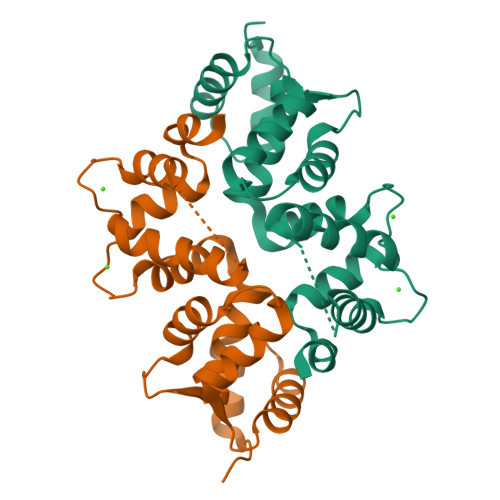
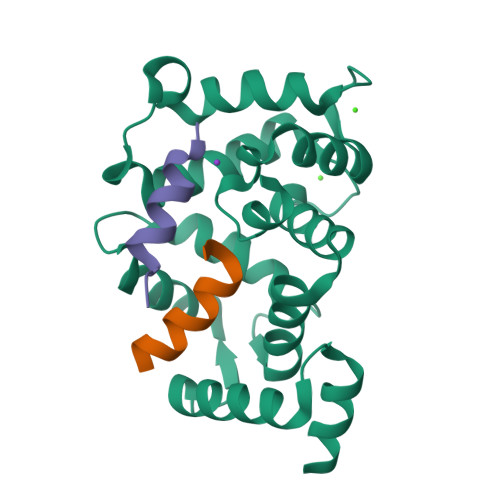
Neuronal calcium sensor 1 structureClick to view 3D structureNeuronal calcium sensor 1P62166HumansPredicted (SEA)
Prediction Confidence Score
0.39
Applicability Domain
0.39
Statistical Significance
1.60e-04
Supporting Reference Compounds
1
E-value
1.24559
Frequenin-2 structureClick to view 3D structureFrequenin-2Q9VWX8Drosophila melanogasterPredicted (SEA)
Prediction Confidence Score
0.39
Applicability Domain
0.39
Statistical Significance
1.60e-04
Supporting Reference Compounds
1
E-value
1.24559
Luciferin 4-monooxygenase structureClick to view 3D structureLuciferin 4-monooxygenaseP08659Photinus pyralisPredicted (SEA)
Prediction Confidence Score
0.38
Applicability Domain
0.548
Statistical Significance
7.70e-04
Supporting Reference Compounds
114
E-value
5.99439
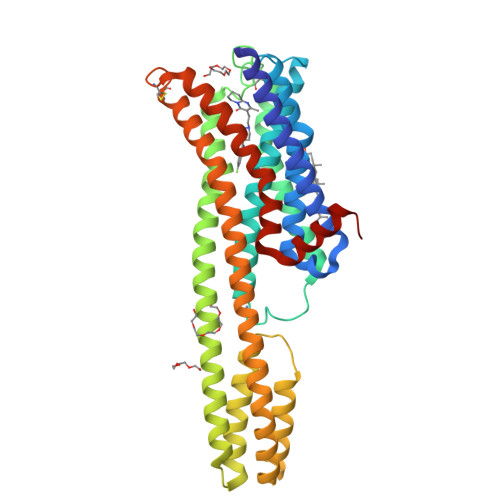
D(2) dopamine receptor structureClick to view 3D structureD(2) dopamine receptorP14416HumansPredicted (SEA)
Prediction Confidence Score
0.367
Applicability Domain
0.536
Statistical Significance
0.0311
Supporting Reference Compounds
1103
E-value
242.033
D(3) dopamine receptor structureClick to view 3D structureD(3) dopamine receptorP35462HumansPredicted (SEA)
Prediction Confidence Score
0.359
Applicability Domain
0.536
Statistical Significance
0.026
Supporting Reference Compounds
861
E-value
202.564
5-hydroxytryptamine receptor 1A structureClick to view 3D structure5-hydroxytryptamine receptor 1AP08908HumansPredicted (SEA)
Prediction Confidence Score
0.336
Applicability Domain
0.375
Statistical Significance
0.0387
Supporting Reference Compounds
953
E-value
301.666
Carbonic anhydrase 2 structureClick to view 3D structureCarbonic anhydrase 2P00918HumansPredicted (SEA)
Prediction Confidence Score
0.329
Applicability Domain
0.469
Statistical Significance
0.0246
Supporting Reference Compounds
472
E-value
191.898
D(1A) dopamine receptor structureClick to view 3D structureD(1A) dopamine receptorP21728HumansPredicted (SEA)
Prediction Confidence Score
0.328
Applicability Domain
0.536
Statistical Significance
0.0209
Supporting Reference Compounds
425
E-value
162.705
5-hydroxytryptamine receptor 2C structureClick to view 3D structure5-hydroxytryptamine receptor 2CP28335HumansPredicted (SEA)
Prediction Confidence Score
0.327
Applicability Domain
0.375
Statistical Significance
0.038
Supporting Reference Compounds
823
E-value
295.671
5-hydroxytryptamine receptor 7 structureClick to view 3D structure5-hydroxytryptamine receptor 7P34969HumansPredicted (SEA)
Prediction Confidence Score
0.324
Applicability Domain
0.348
Statistical Significance
0.0317
Supporting Reference Compounds
565
E-value
246.938
Click to view 3D structureD(4) dopamine receptorP30729Rattus norvegicusPredicted (SEA)
Prediction Confidence Score
0.324
Applicability Domain
0.348
Statistical Significance
0.0105
Supporting Reference Compounds
92
E-value
81.4303
5-hydroxytryptamine receptor 2A structureClick to view 3D structure5-hydroxytryptamine receptor 2AP28223HumansPredicted (SEA)
Prediction Confidence Score
0.321
Applicability Domain
0.348
Statistical Significance
0.0536
Supporting Reference Compounds
955
E-value
417.35
Carbonic anhydrase 12 structureClick to view 3D structureCarbonic anhydrase 12O43570HumansPredicted (SEA)
Prediction Confidence Score
0.318
Applicability Domain
0.469
Statistical Significance
0.0209
Supporting Reference Compounds
332
E-value
163.094
Amyloid-beta precursor protein structureClick to view 3D structureAmyloid-beta precursor proteinP05067HumansPredicted (SEA)
Prediction Confidence Score
0.318
Applicability Domain
0.395
Statistical Significance
0.009
Supporting Reference Compounds
109
E-value
69.9865
Sodium-dependent serotonin transporter structureClick to view 3D structureSodium-dependent serotonin transporterP31645HumansPredicted (SEA)
Prediction Confidence Score
0.317
Applicability Domain
0.348
Statistical Significance
0.036
Supporting Reference Compounds
593
E-value
280.413
Insulin receptor structureClick to view 3D structureInsulin receptorP06213HumansPredicted (SEA)
Prediction Confidence Score
0.316
Applicability Domain
0.375
Statistical Significance
0.0636
Supporting Reference Compounds
772
E-value
495.432
Vascular endothelial growth factor receptor 2 structureClick to view 3D structureVascular endothelial growth factor receptor 2P35968HumansPredicted (SEA)
Prediction Confidence Score
0.316
Applicability Domain
0.372
Statistical Significance
0.1106
Supporting Reference Compounds
1660
E-value
861.324
Aurora kinase B structureClick to view 3D structureAurora kinase BQ96GD4HumansPredicted (SEA)
Prediction Confidence Score
0.314
Applicability Domain
0.372
Statistical Significance
0.0839
Supporting Reference Compounds
1017
E-value
652.921
Aurora kinase A structureClick to view 3D structureAurora kinase AO14965HumansPredicted (SEA)
Prediction Confidence Score
0.313
Applicability Domain
0.372
Statistical Significance
0.0865
Supporting Reference Compounds
996
E-value
673.474
Histamine H1 receptor structureClick to view 3D structureHistamine H1 receptorP35367HumansPredicted (SEA)
Prediction Confidence Score
0.31
Applicability Domain
0.319
Statistical Significance
0.0403
Supporting Reference Compounds
507
E-value
313.499
Carbonic anhydrase 14 structureClick to view 3D structureCarbonic anhydrase 14Q9ULX7HumansPredicted (SEA)
Prediction Confidence Score
0.306
Applicability Domain
0.469
Statistical Significance
0.014
Supporting Reference Compounds
172
E-value
108.833
Alpha-2A adrenergic receptor structureClick to view 3D structureAlpha-2A adrenergic receptorP08913HumansPredicted (SEA)
Prediction Confidence Score
0.306
Applicability Domain
0.536
Statistical Significance
0.0362
Supporting Reference Compounds
487
E-value
282.048
Alpha-2C adrenergic receptor structureClick to view 3D structureAlpha-2C adrenergic receptorP18825HumansPredicted (SEA)
Prediction Confidence Score
0.306
Applicability Domain
0.536
Statistical Significance
0.027
Supporting Reference Compounds
386
E-value
210.426
Carbonic anhydrase 4 structureClick to view 3D structureCarbonic anhydrase 4P22748HumansPredicted (SEA)
Prediction Confidence Score
0.303
Applicability Domain
0.469
Statistical Significance
0.0133
Supporting Reference Compounds
193
E-value
103.539
D(4) dopamine receptor structureClick to view 3D structureD(4) dopamine receptorP21917HumansPredicted (SEA)
Prediction Confidence Score
0.302
Applicability Domain
0.319
Statistical Significance
0.054
Supporting Reference Compounds
524
E-value
420.152
Concentrations
Not Available
External Links
DrugBank IDNot Available
HMDB IDNot Available
FooDB IDNot Available
Phenol Explorer IDNot Available
KNApSAcK IDNot Available
BiGG IDNot Available
BioCyc IDNot Available
METLIN IDNot Available
PDB IDNot Available
Wikipedia LinkNot Available
Chemspider IDNot Available
ChEBI ID115196
PubChem Compound ID13625
Kegg Compound IDNot Available
YMDB IDNot Available
ECMDB IDNot Available
References
Synthesis ReferenceNot Available
MSDSNot Available
General ReferencesNot Available