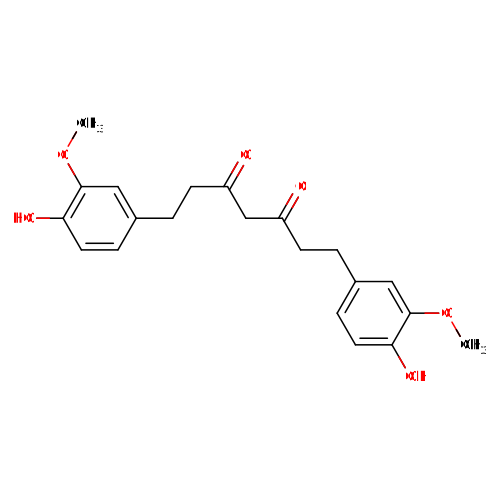
Tetrahydrocurcumin (CED0005890)

Record Information
Version1.0
Creation Date2016-05-25 22:38:23 UTC
Update Date2026-08-21 19:06:17 UTC
SynCED IDCED0005890
Secondary Accession Numbers
  • CHEM025849
Identification
Common NameTetrahydrocurcumin
ClassSmall Molecule
Description
Tetrahydrocurcumin belongs to the linear diarylheptanoids, a subclass of diarylheptanoids within the organic compounds. It has the chemical formula C21H24O6 and an average molecular weight of 372.41 g/mol. This compound is categorized within the superclass of phenylpropanoids and polyketides. In industrial applications, tetrahydrocurcumin is used as an antioxidant. Additionally, it is unspecified in polycarbonate plastics.
Contaminant Type
  • Phenolic Antioxidant
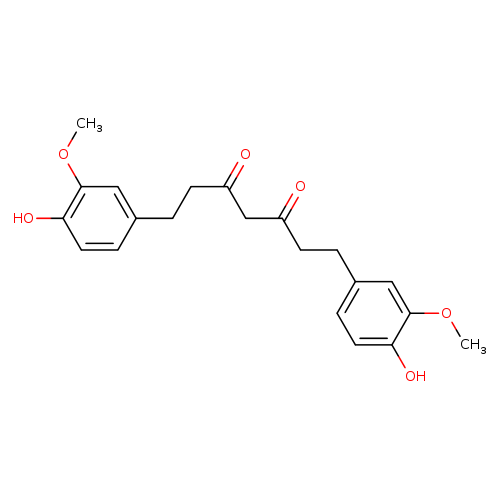
Chemical Structure
Synonyms
ValueSource
1,7-Bis(4-hydroxy-3-methoxyphenyl)-3,5-heptanedioneChEBI
Chemical FormulaC21H24O6
Average Molecular Mass372.412 g/mol
Monoisotopic Mass372.157 g/mol
CAS Registry Number36062-04-1
IUPAC Name1,7-bis(4-hydroxy-3-methoxyphenyl)heptane-3,5-dione
Traditional Nametetrahydrocurcumin
SMILESCOC1=CC(CCC(=O)CC(=O)CCC2=CC(OC)=C(O)C=C2)=CC=C1O
InChI IdentifierInChI=1S/C21H24O6/c1-26-20-11-14(5-9-18(20)24)3-7-16(22)13-17(23)8-4-15-6-10-19(25)21(12-15)27-2/h5-6,9-12,24-25H,3-4,7-8,13H2,1-2H3
InChI KeyLBTVHXHERHESKG-UHFFFAOYSA-N
Chemical Taxonomy
Description Belongs to the class of organic compounds known as curcuminoids. These are aromatic compounds containing a curcumin moiety, which is composed of two aryl buten-2-one (feruloyl) chromophores joined by a methylene group.
KingdomOrganic compounds
Super ClassPhenylpropanoids and polyketides
ClassDiarylheptanoids
Sub ClassLinear diarylheptanoids
Direct ParentCurcuminoids
Alternative Parents
Substituents
  • Curcumin
  • Gingerdione
  • Methoxyphenol
  • Anisole
  • Phenoxy compound
  • Phenol ether
  • Methoxybenzene
  • Phenol
  • 1-hydroxy-2-unsubstituted benzenoid
  • Alkyl aryl ether
  • 1,3-diketone
  • Benzenoid
  • 1,3-dicarbonyl compound
  • Monocyclic benzene moiety
  • Ketone
  • Ether
  • Organooxygen compound
  • Organic oxygen compound
  • Carbonyl group
  • Hydrocarbon derivative
  • Organic oxide
  • Aromatic homomonocyclic compound
Molecular FrameworkAromatic homomonocyclic compounds
External Descriptors
Biological Properties
StatusDetected and Not Quantified
OriginNot Available
Cellular LocationsNot Available
Biofluid LocationsNot Available
Tissue LocationsNot Available
ApplicationsNot Available
Biological Roles
Chemical RolesNot Available
Organoleptic Effects
  • off-white colour ?
Physical Properties
StateNot Available
AppearanceNot Available
Experimental Properties
PropertyValue
Melting PointNot Available
Boiling PointNot Available
SolubilityNot Available
Predicted Properties
PropertyValueSource
Water Solubility0.0056 g/LALOGPS
logP3.51ALOGPS
logP3.96ChemAxon
logS-4.8ALOGPS
pKa (Strongest Acidic)9.31ChemAxon
pKa (Strongest Basic)-4.6ChemAxon
Physiological Charge0ChemAxon
Hydrogen Acceptor Count6ChemAxon
Hydrogen Donor Count2ChemAxon
Polar Surface Area93.06 ŲChemAxon
Rotatable Bond Count10ChemAxon
Refractivity101.62 m³·mol⁻¹ChemAxon
Polarizability39.42 ųChemAxon
Number of Rings2ChemAxon
BioavailabilityYesChemAxon
Rule of FiveYesChemAxon
Ghose FilterYesChemAxon
Veber's RuleNoChemAxon
MDDR-like RuleNoChemAxon
Spectra
Spectra
Spectrum TypeDescriptionSplash KeyDeposition DateView
Predicted GC-MSPredicted GC-MS Spectrumsplash10-004r-0910000000-fa5f9c88947d04535eb3Not AvailableView Spectrum
Predicted GC-MSPredicted GC-MS Spectrumsplash10-0umr-9410140000-19c50b651dca5f38ec3cNot AvailableView Spectrum
Predicted GC-MSPredicted GC-MS SpectrumNot AvailableNot AvailableView Spectrum
Predicted LC-MS/MSPredicted LC-MS/MS Spectrumsplash10-00di-0209000000-7dfd4c091aad667f4f26Not AvailableView Spectrum
Predicted LC-MS/MSPredicted LC-MS/MS Spectrumsplash10-00bi-0922000000-4172923a1d3dfd5cefd5Not AvailableView Spectrum
Predicted LC-MS/MSPredicted LC-MS/MS Spectrumsplash10-004r-1911000000-8ecd77e0bdc5eeb2914cNot AvailableView Spectrum
Predicted LC-MS/MSPredicted LC-MS/MS Spectrumsplash10-00di-0109000000-cc999937febfc38f47c1Not AvailableView Spectrum
Predicted LC-MS/MSPredicted LC-MS/MS Spectrumsplash10-00di-0639000000-3347b9d7105791a849f6Not AvailableView Spectrum
Predicted LC-MS/MSPredicted LC-MS/MS Spectrumsplash10-05ru-5986000000-5bfd0dc38ca2bb0b9efeNot AvailableView Spectrum
Predicted LC-MS/MSPredicted LC-MS/MS Spectrumsplash10-00di-1049000000-140fb262cdbb389db98dNot AvailableView Spectrum
Predicted LC-MS/MSPredicted LC-MS/MS Spectrumsplash10-00ks-6962000000-30302cd971363baba315Not AvailableView Spectrum
Predicted LC-MS/MSPredicted LC-MS/MS Spectrumsplash10-000i-3930000000-7ddc098840a945474666Not AvailableView Spectrum
Predicted LC-MS/MSPredicted LC-MS/MS Spectrumsplash10-00di-0219000000-9f478fd39c93a8ba2530Not AvailableView Spectrum
Predicted LC-MS/MSPredicted LC-MS/MS Spectrumsplash10-000i-0935000000-5253debe0acf5be8a731Not AvailableView Spectrum
Predicted LC-MS/MSPredicted LC-MS/MS Spectrumsplash10-000i-1921000000-1003e2c392e655b3af0fNot AvailableView Spectrum
1D NMR13C NMR Spectrum (1D, H2O, predicted)Not AvailableNot AvailableView Spectrum
1D NMR1H NMR Spectrum (1D, H2O, predicted)Not AvailableNot AvailableView Spectrum
Toxicity Profile
Toxicity Values
Toxicity ValueOrganismDose DescriptorRoute of ExposurePredicted or ExperimentalToxicity RatingReference
3099.0 Log mg/kg [1700:5500]RatLD50oralpredictedNot AvailableNot Available
Toxicity / Toxin ClassNot Available
Mechanism of ToxicityNot Available
Carcinogenicity (IARC Classification)Not Available
Minimum Risk LevelNot Available
SymptomsNot Available
TreatmentNot Available
Health Effects
Health EffectRelationshipDirectionDescriptionReference
cancerHas Therapeutic Effect OnNot AvailableCancer is a group of diseases involving abnormal cell growth with the potential to invade or spread to other parts of the body. Possible signs and symptoms include a lump, abnormal bleeding, prolonged cough, unexplained weight loss, and a change in bowel movements. There are over 100 types of cancers affect humans. The risk of developing certain cancers can be reduced by not smoking, maintaining a healthy weight, not drinking too much alcohol, eating plenty of vegetables, fruits and whole grains, vaccination against certain infectious diseases, not eating too much processed and red meat and avoiding too much sunlight exposure. Cancer is often treated with some combination of radiation therapy, surgery, chemotherapy and targeted therapy. The majority of cancers, some 90–95% of cases, are due to genetic mutations from environmental and lifestyle factors. The remaining 5–10% are due to inherited genetics.PMC7356876 , PMC7356876
cancerNot AvailableNot AvailableCancer is a group of diseases involving abnormal cell growth with the potential to invade or spread to other parts of the body. Possible signs and symptoms include a lump, abnormal bleeding, prolonged cough, unexplained weight loss, and a change in bowel movements. There are over 100 types of cancers affect humans. The risk of developing certain cancers can be reduced by not smoking, maintaining a healthy weight, not drinking too much alcohol, eating plenty of vegetables, fruits and whole grains, vaccination against certain infectious diseases, not eating too much processed and red meat and avoiding too much sunlight exposure. Cancer is often treated with some combination of radiation therapy, surgery, chemotherapy and targeted therapy. The majority of cancers, some 90–95% of cases, are due to genetic mutations from environmental and lifestyle factors. The remaining 5–10% are due to inherited genetics.PMC7356876
ischemic strokeHas Therapeutic Effect OnNot AvailableNot AvailablePMC8253632
Abnormality of mitochondrial metabolismHas Therapeutic Effect OnNot AvailableNot AvailablePMC8253632
Oxidative StressHas Therapeutic Effect OnNot AvailableNot AvailablePMC7356876
gliomaHas Therapeutic Effect OnNot AvailableNot AvailablePMC7356876
DeathHas Therapeutic Effect OnNot AvailableNot AvailablePMC9423984 , PMC7356876
high grade gliomaHas Therapeutic Effect OnNot AvailableNot AvailablePMC7356876
lung non-small cell carcinomaHas Therapeutic Effect OnNot AvailableNot AvailablePMC7356876
Refractory drug responseHas Therapeutic Effect OnNot AvailableNot AvailablePMC7356876
spinal cord injuryNot AvailableNot AvailableNot AvailablePMC12466678
Exposure Sources
Source IDSourceSectorReference
CEDs000490Personal care & cosmeticsNot Available
CEDs000491Industrial manufacturing & chemical processingNot Available
CEDs000545Food Preservation?Food preservation often involves the use of synthetic chemicals, such as preservatives, flavor enhancers, and color additives, to extend shelf life and enhance the sensory qualities of food products.Food, food processing & cookwarePubChem
CEDs000561Perfumes Within Detergents And Soaps?Perfumes within detergents and soaps are synthetic fragrance compounds added to enhance the sensory experience of cleaning products.Household cleaning & consumer productsPubChem
CEDs000563Soap Detergents?Soap detergents are synthetic surfactants designed to enhance the cleaning efficacy of water by reducing surface tension, allowing for better interaction with dirt and grease.Household cleaning & consumer productsPubChem
CEDs000569Tobacco Smoke Filters?Tobacco smoke filters are designed to reduce the inhalation of harmful substances in cigarette smoke, including tar and other particulate matter.Household cleaning & consumer productsPubChem
CEDs000609Aftershave?Aftershave is a grooming product typically used to soothe and protect the skin following shaving.Personal care & cosmeticsPubChem
CEDs000610Aftersun Products?Aftersun products are designed to soothe and hydrate the skin after sun exposure, often containing various synthetic chemicals such as emollients, preservatives, and fragrances.Personal care & cosmeticsPubChem
CEDs000611Anti Perspirants Or Body Deoderants?Antiperspirants and body deodorants commonly contain synthetic chemicals such as aluminum compounds, parabens, and synthetic fragrances.Personal care & cosmeticsPubChem
CEDs000613Depilatories?Depilatories are products designed to remove unwanted hair through the application of synthetic chemicals that break down the protein structure of hair, facilitating its removal.Personal care & cosmeticsPubChem
CEDs000614Essential Oils Or Perfumes?Essential oils and perfumes are complex mixtures of volatile compounds derived from natural or synthetic sources, commonly used for their aromatic properties.Personal care & cosmeticsPubChem
CEDs000615Eye Makeup Products?Eye makeup products, including mascaras, eyeliners, and eyeshadows, often contain a variety of synthetic chemicals such as pigments, preservatives, and film-forming agents.Personal care & cosmeticsPubChem
CEDs000617Lip Care Products?Lip care products, including lipsticks, balms, and glosses, often contain a variety of synthetic chemicals such as parabens, phthalates, and synthetic fragrances.Personal care & cosmeticsPubChem
CEDs000618Lip Makeup Products?Lip makeup products, such as lipsticks, lip glosses, and lip liners, often contain a variety of synthetic chemicals, including pigments, preservatives, and emollients.Personal care & cosmeticsPubChem
CEDs000632Apparel?Apparel production often involves the use of various synthetic chemicals, including dyes, finishing agents, and preservatives.Textiles, leather & furnishingsPubChem
CEDs000662Yarns Or Threads?Yarns or threads used in textiles can be a source of synthetic chemical contamination due to the production processes and treatments they undergo.Textiles, leather & furnishingsPubChem
CEDs000696Nanotechnology?Nanotechnology involves the manipulation of materials at the molecular or atomic level, typically within the range of 1 to 100 nanometers.Industrial manufacturing & chemical processingPubChem
CEDs000739Inks?Inks are complex mixtures composed of pigments or dyes, solvents, resins, and additives used primarily for printing and writing applications.Paper, pulp & fiber productsPubChem
CEDs000740Paper?Paper production involves the processing of wood fibers and the use of various chemicals, which can lead to synthetic chemical contamination.Paper, pulp & fiber productsPubChem
Pathways
0 pathwaysPathway Source: PathBank

No pathways found

No metabolic pathways have been associated with this synthetic chemical

Targets
StructureProteinUniProt IDOrganismRelationshipDetails
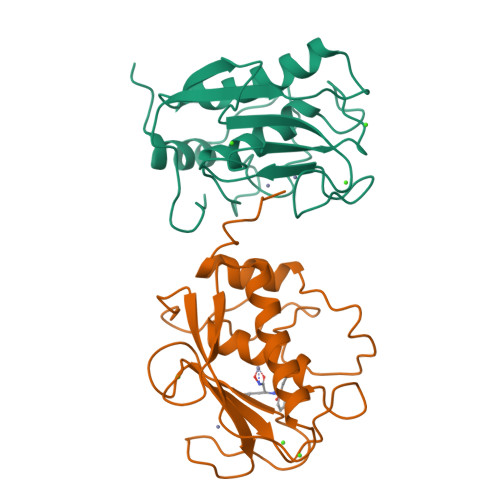
Catalase structureClick to view 3D structureCatalaseP04040HumansKnownNot Available
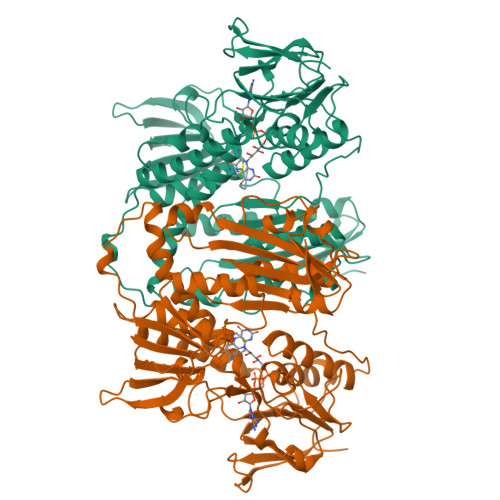
Glutathione S-transferase structureClick to view 3D structureGlutathione S-transferaseQ59721Burkholderia xenovorans (strain LB400)KnownNot Available
Cytochrome P450 2C9 structureClick to view 3D structureCytochrome P450 2C9P11712HumansKnownNot Available
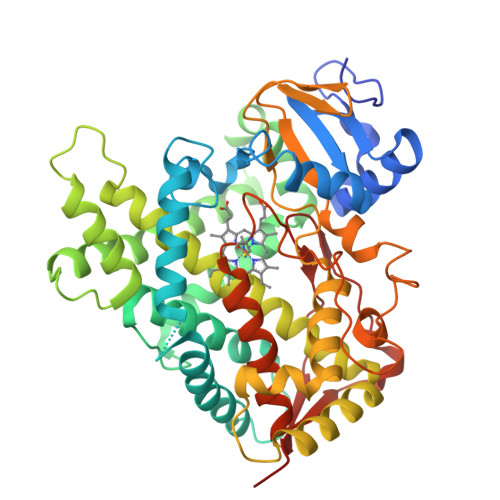
Cytochrome P450 3A4 structureClick to view 3D structureCytochrome P450 3A4P08684HumansKnownNot Available
Cytochrome P450 2E1 structureClick to view 3D structureCytochrome P450 2E1P05181HumansKnownNot Available
Phospholipase A2 structureClick to view 3D structurePhospholipase A2P04054HumansKnownNot Available
Ornithine decarboxylase structureClick to view 3D structureOrnithine decarboxylaseP11926HumansKnownNot Available
Stromelysin-1 structureClick to view 3D structureStromelysin-1P08254HumansKnownNot Available
Collagenase 3 structureClick to view 3D structureCollagenase 3P45452HumansKnownNot Available
Prostaglandin G/H synthase 2 structureClick to view 3D structureProstaglandin G/H synthase 2P35354HumansKnownNot Available
Cytochrome P450 2C9 structureClick to view 3D structureCytochrome P450 2C9P11712HumansPredicted (SEA)
Prediction Confidence Score
0.587
Applicability Domain
0.7
Statistical Significance
0.0011
Supporting Reference Compounds
1245
E-value
8.48557
Polyunsaturated fatty acid 5-lipoxygenase structureClick to view 3D structurePolyunsaturated fatty acid 5-lipoxygenaseP09917HumansPredicted (SEA)
Prediction Confidence Score
0.573
Applicability Domain
1.0
Statistical Significance
1.70e-04
Supporting Reference Compounds
182
E-value
1.32344
Cytochrome P450 2C8 structureClick to view 3D structureCytochrome P450 2C8P10632HumansPredicted (SEA)
Prediction Confidence Score
0.547
Applicability Domain
0.7
Statistical Significance
3.80e-04
Supporting Reference Compounds
305
E-value
2.95827
Cytochrome P450 2B6 structureClick to view 3D structureCytochrome P450 2B6P20813HumansPredicted (SEA)
Prediction Confidence Score
0.54
Applicability Domain
0.7
Statistical Significance
7.00e-05
Supporting Reference Compounds
150
E-value
0.544945
Cytochrome P450 1A2 structureClick to view 3D structureCytochrome P450 1A2P05177HumansPredicted (SEA)
Prediction Confidence Score
0.493
Applicability Domain
0.7
Statistical Significance
0.0026
Supporting Reference Compounds
793
E-value
20.4743
Cytochrome P450 2C19 structureClick to view 3D structureCytochrome P450 2C19P33261HumansPredicted (SEA)
Prediction Confidence Score
0.487
Applicability Domain
0.7
Statistical Significance
0.0023
Supporting Reference Compounds
825
E-value
17.6718
Cytochrome P450 3A4 structureClick to view 3D structureCytochrome P450 3A4P08684HumansPredicted (SEA)
Prediction Confidence Score
0.467
Applicability Domain
0.596
Statistical Significance
0.0075
Supporting Reference Compounds
1538
E-value
58.3869
Carbonic anhydrase 9 structureClick to view 3D structureCarbonic anhydrase 9Q16790HumansPredicted (SEA)
Prediction Confidence Score
0.433
Applicability Domain
0.476
Statistical Significance
0.0037
Supporting Reference Compounds
372
E-value
29.1156
Carbonic anhydrase 12 structureClick to view 3D structureCarbonic anhydrase 12O43570HumansPredicted (SEA)
Prediction Confidence Score
0.422
Applicability Domain
0.476
Statistical Significance
0.004
Supporting Reference Compounds
332
E-value
30.9061
Carbonic anhydrase 7 structureClick to view 3D structureCarbonic anhydrase 7P43166HumansPredicted (SEA)
Prediction Confidence Score
0.417
Applicability Domain
0.476
Statistical Significance
0.0028
Supporting Reference Compounds
242
E-value
21.6421
Transient receptor potential cation channel subfamily V member 1 structureClick to view 3D structureTransient receptor potential cation channel subfamily V member 1Q8NER1HumansPredicted (SEA)
Prediction Confidence Score
0.414
Applicability Domain
0.565
Statistical Significance
0.0012
Supporting Reference Compounds
104
E-value
9.57545
Carbonic anhydrase 6 structureClick to view 3D structureCarbonic anhydrase 6P23280HumansPredicted (SEA)
Prediction Confidence Score
0.412
Applicability Domain
0.476
Statistical Significance
0.0015
Supporting Reference Compounds
151
E-value
11.6774
Carbonic anhydrase 14 structureClick to view 3D structureCarbonic anhydrase 14Q9ULX7HumansPredicted (SEA)
Prediction Confidence Score
0.408
Applicability Domain
0.432
Statistical Significance
0.0023
Supporting Reference Compounds
172
E-value
17.9053
Carbonic anhydrase 2 structureClick to view 3D structureCarbonic anhydrase 2Q3I4V7Cryptococcus neoformansPredicted (SEA)
Prediction Confidence Score
0.407
Applicability Domain
0.526
Statistical Significance
5.80e-04
Supporting Reference Compounds
60
E-value
4.51525
Carbonic anhydrase structureClick to view 3D structureCarbonic anhydraseQ5AJ71Candida albicans (strain SC5314 / ATCC MYA-2876) (Yeast)Predicted (SEA)
Prediction Confidence Score
0.407
Applicability Domain
0.526
Statistical Significance
7.70e-04
Supporting Reference Compounds
68
E-value
5.99439
Click to view 3D structurePROBABLE TRANSMEMBRANE CARBONIC ANHYDRASE (CARBONATE DEHYDRATASE) (CARBONIC DEHYDRATASE)P96878Mycobacterium tuberculosisPredicted (SEA)
Prediction Confidence Score
0.407
Applicability Domain
0.526
Statistical Significance
9.50e-04
Supporting Reference Compounds
38
E-value
7.39568
Click to view 3D structureCarbonic anhydrase 5A, mitochondrialP35218HumansPredicted (SEA)
Prediction Confidence Score
0.403
Applicability Domain
0.432
Statistical Significance
0.0022
Supporting Reference Compounds
165
E-value
17.1268
Carbonic anhydrase 2 structureClick to view 3D structureCarbonic anhydrase 2P00918HumansPredicted (SEA)
Prediction Confidence Score
0.4
Applicability Domain
0.476
Statistical Significance
0.0074
Supporting Reference Compounds
472
E-value
57.9977
Carbonic anhydrase 1 structureClick to view 3D structureCarbonic anhydrase 1P00915HumansPredicted (SEA)
Prediction Confidence Score
0.4
Applicability Domain
0.476
Statistical Significance
0.0068
Supporting Reference Compounds
407
E-value
52.9375
Beta-carbonic anhydrase 1 structureClick to view 3D structureBeta-carbonic anhydrase 1P9WPJ7Mycobacterium tuberculosisPredicted (SEA)
Prediction Confidence Score
0.394
Applicability Domain
0.526
Statistical Significance
0.0014
Supporting Reference Compounds
55
E-value
11.0546
Amyloid-beta precursor protein structureClick to view 3D structureAmyloid-beta precursor proteinP05067HumansPredicted (SEA)
Prediction Confidence Score
0.391
Applicability Domain
0.476
Statistical Significance
0.0034
Supporting Reference Compounds
109
E-value
26.2352
Click to view 3D structurePolyunsaturated fatty acid lipoxygenase ALOX15P16050HumansPredicted (SEA)
Prediction Confidence Score
0.386
Applicability Domain
0.488
Statistical Significance
2.40e-04
Supporting Reference Compounds
46
E-value
1.86838
Trypanothione reductase structureClick to view 3D structureTrypanothione reductaseP39040Crithidia fasciculataPredicted (SEA)
Prediction Confidence Score
0.383
Applicability Domain
0.383
Statistical Significance
1.20e-04
Supporting Reference Compounds
1
E-value
0.934191
Dual specificity protein kinase CLK4 structureClick to view 3D structureDual specificity protein kinase CLK4Q9HAZ1HumansPredicted (SEA)
Prediction Confidence Score
0.382
Applicability Domain
0.476
Statistical Significance
0.016
Supporting Reference Compounds
742
E-value
124.325
Amine oxidase [flavin-containing] A structureClick to view 3D structureAmine oxidase [flavin-containing] AP21397HumansPredicted (SEA)
Prediction Confidence Score
0.38
Applicability Domain
0.476
Statistical Significance
0.0043
Supporting Reference Compounds
241
E-value
33.4752
Concentrations
Not Available
External Links
DrugBank IDNot Available
HMDB IDHMDB0005789
FooDB IDFDB005352
Phenol Explorer IDNot Available
KNApSAcK IDC00055176
BiGG IDNot Available
BioCyc IDCPD-13315
METLIN IDNot Available
PDB IDNot Available
Wikipedia LinkNot Available
Chemspider ID110569
ChEBI ID67263
PubChem Compound ID124072
Kegg Compound IDNot Available
YMDB IDNot Available
ECMDB IDECMDB23171
References
Synthesis ReferenceNot Available
MSDSNot Available
General ReferencesNot Available