Thymoquinone (CED0003084)

Record Information
Version1.0
Creation Date2016-05-26 00:40:07 UTC
Update Date2026-08-17 23:45:29 UTC
SynCED IDCED0003084
Secondary Accession Numbers
  • CHEM028748
Identification
Common NameThymoquinone
ClassSmall Molecule
Description
Thymoquinone is an organic compound with the formula C10H12O2 and an average molecular weight of 164.20 g/mol. Thymoquinone belongs to the carbonyl compounds, a subclass of organooxygen compounds within the organic compounds. Biological roles and uses for this compound include its application as an antidepressant (PMC11786020 ), an antioxidant (PMC10669285 ), and an analgesic (PMC3698541 ). In terms of health effects, it is used as a treatment for periodontitis and periodontal disease (PMC4665427 ). The compound acts on three recorded protein targets: the apoptosis regulator BAX, the apoptosis regulator Bcl-2 (BCL2), and the cellular tumor antigen p53 (TP53), for which it serves as an inhibitor. Thymoquinone is found in or released from ten recorded sources. These include food preservation and food contact materials within the category of food, food processing, and cookware; perfumes within detergents and soaps, soap detergents, non-electric simulated smoking devices, and cigar cigarettes within household cleaning and consumer products; as well as electrodes, hybrid capacitors, electrically stimulated smoking devices, and conductors or conductive bodies characterised by the conductive materials within electrical and electronic equipment. Recorded exposure routes for the compound are oral, inhalation, and touch.
Contaminant TypeNot Available
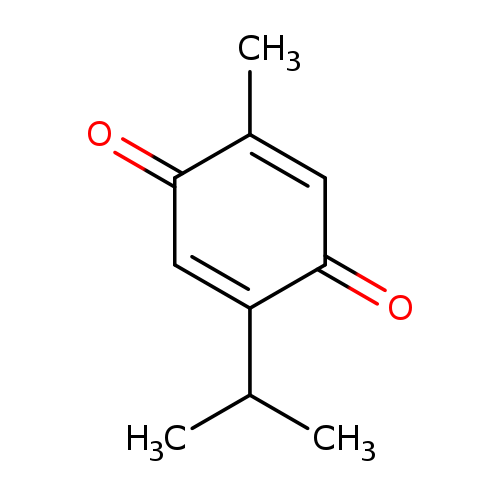
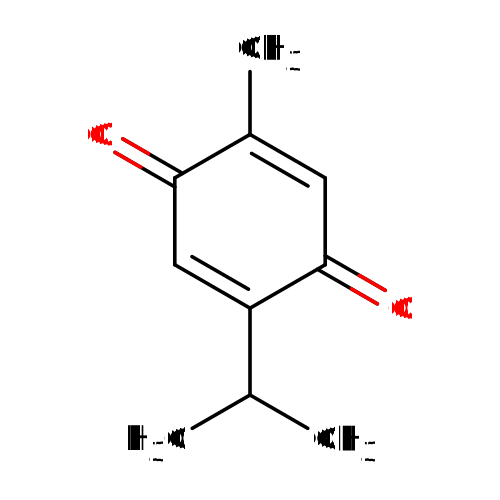
Chemical Structure
Synonyms
ValueSource
2-Isopropyl-5-methyl-1,4-benzoquinoneChEBI
2-Isopropyl-5-methyl-p-benzoquinoneChEBI
2-Methyl-5-(1-methylethyl)-2,5-cyclohexadiene-1,4-dioneChEBI
5-Isopropyl-2-methyl-2,5-cyclohexadiene-1,4-dioneChEBI
p-Cymene-2,5-dioneChEBI
p-Mentha-3,6-diene-2,5-dioneChEBI
ThymoquinonChEBI
TQChEBI
2-Isopropyl-5-methylbenzo-1,4-quinoneHMDB
2-Isopropyl-5-methylbenzoquinoneHMDB, MeSH
2-Methyl-5-(1-methylethyl)-2,5-cyclohexadiene-1,4-dione, 9ciHMDB
2-Methyl-5-isopropyl-1,4-benzoquinoneHMDB
2-Methyl-5-isopropyl-P-benzoquinoneHMDB, MeSH
5-Isopropyl-2-methyl-1,4-benzoquinoneHMDB
5-Isopropyl-2-methyl-P-benzoquinoneHMDB
P-Mentha-3,6-diene-2,5-dione (8ci)HMDB
PolythymoquinoneHMDB
ThymoilHMDB
ThymolquinoneHMDB
DihydrothymoquinoneMeSH, HMDB
ThymoquinoneMeSH
Chemical FormulaC10H12O2
Average Molecular Mass164.201 g/mol
Monoisotopic Mass164.084 g/mol
CAS Registry Number490-91-5
IUPAC Name2-methyl-5-(propan-2-yl)cyclohexa-2,5-diene-1,4-dione
Traditional Namethymoquinone
SMILESCC(C)C1=CC(=O)C(C)=CC1=O
InChI IdentifierInChI=1S/C10H12O2/c1-6(2)8-5-9(11)7(3)4-10(8)12/h4-6H,1-3H3
InChI KeyKEQHJBNSCLWCAE-UHFFFAOYSA-N
Chemical Taxonomy
Description Belongs to the class of organic compounds known as p-benzoquinones. These are benzoquinones where the two C=O groups are attached at the 1- and 4-positions, respectively.
KingdomOrganic compounds
Super ClassOrganic oxygen compounds
ClassOrganooxygen compounds
Sub ClassCarbonyl compounds
Direct ParentP-benzoquinones
Alternative Parents
Substituents
  • P-benzoquinone
  • Organic oxide
  • Hydrocarbon derivative
  • Aliphatic homomonocyclic compound
Molecular FrameworkAliphatic homomonocyclic compounds
External DescriptorsNot Available
Biological Properties
StatusDetected and Not Quantified
OriginNot Available
Cellular LocationsNot Available
Biofluid LocationsNot Available
Tissue LocationsNot Available
ApplicationsNot Available
Biological Roles
Chemical RolesNot Available
Organoleptic Effects
  • yellow colour ?
  • yellowing colour ?
Physical Properties
StateNot Available
AppearanceNot Available
Experimental Properties
PropertyValue
Melting PointNot Available
Boiling PointNot Available
SolubilityNot Available
Predicted Properties
PropertyValueSource
Water Solubility1.83 g/LALOGPS
logP2ALOGPS
logP2.55ChemAxon
logS-2ALOGPS
pKa (Strongest Basic)-7.7ChemAxon
Physiological Charge0ChemAxon
Hydrogen Acceptor Count2ChemAxon
Hydrogen Donor Count0ChemAxon
Polar Surface Area34.14 ŲChemAxon
Rotatable Bond Count1ChemAxon
Refractivity48.89 m³·mol⁻¹ChemAxon
Polarizability17.84 ųChemAxon
Number of Rings1ChemAxon
BioavailabilityYesChemAxon
Rule of FiveYesChemAxon
Ghose FilterYesChemAxon
Veber's RuleYesChemAxon
MDDR-like RuleNoChemAxon
Spectra
Spectra
Spectrum TypeDescriptionSplash KeyDeposition DateView
Predicted GC-MSPredicted GC-MS Spectrumsplash10-00xr-6900000000-764f3b8a1150b1cac052Not AvailableView Spectrum
Predicted GC-MSPredicted GC-MS SpectrumNot AvailableNot AvailableView Spectrum
Predicted LC-MS/MSPredicted LC-MS/MS Spectrumsplash10-014i-0900000000-96f0c8e4e4f4a8455abeNot AvailableView Spectrum
Predicted LC-MS/MSPredicted LC-MS/MS Spectrumsplash10-014i-5900000000-441064ba80ff42a70cfeNot AvailableView Spectrum
Predicted LC-MS/MSPredicted LC-MS/MS Spectrumsplash10-014i-9200000000-c6d527c2a9a79f901029Not AvailableView Spectrum
Predicted LC-MS/MSPredicted LC-MS/MS Spectrumsplash10-03di-0900000000-d9e63c8d82efebaf41b1Not AvailableView Spectrum
Predicted LC-MS/MSPredicted LC-MS/MS Spectrumsplash10-03di-0900000000-98b2dccaab2bbdb236feNot AvailableView Spectrum
Predicted LC-MS/MSPredicted LC-MS/MS Spectrumsplash10-014r-9500000000-19dae31b3a18d5f7735cNot AvailableView Spectrum
Predicted LC-MS/MSPredicted LC-MS/MS Spectrumsplash10-03di-0900000000-8db47caa9667c101bd0fNot AvailableView Spectrum
Predicted LC-MS/MSPredicted LC-MS/MS Spectrumsplash10-03di-0900000000-5a485fdf30f3fb6eef66Not AvailableView Spectrum
Predicted LC-MS/MSPredicted LC-MS/MS Spectrumsplash10-014i-9500000000-e6c8bd2fffd875c29cffNot AvailableView Spectrum
Predicted LC-MS/MSPredicted LC-MS/MS Spectrumsplash10-014i-0900000000-7a4cd3c2c5dcf8576412Not AvailableView Spectrum
Predicted LC-MS/MSPredicted LC-MS/MS Spectrumsplash10-00xr-3900000000-c1e3ac1b0edf80cd5e27Not AvailableView Spectrum
Predicted LC-MS/MSPredicted LC-MS/MS Spectrumsplash10-00kf-9100000000-897472ebb650188b991dNot AvailableView Spectrum
1D NMR1H NMR Spectrum (1D, D2O, predicted)Not AvailableNot AvailableView Spectrum
1D NMR13C NMR Spectrum (1D, D2O, predicted)Not AvailableNot AvailableView Spectrum
Toxicity Profile
Toxicity Values
Toxicity ValueOrganismDose DescriptorRoute of ExposurePredicted or ExperimentalToxicity RatingReference
2071.0 Log mg/kg [1200:3700]RatLD50oralpredictedNot AvailableNot Available
Toxicity / Toxin ClassNot Available
Mechanism of ToxicityNot Available
Carcinogenicity (IARC Classification)Not Available
Minimum Risk LevelNot Available
SymptomsNot Available
TreatmentNot Available
Health Effects
Health EffectRelationshipDirectionDescriptionReference
arthritisNot AvailableNot AvailableA disorder characterized by inflammation involving a joint. (NCI CTCAE)PMC11366942
hypertensionNot AvailableNot AvailableA disorder characterized by a pathological increase in blood pressure; a repeatedly elevation in the blood pressure exceeding 140 over 90 mm Hg. (NCI CTCAE)PMC11366942
hypertensionHas Therapeutic Effect OnNot AvailableA disorder characterized by a pathological increase in blood pressure; a repeatedly elevation in the blood pressure exceeding 140 over 90 mm Hg. (NCI CTCAE)PMC11366942
inflammationHas Therapeutic Effect OnNot AvailableNot AvailablePMC3933240
cancerHas Therapeutic Effect OnNot AvailableCancer is a group of diseases involving abnormal cell growth with the potential to invade or spread to other parts of the body. Possible signs and symptoms include a lump, abnormal bleeding, prolonged cough, unexplained weight loss, and a change in bowel movements. There are over 100 types of cancers affect humans. The risk of developing certain cancers can be reduced by not smoking, maintaining a healthy weight, not drinking too much alcohol, eating plenty of vegetables, fruits and whole grains, vaccination against certain infectious diseases, not eating too much processed and red meat and avoiding too much sunlight exposure. Cancer is often treated with some combination of radiation therapy, surgery, chemotherapy and targeted therapy. The majority of cancers, some 90–95% of cases, are due to genetic mutations from environmental and lifestyle factors. The remaining 5–10% are due to inherited genetics.PMC3698541 , PMC12653776
cancerAssociated With?Not AvailableCancer is a group of diseases involving abnormal cell growth with the potential to invade or spread to other parts of the body. Possible signs and symptoms include a lump, abnormal bleeding, prolonged cough, unexplained weight loss, and a change in bowel movements. There are over 100 types of cancers affect humans. The risk of developing certain cancers can be reduced by not smoking, maintaining a healthy weight, not drinking too much alcohol, eating plenty of vegetables, fruits and whole grains, vaccination against certain infectious diseases, not eating too much processed and red meat and avoiding too much sunlight exposure. Cancer is often treated with some combination of radiation therapy, surgery, chemotherapy and targeted therapy. The majority of cancers, some 90–95% of cases, are due to genetic mutations from environmental and lifestyle factors. The remaining 5–10% are due to inherited genetics.PMC10044913
cancerNot AvailableNot AvailableCancer is a group of diseases involving abnormal cell growth with the potential to invade or spread to other parts of the body. Possible signs and symptoms include a lump, abnormal bleeding, prolonged cough, unexplained weight loss, and a change in bowel movements. There are over 100 types of cancers affect humans. The risk of developing certain cancers can be reduced by not smoking, maintaining a healthy weight, not drinking too much alcohol, eating plenty of vegetables, fruits and whole grains, vaccination against certain infectious diseases, not eating too much processed and red meat and avoiding too much sunlight exposure. Cancer is often treated with some combination of radiation therapy, surgery, chemotherapy and targeted therapy. The majority of cancers, some 90–95% of cases, are due to genetic mutations from environmental and lifestyle factors. The remaining 5–10% are due to inherited genetics.PMC2990154 , PMC8897426
type 2 diabetes mellitusHas Therapeutic Effect OnNot AvailableNot AvailablePMC12347654 , PMC11366942
bronchitisNot AvailableNot AvailableA disorder characterized by the inflammation of the lining of the bronchi.PMC11366942
asthmaNot AvailableNot AvailableA bronchial disease that is characterized by chronic inflammation and narrowing of the airways, which is caused by a combination of environmental and genetic factors. The disease has symptom recurring periods of wheezing (a whistling sound while breathing), has symptom chest tightness, has symptom shortness of breath, has symptom mucus production and has symptom coughing. The symptoms appear due to a variety of triggers such as allergens, irritants, respiratory infections, weather changes, exercise, stress, reflux disease, medications, foods and emotional anxiety. (DO)PMC11366942
Prostate cancerHas Therapeutic Effect OnNot AvailableA male reproductive organ cancer that is located in the prostate. (DO)PMC3698541 , PMC3698541
liver cancerHas Therapeutic Effect OnNot AvailableLiver cancer, also known as hepatic cancer and primary hepatic cancer, is cancer that starts in the liver. Cancer which has spread from elsewhere to the liver, known as liver metastasis, is more common than that which starts in the liver. Symptoms of liver cancer may include a lump or pain in the right side below the rib cage, swelling of the abdomen, yellowish skin, easy bruising, weight loss and weakness.("Adult Primary Liver Cancer Treatment (PDQ®)–Patient Version". NCI. 6 July 2016. Archived from the original on 2 October 2016. Retrieved 29 September 2016) The leading cause of liver cancer is cirrhosis due to hepatitis B, hepatitis C or alcohol.(PMID: 25530442) The most common types of liver cancer are hepatocellular carcinoma (HCC), which makes up 80% of cases, and cholangiocarcinoma.(World Cancer Report 2014. World Health Organization. 2014. pp. Chapter 5.6. ISBN 978-9283204299) Globally, as of 2010, liver cancer resulted in 754,000 deaths, up from 460,000 in 1990, making it the third leading cause of cancer death after lung and stomach.(PMID: 23245604) In 2012, it represented 7% of cancer diagnoses in men, the 5th most diagnosed cancer that year.(World Cancer Report 2014. International Agency for Research on Cancer, World Health Organization. 2014. ISBN 978-92-832-0432-9)PMC6523119
coughNot AvailableNot AvailableA sudden, often repetitive, spasmodic contraction of the thoracic cavity, resulting in violent release of air from the lungs and usually accompanied by a distinctive sound. (NCI CTCAE)PMC11366942
colon cancerHas Therapeutic Effect OnNot AvailableNot AvailablePMC3698541 , PMC7913489
obesityHas Therapeutic Effect OnNot AvailableA disorder characterized by having a high amount of body fat. (NCI CTCAE)PMC11366942 , PMC11366942
dyspneaAssociated With?Not AvailableNot AvailablePMC8773111
kidney failureNot AvailableNot AvailableNot AvailablePMC5963642
periodontal diseaseNot AvailableNot AvailableA disorder in the gingival tissue around the teeth. (NCI CTCAE)PMC4665427
squamous cell carcinomaAssociated With?Not AvailableA carcinoma that derives from squamous epithelial cells. (DO)PMC5380856
periodontitisNot AvailableNot AvailableNot AvailablePMC4665427
pancreatic adenocarcinomaHas Therapeutic Effect OnNot AvailableNot AvailablePMC3698541
peritonitisAssociated With?Not AvailableA gastrointestinal system disease that involves inflammation of the peritoneum resulting from perforation of the gastrointestinal tract, which produces immediate chemical inflammation followed shortly by infection from intestinal organisms. Peritonitis can also result from appendicitis, diverticulitis, strangulating intestinal obstruction, pancreatitis, pelvic inflammatory disease, mesenteric ischemia, intraperitoneal blood, barium, or peritoneo-systemic shunts, drains, and dialysis catheters in the peritoneal cavity. The symptoms include abdominal pain and tenderness, fever, fluid in the abdomen, nausea, vomiting and low urine output. (DO)PMC8773111
lipid metabolism disorderHas Therapeutic Effect OnNot AvailableNot AvailablePMC11366942 , PMC11366942
Oxidative StressAssociated With?Not AvailableNot AvailablePMC10044913
Oxidative StressHas Therapeutic Effect OnNot AvailableNot AvailablePMC12347654
injuryHas Therapeutic Effect OnNot AvailableNot AvailablePMC11786020
Weight lossAssociated With?Not AvailableNot AvailablePMC8773111
DNA DamageAssociated With?Not AvailableNot AvailablePMC10044913
infectious diseaseNot AvailableNot AvailableNot AvailablePMC12653776
NeuroinflammationHas Therapeutic Effect OnNot AvailableNot AvailablePMC12347654
metabolic dysfunction-associated steatotic liver diseaseHas Therapeutic Effect OnNot AvailableNot AvailablePMC11366942
NeurodegenerationHas Therapeutic Effect OnNot AvailableNot AvailablePMC12347654
OtotoxicityHas Therapeutic Effect OnNot AvailableNot AvailablePMC5963642
ArthralgiaNot AvailableNot AvailableNot AvailablePMC11366942
Glycemic ControlHas Therapeutic Effect OnNot AvailableNot AvailablePMC12653776
Heart Disease Risk FactorsHas Therapeutic Effect OnNot AvailableNot AvailablePMC11366942
hematopoietic and lymphoid system neoplasmNot AvailableNot AvailableNot AvailablePMC12653776
Exposure Sources
Source IDSourceSectorReference
CEDs000010Insecticides?Insecticides are synthetic chemicals designed to control or eliminate insect pests that threaten crops and other agricultural products.Agriculture & land managementPubChem
CEDs000181Ballast water?Ballast water, taken on by ships to maintain stability and balance, often contains a diverse array of microorganisms, including bacteria, viruses, and plankton.Marine, shipping & aquaculturePubChem
CEDs000182Bilge water?Bilge water is a byproduct generated from the accumulation of water in the lowest part of a ship's hull, which may include a mixture of seawater, oil, fuel residues, and various contaminants.Marine, shipping & aquaculturePubChem
CEDs000494Food contact materials?Food contact materials refer to substances and products that are intended to come into contact with food during processing, packaging, or preparation.Food, food processing & cookwareNot Available
CEDs000511Conductors Or Conductive Bodies Characterised By The Conductive Materials?Conductors, or conductive bodies, are materials that allow the flow of electrical current, typically made from metals such as copper, aluminum, or silver.Electrical & Electronic EquipmentPubChem
CEDs000518Electrically Stimulated Smoking Devices?Electrically stimulated smoking devices, commonly known as e-cigarettes or vape pens, utilize electrical components to heat a liquid solution, often containing nicotine, flavorings, and other additives, to produce an aerosol for inhalation.Electrical & Electronic EquipmentPubChem
CEDs000519Electrodes?Electrodes, used in various electrical and electronic applications, can be a source of synthetic chemical contamination due to the materials from which they are constructed and the processes involved in their manufacturing.Electrical & Electronic EquipmentPubChem
CEDs000524Hybrid Capacitors?Hybrid capacitors are energy storage devices that combine the properties of electrolytic and supercapacitors, utilizing a combination of electrochemical principles to achieve higher energy density and power density.Electrical & Electronic EquipmentPubChem
CEDs000545Food Preservation?Food preservation often involves the use of synthetic chemicals, such as preservatives, flavor enhancers, and color additives, to extend shelf life and enhance the sensory qualities of food products.Food, food processing & cookwarePubChem
CEDs000556Cigar Cigarettes?Cigar cigarettes are a source of synthetic chemical contamination due to the combustion of various tobacco blends and additives.Household cleaning & consumer productsPubChem
CEDs000559Non Electric Simulated Smoking Devices?Non-electric simulated smoking devices, often designed to mimic the experience of smoking without combustion, can be sources of synthetic chemical contamination due to the materials and chemicals used in their construction and operation.Household cleaning & consumer productsPubChem
CEDs000561Perfumes Within Detergents And Soaps?Perfumes within detergents and soaps are synthetic fragrance compounds added to enhance the sensory experience of cleaning products.Household cleaning & consumer productsPubChem
CEDs000563Soap Detergents?Soap detergents are synthetic surfactants designed to enhance the cleaning efficacy of water by reducing surface tension, allowing for better interaction with dirt and grease.Household cleaning & consumer productsPubChem
CEDs000580Manufacture Preparation Of Tobacco Products?The manufacture and preparation of tobacco products involve various processes that can result in the introduction of synthetic chemicals into the environment.Industrial manufacturing & chemical processingPubChem
CEDs000600Herbicides And Algicides?Herbicides and algicides are synthetic chemicals primarily used to control unwanted plants and algae in various environments.Agriculture & land managementPubChem
CEDs000603Nematocides?Nematocides are synthetic chemicals specifically designed to control nematodes, which are microscopic roundworms that can cause significant damage to crops and plants.Agriculture & land managementPubChem
CEDs000604Pest Attractants?Pest attractants are synthetic chemicals designed to lure specific pests for monitoring or control purposes.Agriculture & land managementPubChem
CEDs000605Pest Repellants?Pest repellents, often formulated from synthetic chemicals, are widely used to protect crops from insect infestations and other pests.Agriculture & land managementPubChem
CEDs000606Plant Growth Regulators?Plant Growth Regulators (PGRs) are synthetic chemicals designed to influence the growth and development of plants.Agriculture & land managementPubChem
CEDs000610Aftersun Products?Aftersun products are designed to soothe and hydrate the skin after sun exposure, often containing various synthetic chemicals such as emollients, preservatives, and fragrances.Personal care & cosmeticsPubChem
CEDs000611Anti Perspirants Or Body Deoderants?Antiperspirants and body deodorants commonly contain synthetic chemicals such as aluminum compounds, parabens, and synthetic fragrances.Personal care & cosmeticsPubChem
CEDs000614Essential Oils Or Perfumes?Essential oils and perfumes are complex mixtures of volatile compounds derived from natural or synthetic sources, commonly used for their aromatic properties.Personal care & cosmeticsPubChem
CEDs000615Eye Makeup Products?Eye makeup products, including mascaras, eyeliners, and eyeshadows, often contain a variety of synthetic chemicals such as pigments, preservatives, and film-forming agents.Personal care & cosmeticsPubChem
CEDs000632Apparel?Apparel production often involves the use of various synthetic chemicals, including dyes, finishing agents, and preservatives.Textiles, leather & furnishingsPubChem
CEDs000662Yarns Or Threads?Yarns or threads used in textiles can be a source of synthetic chemical contamination due to the production processes and treatments they undergo.Textiles, leather & furnishingsPubChem
CEDs000696Nanotechnology?Nanotechnology involves the manipulation of materials at the molecular or atomic level, typically within the range of 1 to 100 nanometers.Industrial manufacturing & chemical processingPubChem
CEDs000734Coating Compositions?Coating compositions, which include paints, sealants, and varnishes, are formulated with a variety of synthetic chemicals such as solvents, resins, pigments, and additives.Building & ConstructionPubChem
CEDs000739Inks?Inks are complex mixtures composed of pigments or dyes, solvents, resins, and additives used primarily for printing and writing applications.Paper, pulp & fiber productsPubChem
CEDs000744Water, Wastewater, & Sewage Treatment?Water, wastewater, and sewage treatment processes are critical for managing and mitigating pollutants in water systems.Wastewater, sanitation & biosolidsPubChem
CEDs01143DietFood, food processing & cookwarePMC5635598
CEDs01202Olive OilFood, food processing & cookwarePMC5963642
CEDs01274Infant FormulaFood, food processing & cookwarePMC13243874
CEDs02021OleoresinsIndustrial manufacturing & chemical processingPMC3933240
Pathways
0 pathwaysPathway Source: PathBank

No pathways found

No metabolic pathways have been associated with this synthetic chemical

Targets
StructureProteinUniProt IDOrganismRelationshipDetails
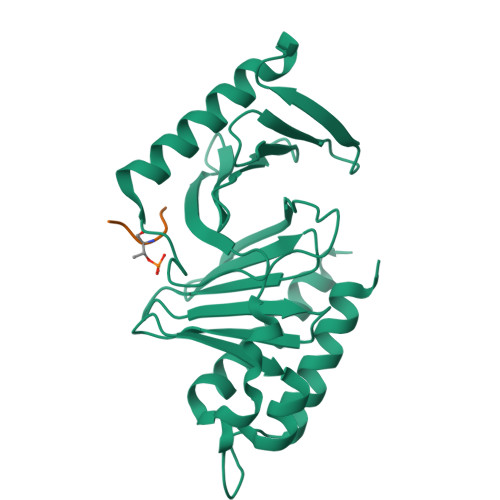
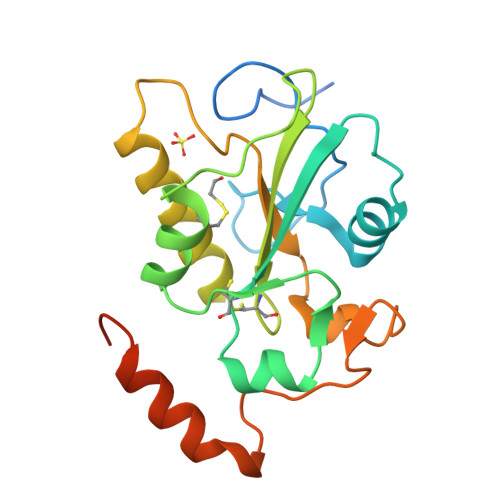
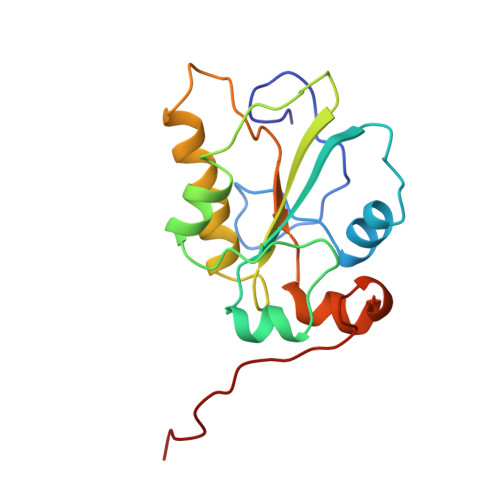
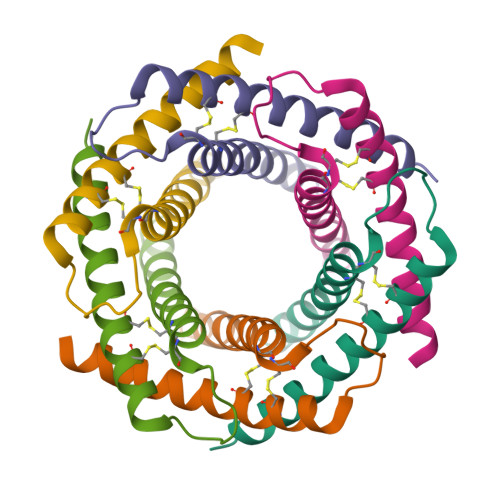
Eukaryotic elongation factor 2 kinase structureClick to view 3D structureEukaryotic elongation factor 2 kinaseO00418HumansPredicted (SEA)
Prediction Confidence Score
0.321
Applicability Domain
1.0
Statistical Significance
0.0165
Supporting Reference Compounds
263
E-value
128.529
Serine/threonine-protein kinase PLK1 structureClick to view 3D structureSerine/threonine-protein kinase PLK1P53350HumansPredicted (SEA)
Prediction Confidence Score
0.317
Applicability Domain
1.0
Statistical Significance
0.056
Supporting Reference Compounds
705
E-value
436.345
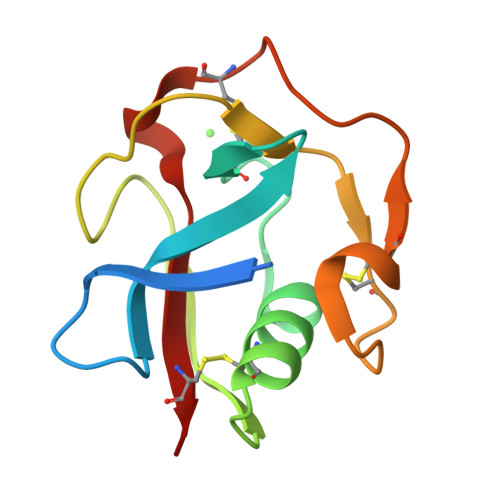
M-phase inducer phosphatase 2 structureClick to view 3D structureM-phase inducer phosphatase 2P30305HumansPredicted (SEA)
Prediction Confidence Score
0.252
Applicability Domain
0.367
Statistical Significance
0.0057
Supporting Reference Compounds
50
E-value
44.7633
M-phase inducer phosphatase 1 structureClick to view 3D structureM-phase inducer phosphatase 1P30304HumansPredicted (SEA)
Prediction Confidence Score
0.249
Applicability Domain
0.367
Statistical Significance
0.002
Supporting Reference Compounds
25
E-value
15.8034
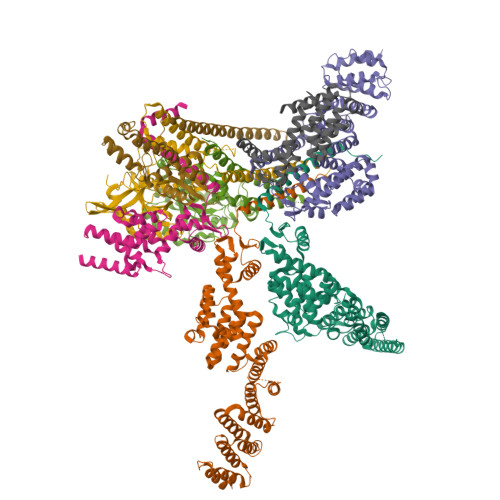
Replicase polyprotein 1ab structureClick to view 3D structureReplicase polyprotein 1abP0DTD1SARS-CoV-2Predicted (SEA)
Prediction Confidence Score
0.233
Applicability Domain
0.367
Statistical Significance
0.1123
Supporting Reference Compounds
215
E-value
874.247
Click to view 3D structureReverse transcriptaseQ06347Human immunodeficiency virus 2Predicted (SEA)
Prediction Confidence Score
0.229
Applicability Domain
0.229 Low confidence
Statistical Significance
0.0016
Supporting Reference Compounds
1
E-value
12.8451
Macrophage scavenger receptor types I and II structureClick to view 3D structureMacrophage scavenger receptor types I and IIP21757HumansPredicted (SEA)
Prediction Confidence Score
0.227
Applicability Domain
0.227 Low confidence
Statistical Significance
1.60e-04
Supporting Reference Compounds
1
E-value
1.24559
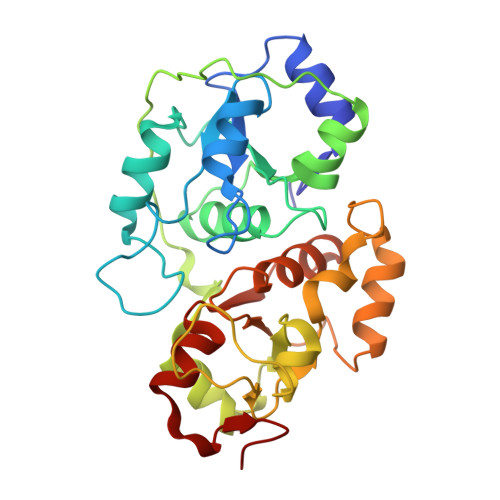
Indoleamine 2,3-dioxygenase 1 structureClick to view 3D structureIndoleamine 2,3-dioxygenase 1P14902HumansPredicted (SEA)
Prediction Confidence Score
0.216
Applicability Domain
0.367
Statistical Significance
0.1202
Supporting Reference Compounds
108
E-value
936.059
Thiosulfate sulfurtransferase structureClick to view 3D structureThiosulfate sulfurtransferaseQ16762HumansPredicted (SEA)
Prediction Confidence Score
0.212
Applicability Domain
0.367
Statistical Significance
0.002
Supporting Reference Compounds
15
E-value
15.5698
Click to view 3D structureDNA damage-inducible transcript 3 proteinP35639Mus musculusPredicted (SEA)
Prediction Confidence Score
0.207
Applicability Domain
0.293 Low confidence
Statistical Significance
0.3955
Supporting Reference Compounds
226
E-value
3079.25
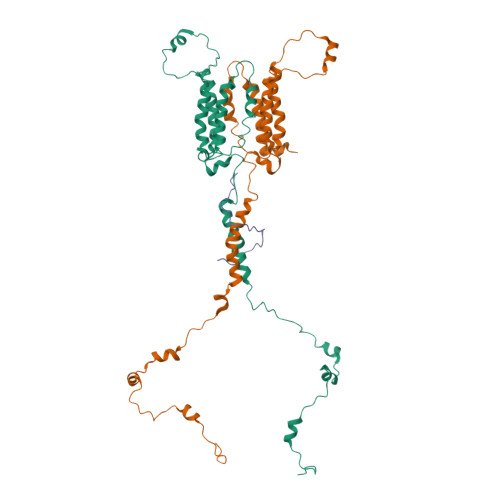
X-box-binding protein 1 structureClick to view 3D structureX-box-binding protein 1P17861HumansPredicted (SEA)
Prediction Confidence Score
0.207
Applicability Domain
0.293 Low confidence
Statistical Significance
0.3963
Supporting Reference Compounds
227
E-value
3085.09
Click to view 3D structureMannose-6-phosphate isomeraseP34949HumansPredicted (SEA)
Prediction Confidence Score
0.206
Applicability Domain
0.293 Low confidence
Statistical Significance
0.0427
Supporting Reference Compounds
53
E-value
332.728
Amine oxidase [flavin-containing] B structureClick to view 3D structureAmine oxidase [flavin-containing] BP27338HumansPredicted (SEA)
Prediction Confidence Score
0.201
Applicability Domain
0.367
Statistical Significance
0.5158
Supporting Reference Compounds
315
E-value
4015.7
Mitochondrial import inner membrane translocase subunit TIM23 structureClick to view 3D structureMitochondrial import inner membrane translocase subunit TIM23P32897Saccharomyces cerevisiae S288cPredicted (SEA)
Prediction Confidence Score
0.193
Applicability Domain
0.293 Low confidence
Statistical Significance
0.3172
Supporting Reference Compounds
75
E-value
2469.77
Mitochondrial import inner membrane translocase subunit TIM10 structureClick to view 3D structureMitochondrial import inner membrane translocase subunit TIM10P87108Saccharomyces cerevisiae S288cPredicted (SEA)
Prediction Confidence Score
0.191
Applicability Domain
0.293 Low confidence
Statistical Significance
0.2979
Supporting Reference Compounds
64
E-value
2319.52
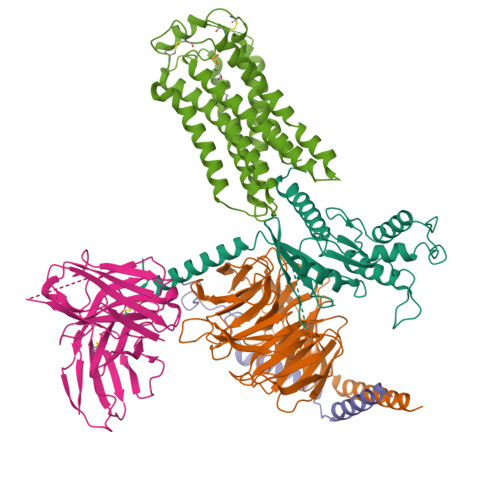
Sphingosine 1-phosphate receptor 2 structureClick to view 3D structureSphingosine 1-phosphate receptor 2O95136HumansPredicted (SEA)
Prediction Confidence Score
0.191
Applicability Domain
0.293 Low confidence
Statistical Significance
0.393
Supporting Reference Compounds
79
E-value
3059.55
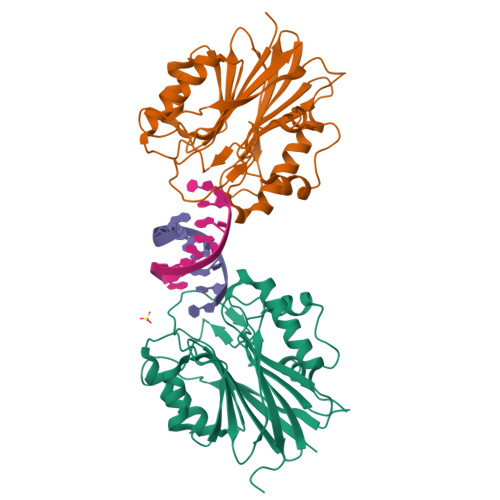
Protein RecA structureClick to view 3D structureProtein RecAP9WHJ3Mycobacterium tuberculosisPredicted (SEA)
Prediction Confidence Score
0.185
Applicability Domain
0.22 Low confidence
Statistical Significance
0.6966
Supporting Reference Compounds
296
E-value
5422.98
COP9 signalosome complex subunit 5 structureClick to view 3D structureCOP9 signalosome complex subunit 5Q92905HumansPredicted (SEA)
Prediction Confidence Score
0.181
Applicability Domain
0.222 Low confidence
Statistical Significance
0.0012
Supporting Reference Compounds
7
E-value
9.03051
Tyrosyl-DNA phosphodiesterase 2 structureClick to view 3D structureTyrosyl-DNA phosphodiesterase 2O95551HumansPredicted (SEA)
Prediction Confidence Score
0.179
Applicability Domain
0.196 Low confidence
Statistical Significance
0.2576
Supporting Reference Compounds
60
E-value
2005.47
Cytochrome P450 3A4 structureClick to view 3D structureCytochrome P450 3A4P08684HumansPredicted (SEA)
Prediction Confidence Score
0.179
Applicability Domain
0.27 Low confidence
Statistical Significance
0.9857
Supporting Reference Compounds
1538
E-value
7673.6
Click to view 3D structureL-lactate dehydrogenase B chainP16125Mus musculusPredicted (SEA)
Prediction Confidence Score
0.178
Applicability Domain
0.178 Low confidence
Statistical Significance
0.0021
Supporting Reference Compounds
1
E-value
16.4262
Transient receptor potential cation channel subfamily A member 1 structureClick to view 3D structureTransient receptor potential cation channel subfamily A member 1O75762HumansPredicted (SEA)
Prediction Confidence Score
0.177
Applicability Domain
0.27 Low confidence
Statistical Significance
0.5117
Supporting Reference Compounds
70
E-value
3983.47
Receptor-type tyrosine-protein phosphatase C structureClick to view 3D structureReceptor-type tyrosine-protein phosphatase CP08575HumansPredicted (SEA)
Prediction Confidence Score
0.176
Applicability Domain
0.205 Low confidence
Statistical Significance
0.2877
Supporting Reference Compounds
45
E-value
2239.72
Click to view 3D structureStreptokinase AP10520Streptococcus pyogenes serotype M1Predicted (SEA)
Prediction Confidence Score
0.174
Applicability Domain
0.179 Low confidence
Statistical Significance
0.878
Supporting Reference Compounds
425
E-value
6835.4
Apoptotic protease-activating factor 1 structureClick to view 3D structureApoptotic protease-activating factor 1O14727HumansPredicted (SEA)
Prediction Confidence Score
0.174
Applicability Domain
0.179 Low confidence
Statistical Significance
0.5849
Supporting Reference Compounds
112
E-value
4553.79
Insulin receptor structureClick to view 3D structureInsulin receptorP06213HumansKnownNot Available
3-hydroxy-3-methylglutaryl-coenzyme A reductase structureClick to view 3D structure3-hydroxy-3-methylglutaryl-coenzyme A reductaseP04035HumansKnownNot Available
Caspase-3 structureClick to view 3D structureCaspase-3P42574HumansKnownNot Available
Concentrations
Not Available
External Links
DrugBank IDNot Available
HMDB IDHMDB0034732
FooDB IDFDB013274
Phenol Explorer IDNot Available
KNApSAcK IDC00010876
BiGG IDNot Available
BioCyc IDNot Available
METLIN IDNot Available
PDB IDIMW
Wikipedia LinkThymoquinone
Chemspider ID9861
ChEBI ID113532
PubChem Compound ID10281
Kegg Compound IDNot Available
YMDB IDNot Available
ECMDB IDNot Available
References
Synthesis ReferenceNot Available
MSDSNot Available
General ReferencesNot Available