4,8-dioxa-3H-perfluorooctanoic acid (CED0153083)

Record Information
Version1.0
Creation Date2016-06-03 10:50:45 UTC
Update Date2026-08-23 23:12:03 UTC
SynCED IDCED0153083
Secondary Accession Numbers
  • CHEM043355
Identification
Common Name4,8-dioxa-3H-perfluorooctanoic acid
ClassSmall Molecule
Description
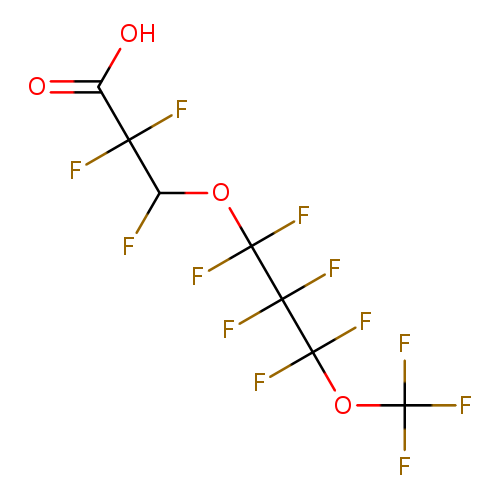
4,8-dioxa-3H-perfluorooctanoic acid is an organic compound with the formula C7H2F12O4 and an average molecular weight of 378.07 g/mol. 4,8-dioxa-3H-perfluorooctanoic acid belongs to the alpha-halocarboxylic acids and derivatives, a subclass of carboxylic acids and derivatives within the organic compounds. This substance has been identified in or released from 33 recorded sources. Within the electrical and electronic equipment sector, it is found in capacitors, cell phones, batteries, wires and cables, printed circuit boards, and one additional source. It is present in aquatic systems and sediments, including seawater, freshwater, surface water, and groundwater. It has also been detected in drinking water and water supply sources such as tap water, bottled water, and desalinated water. Regarding wastewater, sanitation, and biosolids, the compound appears in wastewater treatment effluent, industrial wastewater, mine wastewater, and unspecified wastewater. Additionally, it is found in food contact materials and food packaging within the food, food processing, and cookware sector, as well as in synthetic textiles, carpets, and rugs within the textiles, leather, and furnishings sector. Eight more sectors have also been recorded as sources. Exposure routes for 4,8-dioxa-3H-perfluorooctanoic acid include oral, inhalation, and touch.
Contaminant Type
  • PFAS
  • PMT
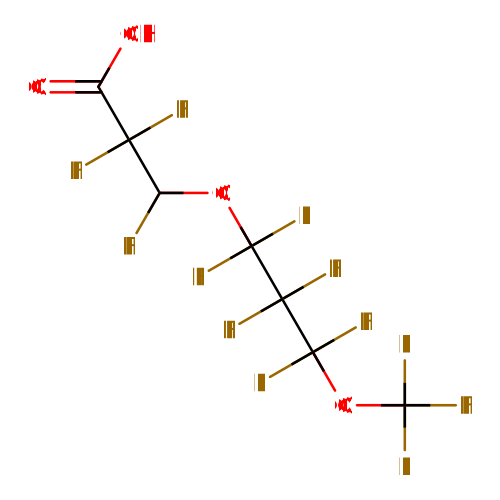
Chemical Structure
SynonymsNot Available
Chemical FormulaC7H2F12O4
Average Molecular Mass378.070 g/mol
Monoisotopic Mass377.976 g/mol
CAS Registry Number919005-14-4
IUPAC Name2,2,3-trifluoro-3-[1,1,2,2,3,3-hexafluoro-3-(trifluoromethoxy)propoxy]propanoic acid
Traditional Name2,2,3-trifluoro-3-[1,1,2,2,3,3-hexafluoro-3-(trifluoromethoxy)propoxy]propanoic acid
SMILESOC(=O)C(F)(F)C(F)OC(F)(F)C(F)(F)C(F)(F)OC(F)(F)F
InChI IdentifierInChI=1S/C7H2F12O4/c8-1(3(9,10)2(20)21)22-5(13,14)4(11,12)6(15,16)23-7(17,18)19/h1H,(H,20,21)
InChI KeyAFDRCEOKCOUICI-UHFFFAOYSA-N
Chemical Taxonomy
Description Belongs to the class of organic compounds known as alpha-halocarboxylic acids. These are carboxylic acids containing a halogen atom bonded to the alpha carbon atom.
KingdomOrganic compounds
Super ClassOrganic acids and derivatives
ClassCarboxylic acids and derivatives
Sub ClassAlpha-halocarboxylic acids and derivatives
Direct ParentAlpha-halocarboxylic acids
Alternative Parents
Substituents
  • Alpha-halocarboxylic acid
  • Trihalomethane
  • Monocarboxylic acid or derivatives
  • Carboxylic acid
  • Organic oxygen compound
  • Organic oxide
  • Halomethane
  • Hydrocarbon derivative
  • Organooxygen compound
  • Organofluoride
  • Organohalogen compound
  • Carbonyl group
  • Alkyl halide
  • Alkyl fluoride
  • Aliphatic acyclic compound
Molecular FrameworkAliphatic acyclic compounds
External DescriptorsNot Available
Biological Properties
StatusDetected and Not Quantified
OriginNot Available
Cellular LocationsNot Available
Biofluid LocationsNot Available
Tissue LocationsNot Available
ApplicationsNot Available
Biological RolesNot Available
Chemical RolesNot Available
Organoleptic EffectsNot Available
Physical Properties
StateNot Available
AppearanceNot Available
Experimental Properties
PropertyValue
Melting PointNot Available
Boiling PointNot Available
SolubilityNot Available
Predicted Properties
PropertyValueSource
Water Solubility0.018 g/LALOGPS
logP4.49ALOGPS
logP4.94ChemAxon
logS-4.3ALOGPS
pKa (Strongest Acidic)-1.4ChemAxon
pKa (Strongest Basic)-4.7ChemAxon
Physiological Charge-1ChemAxon
Hydrogen Acceptor Count4ChemAxon
Hydrogen Donor Count1ChemAxon
Polar Surface Area55.76 ŲChemAxon
Rotatable Bond Count8ChemAxon
Refractivity37.01 m³·mol⁻¹ChemAxon
Polarizability17.86 ųChemAxon
Number of Rings0ChemAxon
BioavailabilityYesChemAxon
Rule of FiveYesChemAxon
Ghose FilterNoChemAxon
Veber's RuleNoChemAxon
MDDR-like RuleNoChemAxon
Spectra
Spectra
Spectrum TypeDescriptionSplash KeyDeposition DateView
Predicted LC-MS/MSPredicted LC-MS/MS Spectrumsplash10-001i-1139000000-3c00f90ba811eda94b35Not AvailableView Spectrum
Predicted LC-MS/MSPredicted LC-MS/MS Spectrumsplash10-0059-1269000000-30d15842fe098d0aba7dNot AvailableView Spectrum
Predicted LC-MS/MSPredicted LC-MS/MS Spectrumsplash10-001j-3940000000-3a40aa6fe386d49225f3Not AvailableView Spectrum
Predicted LC-MS/MSPredicted LC-MS/MS Spectrumsplash10-001i-9702000000-b64231a712296281631fNot AvailableView Spectrum
Predicted LC-MS/MSPredicted LC-MS/MS Spectrumsplash10-0059-3009000000-0257d6400f4fb2602402Not AvailableView Spectrum
Predicted LC-MS/MSPredicted LC-MS/MS Spectrumsplash10-001l-9700000000-765d21e1593a6fd09ec3Not AvailableView Spectrum
Toxicity Profile
Toxicity Values
Toxicity ValueOrganismDose DescriptorRoute of ExposurePredicted or ExperimentalToxicity RatingReference
422.0 Log mg/kg [240:750]RatLD50oralpredictedNot AvailableNot Available
Toxicity / Toxin ClassNot Available
Mechanism of ToxicityNot Available
Carcinogenicity (IARC Classification)Not Available
Minimum Risk LevelNot Available
SymptomsNot Available
TreatmentNot Available
Health Effects
Health EffectRelationshipDirectionDescriptionReference
Exposure Sources
Source IDSourceSectorReference
CEDs000003Irrigation water?Irrigation water can serve as a vector for synthetic chemical contamination due to its potential exposure to agricultural inputs such as fertilizers, pesticides, and herbicides.Agriculture & land managementNot Available
CEDs000007Pesticides?Pesticides are synthetic chemicals designed to prevent, destroy, or control pests that threaten crops and agricultural productivity.Agriculture & land managementNot Available
CEDs000013Soil?Soil serves as a critical medium for plant growth and sustains various ecological functions; however, it can become a reservoir for synthetic chemical contamination.Agriculture & land managementPMC12810246
CEDs000027Water Coolers?Water coolers can be a source of synthetic chemical contamination due to various materials used in their construction and operation.Appliances, HVAC & refrigerantsNot Available
CEDs000043Water heaters?Water heaters can be a source of synthetic chemical contamination primarily through the materials and coatings used in their construction.Appliances, HVAC & refrigerantsNot Available
CEDs000050Groundwater?Groundwater serves as a vital resource for drinking water and agricultural irrigation but is increasingly susceptible to contamination from synthetic chemicals.Aquatic systems & sedimentsNot Available
CEDs000051Surface water?Surface water can serve as a significant vector for the introduction of synthetic chemical contaminants into aquatic ecosystems.Aquatic systems & sedimentsNot Available
CEDs000052Seawater?Seawater can serve as a significant reservoir for synthetic chemical contamination due to various industrial activities, including shipping, oil drilling, and coastal manufacturing.Aquatic systems & sedimentsNot Available
CEDs000053Freshwater?Freshwater bodies, including rivers, lakes, and reservoirs, can serve as significant sources of synthetic chemical contamination due to various anthropogenic activities.Aquatic systems & sedimentsNot Available
CEDs000070Stormwater runoff?Stormwater runoff refers to the flow of rainwater or melted snow that does not soak into the ground and instead collects pollutants as it travels over impervious surfaces such as roads and parking lots.Automotive & urban infrastructureNot Available
CEDs000088Waterproofing sprays?Waterproofing sprays are synthetic chemical formulations designed to create a protective barrier against moisture on various surfaces, including fabrics, wood, and masonry.Building & ConstructionNot Available
CEDs000115Drinking water?Drinking water can be a medium for synthetic chemical contamination, often originating from various industrial processes and agricultural practices.Drinking water & water supplyNot Available
CEDs000116Tap water?Tap water can be a potential source of synthetic chemical contamination due to various industrial processes and agricultural runoff.Drinking water & water supplyNot Available
CEDs000117Bottled water?Bottled water, while perceived as a safe and convenient alternative to tap water, can be a source of synthetic chemical contamination.Drinking water & water supplyNot Available
CEDs000118Desalinated water?Desalinated water, produced through processes such as reverse osmosis or distillation, is increasingly utilized to meet freshwater demands in various regions.Drinking water & water supplyNot Available
CEDs000120Wires and cables?Wires and cables are integral components in the transmission of electrical power and signals.Electrical & Electronic EquipmentNot Available
CEDs000121Printed circuit boards?Printed circuit boards (PCBs) are essential components in the manufacturing of electronic devices, serving as the backbone for electrical connections and circuit pathways.Electrical & Electronic EquipmentNot Available
CEDs000125Batteries?Batteries are devices that store and release electrical energy through electrochemical reactions.Electrical & Electronic EquipmentNot Available
CEDs000130Semiconductors?Semiconductors are materials that possess electrical conductivity between that of conductors and insulators, making them essential for various electronic applications, including transistors, diodes, and integrated circuits.Electrical & Electronic EquipmentNot Available
CEDs000138Lubricants?Lubricants are synthetic or petroleum-derived substances used to reduce friction between surfaces in machinery and equipment, enhancing operational efficiency and longevity.Energy, oil & gasNot Available
CEDs000147Food packaging?Food packaging often utilizes synthetic chemicals, such as plastics and coatings, to enhance durability, moisture resistance, and shelf life.Food, food processing & cookwareNot Available
CEDs000174Lubricants?Lubricants are synthetic or petroleum-based substances used to reduce friction and wear between moving parts in machinery and equipment.Industrial manufacturing & chemical processingNot Available
CEDs000181Ballast water?Ballast water, taken on by ships to maintain stability and balance, often contains a diverse array of microorganisms, including bacteria, viruses, and plankton.Marine, shipping & aquacultureNot Available
CEDs000182Bilge water?Bilge water is a byproduct generated from the accumulation of water in the lowest part of a ship's hull, which may include a mixture of seawater, oil, fuel residues, and various contaminants.Marine, shipping & aquacultureNot Available
CEDs000234Medical devices?Medical devices often incorporate synthetic chemicals in their manufacturing processes, which can contribute to contamination in healthcare settings.Healthcare, pharmaceuticals & veterinary productsNot Available
CEDs000451Carpets and Rugs?Carpets and rugs are commonly manufactured using synthetic fibers such as nylon, polyester, and polypropylene, which can be derived from petrochemical sources.Textiles, leather & furnishingsNot Available
CEDs000454Synthetic textiles?Synthetic textiles are materials derived from man-made fibers, such as polyester, nylon, and acrylic, which are produced through chemical processes involving petrochemicals.Textiles, leather & furnishingsNot Available
CEDs000468Industrial wastewater?Industrial wastewater is a byproduct generated during various manufacturing and processing activities, which often contains a complex mixture of organic and inorganic synthetic chemicals.Wastewater, sanitation & biosolidsNot Available
CEDs000470Wastewater treatment effluent?Wastewater treatment effluent is the liquid byproduct discharged from the treatment processes designed to remove contaminants from wastewater.Wastewater, sanitation & biosolidsNot Available
CEDs000475Mine wastewater?Mine wastewater refers to the liquid waste generated during the extraction and processing of minerals.Wastewater, sanitation & biosolidsNot Available
CEDs000477Wastewater, unspecified?Wastewater refers to water that has been adversely affected in quality by anthropogenic influence, typically through domestic, industrial, or agricultural activities.Wastewater, sanitation & biosolidsNot Available
CEDs000490Personal care & cosmeticsNot Available
CEDs000492Cell phones?Cell phones contain a variety of synthetic chemicals and materials, including plastics, metals, and glass, which can contribute to environmental contamination.Electrical & Electronic EquipmentNot Available
CEDs000493Capacitors?Capacitors are electronic components that store and release electrical energy, often using dielectric materials that can include synthetic chemicals.Electrical & Electronic EquipmentNot Available
CEDs000494Food contact materials?Food contact materials refer to substances and products that are intended to come into contact with food during processing, packaging, or preparation.Food, food processing & cookwareNot Available
CEDs000511Conductors Or Conductive Bodies Characterised By The Conductive Materials?Conductors, or conductive bodies, are materials that allow the flow of electrical current, typically made from metals such as copper, aluminum, or silver.Electrical & Electronic EquipmentPubChem
CEDs000519Electrodes?Electrodes, used in various electrical and electronic applications, can be a source of synthetic chemical contamination due to the materials from which they are constructed and the processes involved in their manufacturing.Electrical & Electronic EquipmentPubChem
CEDs000524Hybrid Capacitors?Hybrid capacitors are energy storage devices that combine the properties of electrolytic and supercapacitors, utilizing a combination of electrochemical principles to achieve higher energy density and power density.Electrical & Electronic EquipmentPubChem
CEDs000743Sludge Treatment?Sludge treatment involves the processing of waste materials generated from wastewater treatment plants, which often contain a variety of organic and inorganic substances.Wastewater, sanitation & biosolidsPubChem
CEDs000744Water, Wastewater, & Sewage Treatment?Water, wastewater, and sewage treatment processes are critical for managing and mitigating pollutants in water systems.Wastewater, sanitation & biosolidsPubChem
CEDs02265River WaterAquatic systems & sedimentsPMC7863963
Pathways
0 pathwaysPathway Source: PathBank

No pathways found

No metabolic pathways have been associated with this synthetic chemical

Targets
StructureProteinUniProt IDOrganismRelationshipDetails
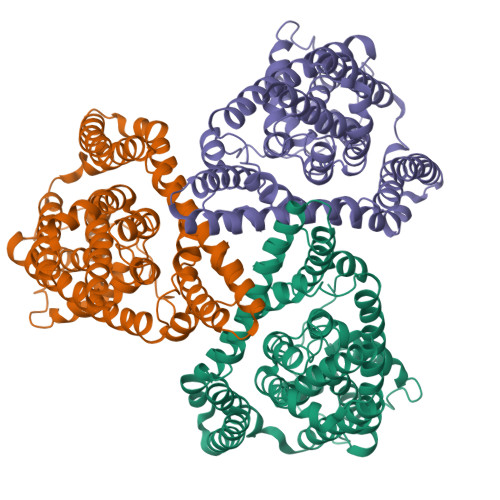
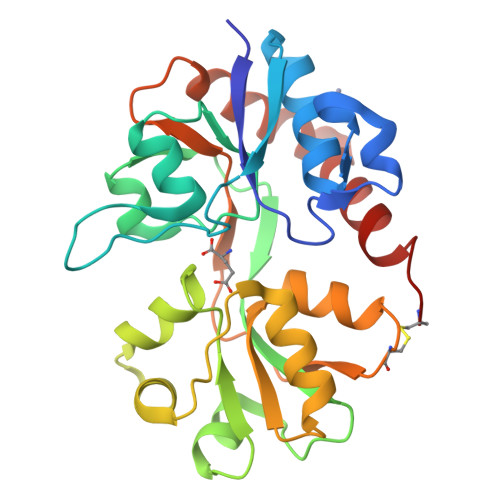
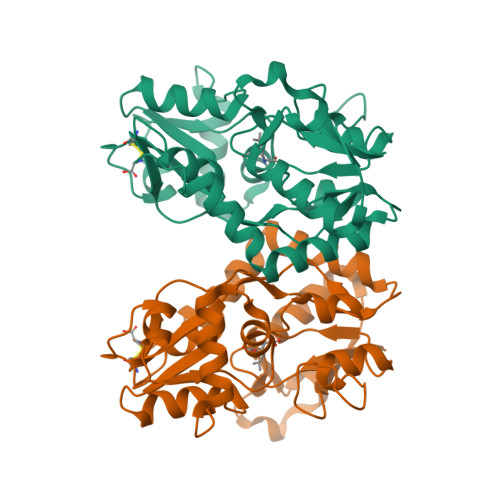
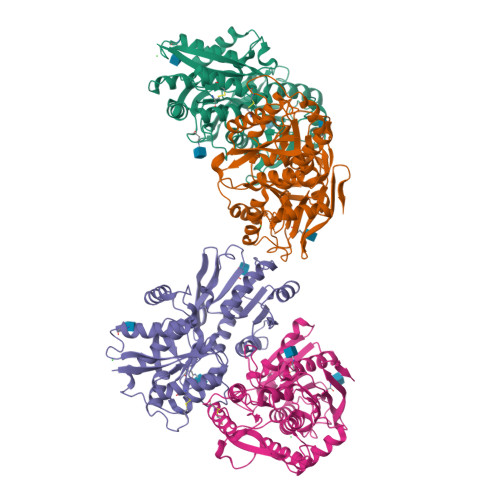
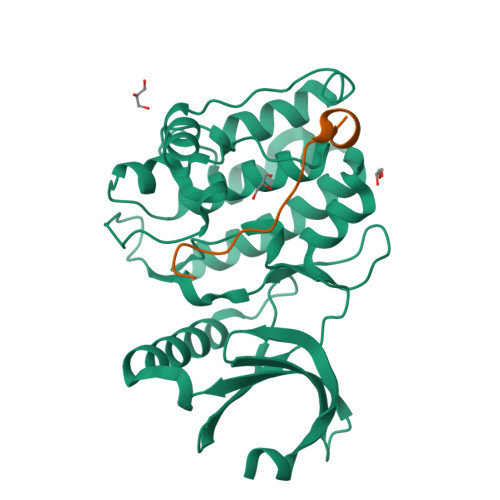
Inward rectifier potassium channel 2 structureClick to view 3D structureInward rectifier potassium channel 2P35561Mus musculusPredicted (SEA)
Prediction Confidence Score
0.188
Applicability Domain
0.188 Low confidence
Statistical Significance
0.0968
Supporting Reference Compounds
1
E-value
753.736
Click to view 3D structureAsc-type amino acid transporter 1P63116RatPredicted (SEA)
Prediction Confidence Score
0.167
Applicability Domain
0.167 Low confidence
Statistical Significance
0.0035
Supporting Reference Compounds
2
E-value
27.0137
Click to view 3D structureACCaseH9BT73Alopecurus japonicusPredicted (SEA)
Prediction Confidence Score
0.167
Applicability Domain
0.167 Low confidence
Statistical Significance
0.1349
Supporting Reference Compounds
1
E-value
1050.19
Glutamate transporter homolog structureClick to view 3D structureGlutamate transporter homologO59010Pyrococcus horikoshii (strain ATCC 700860 / DSM 12428 / JCM 9974 /NBRC 100139 / OT-3)Predicted (SEA)
Prediction Confidence Score
0.157
Applicability Domain
0.162 Low confidence
Statistical Significance
0.0151
Supporting Reference Compounds
3
E-value
117.864
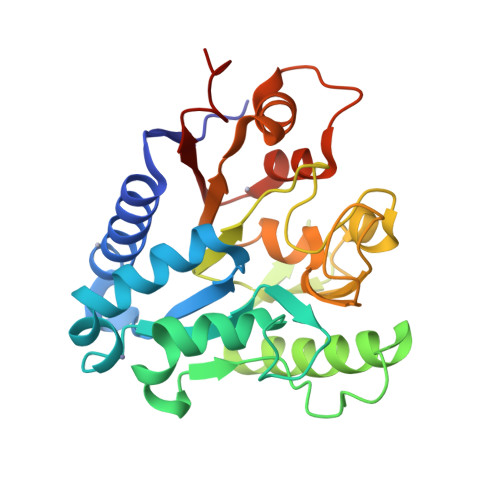
Ribose-5-phosphate isomerase B structureClick to view 3D structureRibose-5-phosphate isomerase BP9WKD7Mycobacterium tuberculosis (strain ATCC 25618 / H37Rv)Predicted (SEA)
Prediction Confidence Score
0.156
Applicability Domain
0.156 Low confidence
Statistical Significance
0.0025
Supporting Reference Compounds
1
E-value
19.6959
Peroxisome proliferator-activated receptor gamma structureClick to view 3D structurePeroxisome proliferator-activated receptor gammaP37231HumansPredicted (SEA)
Prediction Confidence Score
0.154
Applicability Domain
0.175 Low confidence
Statistical Significance
0.9321
Supporting Reference Compounds
192
E-value
7256.56
Glutamate receptor 1 structureClick to view 3D structureGlutamate receptor 1P19490Rattus norvegicusPredicted (SEA)
Prediction Confidence Score
0.154
Applicability Domain
0.154 Low confidence
Statistical Significance
0.2317
Supporting Reference Compounds
37
E-value
1804.08
Click to view 3D structureGlutamate receptor ionotropic, kainate 5Q16478HumansPredicted (SEA)
Prediction Confidence Score
0.154
Applicability Domain
0.154 Low confidence
Statistical Significance
0.0631
Supporting Reference Compounds
17
E-value
491.229
Click to view 3D structureGlutamate receptor 4P48058HumansPredicted (SEA)
Prediction Confidence Score
0.154
Applicability Domain
0.154 Low confidence
Statistical Significance
0.1358
Supporting Reference Compounds
25
E-value
1057.43
Peroxisome proliferator-activated receptor alpha structureClick to view 3D structurePeroxisome proliferator-activated receptor alphaQ07869HumansPredicted (SEA)
Prediction Confidence Score
0.154
Applicability Domain
0.175 Low confidence
Statistical Significance
0.8823
Supporting Reference Compounds
127
E-value
6869.03
Glutamate receptor ionotropic, kainate 1 structureClick to view 3D structureGlutamate receptor ionotropic, kainate 1P22756Rattus norvegicusPredicted (SEA)
Prediction Confidence Score
0.153
Applicability Domain
0.154 Low confidence
Statistical Significance
0.2528
Supporting Reference Compounds
45
E-value
1967.72
Histone deacetylase-like amidohydrolase structureClick to view 3D structureHistone deacetylase-like amidohydrolaseQ70I53Alcaligenes sp. (strain DSM 11172)Predicted (SEA)
Prediction Confidence Score
0.153
Applicability Domain
0.191 Low confidence
Statistical Significance
0.2014
Supporting Reference Compounds
11
E-value
1568.27
6-phosphogluconolactonase structureClick to view 3D structure6-phosphogluconolactonaseQ9GRG6Trypanosoma bruceiPredicted (SEA)
Prediction Confidence Score
0.152
Applicability Domain
0.152 Low confidence
Statistical Significance
0.0026
Supporting Reference Compounds
1
E-value
20.4743
Aldo-keto reductase family 1 member C3 structureClick to view 3D structureAldo-keto reductase family 1 member C3P42330HumansPredicted (SEA)
Prediction Confidence Score
0.152
Applicability Domain
0.169 Low confidence
Statistical Significance
0.7687
Supporting Reference Compounds
57
E-value
5984.5
Aldo-keto reductase family 1 member C2 structureClick to view 3D structureAldo-keto reductase family 1 member C2P52895HumansPredicted (SEA)
Prediction Confidence Score
0.152
Applicability Domain
0.169 Low confidence
Statistical Significance
0.6703
Supporting Reference Compounds
40
E-value
5217.92
Glutamate receptor 2 structureClick to view 3D structureGlutamate receptor 2P19491Rattus norvegicusPredicted (SEA)
Prediction Confidence Score
0.152
Applicability Domain
0.154 Low confidence
Statistical Significance
0.1469
Supporting Reference Compounds
34
E-value
1143.45
Glutamate receptor 3 structureClick to view 3D structureGlutamate receptor 3P19492Rattus norvegicusPredicted (SEA)
Prediction Confidence Score
0.152
Applicability Domain
0.154 Low confidence
Statistical Significance
0.184
Supporting Reference Compounds
30
E-value
1432.74
Glutamate receptor 4 structureClick to view 3D structureGlutamate receptor 4P19493Rattus norvegicusPredicted (SEA)
Prediction Confidence Score
0.151
Applicability Domain
0.154 Low confidence
Statistical Significance
0.1268
Supporting Reference Compounds
25
E-value
987.206
Winged helix repair factor 1 structureClick to view 3D structureWinged helix repair factor 1P49842HumansPredicted (SEA)
Prediction Confidence Score
0.151
Applicability Domain
0.157 Low confidence
Statistical Significance
0.2816
Supporting Reference Compounds
2
E-value
2192.0
Glutamate receptor ionotropic, kainate 3 structureClick to view 3D structureGlutamate receptor ionotropic, kainate 3P42264Rattus norvegicusPredicted (SEA)
Prediction Confidence Score
0.151
Applicability Domain
0.154 Low confidence
Statistical Significance
0.1407
Supporting Reference Compounds
26
E-value
1095.26
Glutamate receptor 1 structureClick to view 3D structureGlutamate receptor 1P42261HumansPredicted (SEA)
Prediction Confidence Score
0.151
Applicability Domain
0.154 Low confidence
Statistical Significance
0.3288
Supporting Reference Compounds
37
E-value
2559.37
Click to view 3D structurePeroxisome proliferator-activated receptor alphaP23204Mus musculusPredicted (SEA)
Prediction Confidence Score
0.15
Applicability Domain
0.156 Low confidence
Statistical Significance
0.746
Supporting Reference Compounds
38
E-value
5807.63
Click to view 3D structureMetabotropic glutamate receptor 4P31423Rattus norvegicusPredicted (SEA)
Prediction Confidence Score
0.15
Applicability Domain
0.167 Low confidence
Statistical Significance
0.5829
Supporting Reference Compounds
38
E-value
4537.6
Click to view 3D structureMetabotropic glutamate receptor 6P35349Rattus norvegicusPredicted (SEA)
Prediction Confidence Score
0.15
Applicability Domain
0.167 Low confidence
Statistical Significance
0.3444
Supporting Reference Compounds
24
E-value
2681.52
Glutamate receptor 2 structureClick to view 3D structureGlutamate receptor 2P42262HumansPredicted (SEA)
Prediction Confidence Score
0.149
Applicability Domain
0.154 Low confidence
Statistical Significance
0.4705
Supporting Reference Compounds
41
E-value
3662.65
Concentrations
Not Available
External Links
DrugBank IDNot Available
HMDB IDNot Available
FooDB IDNot Available
Phenol Explorer IDNot Available
KNApSAcK IDNot Available
BiGG IDNot Available
BioCyc IDNot Available
METLIN IDNot Available
PDB IDNot Available
Wikipedia LinkNot Available
Chemspider IDNot Available
ChEBI IDNot Available
PubChem Compound ID52915299
Kegg Compound IDNot Available
YMDB IDNot Available
ECMDB IDNot Available
References
Synthesis ReferenceNot Available
MSDSNot Available
General ReferencesNot Available