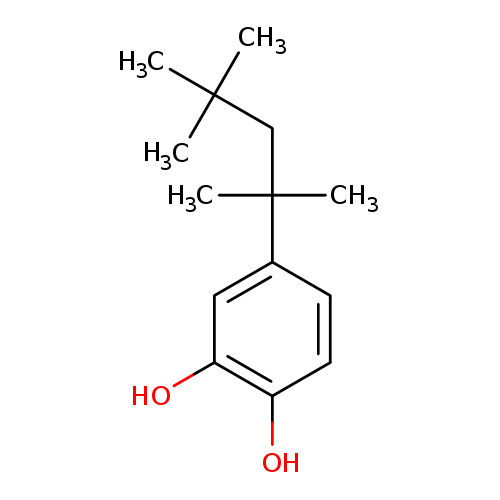
Click to view 3D structure Click to view 3D structure | Sarcoplasmic/endoplasmic reticulum calcium ATPase 2 | P11507 | Rattus norvegicus | Predicted (SEA) | - Prediction Confidence Score
- 0.333
- Applicability Domain
- 0.333
- Statistical Significance
- 1.40e-04
- Supporting Reference Compounds
- 1
- E-value
- 1.08989
|
 Click to view 3D structure Click to view 3D structure | Polyunsaturated fatty acid lipoxygenase ALOX15 | P12530 | Oryctolagus cuniculus | Predicted (SEA) | - Prediction Confidence Score
- 0.332
- Applicability Domain
- 0.359
- Statistical Significance
- 5.40e-04
- Supporting Reference Compounds
- 47
- E-value
- 4.20386
|
| Click to view 3D structure | Beta-1 adrenergic receptor | P18090 | Rattus norvegicus | Predicted (SEA) | - Prediction Confidence Score
- 0.313
- Applicability Domain
- 0.324
- Statistical Significance
- 0.0017
- Supporting Reference Compounds
- 43
- E-value
- 13.0787
|
| Click to view 3D structure | Beta-1 adrenergic receptor | B0FL73 | Cavia porcellus | Predicted (SEA) | - Prediction Confidence Score
- 0.308
- Applicability Domain
- 0.318
- Statistical Significance
- 0.0018
- Supporting Reference Compounds
- 37
- E-value
- 14.3243
|
| Click to view 3D structure | Beta-2 adrenergic receptor | Q8K4Z4 | Cavia porcellus | Predicted (SEA) | - Prediction Confidence Score
- 0.308
- Applicability Domain
- 0.318
- Statistical Significance
- 0.0022
- Supporting Reference Compounds
- 48
- E-value
- 17.5161
|
| Click to view 3D structure | Alpha-2A adrenergic receptor | Q01338 | Mus musculus | Predicted (SEA) | - Prediction Confidence Score
- 0.306
- Applicability Domain
- 0.306
- Statistical Significance
- 1.00e-04
- Supporting Reference Compounds
- 1
- E-value
- 0.778492
|
| Click to view 3D structure | Alpha-2C adrenergic receptor | Q01337 | Mus musculus | Predicted (SEA) | - Prediction Confidence Score
- 0.306
- Applicability Domain
- 0.306
- Statistical Significance
- 1.00e-04
- Supporting Reference Compounds
- 1
- E-value
- 0.778492
|
 Click to view 3D structure Click to view 3D structure | Beta-2 adrenergic receptor | P07550 | Humans | Predicted (SEA) | - Prediction Confidence Score
- 0.303
- Applicability Domain
- 0.316
- Statistical Significance
- 0.014
- Supporting Reference Compounds
- 258
- E-value
- 108.755
|
 Click to view 3D structure Click to view 3D structure | D(2) dopamine receptor | P14416 | Humans | Predicted (SEA) | - Prediction Confidence Score
- 0.302
- Applicability Domain
- 0.324
- Statistical Significance
- 0.0859
- Supporting Reference Compounds
- 1103
- E-value
- 668.958
|
 Click to view 3D structure Click to view 3D structure | Tyrosine-protein kinase Fyn | P06241 | Humans | Predicted (SEA) | - Prediction Confidence Score
- 0.302
- Applicability Domain
- 0.359
- Statistical Significance
- 0.0869
- Supporting Reference Compounds
- 707
- E-value
- 676.743
|
| Click to view 3D structure | Taste receptor type 2 member 50 | P59544 | Humans | Predicted (SEA) | - Prediction Confidence Score
- 0.3
- Applicability Domain
- 0.3
- Statistical Significance
- 4.20e-04
- Supporting Reference Compounds
- 1
- E-value
- 3.26967
|
| Click to view 3D structure | Taste receptor type 2 member 45 | P59539 | Humans | Predicted (SEA) | - Prediction Confidence Score
- 0.3
- Applicability Domain
- 0.3
- Statistical Significance
- 4.20e-04
- Supporting Reference Compounds
- 1
- E-value
- 3.26967
|
| Click to view 3D structure | Taste receptor type 2 member 42 | Q7RTR8 | Humans | Predicted (SEA) | - Prediction Confidence Score
- 0.3
- Applicability Domain
- 0.3
- Statistical Significance
- 4.20e-04
- Supporting Reference Compounds
- 1
- E-value
- 3.26967
|
| Click to view 3D structure | Taste receptor type 2 member 41 | P59536 | Humans | Predicted (SEA) | - Prediction Confidence Score
- 0.3
- Applicability Domain
- 0.3
- Statistical Significance
- 4.20e-04
- Supporting Reference Compounds
- 1
- E-value
- 3.26967
|
| Click to view 3D structure | Taste receptor type 2 member 7 | Q9NYW3 | Humans | Predicted (SEA) | - Prediction Confidence Score
- 0.3
- Applicability Domain
- 0.3
- Statistical Significance
- 4.20e-04
- Supporting Reference Compounds
- 1
- E-value
- 3.26967
|
| Click to view 3D structure | Taste receptor type 2 member 30 | P59541 | Humans | Predicted (SEA) | - Prediction Confidence Score
- 0.3
- Applicability Domain
- 0.3
- Statistical Significance
- 4.20e-04
- Supporting Reference Compounds
- 1
- E-value
- 3.26967
|
| Click to view 3D structure | Taste receptor type 2 member 60 | P59551 | Humans | Predicted (SEA) | - Prediction Confidence Score
- 0.3
- Applicability Domain
- 0.3
- Statistical Significance
- 4.20e-04
- Supporting Reference Compounds
- 1
- E-value
- 3.26967
|
| Click to view 3D structure | Taste receptor type 2 member 19 | P59542 | Humans | Predicted (SEA) | - Prediction Confidence Score
- 0.3
- Applicability Domain
- 0.3
- Statistical Significance
- 4.20e-04
- Supporting Reference Compounds
- 1
- E-value
- 3.26967
|
| Click to view 3D structure | Taste receptor type 2 member 20 | P59543 | Humans | Predicted (SEA) | - Prediction Confidence Score
- 0.3
- Applicability Domain
- 0.3
- Statistical Significance
- 4.20e-04
- Supporting Reference Compounds
- 1
- E-value
- 3.26967
|
| Click to view 3D structure | Taste receptor type 2 member 1 | Q9NYW7 | Humans | Predicted (SEA) | - Prediction Confidence Score
- 0.3
- Applicability Domain
- 0.3
- Statistical Significance
- 4.20e-04
- Supporting Reference Compounds
- 1
- E-value
- 3.26967
|
| Click to view 3D structure | Taste receptor type 2 member 40 | P59535 | Humans | Predicted (SEA) | - Prediction Confidence Score
- 0.3
- Applicability Domain
- 0.3
- Statistical Significance
- 4.20e-04
- Supporting Reference Compounds
- 1
- E-value
- 3.26967
|
| Click to view 3D structure | Taste receptor type 2 member 3 | Q9NYW6 | Humans | Predicted (SEA) | - Prediction Confidence Score
- 0.3
- Applicability Domain
- 0.3
- Statistical Significance
- 4.20e-04
- Supporting Reference Compounds
- 1
- E-value
- 3.26967
|
| Click to view 3D structure | Taste receptor type 2 member 13 | Q9NYV9 | Humans | Predicted (SEA) | - Prediction Confidence Score
- 0.3
- Applicability Domain
- 0.3
- Statistical Significance
- 4.20e-04
- Supporting Reference Compounds
- 1
- E-value
- 3.26967
|
| Click to view 3D structure | Taste receptor type 2 member 39 | P59534 | Humans | Predicted (SEA) | - Prediction Confidence Score
- 0.3
- Applicability Domain
- 0.3
- Statistical Significance
- 4.20e-04
- Supporting Reference Compounds
- 1
- E-value
- 3.26967
|
| Click to view 3D structure | Taste receptor type 2 member 5 | Q9NYW4 | Humans | Predicted (SEA) | - Prediction Confidence Score
- 0.3
- Applicability Domain
- 0.3
- Statistical Significance
- 4.20e-04
- Supporting Reference Compounds
- 1
- E-value
- 3.26967
|