1,2,3-Propanetriyl triisooctadecanoate (CED0017783)

Record Information
Version1.0
Creation Date2026-03-26 20:26:40 UTC
Update Date2026-08-22 19:37:47 UTC
SynCED IDCED0017783
Secondary Accession Numbers
  • CHEM056358
Identification
Common Name1,2,3-Propanetriyl triisooctadecanoate
ClassSmall Molecule
Description
1,2,3-Propanetriyl triisooctadecanoate belongs to the triradylcglycerols, a subclass of glycerolipids within the organic compounds. It is classified under the superclass of lipids and lipid-like molecules and has the formula C57H110O6. With an average molecular weight of 891.50 g/mol, 1,2,3-Propanetriyl triisooctadecanoate is a heavy molecule.
Contaminant TypeNot Available
Chemical Structure
Synonyms
ValueSource
1-isooctadecanoyl-2-isooctadecanoyl-3-isooctadecanoyl-glycerolLipid Annotator, HMDB
TG(54:0)Lipid Annotator, HMDB
TG(i-18:0/i-18:0/i-18:0)Lipid Annotator
TriacylglycerolLipid Annotator, HMDB
TAG(i-18:0/i-18:0/i-18:0)Lipid Annotator, HMDB
TriglycerideLipid Annotator, HMDB
Tracylglycerol(i-18:0/i-18:0/i-18:0)Lipid Annotator, HMDB
Tracylglycerol(54:0)Lipid Annotator, HMDB
TAG(54:0)Lipid Annotator, HMDB
Chemical FormulaC57H110O6
Average Molecular Mass891.500 g/mol
Monoisotopic Mass890.830 g/mol
CAS Registry Number26942-95-0;111212-36-3;26492-95-5;73597-25-8
IUPAC Name1,3-bis[(16-methylheptadecanoyl)oxy]propan-2-yl 16-methylheptadecanoate
Traditional Name1,3-bis[(16-methylheptadecanoyl)oxy]propan-2-yl 16-methylheptadecanoate
SMILESCC(C)CCCCCCCCCCCCCCC(=O)OCC(COC(=O)CCCCCCCCCCCCCCC(C)C)OC(=O)CCCCCCCCCCCCCCC(C)C
InChI IdentifierInChI=1S/C57H110O6/c1-51(2)43-37-31-25-19-13-7-10-16-22-28-34-40-46-55(58)61-49-54(63-57(60)48-42-36-30-24-18-12-9-15-21-27-33-39-45-53(5)6)50-62-56(59)47-41-35-29-23-17-11-8-14-20-26-32-38-44-52(3)4/h51-54H,7-50H2,1-6H3
InChI KeyJYPSWVMNJOPQ-UHFFFAOYSA-N
Chemical Taxonomy
Description Belongs to the class of organic compounds known as triacylglycerols. These are glycerides consisting of three fatty acid chains covalently bonded to a glycerol molecule through ester linkages.
KingdomOrganic compounds
Super ClassLipids and lipid-like molecules
ClassGlycerolipids
Sub ClassTriradylcglycerols
Direct ParentTriacylglycerols
Alternative Parents
Substituents
  • Triacyl-sn-glycerol
  • Tricarboxylic acid or derivatives
  • Fatty acid ester
  • Fatty acyl
  • Carboxylic acid ester
  • Carboxylic acid derivative
  • Organic oxygen compound
  • Organic oxide
  • Hydrocarbon derivative
  • Organooxygen compound
  • Carbonyl group
  • Aliphatic acyclic compound
Molecular FrameworkAliphatic acyclic compounds
External DescriptorsNot Available
Biological Properties
StatusDetected and Not Quantified
OriginNot Available
Cellular LocationsNot Available
Biofluid LocationsNot Available
Tissue LocationsNot Available
ApplicationsNot Available
Biological RolesNot Available
Chemical RolesNot Available
Organoleptic EffectsNot Available
Physical Properties
StateNot Available
AppearanceNot Available
Experimental Properties
PropertyValue
Melting PointNot Available
Boiling PointNot Available
SolubilityNot Available
Predicted Properties
PropertyValueSource
Water Solubility1.0e-05 g/LALOGPS
logP10.3ALOGPS
logP21.12ChemAxon
logS-8ALOGPS
pKa (Strongest Basic)-6.6ChemAxon
Physiological Charge0ChemAxon
Hydrogen Acceptor Count3ChemAxon
Hydrogen Donor Count0ChemAxon
Polar Surface Area78.9 ŲChemAxon
Rotatable Bond Count53ChemAxon
Refractivity268.74 m³·mol⁻¹ChemAxon
Polarizability121.18 ųChemAxon
Number of Rings0ChemAxon
BioavailabilityNoChemAxon
Rule of FiveNoChemAxon
Ghose FilterNoChemAxon
Veber's RuleNoChemAxon
MDDR-like RuleNoChemAxon
Spectra
SpectraNot Available
Toxicity Profile
Toxicity Values
Toxicity ValueOrganismDose DescriptorRoute of ExposurePredicted or ExperimentalToxicity RatingReference
10175.0 Log mg/kg [5700:18000]RatLD50oralpredictedNot AvailableNot Available
Toxicity / Toxin ClassNot Available
Mechanism of ToxicityNot Available
Carcinogenicity (IARC Classification)Not Available
Minimum Risk LevelNot Available
SymptomsNot Available
TreatmentNot Available
Health Effects
Health EffectRelationshipDirectionDescriptionReference
Exposure Sources
Source IDSourceSectorReference
CEDs000233Brushes?Brushes used in personal care and cosmetics can be a source of synthetic chemical contamination due to the materials and coatings used in their manufacturing.Personal care & cosmeticsPubChem
CEDs000490Personal care & cosmeticsNot Available
CEDs000511Conductors Or Conductive Bodies Characterised By The Conductive Materials?Conductors, or conductive bodies, are materials that allow the flow of electrical current, typically made from metals such as copper, aluminum, or silver.Electrical & Electronic EquipmentPubChem
CEDs000519Electrodes?Electrodes, used in various electrical and electronic applications, can be a source of synthetic chemical contamination due to the materials from which they are constructed and the processes involved in their manufacturing.Electrical & Electronic EquipmentPubChem
CEDs000524Hybrid Capacitors?Hybrid capacitors are energy storage devices that combine the properties of electrolytic and supercapacitors, utilizing a combination of electrochemical principles to achieve higher energy density and power density.Electrical & Electronic EquipmentPubChem
CEDs000545Food Preservation?Food preservation often involves the use of synthetic chemicals, such as preservatives, flavor enhancers, and color additives, to extend shelf life and enhance the sensory qualities of food products.Food, food processing & cookwarePubChem
CEDs000555Bleaching Agents?Bleaching agents are chemical substances used to whiten or lighten materials, often employed in various cleaning products for their stain removal and disinfecting properties.Household cleaning & consumer productsPubChem
CEDs000561Perfumes Within Detergents And Soaps?Perfumes within detergents and soaps are synthetic fragrance compounds added to enhance the sensory experience of cleaning products.Household cleaning & consumer productsPubChem
CEDs000563Soap Detergents?Soap detergents are synthetic surfactants designed to enhance the cleaning efficacy of water by reducing surface tension, allowing for better interaction with dirt and grease.Household cleaning & consumer productsPubChem
CEDs000581Paper Making Machines?Paper making machines utilize various synthetic chemicals throughout the production process, including additives, coatings, and bleaching agents.Industrial manufacturing & chemical processingPubChem
CEDs000605Pest Repellants?Pest repellents, often formulated from synthetic chemicals, are widely used to protect crops from insect infestations and other pests.Agriculture & land managementPubChem
CEDs000609Aftershave?Aftershave is a grooming product typically used to soothe and protect the skin following shaving.Personal care & cosmeticsPubChem
CEDs000610Aftersun Products?Aftersun products are designed to soothe and hydrate the skin after sun exposure, often containing various synthetic chemicals such as emollients, preservatives, and fragrances.Personal care & cosmeticsPubChem
CEDs000611Anti Perspirants Or Body Deoderants?Antiperspirants and body deodorants commonly contain synthetic chemicals such as aluminum compounds, parabens, and synthetic fragrances.Personal care & cosmeticsPubChem
CEDs000612Body Washing Or Cleaning Implements?Body washing or cleaning implements, such as synthetic sponges, loofahs, and washcloths, can be sources of synthetic chemical contamination due to the materials used in their production.Personal care & cosmeticsPubChem
CEDs000613Depilatories?Depilatories are products designed to remove unwanted hair through the application of synthetic chemicals that break down the protein structure of hair, facilitating its removal.Personal care & cosmeticsPubChem
CEDs000614Essential Oils Or Perfumes?Essential oils and perfumes are complex mixtures of volatile compounds derived from natural or synthetic sources, commonly used for their aromatic properties.Personal care & cosmeticsPubChem
CEDs000615Eye Makeup Products?Eye makeup products, including mascaras, eyeliners, and eyeshadows, often contain a variety of synthetic chemicals such as pigments, preservatives, and film-forming agents.Personal care & cosmeticsPubChem
CEDs000616Face Mask Cosmetics?Face mask cosmetics often contain a variety of synthetic chemicals, including preservatives, emulsifiers, and fragrances, which can contribute to chemical contamination.Personal care & cosmeticsPubChem
CEDs000617Lip Care Products?Lip care products, including lipsticks, balms, and glosses, often contain a variety of synthetic chemicals such as parabens, phthalates, and synthetic fragrances.Personal care & cosmeticsPubChem
CEDs000618Lip Makeup Products?Lip makeup products, such as lipsticks, lip glosses, and lip liners, often contain a variety of synthetic chemicals, including pigments, preservatives, and emollients.Personal care & cosmeticsPubChem
CEDs000619Manicure Pedicure?Manicure and pedicure procedures often involve the use of various synthetic chemicals, including solvents, nail polishes, and nail adhesives.Personal care & cosmeticsPubChem
CEDs000632Apparel?Apparel production often involves the use of various synthetic chemicals, including dyes, finishing agents, and preservatives.Textiles, leather & furnishingsPubChem
CEDs000685Ceramics?Ceramics can be a source of synthetic chemical contamination through various additives and processing agents used in their production.Building & ConstructionPubChem
CEDs000688Glass Coatings?Glass coatings are synthetic chemical formulations applied to glass surfaces to enhance properties such as durability, UV resistance, and aesthetic appeal.Building & ConstructionPubChem
CEDs000693Silica Glass?Silica glass, primarily composed of silicon dioxide (SiO2), is widely used in various applications, including windows, glass facades, and insulation materials.Building & ConstructionPubChem
CEDs000696Nanotechnology?Nanotechnology involves the manipulation of materials at the molecular or atomic level, typically within the range of 1 to 100 nanometers.Industrial manufacturing & chemical processingPubChem
CEDs000707Books?Books can be a source of synthetic chemical contamination due to the use of various chemicals in their production and preservation processes.Paper, pulp & fiber productsPubChem
CEDs000726Pens?Pens, commonly utilized for writing and marking, can be a source of synthetic chemical contamination primarily due to the materials used in their manufacturing.Paper, pulp & fiber productsPubChem
CEDs000727Printing Machines Or Presses?Printing machines or presses commonly utilize synthetic chemicals such as inks, solvents, and cleaning agents.Paper, pulp & fiber productsPubChem
CEDs000729Stamps?Stamps, particularly those produced using synthetic inks and adhesives, can contribute to chemical contamination when disposed of improperly.Paper, pulp & fiber productsPubChem
CEDs000734Coating Compositions?Coating compositions, which include paints, sealants, and varnishes, are formulated with a variety of synthetic chemicals such as solvents, resins, pigments, and additives.Building & ConstructionPubChem
CEDs000739Inks?Inks are complex mixtures composed of pigments or dyes, solvents, resins, and additives used primarily for printing and writing applications.Paper, pulp & fiber productsPubChem
CEDs000740Paper?Paper production involves the processing of wood fibers and the use of various chemicals, which can lead to synthetic chemical contamination.Paper, pulp & fiber productsPubChem
CEDs000741Pigment Pastes?Pigment pastes are concentrated dispersions of pigments used to impart color and properties to materials.Paper, pulp & fiber productsPubChem
Pathways
0 pathwaysPathway Source: PathBank

No pathways found

No metabolic pathways have been associated with this synthetic chemical

Targets
StructureProteinUniProt IDOrganismRelationshipDetails
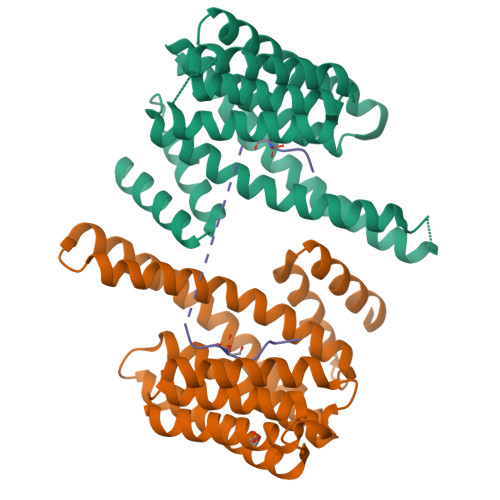
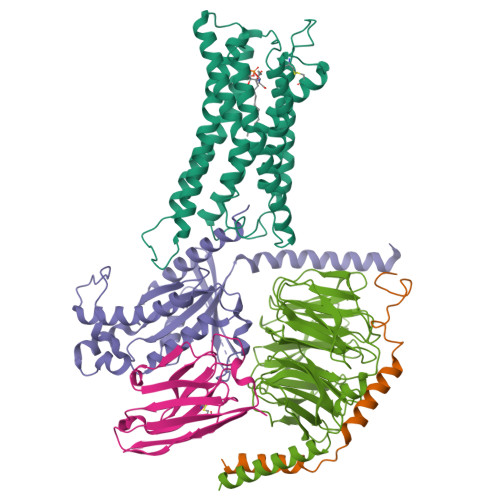
Click to view 3D structureLysophosphatidic acid receptor 3Q9UBY5HumansPredicted (SEA)
Prediction Confidence Score
0.481
Applicability Domain
0.561
Statistical Significance
1.80e-04
Supporting Reference Compounds
21
E-value
1.40129
Lysophosphatidic acid receptor 1 structureClick to view 3D structureLysophosphatidic acid receptor 1Q92633HumansPredicted (SEA)
Prediction Confidence Score
0.438
Applicability Domain
0.561
Statistical Significance
2.50e-04
Supporting Reference Compounds
31
E-value
1.94623
Lysophosphatidic acid receptor 2 structureClick to view 3D structureLysophosphatidic acid receptor 2Q9HBW0HumansPredicted (SEA)
Prediction Confidence Score
0.435
Applicability Domain
0.548
Statistical Significance
2.10e-04
Supporting Reference Compounds
30
E-value
1.63483
Click to view 3D structureMitochondrial carnitine/acylcarnitine carrier proteinO43772HumansPredicted (SEA)
Prediction Confidence Score
0.37
Applicability Domain
0.37
Statistical Significance
9.00e-05
Supporting Reference Compounds
1
E-value
0.700643
Click to view 3D structureLysophosphatidic acid receptor 4Q8BLG2Mus musculusPredicted (SEA)
Prediction Confidence Score
0.333
Applicability Domain
0.333
Statistical Significance
5.20e-04
Supporting Reference Compounds
1
E-value
4.04816
Protein kinase C alpha type structureClick to view 3D structureProtein kinase C alpha typeP17252HumansPredicted (SEA)
Prediction Confidence Score
0.33
Applicability Domain
0.595
Statistical Significance
0.009
Supporting Reference Compounds
258
E-value
70.3757
Click to view 3D structureLysophosphatidic acid receptor 4Q99677HumansPredicted (SEA)
Prediction Confidence Score
0.312
Applicability Domain
0.413
Statistical Significance
3.70e-04
Supporting Reference Compounds
9
E-value
2.88042
Lysophosphatidic acid receptor 6 structureClick to view 3D structureLysophosphatidic acid receptor 6P43657HumansPredicted (SEA)
Prediction Confidence Score
0.309
Applicability Domain
0.413
Statistical Significance
2.60e-04
Supporting Reference Compounds
3
E-value
2.02408
Click to view 3D structureProtein kinase C alpha typeP04409Bos taurusPredicted (SEA)
Prediction Confidence Score
0.307
Applicability Domain
0.595
Statistical Significance
7.00e-05
Supporting Reference Compounds
8
E-value
0.544945
Putative P2Y purinoceptor 10 structureClick to view 3D structurePutative P2Y purinoceptor 10O00398HumansPredicted (SEA)
Prediction Confidence Score
0.297
Applicability Domain
0.321
Statistical Significance
7.20e-04
Supporting Reference Compounds
10
E-value
5.60514
Click to view 3D structureLysophosphatidic acid receptor 5Q9H1C0HumansPredicted (SEA)
Prediction Confidence Score
0.284
Applicability Domain
0.413
Statistical Significance
3.60e-04
Supporting Reference Compounds
12
E-value
2.80257
Click to view 3D structureCytochrome P450 2C23P24470Rattus norvegicusPredicted (SEA)
Prediction Confidence Score
0.279
Applicability Domain
0.279 Low confidence
Statistical Significance
2.60e-04
Supporting Reference Compounds
1
E-value
2.02408
Protein kinase C epsilon type structureClick to view 3D structureProtein kinase C epsilon typeQ02156HumansPredicted (SEA)
Prediction Confidence Score
0.274
Applicability Domain
0.595
Statistical Significance
0.0409
Supporting Reference Compounds
189
E-value
318.637
Probable G-protein coupled receptor 34 structureClick to view 3D structureProbable G-protein coupled receptor 34Q9UPC5HumansPredicted (SEA)
Prediction Confidence Score
0.268
Applicability Domain
0.321
Statistical Significance
0.0015
Supporting Reference Compounds
11
E-value
11.9888
Probable G-protein coupled receptor 174 structureClick to view 3D structureProbable G-protein coupled receptor 174Q9BXC1HumansPredicted (SEA)
Prediction Confidence Score
0.262
Applicability Domain
0.321
Statistical Significance
7.40e-04
Supporting Reference Compounds
8
E-value
5.76084
Toll-like receptor 2 structureClick to view 3D structureToll-like receptor 2Q9QUN7Mus musculusPredicted (SEA)
Prediction Confidence Score
0.259
Applicability Domain
0.333
Statistical Significance
0.0031
Supporting Reference Compounds
2
E-value
23.8219
Toll-like receptor 2 structureClick to view 3D structureToll-like receptor 2O60603HumansPredicted (SEA)
Prediction Confidence Score
0.257
Applicability Domain
0.393
Statistical Significance
8.90e-04
Supporting Reference Compounds
9
E-value
6.92858
Cannabinoid receptor 1 structureClick to view 3D structureCannabinoid receptor 1P21554HumansPredicted (SEA)
Prediction Confidence Score
0.256
Applicability Domain
0.319
Statistical Significance
0.0765
Supporting Reference Compounds
200
E-value
595.469
HTH-type quorum-sensing regulator RhlR structureClick to view 3D structureHTH-type quorum-sensing regulator RhlRP54292Pseudomonas aeruginosa (strain ATCC 15692 / PAO1 / 1C / PRS 101 / LMG12228)Predicted (SEA)
Prediction Confidence Score
0.255
Applicability Domain
0.255 Low confidence
Statistical Significance
3.70e-04
Supporting Reference Compounds
1
E-value
2.88042
Cannabinoid receptor 2 structureClick to view 3D structureCannabinoid receptor 2P34972HumansPredicted (SEA)
Prediction Confidence Score
0.251
Applicability Domain
0.319
Statistical Significance
0.0782
Supporting Reference Compounds
175
E-value
609.17
Click to view 3D structureCytochrome P450 4A4P10611Oryctolagus cuniculusPredicted (SEA)
Prediction Confidence Score
0.244
Applicability Domain
0.244 Low confidence
Statistical Significance
3.90e-04
Supporting Reference Compounds
1
E-value
3.03612
Click to view 3D structureCAI-1 autoinducer sensor kinase/phosphatase CqsSQ9KM66Vibrio cholerae serotype O1 (strain ATCC 39315 / El Tor Inaba N16961)Predicted (SEA)
Prediction Confidence Score
0.244
Applicability Domain
0.244 Low confidence
Statistical Significance
0.0021
Supporting Reference Compounds
1
E-value
16.0369
Fatty-acid amide hydrolase 1 structureClick to view 3D structureFatty-acid amide hydrolase 1P97612Rattus norvegicusPredicted (SEA)
Prediction Confidence Score
0.244
Applicability Domain
0.264 Low confidence
Statistical Significance
0.0657
Supporting Reference Compounds
102
E-value
511.469
Click to view 3D structureDiacylglycerol lipase-alphaQ9Y4D2HumansPredicted (SEA)
Prediction Confidence Score
0.243
Applicability Domain
0.262 Low confidence
Statistical Significance
0.0178
Supporting Reference Compounds
35
E-value
138.338
Autotaxin structureClick to view 3D structureAutotaxinQ13822HumansPredicted (SEA)
Prediction Confidence Score
0.481
Applicability Domain
0.561
Statistical Significance
3.90e-04
Supporting Reference Compounds
40
E-value
3.03612
Concentrations
Not Available
External Links
DrugBank IDNot Available
HMDB IDHMDB0108857
FooDB IDFDB080676
Phenol Explorer IDNot Available
KNApSAcK IDNot Available
BiGG IDNot Available
BioCyc IDNot Available
METLIN IDNot Available
PDB IDNot Available
Wikipedia LinkNot Available
Chemspider ID147511
ChEBI IDNot Available
PubChem Compound ID168634
Kegg Compound IDNot Available
YMDB IDNot Available
ECMDB IDNot Available
References
Synthesis ReferenceNot Available
MSDSNot Available
General ReferencesNot Available