Cyclohexanone, 2-cyclohexylidene- (CED0083033)

Record Information
Version1.0
Creation Date2026-03-31 21:43:00 UTC
Update Date2026-08-18 19:44:55 UTC
SynCED IDCED0083033
Secondary Accession Numbers
  • CHEM058125
Identification
Common NameCyclohexanone, 2-cyclohexylidene-
ClassSmall Molecule
Description
Cyclohexanone, 2-cyclohexylidene- is an organic compound with the chemical formula C12H18O1 and an average molecular weight of 178.28 g/mol. Cyclohexanone, 2-cyclohexylidene- belongs to the carbonyl compounds, a subclass of organooxygen compounds within the organic compounds. This substance has been identified in or released from seven recorded sources. Within the category of household cleaning and consumer products, it is associated with bleaching agents, perfumes within detergents and soaps, cigar cigarettes, and tobacco smoke filters. In the context of food, food processing, and cookware, it is found in food contact materials and fermentation processes for beer. Additionally, it is present in indoor air, representing the air, dust, and atmospheric transport category. Recorded exposure routes for this compound include inhalation, oral ingestion, and touch.
Contaminant TypeNot Available
Chemical Structure
SynonymsNot Available
Chemical FormulaC12H18O1
Average Molecular Mass178.275 g/mol
Monoisotopic Mass178.136 g/mol
CAS Registry Number1011-12-7;35255-48-2;1195728-20-1;29351-38-0
IUPAC Name[1,1'-bi(cyclohexylidene)]-2-one
Traditional Name[1,1'-bi(cyclohexylidene)]-2-one
SMILESO=C1CCCCC1=C1CCCCC1
InChI IdentifierInChI=1S/C12H18O/c13-12-9-5-4-8-11(12)10-6-2-1-3-7-10/h1-9H2
InChI KeyTYDSIOSLHQWFOU-UHFFFAOYSA-N
Chemical Taxonomy
Description Belongs to the class of organic compounds known as cyclic ketones. These are organic compounds containing a ketone that is conjugated to a cyclic moiety.
KingdomOrganic compounds
Super ClassOrganic oxygen compounds
ClassOrganooxygen compounds
Sub ClassCarbonyl compounds
Direct ParentCyclic ketones
Alternative Parents
Substituents
  • Cyclic ketone
  • Organic oxide
  • Hydrocarbon derivative
  • Aliphatic homomonocyclic compound
Molecular FrameworkAliphatic homomonocyclic compounds
External DescriptorsNot Available
Biological Properties
StatusDetected and Not Quantified
OriginNot Available
Cellular LocationsNot Available
Biofluid LocationsNot Available
Tissue LocationsNot Available
ApplicationsNot Available
Biological RolesNot Available
Chemical RolesNot Available
Organoleptic EffectsNot Available
Physical Properties
StateNot Available
AppearanceNot Available
Experimental Properties
PropertyValue
Melting PointNot Available
Boiling PointNot Available
SolubilityNot Available
Predicted Properties
PropertyValueSource
Water Solubility0.39 g/LALOGPS
logP2.97ALOGPS
logP3.44ChemAxon
logS-2.7ALOGPS
pKa (Strongest Basic)-4.7ChemAxon
Physiological Charge0ChemAxon
Hydrogen Acceptor Count1ChemAxon
Hydrogen Donor Count0ChemAxon
Polar Surface Area17.07 ŲChemAxon
Rotatable Bond Count0ChemAxon
Refractivity54.58 m³·mol⁻¹ChemAxon
Polarizability21.29 ųChemAxon
Number of Rings2ChemAxon
BioavailabilityYesChemAxon
Rule of FiveYesChemAxon
Ghose FilterYesChemAxon
Veber's RuleYesChemAxon
MDDR-like RuleNoChemAxon
Spectra
Spectra
Spectrum TypeDescriptionSplash KeyDeposition DateView
Predicted GC-MSPredicted GC-MS Spectrumsplash10-000i-1900000000-a2b9c899a5c8dc3fa17fNot AvailableView Spectrum
Predicted GC-MSPredicted GC-MS SpectrumNot AvailableNot AvailableView Spectrum
Predicted LC-MS/MSPredicted LC-MS/MS Spectrumsplash10-004i-3900000000-0e9448d052a1901cd8f2Not AvailableView Spectrum
Predicted LC-MS/MSPredicted LC-MS/MS Spectrumsplash10-003r-9400000000-55f50abc82ece367cceaNot AvailableView Spectrum
Predicted LC-MS/MSPredicted LC-MS/MS Spectrumsplash10-0a7i-9100000000-a3ebcaa90d23285953d6Not AvailableView Spectrum
Predicted LC-MS/MSPredicted LC-MS/MS Spectrumsplash10-004i-0900000000-1c420c1b8167732abdd0Not AvailableView Spectrum
Predicted LC-MS/MSPredicted LC-MS/MS Spectrumsplash10-004i-0900000000-166d786ffca92c7226e5Not AvailableView Spectrum
Predicted LC-MS/MSPredicted LC-MS/MS Spectrumsplash10-003r-9600000000-63f03c840a37d22cf273Not AvailableView Spectrum
Toxicity Profile
Toxicity Values
Toxicity ValueOrganismDose DescriptorRoute of ExposurePredicted or ExperimentalToxicity RatingReference
2820.0 Log mg/kg [1600:5000]RatLD50oralpredictedNot AvailableNot Available
Toxicity / Toxin ClassNot Available
Mechanism of ToxicityNot Available
Carcinogenicity (IARC Classification)Not Available
Minimum Risk LevelNot Available
SymptomsNot Available
TreatmentNot Available
Health Effects
Health EffectRelationshipDirectionDescriptionReference
Exposure Sources
Source IDSourceSectorReference
CEDs000019Indoor air?Indoor air can be a significant reservoir for synthetic chemical contaminants, which often originate from various sources within enclosed environments.Air, dust & atmospheric transportNot Available
CEDs000490Personal care & cosmeticsNot Available
CEDs000494Food contact materials?Food contact materials refer to substances and products that are intended to come into contact with food during processing, packaging, or preparation.Food, food processing & cookwareNot Available
CEDs000511Conductors Or Conductive Bodies Characterised By The Conductive Materials?Conductors, or conductive bodies, are materials that allow the flow of electrical current, typically made from metals such as copper, aluminum, or silver.Electrical & Electronic EquipmentPubChem
CEDs000519Electrodes?Electrodes, used in various electrical and electronic applications, can be a source of synthetic chemical contamination due to the materials from which they are constructed and the processes involved in their manufacturing.Electrical & Electronic EquipmentPubChem
CEDs000544Fermentation Processes For Beer?Fermentation processes for beer involve the conversion of sugars into alcohol and carbon dioxide by yeast.Food, food processing & cookwarePubChem
CEDs000555Bleaching Agents?Bleaching agents are chemical substances used to whiten or lighten materials, often employed in various cleaning products for their stain removal and disinfecting properties.Household cleaning & consumer productsPubChem
CEDs000556Cigar Cigarettes?Cigar cigarettes are a source of synthetic chemical contamination due to the combustion of various tobacco blends and additives.Household cleaning & consumer productsPubChem
CEDs000561Perfumes Within Detergents And Soaps?Perfumes within detergents and soaps are synthetic fragrance compounds added to enhance the sensory experience of cleaning products.Household cleaning & consumer productsPubChem
CEDs000569Tobacco Smoke Filters?Tobacco smoke filters are designed to reduce the inhalation of harmful substances in cigarette smoke, including tar and other particulate matter.Household cleaning & consumer productsPubChem
CEDs000610Aftersun Products?Aftersun products are designed to soothe and hydrate the skin after sun exposure, often containing various synthetic chemicals such as emollients, preservatives, and fragrances.Personal care & cosmeticsPubChem
CEDs000611Anti Perspirants Or Body Deoderants?Antiperspirants and body deodorants commonly contain synthetic chemicals such as aluminum compounds, parabens, and synthetic fragrances.Personal care & cosmeticsPubChem
CEDs000614Essential Oils Or Perfumes?Essential oils and perfumes are complex mixtures of volatile compounds derived from natural or synthetic sources, commonly used for their aromatic properties.Personal care & cosmeticsPubChem
CEDs000696Nanotechnology?Nanotechnology involves the manipulation of materials at the molecular or atomic level, typically within the range of 1 to 100 nanometers.Industrial manufacturing & chemical processingPubChem
CEDs000739Inks?Inks are complex mixtures composed of pigments or dyes, solvents, resins, and additives used primarily for printing and writing applications.Paper, pulp & fiber productsPubChem
CEDs000740Paper?Paper production involves the processing of wood fibers and the use of various chemicals, which can lead to synthetic chemical contamination.Paper, pulp & fiber productsPubChem
CEDs000744Water, Wastewater, & Sewage Treatment?Water, wastewater, and sewage treatment processes are critical for managing and mitigating pollutants in water systems.Wastewater, sanitation & biosolidsPubChem
Pathways
0 pathwaysPathway Source: PathBank

No pathways found

No metabolic pathways have been associated with this synthetic chemical

Targets
StructureProteinUniProt IDOrganismRelationshipDetails
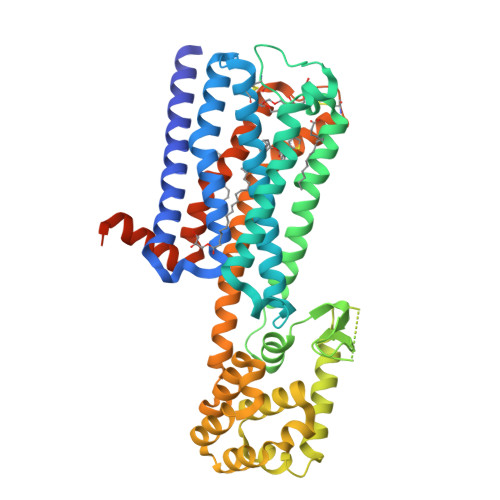
Click to view 3D structureProtoporphyrinogen oxidase, chloroplasticQ9AR38Oryza sativa subsp. japonicaPredicted (SEA)
Prediction Confidence Score
0.223
Applicability Domain
0.273 Low confidence
Statistical Significance
3.30e-04
Supporting Reference Compounds
2
E-value
2.56902
Estrogen receptor beta structureClick to view 3D structureEstrogen receptor betaQ92731HumansPredicted (SEA)
Prediction Confidence Score
0.177
Applicability Domain
0.281 Low confidence
Statistical Significance
0.6955
Supporting Reference Compounds
174
E-value
5414.49
Protein Tat structureClick to view 3D structureProtein TatP04608Human immunodeficiency virus type 1 group M subtype B (isolate HXB2)(HIV-1)Predicted (SEA)
Prediction Confidence Score
0.172
Applicability Domain
0.281 Low confidence
Statistical Significance
0.5051
Supporting Reference Compounds
108
E-value
3932.4
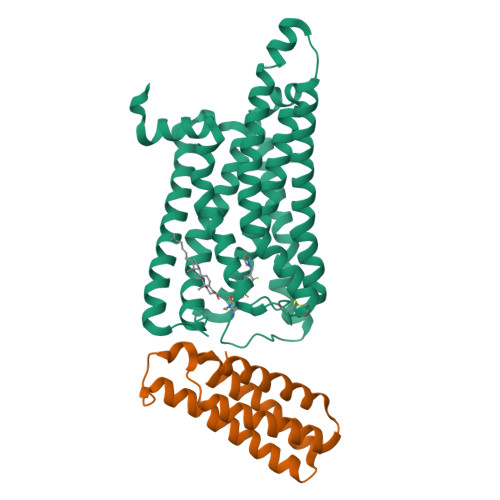
Click to view 3D structureMuscarinic acetylcholine receptor M2P10980Rattus norvegicusPredicted (SEA)
Prediction Confidence Score
0.165
Applicability Domain
0.194 Low confidence
Statistical Significance
0.6243
Supporting Reference Compounds
98
E-value
4859.89
Muscarinic acetylcholine receptor M2 structureClick to view 3D structureMuscarinic acetylcholine receptor M2P08172HumansPredicted (SEA)
Prediction Confidence Score
0.164
Applicability Domain
0.194 Low confidence
Statistical Significance
0.9621
Supporting Reference Compounds
373
E-value
7490.03
DNA dC->dU-editing enzyme APOBEC-3G structureClick to view 3D structureDNA dC->dU-editing enzyme APOBEC-3GQ9HC16HumansPredicted (SEA)
Prediction Confidence Score
0.164
Applicability Domain
0.281 Low confidence
Statistical Significance
0.5904
Supporting Reference Compounds
76
E-value
4596.37
Click to view 3D structureMuscarinic acetylcholine receptor M1P08482Rattus norvegicusPredicted (SEA)
Prediction Confidence Score
0.162
Applicability Domain
0.194 Low confidence
Statistical Significance
0.7685
Supporting Reference Compounds
109
E-value
5982.48
Metabotropic glutamate receptor 5 structureClick to view 3D structureMetabotropic glutamate receptor 5P41594HumansPredicted (SEA)
Prediction Confidence Score
0.161
Applicability Domain
0.2 Low confidence
Statistical Significance
0.8194
Supporting Reference Compounds
89
E-value
6378.73
Muscarinic acetylcholine receptor M3 structureClick to view 3D structureMuscarinic acetylcholine receptor M3P20309HumansPredicted (SEA)
Prediction Confidence Score
0.16
Applicability Domain
0.194 Low confidence
Statistical Significance
0.9621
Supporting Reference Compounds
310
E-value
7490.11
Muscarinic acetylcholine receptor M1 structureClick to view 3D structureMuscarinic acetylcholine receptor M1P11229HumansPredicted (SEA)
Prediction Confidence Score
0.159
Applicability Domain
0.194 Low confidence
Statistical Significance
0.9744
Supporting Reference Compounds
385
E-value
7585.78
Muscarinic acetylcholine receptor M5 structureClick to view 3D structureMuscarinic acetylcholine receptor M5P08912HumansPredicted (SEA)
Prediction Confidence Score
0.158
Applicability Domain
0.194 Low confidence
Statistical Significance
0.9554
Supporting Reference Compounds
266
E-value
7437.64
Coproporphyrinogen III oxidase structureClick to view 3D structureCoproporphyrinogen III oxidaseP32397Bacillus subtilis (strain 168)Predicted (SEA)
Prediction Confidence Score
0.158
Applicability Domain
0.158 Low confidence
Statistical Significance
0.1983
Supporting Reference Compounds
1
E-value
1543.67
Muscarinic acetylcholine receptor M4 structureClick to view 3D structureMuscarinic acetylcholine receptor M4P08173HumansPredicted (SEA)
Prediction Confidence Score
0.157
Applicability Domain
0.194 Low confidence
Statistical Significance
0.9652
Supporting Reference Compounds
297
E-value
7513.77
Amine oxidase [flavin-containing] B structureClick to view 3D structureAmine oxidase [flavin-containing] BP27338HumansPredicted (SEA)
Prediction Confidence Score
0.157
Applicability Domain
0.2 Low confidence
Statistical Significance
0.9348
Supporting Reference Compounds
315
E-value
7277.27
Sigma non-opioid intracellular receptor 1 structureClick to view 3D structureSigma non-opioid intracellular receptor 1Q99720HumansPredicted (SEA)
Prediction Confidence Score
0.154
Applicability Domain
0.173 Low confidence
Statistical Significance
0.9851
Supporting Reference Compounds
562
E-value
7669.32
Histamine H3 receptor structureClick to view 3D structureHistamine H3 receptorQ9Y5N1HumansPredicted (SEA)
Prediction Confidence Score
0.153
Applicability Domain
0.188 Low confidence
Statistical Significance
0.9706
Supporting Reference Compounds
294
E-value
7555.97
Click to view 3D structureAcetylcholinesteraseP37136Rattus norvegicusPredicted (SEA)
Prediction Confidence Score
0.152
Applicability Domain
0.188 Low confidence
Statistical Significance
0.8149
Supporting Reference Compounds
95
E-value
6343.7
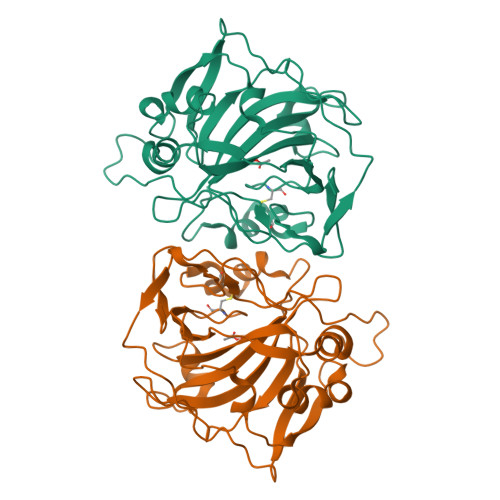
Carbonic anhydrase 2 structureClick to view 3D structureCarbonic anhydrase 2P00918HumansPredicted (SEA)
Prediction Confidence Score
0.151
Applicability Domain
0.196 Low confidence
Statistical Significance
0.9691
Supporting Reference Compounds
472
E-value
7544.76
Bromodomain-containing protein 4 structureClick to view 3D structureBromodomain-containing protein 4O60885HumansPredicted (SEA)
Prediction Confidence Score
0.151
Applicability Domain
0.188 Low confidence
Statistical Significance
0.9636
Supporting Reference Compounds
237
E-value
7501.94
Amine oxidase [flavin-containing] A structureClick to view 3D structureAmine oxidase [flavin-containing] AP21397HumansPredicted (SEA)
Prediction Confidence Score
0.151
Applicability Domain
0.2 Low confidence
Statistical Significance
0.9543
Supporting Reference Compounds
241
E-value
7429.54
Bile salt-activated lipase structureClick to view 3D structureBile salt-activated lipaseP30122Bos taurusPredicted (SEA)
Prediction Confidence Score
0.151
Applicability Domain
0.156 Low confidence
Statistical Significance
0.0066
Supporting Reference Compounds
2
E-value
51.1469
Click to view 3D structureAcetylcholinesteraseO42275Electrophorus electricusPredicted (SEA)
Prediction Confidence Score
0.15
Applicability Domain
0.195 Low confidence
Statistical Significance
0.9494
Supporting Reference Compounds
206
E-value
7391.24
Protein deacetylase HDAC6 structureClick to view 3D structureProtein deacetylase HDAC6Q9UBN7HumansPredicted (SEA)
Prediction Confidence Score
0.149
Applicability Domain
0.196 Low confidence
Statistical Significance
0.9919
Supporting Reference Compounds
553
E-value
7721.63
Carbonic anhydrase 12 structureClick to view 3D structureCarbonic anhydrase 12O43570HumansPredicted (SEA)
Prediction Confidence Score
0.149
Applicability Domain
0.196 Low confidence
Statistical Significance
0.9489
Supporting Reference Compounds
332
E-value
7387.11
Carbonic anhydrase 1 structureClick to view 3D structureCarbonic anhydrase 1P00915HumansPredicted (SEA)
Prediction Confidence Score
0.149
Applicability Domain
0.196 Low confidence
Statistical Significance
0.9611
Supporting Reference Compounds
407
E-value
7481.85
Concentrations
Not Available
External Links
DrugBank IDNot Available
HMDB IDHMDB0245090
FooDB IDNot Available
Phenol Explorer IDNot Available
KNApSAcK IDNot Available
BiGG IDNot Available
BioCyc IDNot Available
METLIN IDNot Available
PDB IDNot Available
Wikipedia LinkNot Available
Chemspider ID13291
ChEBI IDNot Available
PubChem Compound ID13892
Kegg Compound IDNot Available
YMDB IDNot Available
ECMDB IDNot Available
References
Synthesis ReferenceNot Available
MSDSNot Available
General ReferencesNot Available