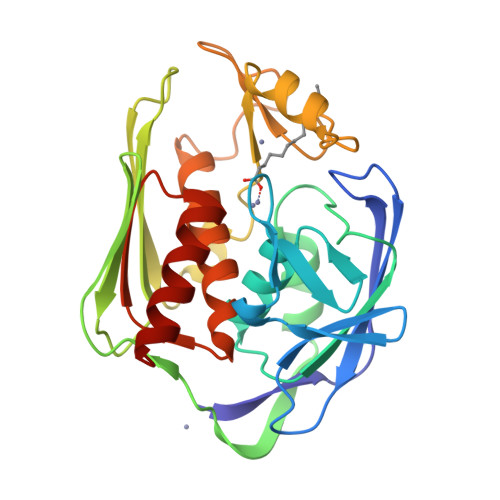
 Click to view 3D structure | UDP-3-O-acyl-N-acetylglucosamine deacetylase | O67648 | Aquifex aeolicus (strain VF5) | Predicted (SEA) | - Prediction Confidence Score
- 0.319
- Applicability Domain
- 0.319
- Statistical Significance
- 0.0031
- Supporting Reference Compounds
- 1
- E-value
- 23.8997
|
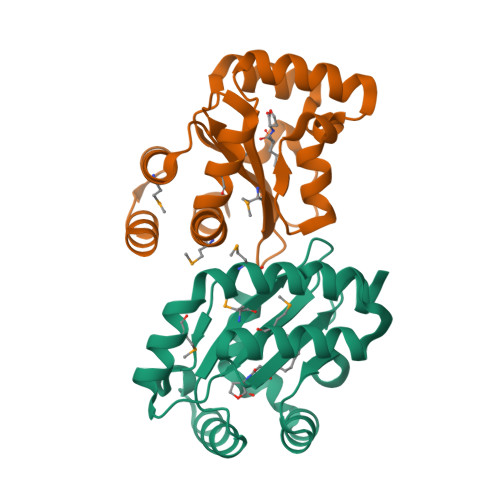 Click to view 3D structure | Transcriptional activator protein LasR | P25084 | Pseudomonas aeruginosa (strain ATCC 15692 / PAO1 / 1C / PRS 101 / LMG 12228) | Predicted (SEA) | - Prediction Confidence Score
- 0.294
- Applicability Domain
- 0.308
- Statistical Significance
- 3.50e-04
- Supporting Reference Compounds
- 12
- E-value
- 2.72472
|
 Click to view 3D structure | Histone deacetylase 11 | Q96DB2 | Humans | Predicted (SEA) | - Prediction Confidence Score
- 0.289
- Applicability Domain
- 0.317
- Statistical Significance
- 0.0243
- Supporting Reference Compounds
- 149
- E-value
- 189.174
|
 Click to view 3D structure | Acylcarnitine hydrolase | Q91WG0 | Mus musculus | Predicted (SEA) | - Prediction Confidence Score
- 0.283
- Applicability Domain
- 0.341
- Statistical Significance
- 3.10e-04
- Supporting Reference Compounds
- 2
- E-value
- 2.41333
|
| Click to view 3D structure | Putative inactive group IIC secretory phospholipase A2 | Q5R387 | Humans | Predicted (SEA) | - Prediction Confidence Score
- 0.278
- Applicability Domain
- 0.278 Low confidence
- Statistical Significance
- 7.50e-04
- Supporting Reference Compounds
- 1
- E-value
- 5.83869
|
 Click to view 3D structure | Guanine nucleotide-binding protein G(i) subunit alpha-1 | P63096 | Humans | Predicted (SEA) | - Prediction Confidence Score
- 0.276
- Applicability Domain
- 0.283 Low confidence
- Statistical Significance
- 5.20e-04
- Supporting Reference Compounds
- 2
- E-value
- 4.04816
|
| Click to view 3D structure | Carnitine palmitoyltransferase 1A | Q9MYX2 | Sus scrofa | Predicted (SEA) | - Prediction Confidence Score
- 0.274
- Applicability Domain
- 0.283 Low confidence
- Statistical Significance
- 3.80e-04
- Supporting Reference Compounds
- 2
- E-value
- 2.95827
|
| Click to view 3D structure | Cocaine esterase | O00748 | Humans | Predicted (SEA) | - Prediction Confidence Score
- 0.27
- Applicability Domain
- 0.341
- Statistical Significance
- 0.0022
- Supporting Reference Compounds
- 40
- E-value
- 17.2047
|
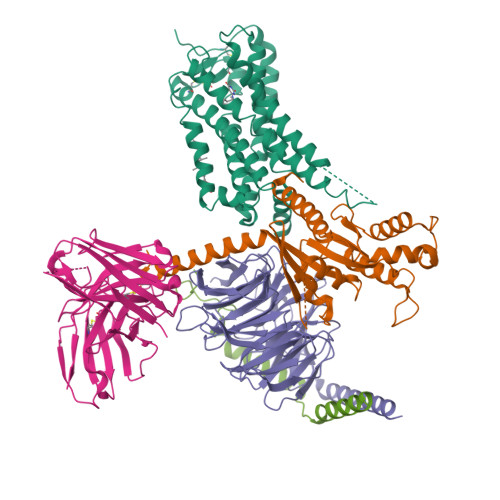 Click to view 3D structure | G-protein coupled receptor 84 | Q9NQS5 | Humans | Predicted (SEA) | - Prediction Confidence Score
- 0.269
- Applicability Domain
- 0.275 Low confidence
- Statistical Significance
- 0.0018
- Supporting Reference Compounds
- 15
- E-value
- 14.0129
|
| Click to view 3D structure | Histamine H3 receptor | Q9JI35 | Cavia porcellus | Predicted (SEA) | - Prediction Confidence Score
- 0.268
- Applicability Domain
- 0.298 Low confidence
- Statistical Significance
- 0.0144
- Supporting Reference Compounds
- 56
- E-value
- 111.791
|
| Click to view 3D structure | Non-lysosomal glucosylceramidase | Q9HCG7 | Humans | Predicted (SEA) | - Prediction Confidence Score
- 0.268
- Applicability Domain
- 0.278 Low confidence
- Statistical Significance
- 6.00e-04
- Supporting Reference Compounds
- 21
- E-value
- 4.67095
|
| Click to view 3D structure | Ceramide glucosyltransferase | O88693 | Mus musculus | Predicted (SEA) | - Prediction Confidence Score
- 0.268
- Applicability Domain
- 0.278 Low confidence
- Statistical Significance
- 4.30e-04
- Supporting Reference Compounds
- 14
- E-value
- 3.34752
|
| Click to view 3D structure | Thyrotropin releasing hormone degrading enzyme | A0A287AP33 | Sus scrofa | Predicted (SEA) | - Prediction Confidence Score
- 0.267
- Applicability Domain
- 0.267 Low confidence
- Statistical Significance
- 0.0053
- Supporting Reference Compounds
- 1
- E-value
- 41.1822
|
| Click to view 3D structure | M-phase inducer phosphatase 2 | P30306 | Mus musculus | Predicted (SEA) | - Prediction Confidence Score
- 0.266
- Applicability Domain
- 0.345
- Statistical Significance
- 6.20e-04
- Supporting Reference Compounds
- 4
- E-value
- 4.82665
|
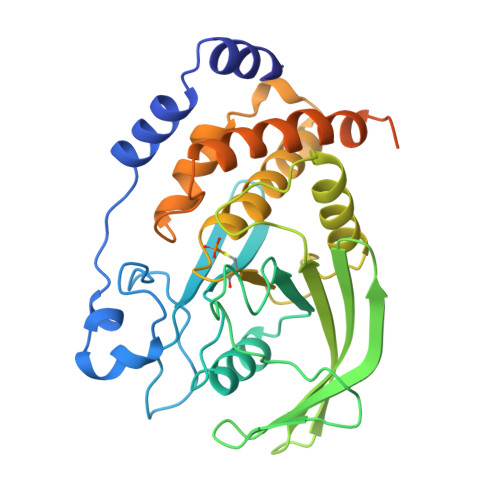 Click to view 3D structure | Tyrosine-protein phosphatase non-receptor type 1 | P18031 | Humans | Predicted (SEA) | - Prediction Confidence Score
- 0.266
- Applicability Domain
- 0.275 Low confidence
- Statistical Significance
- 0.032
- Supporting Reference Compounds
- 197
- E-value
- 248.962
|
| Click to view 3D structure | Histamine H3 receptor | Q9QYN8 | Rattus norvegicus | Predicted (SEA) | - Prediction Confidence Score
- 0.265
- Applicability Domain
- 0.298 Low confidence
- Statistical Significance
- 0.0212
- Supporting Reference Compounds
- 80
- E-value
- 165.196
|
 Click to view 3D structure | Liver carboxylesterase | Q29550 | Sus scrofa | Predicted (SEA) | - Prediction Confidence Score
- 0.264
- Applicability Domain
- 0.341
- Statistical Significance
- 0.0011
- Supporting Reference Compounds
- 20
- E-value
- 8.56341
|
| Click to view 3D structure | Squalene monooxygenase | P52020 | Rattus norvegicus | Predicted (SEA) | - Prediction Confidence Score
- 0.262
- Applicability Domain
- 0.362
- Statistical Significance
- 3.80e-04
- Supporting Reference Compounds
- 12
- E-value
- 2.95827
|
| Click to view 3D structure | Long-chain fatty acid transport protein 4 | Q6P1M0 | Humans | Predicted (SEA) | - Prediction Confidence Score
- 0.262
- Applicability Domain
- 0.344
- Statistical Significance
- 9.10e-04
- Supporting Reference Compounds
- 2
- E-value
- 7.08428
|
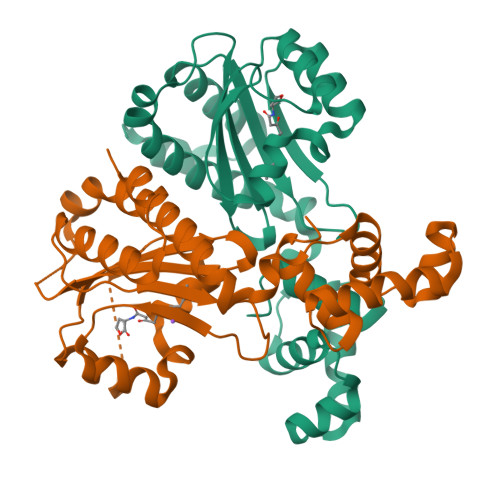 Click to view 3D structure | PhzR | Q9RMS5 | Pseudomonas aeruginosa | Predicted (SEA) | - Prediction Confidence Score
- 0.261
- Applicability Domain
- 0.291 Low confidence
- Statistical Significance
- 3.30e-04
- Supporting Reference Compounds
- 5
- E-value
- 2.56902
|
 Click to view 3D structure | Peroxisome proliferator-activated receptor alpha | Q07869 | Humans | Predicted (SEA) | - Prediction Confidence Score
- 0.261
- Applicability Domain
- 0.275 Low confidence
- Statistical Significance
- 0.051
- Supporting Reference Compounds
- 127
- E-value
- 396.797
|
| Click to view 3D structure | CG8425-PA [Drosophila melanogaster] | A1ZA98 | Drosophila melanogaster | Predicted (SEA) | - Prediction Confidence Score
- 0.26
- Applicability Domain
- 0.341
- Statistical Significance
- 5.80e-04
- Supporting Reference Compounds
- 4
- E-value
- 4.51525
|
 Click to view 3D structure | Guanine nucleotide-binding protein G(o) subunit alpha | P09471 | Humans | Predicted (SEA) | - Prediction Confidence Score
- 0.259
- Applicability Domain
- 0.283 Low confidence
- Statistical Significance
- 2.60e-04
- Supporting Reference Compounds
- 2
- E-value
- 2.02408
|
| Click to view 3D structure | Sucrase-isomaltase | B5THE3 | Mus musculus | Predicted (SEA) | - Prediction Confidence Score
- 0.259
- Applicability Domain
- 0.278 Low confidence
- Statistical Significance
- 4.60e-04
- Supporting Reference Compounds
- 7
- E-value
- 3.58106
|
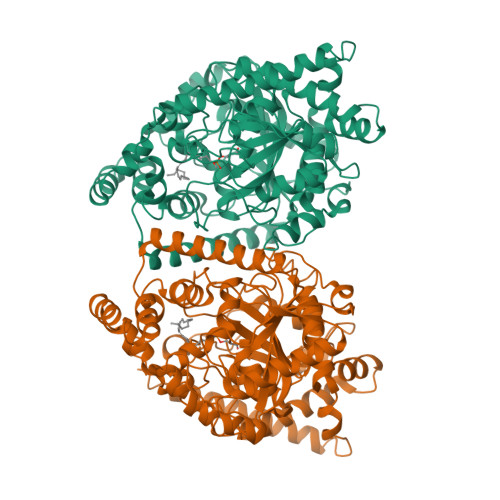 Click to view 3D structure | Fatty-acid amide hydrolase 1 | P97612 | Rattus norvegicus | Predicted (SEA) | - Prediction Confidence Score
- 0.258
- Applicability Domain
- 0.288 Low confidence
- Statistical Significance
- 0.0368
- Supporting Reference Compounds
- 102
- E-value
- 286.485
|

