2,2-Bis(4-hydroxy-3-isopropylphenyl)propane (Bisphenol G) (CED0052483)

Record Information
Version1.0
Creation Date2026-04-02 23:32:44 UTC
Update Date2026-08-21 19:45:54 UTC
SynCED IDCED0052483
Secondary Accession Numbers
  • CHEM059223
Identification
Common Name2,2-Bis(4-hydroxy-3-isopropylphenyl)propane (Bisphenol G)
ClassSmall Molecule
Description
2,2-Bis(4-hydroxy-3-isopropylphenyl)propane (Bisphenol G) belongs to the diphenylmethanes, a subclass of benzene and substituted derivatives within the organic compounds. This benzenoid compound has the chemical formula C21H28O2 and an average molecular weight of 312.45 g/mol. The substance is utilized in plastics, specifically within unspecified polycarbonates. It has been identified in or released from five recorded sources, including food contact materials used in food, food processing, and cookware. Additionally, it is associated with electrical and electronic equipment, specifically radio transmission systems, selectors, communication cables or conductors, and antennas. Recorded exposure routes for the compound include oral intake, inhalation, and touch.
Contaminant Type
  • Phenolic Antioxidant
Chemical Structure
SynonymsNot Available
Chemical FormulaC21H28O2
Average Molecular Mass312.453 g/mol
Monoisotopic Mass312.209 g/mol
CAS Registry Number127-54-8
IUPAC NameNot Available
Traditional NameNot Available
SMILESCC(C)C1=C(O)C=CC(=C1)C(C)(C)C1=CC(C(C)C)=C(O)C=C1
InChI IdentifierInChI=1S/C21H28O2/c1-13(2)17-11-15(7-9-19(17)22)21(5,6)16-8-10-20(23)18(12-16)14(3)4/h7-14,22-23H,1-6H3
InChI KeyIJWIRZQYWANBMP-UHFFFAOYSA-N
Chemical Taxonomy
Description Belongs to the class of organic compounds known as bisphenols. These are methylenediphenols, HOC6H4CH2C6H4OH, commonly p,p-methylenediphenol, and their substitution products (generally derived from condensation of two equivalent amounts of a phenol with an aldehyde or ketone).
KingdomOrganic compounds
Super ClassBenzenoids
ClassBenzene and substituted derivatives
Sub ClassDiphenylmethanes
Direct ParentBisphenols
Alternative Parents
Substituents
  • Bisphenol
  • Phenylpropane
  • Cumene
  • 1-hydroxy-2-unsubstituted benzenoid
  • Phenol
  • Organic oxygen compound
  • Hydrocarbon derivative
  • Organooxygen compound
  • Aromatic homomonocyclic compound
Molecular FrameworkAromatic homomonocyclic compounds
External DescriptorsNot Available
Biological Properties
StatusDetected and Not Quantified
OriginNot Available
Cellular LocationsNot Available
Biofluid LocationsNot Available
Tissue LocationsNot Available
ApplicationsNot Available
Biological RolesNot Available
Chemical RolesNot Available
Organoleptic EffectsNot Available
Physical Properties
StateNot Available
AppearanceNot Available
Experimental Properties
PropertyValue
Melting PointNot Available
Boiling PointNot Available
SolubilityNot Available
Predicted PropertiesNot Available
Spectra
SpectraNot Available
Toxicity Profile
Toxicity Values
Toxicity ValueOrganismDose DescriptorRoute of ExposurePredicted or ExperimentalToxicity RatingReference
2318.0 Log mg/kg [1300:4100]RatLD50oralpredictedNot AvailableNot Available
Toxicity / Toxin ClassNot Available
Mechanism of ToxicityNot Available
Carcinogenicity (IARC Classification)Not Available
Minimum Risk LevelNot Available
SymptomsNot Available
TreatmentNot Available
Health Effects
Health EffectRelationshipDirectionDescriptionReference
Exposure Sources
Source IDSourceSectorReference
CEDs000491Industrial manufacturing & chemical processingNot Available
CEDs000494Food contact materials?Food contact materials refer to substances and products that are intended to come into contact with food during processing, packaging, or preparation.Food, food processing & cookwareNot Available
CEDs000506Antennas?Antennas, commonly used in communication technologies, can be a source of synthetic chemical contamination through the materials and coatings used in their construction.Electrical & Electronic EquipmentPubChem
CEDs000510Communication Cables Or Conductors?Communication cables or conductors are essential components in the transmission of data and signals in various applications, including telecommunications and networking.Electrical & Electronic EquipmentPubChem
CEDs000511Conductors Or Conductive Bodies Characterised By The Conductive Materials?Conductors, or conductive bodies, are materials that allow the flow of electrical current, typically made from metals such as copper, aluminum, or silver.Electrical & Electronic EquipmentPubChem
CEDs000517Electric Switches?Electric switches, integral components in numerous devices, can be a source of synthetic chemical contamination due to the materials and manufacturing processes involved in their production.Electrical & Electronic EquipmentPubChem
CEDs000519Electrodes?Electrodes, used in various electrical and electronic applications, can be a source of synthetic chemical contamination due to the materials from which they are constructed and the processes involved in their manufacturing.Electrical & Electronic EquipmentPubChem
CEDs000521Fixed Capacitors And Their Manufacture?Fixed capacitors are passive electronic components used to store and release electrical energy, playing a critical role in various circuits.Electrical & Electronic EquipmentPubChem
CEDs000530Radio Transmission Systems?Radio transmission systems utilize a variety of synthetic chemicals in their manufacturing and maintenance processes.Electrical & Electronic EquipmentPubChem
CEDs000532Selectors?Selectors are components used in various electronic devices to control the flow of electrical signals.Electrical & Electronic EquipmentPubChem
CEDs000563Soap Detergents?Soap detergents are synthetic surfactants designed to enhance the cleaning efficacy of water by reducing surface tension, allowing for better interaction with dirt and grease.Household cleaning & consumer productsPubChem
CEDs000569Tobacco Smoke Filters?Tobacco smoke filters are designed to reduce the inhalation of harmful substances in cigarette smoke, including tar and other particulate matter.Household cleaning & consumer productsPubChem
CEDs000606Plant Growth Regulators?Plant Growth Regulators (PGRs) are synthetic chemicals designed to influence the growth and development of plants.Agriculture & land managementPubChem
CEDs000630Toys?Toys, particularly those made from synthetic materials such as plastics, can be a source of chemical contamination due to the presence of various additives and compounds used in their production.Recreation & sports surfacesPubChem
CEDs000671Airplanes And Helicopters?Airplanes and helicopters are significant sources of synthetic chemical contamination primarily through the use of aviation fuels, lubricants, and de-icing agents.Aviation & AerospacePubChem
CEDs000684Cements?Cements are a composite material primarily used as a binding agent in construction applications, formed by the calcination of limestone and clay minerals at high temperatures.Building & ConstructionPubChem
CEDs000685Ceramics?Ceramics can be a source of synthetic chemical contamination through various additives and processing agents used in their production.Building & ConstructionPubChem
CEDs000686Clay Wares?Clay wares are ceramic products made from natural clay, often utilized in various construction applications such as tiles, bricks, and sanitary ware.Building & ConstructionPubChem
CEDs000688Glass Coatings?Glass coatings are synthetic chemical formulations applied to glass surfaces to enhance properties such as durability, UV resistance, and aesthetic appeal.Building & ConstructionPubChem
CEDs000696Nanotechnology?Nanotechnology involves the manipulation of materials at the molecular or atomic level, typically within the range of 1 to 100 nanometers.Industrial manufacturing & chemical processingPubChem
CEDs000711Coloured Pencils?Coloured pencils are commonly used tools for artistic expression and education, composed primarily of a wood casing and a core made from a mixture of pigments, binders, and waxes.Paper, pulp & fiber productsPubChem
CEDs000717Fountain Pens?Fountain pens utilize a liquid ink that often contains synthetic chemicals, including dyes, pigments, and solvents, which can contribute to environmental contamination.Paper, pulp & fiber productsPubChem
CEDs000720Ink Reservoir Pens2?Ink reservoir pens are writing instruments that utilize a reservoir to store ink, which is often composed of synthetic dyes, solvents, and additives.Paper, pulp & fiber productsPubChem
CEDs000726Pens?Pens, commonly utilized for writing and marking, can be a source of synthetic chemical contamination primarily due to the materials used in their manufacturing.Paper, pulp & fiber productsPubChem
CEDs000735Explosives?Explosives are chemical compounds or mixtures designed to undergo rapid decomposition, releasing energy in the form of gas and heat.Defense & military infrastructurePubChem
CEDs000739Inks?Inks are complex mixtures composed of pigments or dyes, solvents, resins, and additives used primarily for printing and writing applications.Paper, pulp & fiber productsPubChem
CEDs000740Paper?Paper production involves the processing of wood fibers and the use of various chemicals, which can lead to synthetic chemical contamination.Paper, pulp & fiber productsPubChem
CEDs000741Pigment Pastes?Pigment pastes are concentrated dispersions of pigments used to impart color and properties to materials.Paper, pulp & fiber productsPubChem
CEDs000744Water, Wastewater, & Sewage Treatment?Water, wastewater, and sewage treatment processes are critical for managing and mitigating pollutants in water systems.Wastewater, sanitation & biosolidsPubChem
Pathways
0 pathwaysPathway Source: PathBank

No pathways found

No metabolic pathways have been associated with this synthetic chemical

Targets
StructureProteinUniProt IDOrganismRelationshipDetails
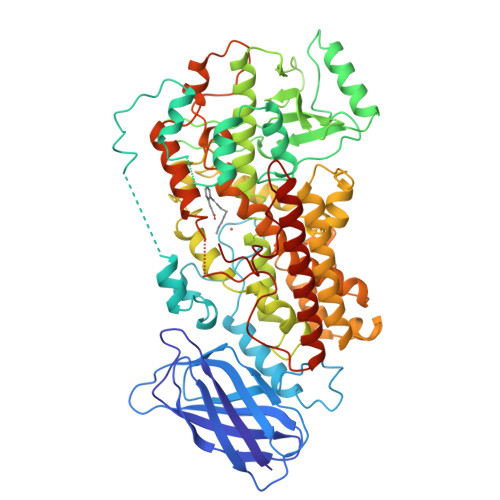
Click to view 3D structureSarcoplasmic/endoplasmic reticulum calcium ATPase 2P11507Rattus norvegicusPredicted (SEA)
Prediction Confidence Score
0.429
Applicability Domain
0.429
Statistical Significance
4.00e-05
Supporting Reference Compounds
1
E-value
0.311397
Click to view 3D structureReverse transcriptaseQ06347Human immunodeficiency virus 2Predicted (SEA)
Prediction Confidence Score
0.343
Applicability Domain
0.343
Statistical Significance
2.00e-05
Supporting Reference Compounds
1
E-value
0.155698
Polyunsaturated fatty acid lipoxygenase ALOX15 structureClick to view 3D structurePolyunsaturated fatty acid lipoxygenase ALOX15P12530Oryctolagus cuniculusPredicted (SEA)
Prediction Confidence Score
0.328
Applicability Domain
0.429
Statistical Significance
5.90e-04
Supporting Reference Compounds
47
E-value
4.5931
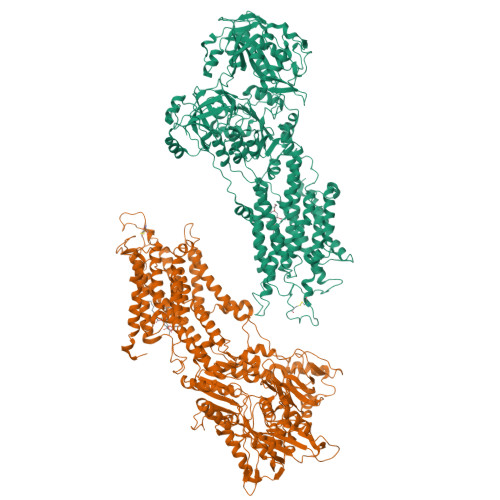
Sarcoplasmic/endoplasmic reticulum calcium ATPase 1 structureClick to view 3D structureSarcoplasmic/endoplasmic reticulum calcium ATPase 1P04191Oryctolagus cuniculusPredicted (SEA)
Prediction Confidence Score
0.286
Applicability Domain
0.429
Statistical Significance
1.30e-04
Supporting Reference Compounds
15
E-value
1.01204
Estrogen receptor beta structureClick to view 3D structureEstrogen receptor betaQ92731HumansPredicted (SEA)
Prediction Confidence Score
0.282
Applicability Domain
0.429
Statistical Significance
0.0192
Supporting Reference Compounds
174
E-value
149.704
Heat shock protein HSP 90-alpha structureClick to view 3D structureHeat shock protein HSP 90-alphaP07900HumansPredicted (SEA)
Prediction Confidence Score
0.278
Applicability Domain
0.311
Statistical Significance
0.012
Supporting Reference Compounds
109
E-value
93.1855
Click to view 3D structurePolyunsaturated fatty acid lipoxygenase ALOX15P16050HumansPredicted (SEA)
Prediction Confidence Score
0.277
Applicability Domain
0.344
Statistical Significance
0.0029
Supporting Reference Compounds
46
E-value
22.732
Androgen receptor structureClick to view 3D structureAndrogen receptorP10275HumansPredicted (SEA)
Prediction Confidence Score
0.271
Applicability Domain
0.429
Statistical Significance
0.0168
Supporting Reference Compounds
146
E-value
131.098
Click to view 3D structureTaste receptor type 2 member 50P59544HumansPredicted (SEA)
Prediction Confidence Score
0.268
Applicability Domain
0.268 Low confidence
Statistical Significance
7.30e-04
Supporting Reference Compounds
1
E-value
5.68299
Click to view 3D structureTaste receptor type 2 member 45P59539HumansPredicted (SEA)
Prediction Confidence Score
0.268
Applicability Domain
0.268 Low confidence
Statistical Significance
7.30e-04
Supporting Reference Compounds
1
E-value
5.68299
Click to view 3D structureTaste receptor type 2 member 42Q7RTR8HumansPredicted (SEA)
Prediction Confidence Score
0.268
Applicability Domain
0.268 Low confidence
Statistical Significance
7.30e-04
Supporting Reference Compounds
1
E-value
5.68299
Click to view 3D structureTaste receptor type 2 member 41P59536HumansPredicted (SEA)
Prediction Confidence Score
0.268
Applicability Domain
0.268 Low confidence
Statistical Significance
7.30e-04
Supporting Reference Compounds
1
E-value
5.68299
Click to view 3D structureTaste receptor type 2 member 7Q9NYW3HumansPredicted (SEA)
Prediction Confidence Score
0.268
Applicability Domain
0.268 Low confidence
Statistical Significance
7.30e-04
Supporting Reference Compounds
1
E-value
5.68299
Click to view 3D structureTaste receptor type 2 member 30P59541HumansPredicted (SEA)
Prediction Confidence Score
0.268
Applicability Domain
0.268 Low confidence
Statistical Significance
7.30e-04
Supporting Reference Compounds
1
E-value
5.68299
Click to view 3D structureTaste receptor type 2 member 60P59551HumansPredicted (SEA)
Prediction Confidence Score
0.268
Applicability Domain
0.268 Low confidence
Statistical Significance
7.30e-04
Supporting Reference Compounds
1
E-value
5.68299
Click to view 3D structureTaste receptor type 2 member 19P59542HumansPredicted (SEA)
Prediction Confidence Score
0.268
Applicability Domain
0.268 Low confidence
Statistical Significance
7.30e-04
Supporting Reference Compounds
1
E-value
5.68299
Click to view 3D structureTaste receptor type 2 member 20P59543HumansPredicted (SEA)
Prediction Confidence Score
0.268
Applicability Domain
0.268 Low confidence
Statistical Significance
7.30e-04
Supporting Reference Compounds
1
E-value
5.68299
Click to view 3D structureTaste receptor type 2 member 1Q9NYW7HumansPredicted (SEA)
Prediction Confidence Score
0.268
Applicability Domain
0.268 Low confidence
Statistical Significance
7.30e-04
Supporting Reference Compounds
1
E-value
5.68299
Click to view 3D structureTaste receptor type 2 member 40P59535HumansPredicted (SEA)
Prediction Confidence Score
0.268
Applicability Domain
0.268 Low confidence
Statistical Significance
7.30e-04
Supporting Reference Compounds
1
E-value
5.68299
Click to view 3D structureTaste receptor type 2 member 3Q9NYW6HumansPredicted (SEA)
Prediction Confidence Score
0.268
Applicability Domain
0.268 Low confidence
Statistical Significance
7.30e-04
Supporting Reference Compounds
1
E-value
5.68299
Click to view 3D structureTaste receptor type 2 member 13Q9NYV9HumansPredicted (SEA)
Prediction Confidence Score
0.268
Applicability Domain
0.268 Low confidence
Statistical Significance
7.30e-04
Supporting Reference Compounds
1
E-value
5.68299
Click to view 3D structureTaste receptor type 2 member 39P59534HumansPredicted (SEA)
Prediction Confidence Score
0.268
Applicability Domain
0.268 Low confidence
Statistical Significance
7.30e-04
Supporting Reference Compounds
1
E-value
5.68299
Click to view 3D structureTaste receptor type 2 member 5Q9NYW4HumansPredicted (SEA)
Prediction Confidence Score
0.268
Applicability Domain
0.268 Low confidence
Statistical Significance
7.30e-04
Supporting Reference Compounds
1
E-value
5.68299
Click to view 3D structureTaste receptor type 2 member 9Q9NYW1HumansPredicted (SEA)
Prediction Confidence Score
0.268
Applicability Domain
0.268 Low confidence
Statistical Significance
7.30e-04
Supporting Reference Compounds
1
E-value
5.68299
Click to view 3D structureTaste receptor type 2 member 43P59537HumansPredicted (SEA)
Prediction Confidence Score
0.268
Applicability Domain
0.268 Low confidence
Statistical Significance
7.30e-04
Supporting Reference Compounds
1
E-value
5.68299
Concentrations
Not Available
External Links
DrugBank IDNot Available
HMDB IDNot Available
FooDB IDNot Available
Phenol Explorer IDNot Available
KNApSAcK IDNot Available
BiGG IDNot Available
BioCyc IDNot Available
METLIN IDNot Available
PDB IDNot Available
Wikipedia LinkNot Available
Chemspider IDNot Available
ChEBI IDNot Available
PubChem Compound ID228537
Kegg Compound IDNot Available
YMDB IDNot Available
ECMDB IDNot Available
References
Synthesis ReferenceNot Available
MSDSNot Available
General ReferencesNot Available