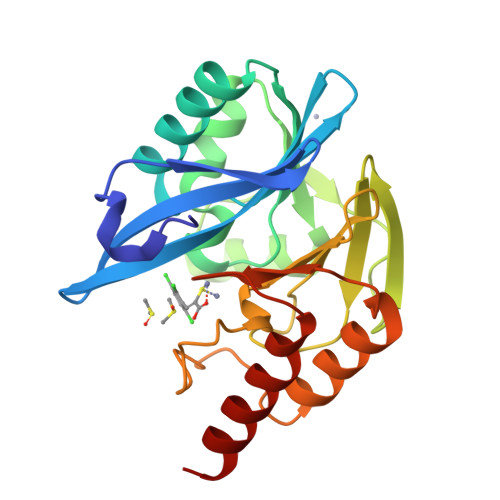
3,5-Pyridinedicarboxylic acid, 1,4-dihydro-2,4,6-trimethyl-, diethyl ester (CED0023081)

Record Information
Version1.0
Creation Date2026-04-03 05:18:53 UTC
Update Date2026-08-19 07:12:54 UTC
SynCED IDCED0023081
Secondary Accession Numbers
  • CHEM061883
Identification
Common Name3,5-Pyridinedicarboxylic acid, 1,4-dihydro-2,4,6-trimethyl-, diethyl ester
ClassSmall Molecule
Description
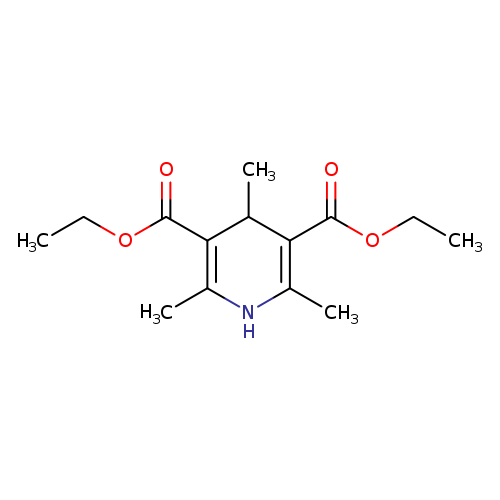
3,5-Pyridinedicarboxylic acid, 1,4-dihydro-2,4,6-trimethyl-, diethyl ester is an organic compound with the chemical formula C14H21N1O4 and an average molecular weight of 267.32 g/mol. 3,5-Pyridinedicarboxylic acid, 1,4-dihydro-2,4,6-trimethyl-, diethyl ester belongs to the hydropyridines, a subclass of pyridines and derivatives within the organic compounds. This substance is categorized within the superclass of organoheterocyclic compounds. It has been identified as being found in or released from six recorded sources, all of which are related to electrical and electronic equipment. These sources include antennas, cores yokes or armatures, discharge tubes with liquid pool cathodes, hybrid capacitors, and loudspeakers, along with one additional source.
Contaminant TypeNot Available
Chemical Structure
Synonyms
ValueSource
3,5-Bis(ethoxycarbonyl)-1,4-dihydrocollidineChEBI
DDCChEBI
DicarbethoxydihydrocollidineChEBI
3,5-Pyridinedicarboxylate, 1,4-dihydro-2,4,6-trimethyl-, diethyl esterGenerator
3,5-Dicarbethoxy-1,4-dihydrocollidineHMDB
3,5-Diethoxycarbonyl-1,4-dihydro-2,4,6-trimethylpyridineHMDB
DiethoxycarbonyldihydrocollidineHMDB
Chemical FormulaC14H21N1O4
Average Molecular Mass267.325 g/mol
Monoisotopic Mass267.147 g/mol
CAS Registry Number632-93-9
IUPAC Name3,5-diethyl 2,4,6-trimethyl-1,4-dihydropyridine-3,5-dicarboxylate
Traditional Name3,5-diethyl 2,4,6-trimethyl-1,4-dihydropyridine-3,5-dicarboxylate
SMILESCCOC(=O)C1=C(C)NC(C)=C(C1C)C(=O)OCC
InChI IdentifierInChI=1S/C14H21NO4/c1-6-18-13(16)11-8(3)12(14(17)19-7-2)10(5)15-9(11)4/h8,15H,6-7H2,1-5H3
InChI KeyCDVAIHNNWWJFJW-UHFFFAOYSA-N
Chemical Taxonomy
Description Belongs to the class of organic compounds known as dihydropyridinecarboxylic acids and derivatives. Dihydropyridinecarboxylic acids and derivatives are compounds containing a dihydropyridine moiety bearing a carboxylic acid group.
KingdomOrganic compounds
Super ClassOrganoheterocyclic compounds
ClassPyridines and derivatives
Sub ClassHydropyridines
Direct ParentDihydropyridinecarboxylic acids and derivatives
Alternative Parents
Substituents
  • Dihydropyridinecarboxylic acid derivative
  • Dicarboxylic acid or derivatives
  • Enoate ester
  • Alpha,beta-unsaturated carboxylic ester
  • Vinylogous amide
  • Amino acid or derivatives
  • Carboxylic acid ester
  • Carboxylic acid derivative
  • Secondary aliphatic amine
  • Enamine
  • Secondary amine
  • Azacycle
  • Organic nitrogen compound
  • Organic oxide
  • Organopnictogen compound
  • Amine
  • Organic oxygen compound
  • Organonitrogen compound
  • Organooxygen compound
  • Carbonyl group
  • Hydrocarbon derivative
  • Aliphatic heteromonocyclic compound
Molecular FrameworkAliphatic heteromonocyclic compounds
External Descriptors
Biological Properties
StatusDetected and Not Quantified
OriginNot Available
Cellular LocationsNot Available
Biofluid LocationsNot Available
Tissue LocationsNot Available
ApplicationsNot Available
Biological Roles
Chemical RolesNot Available
Organoleptic Effects
  • yellowish colour ?
Physical Properties
StateNot Available
AppearanceNot Available
Experimental Properties
PropertyValue
Melting PointNot Available
Boiling PointNot Available
SolubilityNot Available
Predicted Properties
PropertyValueSource
Water Solubility1.07 g/LALOGPS
logP2.66ALOGPS
logP1.46ChemAxon
logS-2.4ALOGPS
pKa (Strongest Acidic)19.6ChemAxon
pKa (Strongest Basic)-6.6ChemAxon
Physiological Charge0ChemAxon
Hydrogen Acceptor Count3ChemAxon
Hydrogen Donor Count1ChemAxon
Polar Surface Area64.63 ŲChemAxon
Rotatable Bond Count6ChemAxon
Refractivity74.24 m³·mol⁻¹ChemAxon
Polarizability29.3 ųChemAxon
Number of Rings1ChemAxon
BioavailabilityYesChemAxon
Rule of FiveYesChemAxon
Ghose FilterYesChemAxon
Veber's RuleNoChemAxon
MDDR-like RuleNoChemAxon
Spectra
Spectra
Spectrum TypeDescriptionSplash KeyDeposition DateView
Predicted GC-MSPredicted GC-MS Spectrumsplash10-004l-7970000000-0f624d6c02273883500cNot AvailableView Spectrum
Predicted GC-MSPredicted GC-MS SpectrumNot AvailableNot AvailableView Spectrum
Predicted LC-MS/MSPredicted LC-MS/MS Spectrumsplash10-01b9-0290000000-057d4121b737bc72f3f0Not AvailableView Spectrum
Predicted LC-MS/MSPredicted LC-MS/MS Spectrumsplash10-006x-0980000000-be912b2f19d172f74d88Not AvailableView Spectrum
Predicted LC-MS/MSPredicted LC-MS/MS Spectrumsplash10-01c0-5910000000-db4c93812ba34c948642Not AvailableView Spectrum
Predicted LC-MS/MSPredicted LC-MS/MS Spectrumsplash10-014i-0090000000-fb79b6be4f7e141b6a0eNot AvailableView Spectrum
Predicted LC-MS/MSPredicted LC-MS/MS Spectrumsplash10-014i-1290000000-2ae7503e9a5b307c0545Not AvailableView Spectrum
Predicted LC-MS/MSPredicted LC-MS/MS Spectrumsplash10-074i-0940000000-5575fd0c7c3aaeb59618Not AvailableView Spectrum
Toxicity Profile
Toxicity Values
Toxicity ValueOrganismDose DescriptorRoute of ExposurePredicted or ExperimentalToxicity RatingReference
2875.0 Log mg/kg [1600:5100]RatLD50oralpredictedNot AvailableNot Available
Toxicity / Toxin ClassNot Available
Mechanism of ToxicityNot Available
Carcinogenicity (IARC Classification)Not Available
Minimum Risk LevelNot Available
SymptomsNot Available
TreatmentNot Available
Health Effects
Health EffectRelationshipDirectionDescriptionReference
obesityNot AvailableNot AvailableA disorder characterized by having a high amount of body fat. (NCI CTCAE)PMC9136617
hepatomegalyAssociated With?increaseNot AvailablePMC10895596
cholestasisAssociated With?increaseImpairment of the bile flow caused by obstruction within the liver, or outside the liver in the bile duct system.PMC9213752
hepatic fibrosisAssociated With?increaseNot AvailablePMC11794951
intrahepatic cholestasisAssociated With?Not AvailableNot AvailablePMC9213752 , PMC9213752
pericholangitisAssociated With?Not AvailableNot AvailablePMC9213752
Oxidative StressAssociated With?Not AvailableNot AvailablePMC4788452
Genomic InstabilityAssociated With?increaseNot AvailablePMC4788452
AIDSNot AvailableNot AvailableNot AvailablePMC7127805
polyploidyAssociated With?increaseNot AvailablePMC4788452
sclerosing cholangitisAssociated With?Not AvailableNot AvailablePMC10895596
Exposure Sources
Source IDSourceSectorReference
CEDs000506Antennas?Antennas, commonly used in communication technologies, can be a source of synthetic chemical contamination through the materials and coatings used in their construction.Electrical & Electronic EquipmentPubChem
CEDs000511Conductors Or Conductive Bodies Characterised By The Conductive Materials?Conductors, or conductive bodies, are materials that allow the flow of electrical current, typically made from metals such as copper, aluminum, or silver.Electrical & Electronic EquipmentPubChem
CEDs000513Cores Yokes Or Armatures?Cores, yokes, or armatures are components commonly found in electrical devices, used to facilitate the magnetic and electrical functions within motors, transformers, and generators.Electrical & Electronic EquipmentPubChem
CEDs000515Discharge Tubes With Liquid Pool Cathodes?Discharge tubes with liquid pool cathodes are devices that utilize a liquid metal as the cathode in gas discharge applications.Electrical & Electronic EquipmentPubChem
CEDs000519Electrodes?Electrodes, used in various electrical and electronic applications, can be a source of synthetic chemical contamination due to the materials from which they are constructed and the processes involved in their manufacturing.Electrical & Electronic EquipmentPubChem
CEDs000524Hybrid Capacitors?Hybrid capacitors are energy storage devices that combine the properties of electrolytic and supercapacitors, utilizing a combination of electrochemical principles to achieve higher energy density and power density.Electrical & Electronic EquipmentPubChem
CEDs000526Loudspeakers?Loudspeakers, as components in audio systems, can be sources of synthetic chemical contamination primarily due to the materials used in their construction.Electrical & Electronic EquipmentPubChem
CEDs000538Thin Magnetic Films?Thin magnetic films are layers of magnetic material ranging from a few nanometers to several micrometers in thickness, commonly used in applications such as magnetic sensors, data storage devices, and electronic components.Electrical & Electronic EquipmentPubChem
CEDs000545Food Preservation?Food preservation often involves the use of synthetic chemicals, such as preservatives, flavor enhancers, and color additives, to extend shelf life and enhance the sensory qualities of food products.Food, food processing & cookwarePubChem
CEDs000579Manufacture Of Iron Or Steel?The manufacture of iron or steel involves various processes, including smelting, refining, and alloying, which can result in the release of synthetic chemicals and contaminants.Industrial manufacturing & chemical processingPubChem
CEDs000580Manufacture Preparation Of Tobacco Products?The manufacture and preparation of tobacco products involve various processes that can result in the introduction of synthetic chemicals into the environment.Industrial manufacturing & chemical processingPubChem
CEDs000611Anti Perspirants Or Body Deoderants?Antiperspirants and body deodorants commonly contain synthetic chemicals such as aluminum compounds, parabens, and synthetic fragrances.Personal care & cosmeticsPubChem
CEDs000632Apparel?Apparel production often involves the use of various synthetic chemicals, including dyes, finishing agents, and preservatives.Textiles, leather & furnishingsPubChem
CEDs000634Buckles?Buckles, commonly used as fasteners in clothing, accessories, and furniture, can be a source of synthetic chemical contamination due to the materials and coatings employed in their production.Textiles, leather & furnishingsPubChem
CEDs000640Embroidering And Tufting?Embroidering and tufting processes often involve the use of synthetic chemicals such as dyes, adhesives, and finishing agents.Textiles, leather & furnishingsPubChem
CEDs000642Footwear?Footwear production often involves the use of various synthetic chemicals, such as adhesives, dyes, and treatments, which can contribute to environmental contamination.Textiles, leather & furnishingsPubChem
CEDs000647Multicolour Dyeing?Multicolour dyeing involves the application of multiple synthetic dyes to textiles and other materials to achieve vibrant, diverse color patterns.Textiles, leather & furnishingsPubChem
CEDs000671Airplanes And Helicopters?Airplanes and helicopters are significant sources of synthetic chemical contamination primarily through the use of aviation fuels, lubricants, and de-icing agents.Aviation & AerospacePubChem
CEDs000678Nitrogenous Fertilisers?Nitrogenous fertilizers are synthetic chemical compounds primarily used to enhance plant growth by supplying essential nitrogen, a crucial nutrient for photosynthesis and protein synthesis.Agriculture & land managementPubChem
CEDs000679Phosphatic Fertilisers?Phosphatic fertilizers are synthetic chemical products primarily composed of phosphorus, which is essential for plant growth.Agriculture & land managementPubChem
CEDs000685Ceramics?Ceramics can be a source of synthetic chemical contamination through various additives and processing agents used in their production.Building & ConstructionPubChem
CEDs000686Clay Wares?Clay wares are ceramic products made from natural clay, often utilized in various construction applications such as tiles, bricks, and sanitary ware.Building & ConstructionPubChem
CEDs000688Glass Coatings?Glass coatings are synthetic chemical formulations applied to glass surfaces to enhance properties such as durability, UV resistance, and aesthetic appeal.Building & ConstructionPubChem
CEDs000693Silica Glass?Silica glass, primarily composed of silicon dioxide (SiO2), is widely used in various applications, including windows, glass facades, and insulation materials.Building & ConstructionPubChem
CEDs000696Nanotechnology?Nanotechnology involves the manipulation of materials at the molecular or atomic level, typically within the range of 1 to 100 nanometers.Industrial manufacturing & chemical processingPubChem
CEDs000734Coating Compositions?Coating compositions, which include paints, sealants, and varnishes, are formulated with a variety of synthetic chemicals such as solvents, resins, pigments, and additives.Building & ConstructionPubChem
CEDs000735Explosives?Explosives are chemical compounds or mixtures designed to undergo rapid decomposition, releasing energy in the form of gas and heat.Defense & military infrastructurePubChem
CEDs000739Inks?Inks are complex mixtures composed of pigments or dyes, solvents, resins, and additives used primarily for printing and writing applications.Paper, pulp & fiber productsPubChem
CEDs000740Paper?Paper production involves the processing of wood fibers and the use of various chemicals, which can lead to synthetic chemical contamination.Paper, pulp & fiber productsPubChem
CEDs000741Pigment Pastes?Pigment pastes are concentrated dispersions of pigments used to impart color and properties to materials.Paper, pulp & fiber productsPubChem
CEDs000744Water, Wastewater, & Sewage Treatment?Water, wastewater, and sewage treatment processes are critical for managing and mitigating pollutants in water systems.Wastewater, sanitation & biosolidsPubChem
CEDs01143DietFood, food processing & cookwarePMC4788452 , PMC4591642
CEDs01450Chow DietFood, food processing & cookwarePMC9213752
Pathways
0 pathwaysPathway Source: PathBank

No pathways found

No metabolic pathways have been associated with this synthetic chemical

Targets
StructureProteinUniProt IDOrganismRelationshipDetails
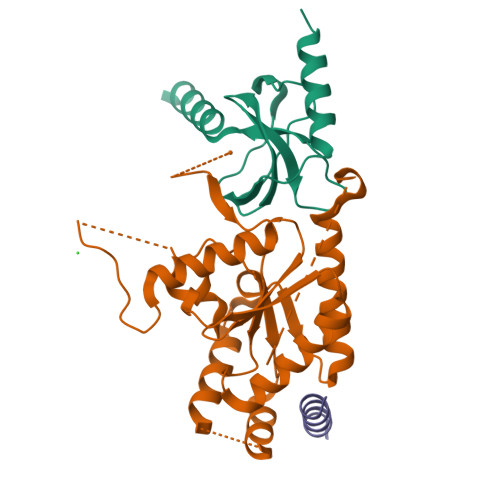
Click to view 3D structureFerrochelataseQ7KZA3HumansKnownNot Available
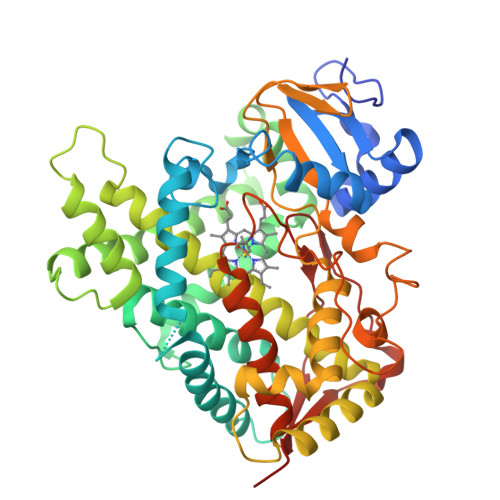
Cytochrome P450 2E1 structureClick to view 3D structureCytochrome P450 2E1P05181HumansKnownNot Available
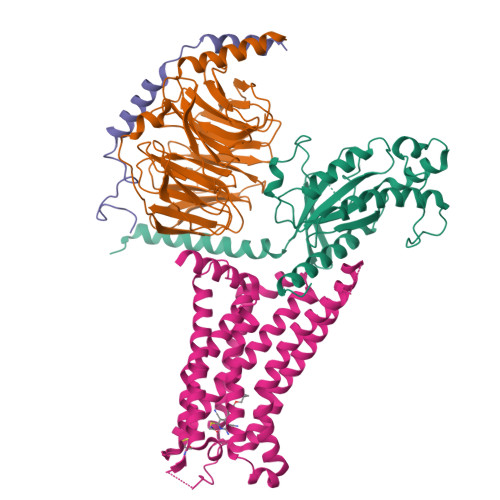
Adenosine receptor A3 structureClick to view 3D structureAdenosine receptor A3P0DMS8HumansPredicted (SEA)
Prediction Confidence Score
0.374
Applicability Domain
0.444
Statistical Significance
0.0095
Supporting Reference Compounds
391
E-value
73.6454
Cytochrome P450 2C9 structureClick to view 3D structureCytochrome P450 2C9P11712HumansPredicted (SEA)
Prediction Confidence Score
0.37
Applicability Domain
0.444
Statistical Significance
0.0296
Supporting Reference Compounds
1245
E-value
230.512
Click to view 3D structureHistidine biosynthesis bifunctional protein HisBP06987Escherichia coli O26:H11 str. CFSAN001629Predicted (SEA)
Prediction Confidence Score
0.35
Applicability Domain
0.35
Statistical Significance
7.00e-05
Supporting Reference Compounds
1
E-value
0.544945
Cytochrome P450 2C19 structureClick to view 3D structureCytochrome P450 2C19P33261HumansPredicted (SEA)
Prediction Confidence Score
0.333
Applicability Domain
0.408
Statistical Significance
0.0304
Supporting Reference Compounds
825
E-value
236.35
Voltage-dependent L-type calcium channel subunit alpha-1C structureClick to view 3D structureVoltage-dependent L-type calcium channel subunit alpha-1CQ13936HumansPredicted (SEA)
Prediction Confidence Score
0.332
Applicability Domain
0.408
Statistical Significance
0.0014
Supporting Reference Compounds
71
E-value
10.821
Click to view 3D structureVoltage-dependent L-type calcium channel subunit alpha-1CO35505Cavia porcellusPredicted (SEA)
Prediction Confidence Score
0.32
Applicability Domain
0.351
Statistical Significance
3.40e-04
Supporting Reference Compounds
25
E-value
2.64687
Cytochrome P450 3A4 structureClick to view 3D structureCytochrome P450 3A4P08684HumansPredicted (SEA)
Prediction Confidence Score
0.319
Applicability Domain
0.4
Statistical Significance
0.1058
Supporting Reference Compounds
1538
E-value
823.645
Click to view 3D structureAdenosine receptor A1P25099Rattus norvegicusPredicted (SEA)
Prediction Confidence Score
0.308
Applicability Domain
0.408
Statistical Significance
0.0152
Supporting Reference Compounds
221
E-value
118.642
Sodium/iodide cotransporter structureClick to view 3D structureSodium/iodide cotransporterQ63008Rattus norvegicusPredicted (SEA)
Prediction Confidence Score
0.302
Applicability Domain
0.302
Statistical Significance
0.001
Supporting Reference Compounds
1
E-value
8.17417
Adenosine receptor A2b structureClick to view 3D structureAdenosine receptor A2bP29275HumansPredicted (SEA)
Prediction Confidence Score
0.296
Applicability Domain
0.422
Statistical Significance
0.0185
Supporting Reference Compounds
187
E-value
143.788
Nuclear receptor subfamily 1 group I member 2 structureClick to view 3D structureNuclear receptor subfamily 1 group I member 2O75469HumansPredicted (SEA)
Prediction Confidence Score
0.289
Applicability Domain
0.444
Statistical Significance
0.0075
Supporting Reference Compounds
146
E-value
58.6983
Click to view 3D structureDual specificity calcium/calmodulin-dependent 3',5'-cyclic nucleotide phosphodiesterase 1CQ14123HumansPredicted (SEA)
Prediction Confidence Score
0.287
Applicability Domain
0.408
Statistical Significance
0.002
Supporting Reference Compounds
42
E-value
15.2584
Click to view 3D structureTransient receptor potential cation channel subfamily A member 1Q8BLA8Mus musculusPredicted (SEA)
Prediction Confidence Score
0.284
Applicability Domain
0.408
Statistical Significance
5.70e-04
Supporting Reference Compounds
18
E-value
4.43741
Voltage-gated inwardly rectifying potassium channel KCNH2 structureClick to view 3D structureVoltage-gated inwardly rectifying potassium channel KCNH2Q12809HumansPredicted (SEA)
Prediction Confidence Score
0.283
Applicability Domain
0.408
Statistical Significance
0.2484
Supporting Reference Compounds
1498
E-value
1934.09
Metallo-beta-lactamase VIM-2 structureClick to view 3D structureMetallo-beta-lactamase VIM-2D1MEN9Pseudomonas aeruginosaPredicted (SEA)
Prediction Confidence Score
0.283
Applicability Domain
0.283 Low confidence
Statistical Significance
1.00e-05
Supporting Reference Compounds
1
E-value
0.0778492
Estrogen receptor beta structureClick to view 3D structureEstrogen receptor betaQ92731HumansPredicted (SEA)
Prediction Confidence Score
0.282
Applicability Domain
0.422
Statistical Significance
0.0188
Supporting Reference Compounds
174
E-value
146.512
Click to view 3D structureDNA damage-inducible transcript 3 proteinP35639Mus musculusPredicted (SEA)
Prediction Confidence Score
0.279
Applicability Domain
0.298 Low confidence
Statistical Significance
0.0208
Supporting Reference Compounds
226
E-value
161.615
X-box-binding protein 1 structureClick to view 3D structureX-box-binding protein 1P17861HumansPredicted (SEA)
Prediction Confidence Score
0.279
Applicability Domain
0.298 Low confidence
Statistical Significance
0.0208
Supporting Reference Compounds
227
E-value
161.615
Histamine H3 receptor structureClick to view 3D structureHistamine H3 receptorQ9Y5N1HumansPredicted (SEA)
Prediction Confidence Score
0.274
Applicability Domain
0.385
Statistical Significance
0.061
Supporting Reference Compounds
294
E-value
474.569
Cytochrome P450 1A2 structureClick to view 3D structureCytochrome P450 1A2P05177HumansPredicted (SEA)
Prediction Confidence Score
0.272
Applicability Domain
0.315
Statistical Significance
0.1742
Supporting Reference Compounds
793
E-value
1356.37
Carbonic anhydrase 9 structureClick to view 3D structureCarbonic anhydrase 9Q16790HumansPredicted (SEA)
Prediction Confidence Score
0.271
Applicability Domain
0.382
Statistical Significance
0.0737
Supporting Reference Compounds
372
E-value
573.904
Click to view 3D structureLong-chain fatty acid transport protein 4Q6P1M0HumansPredicted (SEA)
Prediction Confidence Score
0.271
Applicability Domain
0.309
Statistical Significance
6.90e-04
Supporting Reference Compounds
2
E-value
5.3716
Protein RecA structureClick to view 3D structureProtein RecAP9WHJ3Mycobacterium tuberculosisPredicted (SEA)
Prediction Confidence Score
0.269
Applicability Domain
0.298 Low confidence
Statistical Significance
0.0447
Supporting Reference Compounds
296
E-value
347.675
Voltage-dependent L-type calcium channel subunit alpha-1C structureClick to view 3D structureVoltage-dependent L-type calcium channel subunit alpha-1CP22002Rattus norvegicusPredicted (SEA)
Prediction Confidence Score
0.268
Applicability Domain
0.339
Statistical Significance
0.0025
Supporting Reference Compounds
36
E-value
19.8516
Induced myeloid leukemia cell differentiation protein Mcl-1 structureClick to view 3D structureInduced myeloid leukemia cell differentiation protein Mcl-1Q07820HumansPredicted (SEA)
Prediction Confidence Score
0.268
Applicability Domain
0.308
Statistical Significance
0.0542
Supporting Reference Compounds
343
E-value
422.176
Concentrations
Not Available
External Links
DrugBank IDNot Available
HMDB IDHMDB0247156
FooDB IDNot Available
Phenol Explorer IDNot Available
KNApSAcK IDNot Available
BiGG IDNot Available
BioCyc IDNot Available
METLIN IDNot Available
PDB IDNot Available
Wikipedia LinkNot Available
Chemspider ID11938
ChEBI ID83605
PubChem Compound ID12446
Kegg Compound IDNot Available
YMDB IDNot Available
ECMDB IDNot Available
References
Synthesis ReferenceNot Available
MSDSNot Available
General ReferencesNot Available