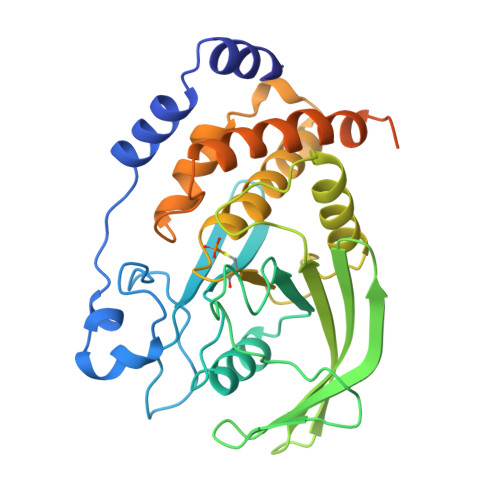
 Click to view 3D structure | Tyrosine-protein phosphatase non-receptor type 1 | P18031 | Humans | Predicted (SEA) | - Prediction Confidence Score
- 0.554
- Applicability Domain
- 0.6
- Statistical Significance
- 4.10e-04
- Supporting Reference Compounds
- 197
- E-value
- 3.19182
|
 Click to view 3D structure | Peroxisome proliferator-activated receptor alpha | Q07869 | Humans | Predicted (SEA) | - Prediction Confidence Score
- 0.554
- Applicability Domain
- 0.6
- Statistical Significance
- 5.20e-04
- Supporting Reference Compounds
- 127
- E-value
- 4.04816
|
 Click to view 3D structure | Peroxisome proliferator-activated receptor delta | Q03181 | Humans | Predicted (SEA) | - Prediction Confidence Score
- 0.522
- Applicability Domain
- 0.6
- Statistical Significance
- 5.90e-04
- Supporting Reference Compounds
- 89
- E-value
- 4.5931
|
 Click to view 3D structure | Transient receptor potential cation channel subfamily V member 2 | Q9WUD2 | Rattus norvegicus | Predicted (SEA) | - Prediction Confidence Score
- 0.496
- Applicability Domain
- 0.6
- Statistical Significance
- 3.40e-04
- Supporting Reference Compounds
- 21
- E-value
- 2.64687
|
 Click to view 3D structure | Peroxisome proliferator-activated receptor gamma | P37231 | Humans | Predicted (SEA) | - Prediction Confidence Score
- 0.49
- Applicability Domain
- 0.6
- Statistical Significance
- 9.40e-04
- Supporting Reference Compounds
- 192
- E-value
- 7.31783
|
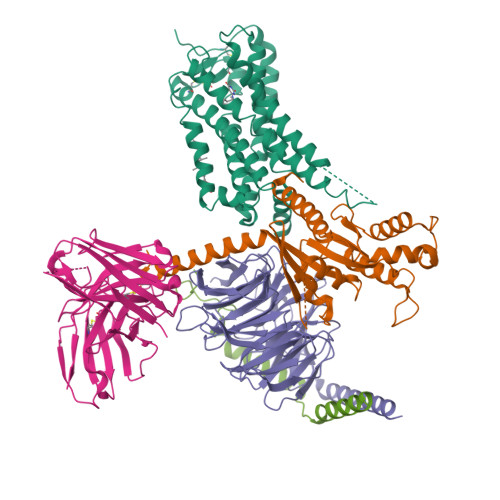 Click to view 3D structure | G-protein coupled receptor 84 | Q9NQS5 | Humans | Predicted (SEA) | - Prediction Confidence Score
- 0.467
- Applicability Domain
- 0.6
- Statistical Significance
- 1.70e-04
- Supporting Reference Compounds
- 15
- E-value
- 1.32344
|
 Click to view 3D structure | Histone deacetylase 11 | Q96DB2 | Humans | Predicted (SEA) | - Prediction Confidence Score
- 0.452
- Applicability Domain
- 0.6
- Statistical Significance
- 8.00e-04
- Supporting Reference Compounds
- 149
- E-value
- 6.22794
|
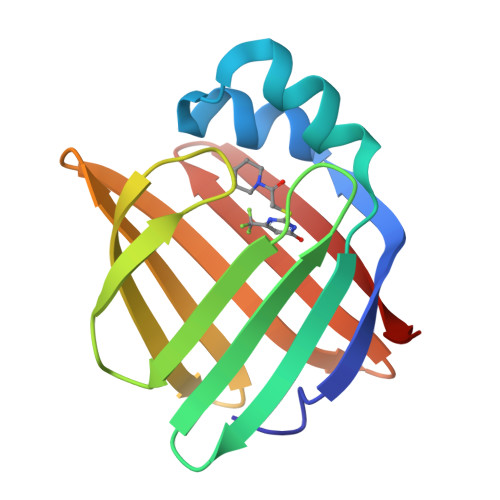 Click to view 3D structure | Fatty acid-binding protein, adipocyte | P15090 | Humans | Predicted (SEA) | - Prediction Confidence Score
- 0.413
- Applicability Domain
- 0.6
- Statistical Significance
- 2.20e-04
- Supporting Reference Compounds
- 19
- E-value
- 1.71268
|
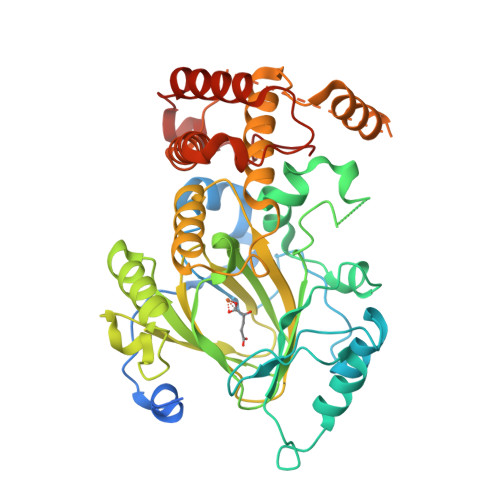 Click to view 3D structure | Lysine-specific demethylase 2A | Q9Y2K7 | Humans | Predicted (SEA) | - Prediction Confidence Score
- 0.398
- Applicability Domain
- 0.581
- Statistical Significance
- 2.30e-04
- Supporting Reference Compounds
- 35
- E-value
- 1.79053
|
 Click to view 3D structure | Free fatty acid receptor 1 | O14842 | Humans | Predicted (SEA) | - Prediction Confidence Score
- 0.391
- Applicability Domain
- 0.6
- Statistical Significance
- 0.0016
- Supporting Reference Compounds
- 56
- E-value
- 12.378
|
| Click to view 3D structure | Putative inactive group IIC secretory phospholipase A2 | Q5R387 | Humans | Predicted (SEA) | - Prediction Confidence Score
- 0.381
- Applicability Domain
- 0.381
- Statistical Significance
- 6.00e-05
- Supporting Reference Compounds
- 1
- E-value
- 0.467095
|
| Click to view 3D structure | Fatty-acid amide hydrolase 1 | O00519 | Humans | Predicted (SEA) | - Prediction Confidence Score
- 0.376
- Applicability Domain
- 0.484
- Statistical Significance
- 0.0032
- Supporting Reference Compounds
- 106
- E-value
- 25.1453
|
| Click to view 3D structure | CAI-1 autoinducer sensor kinase/phosphatase CqsS | Q9KM66 | Vibrio cholerae serotype O1 (strain ATCC 39315 / El Tor Inaba N16961) | Predicted (SEA) | - Prediction Confidence Score
- 0.364
- Applicability Domain
- 0.364
- Statistical Significance
- 1.80e-04
- Supporting Reference Compounds
- 1
- E-value
- 1.40129
|
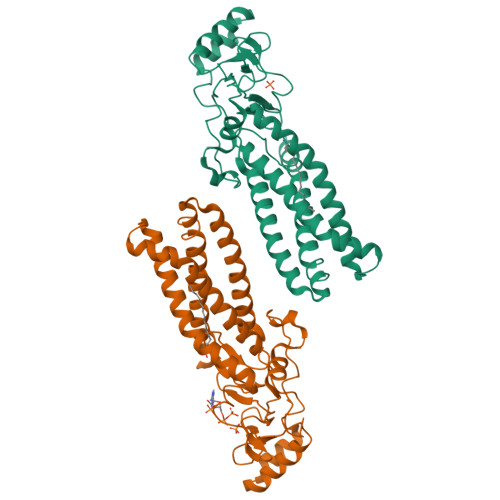 Click to view 3D structure | Palmitoyltransferase ZDHHC20 | Q5W0Z9 | Humans | Predicted (SEA) | - Prediction Confidence Score
- 0.36
- Applicability Domain
- 0.366
- Statistical Significance
- 1.00e-05
- Supporting Reference Compounds
- 3
- E-value
- 0.0778492
|
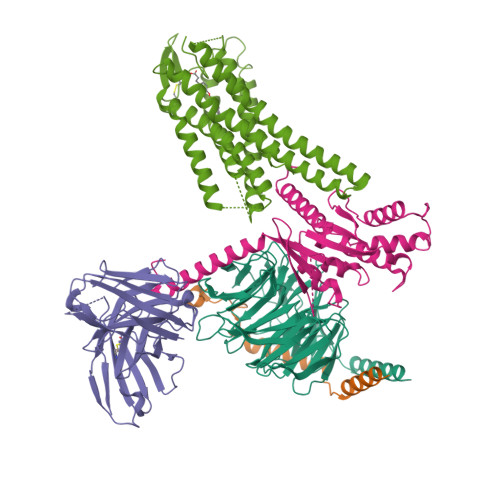 Click to view 3D structure | Free fatty acid receptor 4 | Q5NUL3 | Humans | Predicted (SEA) | - Prediction Confidence Score
- 0.359
- Applicability Domain
- 0.6
- Statistical Significance
- 0.0014
- Supporting Reference Compounds
- 63
- E-value
- 11.2103
|
 Click to view 3D structure | Toll-like receptor 2 | O60603 | Humans | Predicted (SEA) | - Prediction Confidence Score
- 0.356
- Applicability Domain
- 0.6
- Statistical Significance
- 1.50e-04
- Supporting Reference Compounds
- 9
- E-value
- 1.16774
|
| Click to view 3D structure | Alkaline ceramidase 2 | Q5QJU3 | Humans | Predicted (SEA) | - Prediction Confidence Score
- 0.349
- Applicability Domain
- 0.349
- Statistical Significance
- 4.30e-04
- Supporting Reference Compounds
- 1
- E-value
- 3.34752
|
| Click to view 3D structure | Cannabinoid receptor 1 | P20272 | Rattus norvegicus | Predicted (SEA) | - Prediction Confidence Score
- 0.344
- Applicability Domain
- 0.382
- Statistical Significance
- 0.0038
- Supporting Reference Compounds
- 83
- E-value
- 29.2713
|
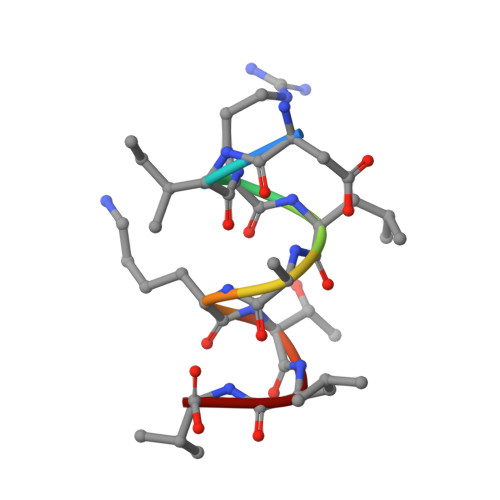 Click to view 3D structure | Cannabinoid receptor 1 | P21554 | Humans | Predicted (SEA) | - Prediction Confidence Score
- 0.332
- Applicability Domain
- 0.382
- Statistical Significance
- 0.0081
- Supporting Reference Compounds
- 200
- E-value
- 63.2136
|
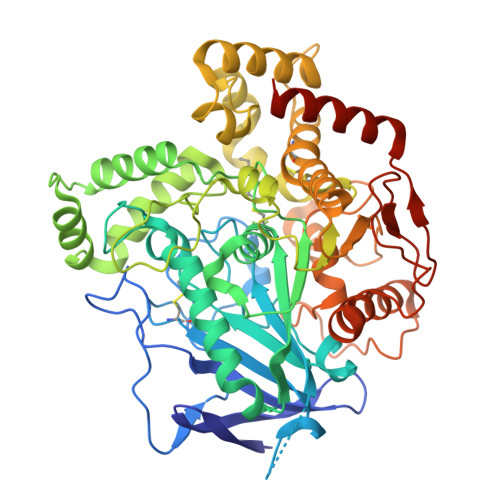 Click to view 3D structure | Juvenile hormone esterase | Q9GPG0 | Manduca sexta | Predicted (SEA) | - Prediction Confidence Score
- 0.332
- Applicability Domain
- 0.375
- Statistical Significance
- 2.00e-04
- Supporting Reference Compounds
- 2
- E-value
- 1.55698
|
| Click to view 3D structure | Palmitoyltransferase ZDHHC2 | Q9UIJ5 | Humans | Predicted (SEA) | - Prediction Confidence Score
- 0.332
- Applicability Domain
- 0.364
- Statistical Significance
- 3.00e-05
- Supporting Reference Compounds
- 3
- E-value
- 0.233548
|
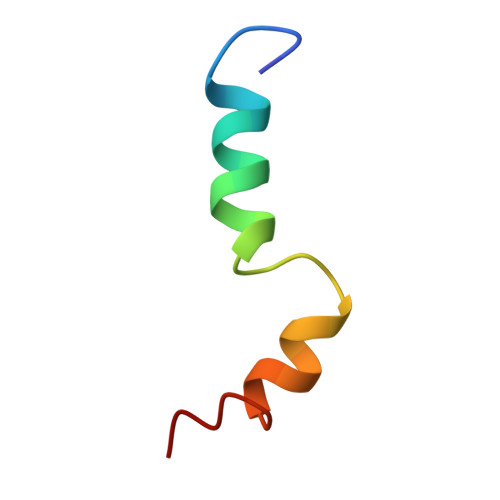 Click to view 3D structure | Cannabinoid receptor 2 | P34972 | Humans | Predicted (SEA) | - Prediction Confidence Score
- 0.332
- Applicability Domain
- 0.382
- Statistical Significance
- 0.0074
- Supporting Reference Compounds
- 175
- E-value
- 57.4527
|
| Click to view 3D structure | Cocaine esterase | O00748 | Humans | Predicted (SEA) | - Prediction Confidence Score
- 0.33
- Applicability Domain
- 0.375
- Statistical Significance
- 4.80e-04
- Supporting Reference Compounds
- 40
- E-value
- 3.73676
|
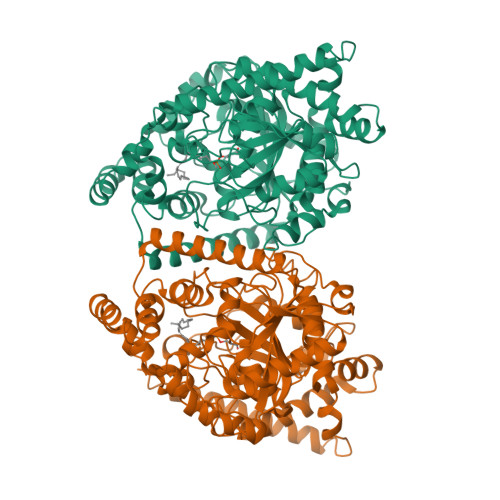 Click to view 3D structure | Fatty-acid amide hydrolase 1 | P97612 | Rattus norvegicus | Predicted (SEA) | - Prediction Confidence Score
- 0.324
- Applicability Domain
- 0.382
- Statistical Significance
- 0.0051
- Supporting Reference Compounds
- 102
- E-value
- 39.781
|
 Click to view 3D structure | Liver carboxylesterase 1 | P23141 | Humans | Predicted (SEA) | - Prediction Confidence Score
- 0.324
- Applicability Domain
- 0.375
- Statistical Significance
- 0.0018
- Supporting Reference Compounds
- 55
- E-value
- 13.935
|

