1-Dodecanamine, N-dodecyl-N-methyl- (CED0170164)

Record Information
Version1.0
Creation Date2026-04-03 10:04:18 UTC
Update Date2026-08-22 05:41:17 UTC
SynCED IDCED0170164
Secondary Accession Numbers
  • CHEM063430
Identification
Common Name1-Dodecanamine, N-dodecyl-N-methyl-
ClassSmall Molecule
Description
1-Dodecanamine, N-dodecyl-N-methyl- is an organic nitrogen compound with the chemical formula C25H53N1 and an average molecular weight of 367.71 g/mol. 1-Dodecanamine, N-dodecyl-N-methyl- belongs to the amines, a subclass of organonitrogen compounds within the organic compounds. This compound has been identified in one recorded source: indoor air, dust, and atmospheric transport. The recorded route of exposure for this substance is inhalation.
Contaminant TypeNot Available
Chemical Structure
SynonymsNot Available
Chemical FormulaC25H53N1
Average Molecular Mass367.706 g/mol
Monoisotopic Mass367.418 g/mol
CAS Registry Number2915-90-4
IUPAC NameNot Available
Traditional NameNot Available
SMILESCCCCCCCCCCCCN(C)CCCCCCCCCCCC
InChI IdentifierInChI=1S/C25H53N/c1-4-6-8-10-12-14-16-18-20-22-24-26(3)25-23-21-19-17-15-13-11-9-7-5-2/h4-25H2,1-3H3
InChI KeyUWHRNIXHZAWBMF-UHFFFAOYSA-N
Chemical Taxonomy
ClassificationNot classified
Biological Properties
StatusDetected and Not Quantified
OriginNot Available
Cellular LocationsNot Available
Biofluid LocationsNot Available
Tissue LocationsNot Available
ApplicationsNot Available
Biological RolesNot Available
Chemical RolesNot Available
Organoleptic EffectsNot Available
Physical Properties
StateNot Available
AppearanceNot Available
Experimental Properties
PropertyValue
Melting PointNot Available
Boiling PointNot Available
SolubilityNot Available
Predicted PropertiesNot Available
Spectra
SpectraNot Available
Toxicity Profile
Toxicity Values
Toxicity ValueOrganismDose DescriptorRoute of ExposurePredicted or ExperimentalToxicity RatingReference
1477.0 Log mg/kg [830:2600]RatLD50oralpredictedNot AvailableNot Available
Toxicity / Toxin ClassNot Available
Mechanism of ToxicityNot Available
Carcinogenicity (IARC Classification)Not Available
Minimum Risk LevelNot Available
SymptomsNot Available
TreatmentNot Available
Health Effects
Health EffectRelationshipDirectionReference
Exposure Sources
Source IDSourceSectorReference
CEDs000019Indoor air?Indoor air can be a significant reservoir for synthetic chemical contaminants, which often originate from various sources within enclosed environments.Air, dust & atmospheric transportNot Available
CEDs000511Conductors Or Conductive Bodies Characterised By The Conductive Materials?Conductors, or conductive bodies, are materials that allow the flow of electrical current, typically made from metals such as copper, aluminum, or silver.Electrical & Electronic EquipmentNot Available
CEDs000519Electrodes?Electrodes, used in various electrical and electronic applications, can be a source of synthetic chemical contamination due to the materials from which they are constructed and the processes involved in their manufacturing.Electrical & Electronic EquipmentNot Available
CEDs000524Hybrid Capacitors?Hybrid capacitors are energy storage devices that combine the properties of electrolytic and supercapacitors, utilizing a combination of electrochemical principles to achieve higher energy density and power density.Electrical & Electronic EquipmentNot Available
CEDs000561Perfumes Within Detergents And Soaps?Perfumes within detergents and soaps are synthetic fragrance compounds added to enhance the sensory experience of cleaning products.Household cleaning & consumer productsNot Available
CEDs000563Soap Detergents?Soap detergents are synthetic surfactants designed to enhance the cleaning efficacy of water by reducing surface tension, allowing for better interaction with dirt and grease.Household cleaning & consumer productsNot Available
CEDs000602Molluscicides?Molluscicides are synthetic chemicals specifically designed to control and eliminate mollusks, such as snails and slugs, which can be detrimental to crops and agricultural productivity.Agriculture & land managementNot Available
CEDs000609Aftershave?Aftershave is a grooming product typically used to soothe and protect the skin following shaving.Personal care & cosmeticsNot Available
CEDs000610Aftersun Products?Aftersun products are designed to soothe and hydrate the skin after sun exposure, often containing various synthetic chemicals such as emollients, preservatives, and fragrances.Personal care & cosmeticsNot Available
CEDs000611Anti Perspirants Or Body Deoderants?Antiperspirants and body deodorants commonly contain synthetic chemicals such as aluminum compounds, parabens, and synthetic fragrances.Personal care & cosmeticsNot Available
CEDs000612Body Washing Or Cleaning Implements?Body washing or cleaning implements, such as synthetic sponges, loofahs, and washcloths, can be sources of synthetic chemical contamination due to the materials used in their production.Personal care & cosmeticsNot Available
CEDs000613Depilatories?Depilatories are products designed to remove unwanted hair through the application of synthetic chemicals that break down the protein structure of hair, facilitating its removal.Personal care & cosmeticsNot Available
CEDs000614Essential Oils Or Perfumes?Essential oils and perfumes are complex mixtures of volatile compounds derived from natural or synthetic sources, commonly used for their aromatic properties.Personal care & cosmeticsNot Available
CEDs000615Eye Makeup Products?Eye makeup products, including mascaras, eyeliners, and eyeshadows, often contain a variety of synthetic chemicals such as pigments, preservatives, and film-forming agents.Personal care & cosmeticsNot Available
CEDs000617Lip Care Products?Lip care products, including lipsticks, balms, and glosses, often contain a variety of synthetic chemicals such as parabens, phthalates, and synthetic fragrances.Personal care & cosmeticsNot Available
CEDs000618Lip Makeup Products?Lip makeup products, such as lipsticks, lip glosses, and lip liners, often contain a variety of synthetic chemicals, including pigments, preservatives, and emollients.Personal care & cosmeticsNot Available
CEDs000642Footwear?Footwear production often involves the use of various synthetic chemicals, such as adhesives, dyes, and treatments, which can contribute to environmental contamination.Textiles, leather & furnishingsNot Available
CEDs000685Ceramics?Ceramics can be a source of synthetic chemical contamination through various additives and processing agents used in their production.Building & ConstructionNot Available
CEDs000696Nanotechnology?Nanotechnology involves the manipulation of materials at the molecular or atomic level, typically within the range of 1 to 100 nanometers.Industrial manufacturing & chemical processingNot Available
CEDs000739Inks?Inks are complex mixtures composed of pigments or dyes, solvents, resins, and additives used primarily for printing and writing applications.Paper, pulp & fiber productsNot Available
CEDs000740Paper?Paper production involves the processing of wood fibers and the use of various chemicals, which can lead to synthetic chemical contamination.Paper, pulp & fiber productsNot Available
CEDs000741Pigment Pastes?Pigment pastes are concentrated dispersions of pigments used to impart color and properties to materials.Paper, pulp & fiber productsNot Available
CEDs000744Water, Wastewater, & Sewage Treatment?Water, wastewater, and sewage treatment processes are critical for managing and mitigating pollutants in water systems.Wastewater, sanitation & biosolidsNot Available
Pathways
0 pathwaysPathway Source: PathBank

No pathways found

No metabolic pathways have been associated with this synthetic chemical

Targets
StructureProteinUniProt IDOrganismRelationshipDetails
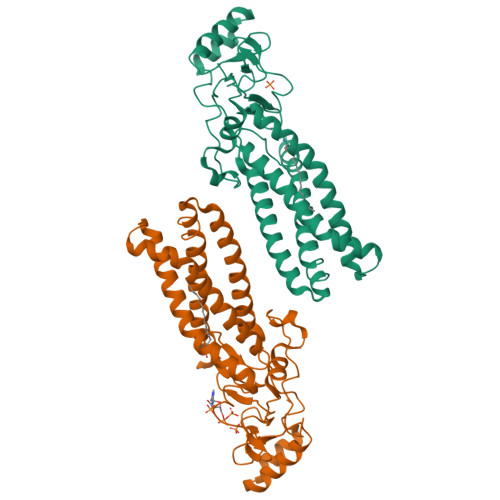
Click to view 3D structurePhospholipase BQ9P8P2Cryptococcus neoformansPredicted (SEA)
Prediction Confidence Score
0.381
Applicability Domain
0.381
Statistical Significance
2.00e-05
Supporting Reference Compounds
1
E-value
0.155698
All-trans-retinol dehydrogenase [NAD(+)] ADH7 structureClick to view 3D structureAll-trans-retinol dehydrogenase [NAD(+)] ADH7P40394HumansPredicted (SEA)
Prediction Confidence Score
0.375
Applicability Domain
0.375
Statistical Significance
1.00e-04
Supporting Reference Compounds
1
E-value
0.778492
Farnesyl pyrophosphate synthase structureClick to view 3D structureFarnesyl pyrophosphate synthaseP14324HumansPredicted (SEA)
Prediction Confidence Score
0.317
Applicability Domain
0.483
Statistical Significance
4.50e-04
Supporting Reference Compounds
22
E-value
3.50322
Peroxisome proliferator-activated receptor alpha structureClick to view 3D structurePeroxisome proliferator-activated receptor alphaQ07869HumansPredicted (SEA)
Prediction Confidence Score
0.31
Applicability Domain
0.333
Statistical Significance
0.0106
Supporting Reference Compounds
127
E-value
82.3645
Tyrosine-protein phosphatase non-receptor type 1 structureClick to view 3D structureTyrosine-protein phosphatase non-receptor type 1P18031HumansPredicted (SEA)
Prediction Confidence Score
0.307
Applicability Domain
0.333
Statistical Significance
0.0086
Supporting Reference Compounds
197
E-value
67.0282
Click to view 3D structureSodium- and chloride-dependent creatine transporter 1P28570Rattus norvegicusPredicted (SEA)
Prediction Confidence Score
0.296
Applicability Domain
0.296 Low confidence
Statistical Significance
6.00e-05
Supporting Reference Compounds
1
E-value
0.467095
Palmitoyltransferase ZDHHC20 structureClick to view 3D structurePalmitoyltransferase ZDHHC20Q5W0Z9HumansPredicted (SEA)
Prediction Confidence Score
0.296
Applicability Domain
0.314
Statistical Significance
1.00e-04
Supporting Reference Compounds
3
E-value
0.778492
Peroxisome proliferator-activated receptor delta structureClick to view 3D structurePeroxisome proliferator-activated receptor deltaQ03181HumansPredicted (SEA)
Prediction Confidence Score
0.295
Applicability Domain
0.333
Statistical Significance
0.0108
Supporting Reference Compounds
89
E-value
84.3886
Transient receptor potential cation channel subfamily V member 2 structureClick to view 3D structureTransient receptor potential cation channel subfamily V member 2Q9WUD2Rattus norvegicusPredicted (SEA)
Prediction Confidence Score
0.292
Applicability Domain
0.333
Statistical Significance
0.0026
Supporting Reference Compounds
21
E-value
20.1629
G-protein coupled receptor 84 structureClick to view 3D structureG-protein coupled receptor 84Q9NQS5HumansPredicted (SEA)
Prediction Confidence Score
0.292
Applicability Domain
0.333
Statistical Significance
0.0012
Supporting Reference Compounds
15
E-value
9.26406
Click to view 3D structureFatty-acid amide hydrolase 1O00519HumansPredicted (SEA)
Prediction Confidence Score
0.28
Applicability Domain
0.32
Statistical Significance
0.0267
Supporting Reference Compounds
106
E-value
207.857
Click to view 3D structureCannabinoid receptor 1P20272Rattus norvegicusPredicted (SEA)
Prediction Confidence Score
0.276
Applicability Domain
0.32
Statistical Significance
0.0102
Supporting Reference Compounds
83
E-value
79.2505
Click to view 3D structureCAI-1 autoinducer sensor kinase/phosphatase CqsSQ9KM66Vibrio cholerae serotype O1 (strain ATCC 39315 / El Tor Inaba N16961)Predicted (SEA)
Prediction Confidence Score
0.276
Applicability Domain
0.276 Low confidence
Statistical Significance
8.90e-04
Supporting Reference Compounds
1
E-value
6.92858
Click to view 3D structureSarcoplasmic/endoplasmic reticulum calcium ATPase 3Q64518Mus musculusPredicted (SEA)
Prediction Confidence Score
0.276
Applicability Domain
0.276 Low confidence
Statistical Significance
0.003
Supporting Reference Compounds
1
E-value
23.1212
Geranylgeranyl pyrophosphate synthase structureClick to view 3D structureGeranylgeranyl pyrophosphate synthaseO95749HumansPredicted (SEA)
Prediction Confidence Score
0.274
Applicability Domain
0.276 Low confidence
Statistical Significance
7.20e-04
Supporting Reference Compounds
15
E-value
5.60514
Click to view 3D structureFarnesyl pyrophosphate synthaseQ0GKD7Leishmania donovaniPredicted (SEA)
Prediction Confidence Score
0.274
Applicability Domain
0.276 Low confidence
Statistical Significance
6.80e-04
Supporting Reference Compounds
14
E-value
5.29375
Click to view 3D structureHistone deacetylase 11Q96DB2HumansPredicted (SEA)
Prediction Confidence Score
0.272
Applicability Domain
0.333
Statistical Significance
0.0407
Supporting Reference Compounds
149
E-value
316.613
Liver carboxylesterase 1 structureClick to view 3D structureLiver carboxylesterase 1P23141HumansPredicted (SEA)
Prediction Confidence Score
0.272
Applicability Domain
0.286 Low confidence
Statistical Significance
0.006
Supporting Reference Compounds
55
E-value
46.6317
Peroxisome proliferator-activated receptor gamma structureClick to view 3D structurePeroxisome proliferator-activated receptor gammaP37231HumansPredicted (SEA)
Prediction Confidence Score
0.27
Applicability Domain
0.333
Statistical Significance
0.0468
Supporting Reference Compounds
192
E-value
364.179
Click to view 3D structureCocaine esteraseO00748HumansPredicted (SEA)
Prediction Confidence Score
0.266
Applicability Domain
0.286 Low confidence
Statistical Significance
0.0024
Supporting Reference Compounds
40
E-value
18.7617
Click to view 3D structureCG8425-PA [Drosophila melanogaster]A1ZA98Drosophila melanogasterPredicted (SEA)
Prediction Confidence Score
0.265
Applicability Domain
0.286 Low confidence
Statistical Significance
5.30e-04
Supporting Reference Compounds
4
E-value
4.12601
Juvenile hormone esterase structureClick to view 3D structureJuvenile hormone esteraseQ9GPG0Manduca sextaPredicted (SEA)
Prediction Confidence Score
0.264
Applicability Domain
0.286 Low confidence
Statistical Significance
6.60e-04
Supporting Reference Compounds
2
E-value
5.13805
Fatty-acid amide hydrolase 1 structureClick to view 3D structureFatty-acid amide hydrolase 1P97612Rattus norvegicusPredicted (SEA)
Prediction Confidence Score
0.264
Applicability Domain
0.32
Statistical Significance
0.0297
Supporting Reference Compounds
102
E-value
231.29
Liver carboxylesterase structureClick to view 3D structureLiver carboxylesteraseQ29550Sus scrofaPredicted (SEA)
Prediction Confidence Score
0.264
Applicability Domain
0.286 Low confidence
Statistical Significance
0.0011
Supporting Reference Compounds
20
E-value
8.87481
Click to view 3D structureFatty-acid amide hydrolase 1O08914Mus musculusPredicted (SEA)
Prediction Confidence Score
0.262
Applicability Domain
0.32
Statistical Significance
0.0153
Supporting Reference Compounds
46
E-value
119.109
Concentrations
Not Available
External Links
IdentifiersNot Available
References
Synthesis ReferenceNot Available
MSDSNot Available
General ReferencesNot Available