4-Amino-2,5-dimethylaniline (CED0161272)

Record Information
Version1.0
Creation Date2026-04-03 10:36:36 UTC
Update Date2026-08-24 13:05:57 UTC
SynCED IDCED0161272
Secondary Accession Numbers
  • CHEM063667
Identification
Common Name4-Amino-2,5-dimethylaniline
ClassSmall Molecule
Description
4-Amino-2,5-dimethylaniline is an organic compound with the formula C8H12N2 and an average molecular weight of 136.20 g/mol. 4-Amino-2,5-dimethylaniline belongs to the xylenes, a subclass of benzene and substituted derivatives within the organic compounds. This substance is classified as a benzenoid. It has been identified as being found in or released from one recorded source: Electrical & Electronic Equipment (Thin Magnetic Films).
Contaminant TypeNot Available
Chemical Structure
SynonymsNot Available
Chemical FormulaC8H12N2
Average Molecular Mass136.198 g/mol
Monoisotopic Mass136.100 g/mol
CAS Registry Number07-01-93
IUPAC NameNot Available
Traditional NameNot Available
SMILESCC1=CC(N)=C(C)C=C1N
InChI IdentifierInChI=1S/C8H12N2/c1-5-3-8(10)6(2)4-7(5)9/h3-4H,9-10H2,1-2H3
InChI KeyBWAPJIHJXDYDPW-UHFFFAOYSA-N
Chemical Taxonomy
ClassificationNot classified
Biological Properties
StatusDetected and Not Quantified
OriginNot Available
Cellular LocationsNot Available
Biofluid LocationsNot Available
Tissue LocationsNot Available
ApplicationsNot Available
Biological RolesNot Available
Chemical RolesNot Available
Organoleptic EffectsNot Available
Physical Properties
StateNot Available
AppearanceNot Available
Experimental Properties
PropertyValue
Melting PointNot Available
Boiling PointNot Available
SolubilityNot Available
Predicted PropertiesNot Available
Spectra
SpectraNot Available
Toxicity Profile
Toxicity Values
Toxicity ValueOrganismDose DescriptorRoute of ExposurePredicted or ExperimentalToxicity RatingReference
542.0 Log mg/kg [300:960]RatLD50oralpredictedNot AvailableNot Available
Toxicity / Toxin ClassNot Available
Mechanism of ToxicityNot Available
Carcinogenicity (IARC Classification)Not Available
Minimum Risk LevelNot Available
SymptomsNot Available
TreatmentNot Available
Health Effects
Health EffectRelationshipDirectionDescriptionReference
Exposure Sources
Source IDSourceSectorReference
CEDs000233Brushes?Brushes used in personal care and cosmetics can be a source of synthetic chemical contamination due to the materials and coatings used in their manufacturing.Personal care & cosmeticsPubChem
CEDs000511Conductors Or Conductive Bodies Characterised By The Conductive Materials?Conductors, or conductive bodies, are materials that allow the flow of electrical current, typically made from metals such as copper, aluminum, or silver.Electrical & Electronic EquipmentPubChem
CEDs000517Electric Switches?Electric switches, integral components in numerous devices, can be a source of synthetic chemical contamination due to the materials and manufacturing processes involved in their production.Electrical & Electronic EquipmentPubChem
CEDs000519Electrodes?Electrodes, used in various electrical and electronic applications, can be a source of synthetic chemical contamination due to the materials from which they are constructed and the processes involved in their manufacturing.Electrical & Electronic EquipmentPubChem
CEDs000521Fixed Capacitors And Their Manufacture?Fixed capacitors are passive electronic components used to store and release electrical energy, playing a critical role in various circuits.Electrical & Electronic EquipmentPubChem
CEDs000524Hybrid Capacitors?Hybrid capacitors are energy storage devices that combine the properties of electrolytic and supercapacitors, utilizing a combination of electrochemical principles to achieve higher energy density and power density.Electrical & Electronic EquipmentPubChem
CEDs000538Thin Magnetic Films?Thin magnetic films are layers of magnetic material ranging from a few nanometers to several micrometers in thickness, commonly used in applications such as magnetic sensors, data storage devices, and electronic components.Electrical & Electronic EquipmentPubChem
CEDs000561Perfumes Within Detergents And Soaps?Perfumes within detergents and soaps are synthetic fragrance compounds added to enhance the sensory experience of cleaning products.Household cleaning & consumer productsPubChem
CEDs000563Soap Detergents?Soap detergents are synthetic surfactants designed to enhance the cleaning efficacy of water by reducing surface tension, allowing for better interaction with dirt and grease.Household cleaning & consumer productsPubChem
CEDs000609Aftershave?Aftershave is a grooming product typically used to soothe and protect the skin following shaving.Personal care & cosmeticsPubChem
CEDs000611Anti Perspirants Or Body Deoderants?Antiperspirants and body deodorants commonly contain synthetic chemicals such as aluminum compounds, parabens, and synthetic fragrances.Personal care & cosmeticsPubChem
CEDs000613Depilatories?Depilatories are products designed to remove unwanted hair through the application of synthetic chemicals that break down the protein structure of hair, facilitating its removal.Personal care & cosmeticsPubChem
CEDs000615Eye Makeup Products?Eye makeup products, including mascaras, eyeliners, and eyeshadows, often contain a variety of synthetic chemicals such as pigments, preservatives, and film-forming agents.Personal care & cosmeticsPubChem
CEDs000618Lip Makeup Products?Lip makeup products, such as lipsticks, lip glosses, and lip liners, often contain a variety of synthetic chemicals, including pigments, preservatives, and emollients.Personal care & cosmeticsPubChem
CEDs000633Azo Dyes?Azo dyes are synthetic organic compounds characterized by the presence of one or more azo groups (-N=N-), which are widely used for coloring textiles, leather, and furnishings.Textiles, leather & furnishingsPubChem
CEDs000640Embroidering And Tufting?Embroidering and tufting processes often involve the use of synthetic chemicals such as dyes, adhesives, and finishing agents.Textiles, leather & furnishingsPubChem
CEDs000647Multicolour Dyeing?Multicolour dyeing involves the application of multiple synthetic dyes to textiles and other materials to achieve vibrant, diverse color patterns.Textiles, leather & furnishingsPubChem
CEDs000685Ceramics?Ceramics can be a source of synthetic chemical contamination through various additives and processing agents used in their production.Building & ConstructionPubChem
CEDs000696Nanotechnology?Nanotechnology involves the manipulation of materials at the molecular or atomic level, typically within the range of 1 to 100 nanometers.Industrial manufacturing & chemical processingPubChem
CEDs000739Inks?Inks are complex mixtures composed of pigments or dyes, solvents, resins, and additives used primarily for printing and writing applications.Paper, pulp & fiber productsPubChem
CEDs000740Paper?Paper production involves the processing of wood fibers and the use of various chemicals, which can lead to synthetic chemical contamination.Paper, pulp & fiber productsPubChem
CEDs000741Pigment Pastes?Pigment pastes are concentrated dispersions of pigments used to impart color and properties to materials.Paper, pulp & fiber productsPubChem
CEDs000744Water, Wastewater, & Sewage Treatment?Water, wastewater, and sewage treatment processes are critical for managing and mitigating pollutants in water systems.Wastewater, sanitation & biosolidsPubChem
Pathways
0 pathwaysPathway Source: PathBank

No pathways found

No metabolic pathways have been associated with this synthetic chemical

Targets
StructureProteinUniProt IDOrganismRelationshipDetails
Gastrotropin structureClick to view 3D structureGastrotropinP51161HumansPredicted (SEA)
Prediction Confidence Score
0.296
Applicability Domain
0.296 Low confidence
Statistical Significance
6.00e-05
Supporting Reference Compounds
1
E-value
0.467095
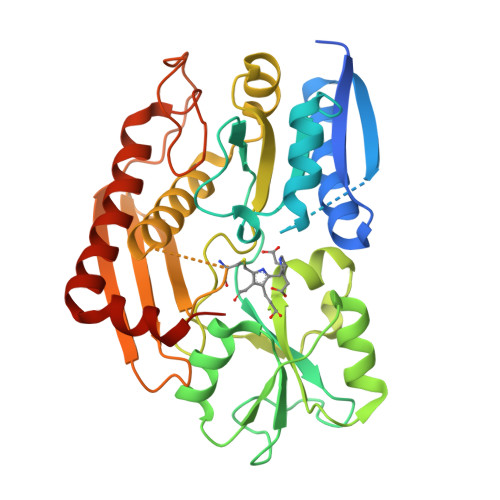
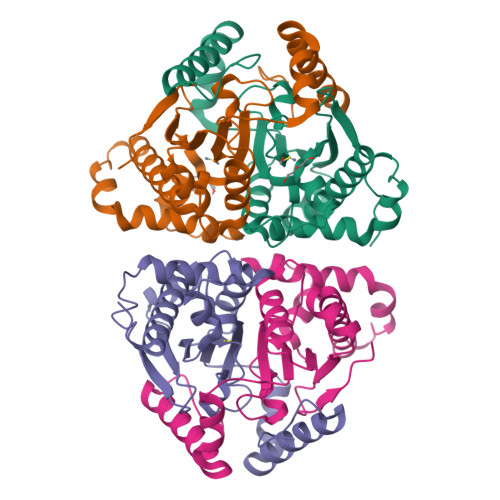
Porphobilinogen deaminase structureClick to view 3D structurePorphobilinogen deaminaseP08397HumansPredicted (SEA)
Prediction Confidence Score
0.238
Applicability Domain
0.238 Low confidence
Statistical Significance
6.00e-05
Supporting Reference Compounds
1
E-value
0.467095
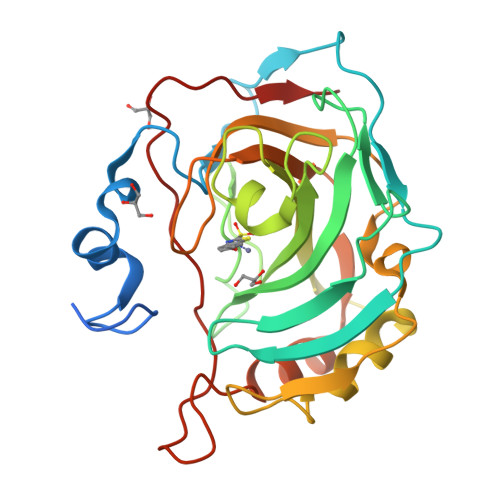
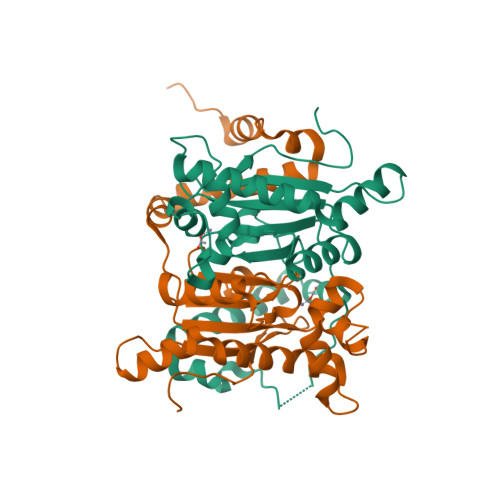
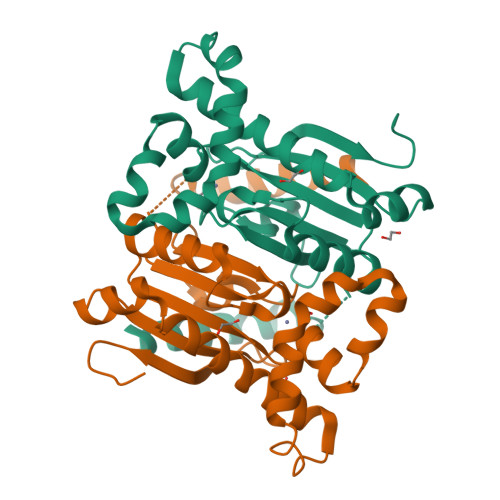
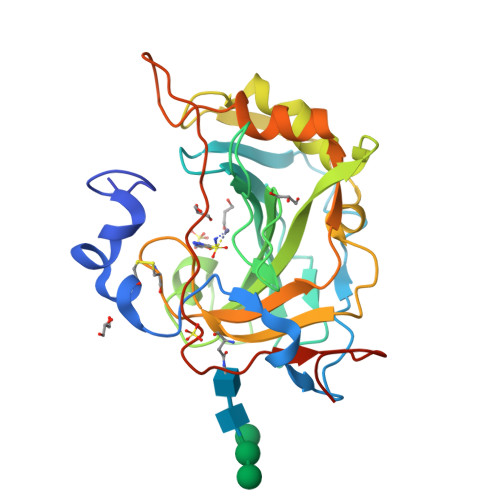
Click to view 3D structureCarbonic anhydrase 4Q95323Bos taurusPredicted (SEA)
Prediction Confidence Score
0.225
Applicability Domain
0.259 Low confidence
Statistical Significance
0.0504
Supporting Reference Compounds
64
E-value
392.438
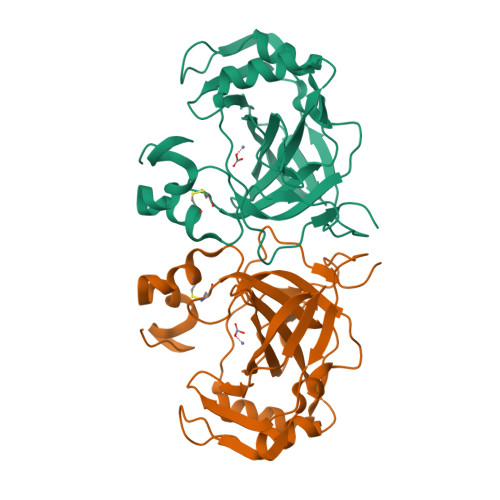
Carbonic anhydrase 9 structureClick to view 3D structureCarbonic anhydrase 9Q16790HumansPredicted (SEA)
Prediction Confidence Score
0.225
Applicability Domain
0.259 Low confidence
Statistical Significance
0.2722
Supporting Reference Compounds
372
E-value
2119.13
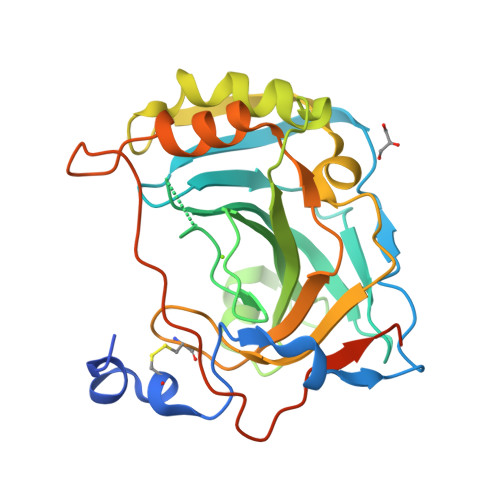
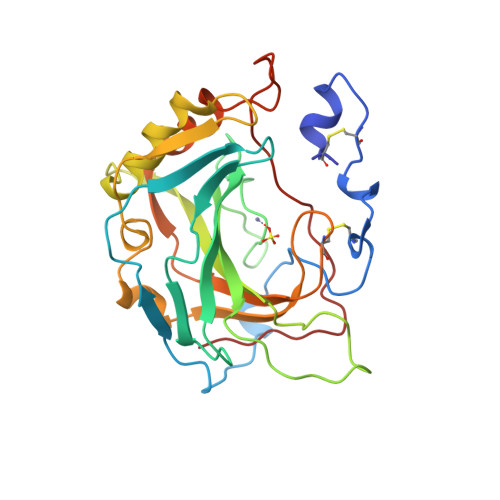
Carbonic anhydrase 2 structureClick to view 3D structureCarbonic anhydrase 2P00918HumansPredicted (SEA)
Prediction Confidence Score
0.225
Applicability Domain
0.259 Low confidence
Statistical Significance
0.3248
Supporting Reference Compounds
472
E-value
2528.78
Carbonic anhydrase 1 structureClick to view 3D structureCarbonic anhydrase 1P00915HumansPredicted (SEA)
Prediction Confidence Score
0.225
Applicability Domain
0.259 Low confidence
Statistical Significance
0.2788
Supporting Reference Compounds
407
E-value
2170.28
Carbonic anhydrase 7 structureClick to view 3D structureCarbonic anhydrase 7P43166HumansPredicted (SEA)
Prediction Confidence Score
0.219
Applicability Domain
0.259 Low confidence
Statistical Significance
0.2409
Supporting Reference Compounds
242
E-value
1875.31
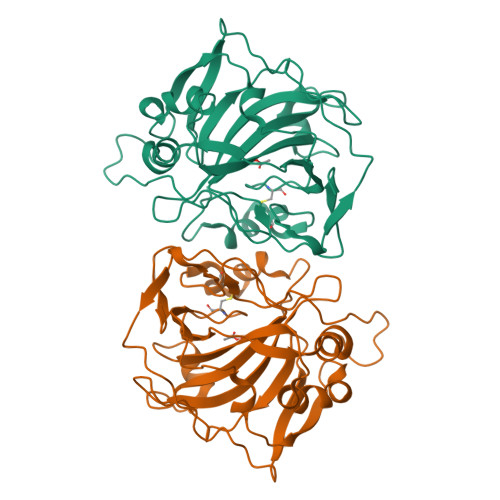
Click to view 3D structureCarbonate dehydrataseB2V8E3Sulfurihydrogenibium sp. (strain YO3AOP1)Predicted (SEA)
Prediction Confidence Score
0.219
Applicability Domain
0.259 Low confidence
Statistical Significance
0.0178
Supporting Reference Compounds
40
E-value
138.649
Carbonic anhydrase 12 structureClick to view 3D structureCarbonic anhydrase 12O43570HumansPredicted (SEA)
Prediction Confidence Score
0.219
Applicability Domain
0.259 Low confidence
Statistical Significance
0.3027
Supporting Reference Compounds
332
E-value
2356.5
Click to view 3D structureCarbonic anhydraseO24855Helicobacter pylori (strain ATCC 700392 / 26695) (Campylobacterpylori)Predicted (SEA)
Prediction Confidence Score
0.219
Applicability Domain
0.259 Low confidence
Statistical Significance
0.0214
Supporting Reference Compounds
38
E-value
166.442
Click to view 3D structureCarbonic anhydraseQ6FTL6Candida glabrata CBS 138Predicted (SEA)
Prediction Confidence Score
0.219
Applicability Domain
0.259 Low confidence
Statistical Significance
0.039
Supporting Reference Compounds
46
E-value
303.846
Click to view 3D structureAlpha carbonic anhydraseB5SU02Stylophora pistillataPredicted (SEA)
Prediction Confidence Score
0.219
Applicability Domain
0.259 Low confidence
Statistical Significance
0.0182
Supporting Reference Compounds
43
E-value
142.075
Carbonic anhydrase 2 structureClick to view 3D structureCarbonic anhydrase 2Q3I4V7Cryptococcus neoformansPredicted (SEA)
Prediction Confidence Score
0.219
Applicability Domain
0.259 Low confidence
Statistical Significance
0.0574
Supporting Reference Compounds
60
E-value
446.777
Carbonic anhydrase 6 structureClick to view 3D structureCarbonic anhydrase 6P23280HumansPredicted (SEA)
Prediction Confidence Score
0.219
Applicability Domain
0.259 Low confidence
Statistical Significance
0.1351
Supporting Reference Compounds
151
E-value
1051.43
Carbonic anhydrase structureClick to view 3D structureCarbonic anhydraseP53615Saccharomyces cerevisiae S288cPredicted (SEA)
Prediction Confidence Score
0.219
Applicability Domain
0.259 Low confidence
Statistical Significance
0.0165
Supporting Reference Compounds
34
E-value
128.218
Carbonic anhydrase, alpha family structureClick to view 3D structureCarbonic anhydrase, alpha familyQ31FD6Thiomicrospira crunogenaPredicted (SEA)
Prediction Confidence Score
0.219
Applicability Domain
0.259 Low confidence
Statistical Significance
0.0178
Supporting Reference Compounds
41
E-value
138.649
Carbonic anhydrase 14 structureClick to view 3D structureCarbonic anhydrase 14Q9ULX7HumansPredicted (SEA)
Prediction Confidence Score
0.219
Applicability Domain
0.259 Low confidence
Statistical Significance
0.181
Supporting Reference Compounds
172
E-value
1408.76
Carbonic anhydrase structureClick to view 3D structureCarbonic anhydraseQ5AJ71Candida albicans (strain SC5314 / ATCC MYA-2876) (Yeast)Predicted (SEA)
Prediction Confidence Score
0.219
Applicability Domain
0.259 Low confidence
Statistical Significance
0.0662
Supporting Reference Compounds
68
E-value
515.284
Click to view 3D structureCarbonic anhydraseC0IX24Stylophora pistillataPredicted (SEA)
Prediction Confidence Score
0.219
Applicability Domain
0.259 Low confidence
Statistical Significance
0.0182
Supporting Reference Compounds
41
E-value
142.075
Click to view 3D structureCarbonic anhydrase 15Q99N23Mus musculusPredicted (SEA)
Prediction Confidence Score
0.219
Applicability Domain
0.259 Low confidence
Statistical Significance
0.0798
Supporting Reference Compounds
78
E-value
621.47
Beta-carbonic anhydrase 1 structureClick to view 3D structureBeta-carbonic anhydrase 1P9WPJ7Mycobacterium tuberculosisPredicted (SEA)
Prediction Confidence Score
0.219
Applicability Domain
0.259 Low confidence
Statistical Significance
0.0479
Supporting Reference Compounds
55
E-value
373.131
Carbonic anhydrase 4 structureClick to view 3D structureCarbonic anhydrase 4P22748HumansPredicted (SEA)
Prediction Confidence Score
0.219
Applicability Domain
0.259 Low confidence
Statistical Significance
0.1776
Supporting Reference Compounds
193
E-value
1382.99
Carbonic anhydrase structureClick to view 3D structureCarbonic anhydraseP40881Methanosarcina thermophilaPredicted (SEA)
Prediction Confidence Score
0.219
Applicability Domain
0.259 Low confidence
Statistical Significance
0.0107
Supporting Reference Compounds
22
E-value
83.5322
Click to view 3D structureCarbonic anhydrase 5B, mitochondrialQ9Y2D0HumansPredicted (SEA)
Prediction Confidence Score
0.219
Applicability Domain
0.259 Low confidence
Statistical Significance
0.132
Supporting Reference Compounds
157
E-value
1027.61
Click to view 3D structureCarbonic anhydrase 5A, mitochondrialP35218HumansPredicted (SEA)
Prediction Confidence Score
0.219
Applicability Domain
0.259 Low confidence
Statistical Significance
0.1694
Supporting Reference Compounds
165
E-value
1318.84
Concentrations
Not Available
External Links
IdentifiersNot Available
References
Synthesis ReferenceNot Available
MSDSNot Available
General ReferencesNot Available