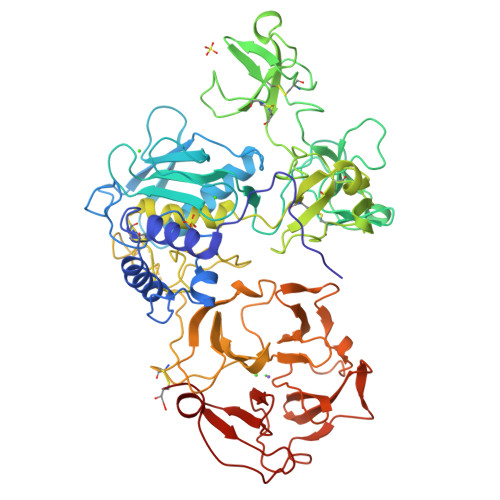
 Click to view 3D structure | 72 kDa type IV collagenase | P08253 | Humans | Predicted (SEA) | - Prediction Confidence Score
- 0.259
- Applicability Domain
- 0.278 Low confidence
- Statistical Significance
- 0.1203
- Supporting Reference Compounds
- 400
- E-value
- 936.682
|
 Click to view 3D structure | Muscarinic acetylcholine receptor M1 | P08482 | Rattus norvegicus | Predicted (SEA) | - Prediction Confidence Score
- 0.259
- Applicability Domain
- 0.273 Low confidence
- Statistical Significance
- 0.0268
- Supporting Reference Compounds
- 109
- E-value
- 208.325
|
| Click to view 3D structure | Muscarinic acetylcholine receptor M2 | P10980 | Rattus norvegicus | Predicted (SEA) | - Prediction Confidence Score
- 0.259
- Applicability Domain
- 0.273 Low confidence
- Statistical Significance
- 0.0161
- Supporting Reference Compounds
- 98
- E-value
- 125.337
|
| Click to view 3D structure | Epoxide hydrolase 1 | Q9D379 | Mus musculus | Predicted (SEA) | - Prediction Confidence Score
- 0.255
- Applicability Domain
- 0.316
- Statistical Significance
- 0.0044
- Supporting Reference Compounds
- 8
- E-value
- 34.3315
|
 Click to view 3D structure | Muscarinic acetylcholine receptor M1 | P11229 | Humans | Predicted (SEA) | - Prediction Confidence Score
- 0.254
- Applicability Domain
- 0.273 Low confidence
- Statistical Significance
- 0.1247
- Supporting Reference Compounds
- 385
- E-value
- 970.624
|
 Click to view 3D structure | Muscarinic acetylcholine receptor M2 | P08172 | Humans | Predicted (SEA) | - Prediction Confidence Score
- 0.252
- Applicability Domain
- 0.273 Low confidence
- Statistical Significance
- 0.132
- Supporting Reference Compounds
- 373
- E-value
- 1028.0
|
 Click to view 3D structure | Muscarinic acetylcholine receptor M4 | P08173 | Humans | Predicted (SEA) | - Prediction Confidence Score
- 0.252
- Applicability Domain
- 0.273 Low confidence
- Statistical Significance
- 0.1037
- Supporting Reference Compounds
- 297
- E-value
- 806.985
|
 Click to view 3D structure | Muscarinic acetylcholine receptor M3 | P20309 | Humans | Predicted (SEA) | - Prediction Confidence Score
- 0.247
- Applicability Domain
- 0.273 Low confidence
- Statistical Significance
- 0.1274
- Supporting Reference Compounds
- 310
- E-value
- 991.566
|
| Click to view 3D structure | Epoxide hydrolase 1 | P07099 | Humans | Predicted (SEA) | - Prediction Confidence Score
- 0.243
- Applicability Domain
- 0.316
- Statistical Significance
- 0.0184
- Supporting Reference Compounds
- 18
- E-value
- 143.009
|
| Click to view 3D structure | Muscarinic acetylcholine receptor M4 | P08485 | Rattus norvegicus | Predicted (SEA) | - Prediction Confidence Score
- 0.243
- Applicability Domain
- 0.256 Low confidence
- Statistical Significance
- 0.0092
- Supporting Reference Compounds
- 38
- E-value
- 71.4656
|
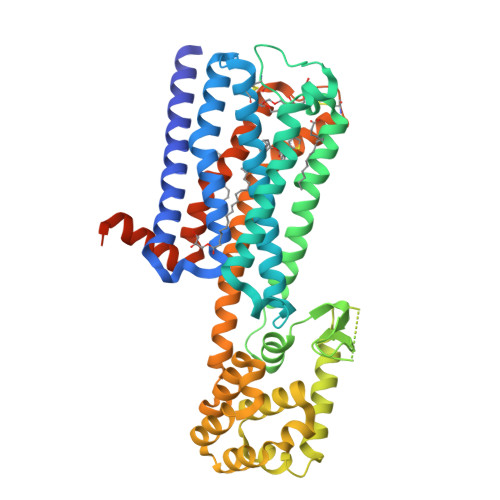 Click to view 3D structure | Muscarinic acetylcholine receptor M5 | P08912 | Humans | Predicted (SEA) | - Prediction Confidence Score
- 0.241
- Applicability Domain
- 0.273 Low confidence
- Statistical Significance
- 0.1451
- Supporting Reference Compounds
- 266
- E-value
- 1129.98
|
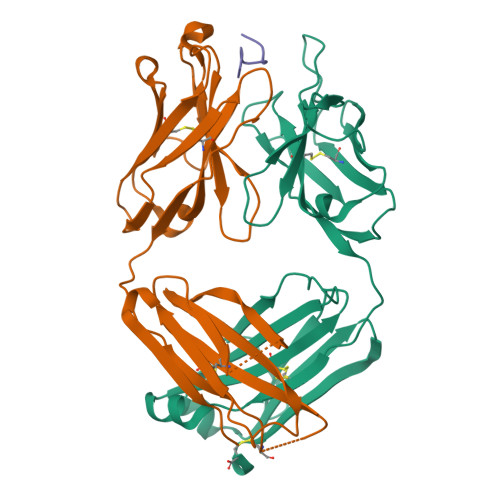 Click to view 3D structure | Carbonic anhydrase 9 | Q16790 | Humans | Predicted (SEA) | - Prediction Confidence Score
- 0.24
- Applicability Domain
- 0.273 Low confidence
- Statistical Significance
- 0.1777
- Supporting Reference Compounds
- 372
- E-value
- 1383.61
|
 Click to view 3D structure | Carbonic anhydrase 2 | P00918 | Humans | Predicted (SEA) | - Prediction Confidence Score
- 0.24
- Applicability Domain
- 0.273 Low confidence
- Statistical Significance
- 0.2196
- Supporting Reference Compounds
- 472
- E-value
- 1709.96
|
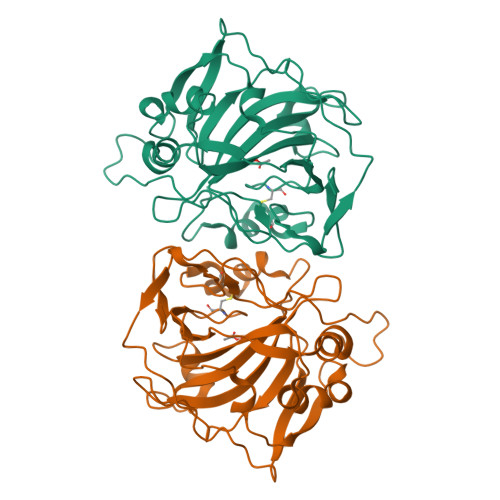 Click to view 3D structure | Carbonic anhydrase 12 | O43570 | Humans | Predicted (SEA) | - Prediction Confidence Score
- 0.24
- Applicability Domain
- 0.273 Low confidence
- Statistical Significance
- 0.1606
- Supporting Reference Compounds
- 332
- E-value
- 1250.41
|
 Click to view 3D structure | Carbonic anhydrase 1 | P00915 | Humans | Predicted (SEA) | - Prediction Confidence Score
- 0.24
- Applicability Domain
- 0.273 Low confidence
- Statistical Significance
- 0.1845
- Supporting Reference Compounds
- 407
- E-value
- 1436.4
|
| Click to view 3D structure | Muscarinic acetylcholine receptor M3 | Q8VH26 | Cavia porcellus | Predicted (SEA) | - Prediction Confidence Score
- 0.239
- Applicability Domain
- 0.265 Low confidence
- Statistical Significance
- 0.0133
- Supporting Reference Compounds
- 52
- E-value
- 103.773
|
 Click to view 3D structure | Muscarinic acetylcholine receptor M3 | P08483 | Rattus norvegicus | Predicted (SEA) | - Prediction Confidence Score
- 0.239
- Applicability Domain
- 0.256 Low confidence
- Statistical Significance
- 0.0192
- Supporting Reference Compounds
- 55
- E-value
- 149.782
|
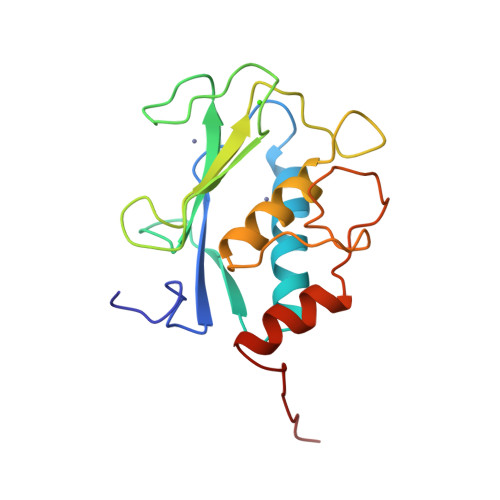 Click to view 3D structure | Interstitial collagenase | P03956 | Humans | Predicted (SEA) | - Prediction Confidence Score
- 0.234
- Applicability Domain
- 0.273 Low confidence
- Statistical Significance
- 0.1915
- Supporting Reference Compounds
- 258
- E-value
- 1490.66
|
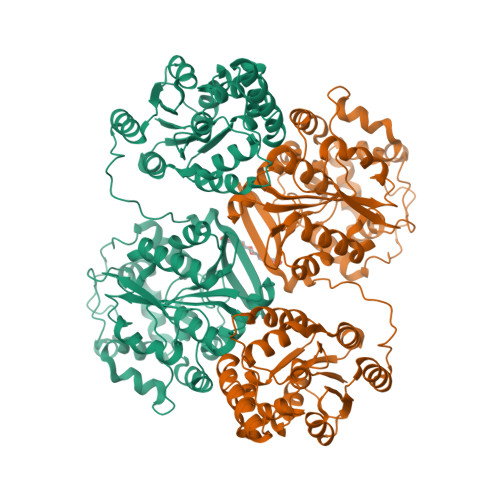 Click to view 3D structure | Bifunctional epoxide hydrolase 2 | P34913 | Humans | Predicted (SEA) | - Prediction Confidence Score
- 0.23
- Applicability Domain
- 0.25 Low confidence
- Statistical Significance
- 0.1623
- Supporting Reference Compounds
- 93
- E-value
- 1263.42
|
 Click to view 3D structure | Cell division protein FtsZ | P9WN95 | Mycobacterium tuberculosis (strain ATCC 25618 / H37Rv) | Predicted (SEA) | - Prediction Confidence Score
- 0.23
- Applicability Domain
- 0.23 Low confidence
- Statistical Significance
- 0.0031
- Supporting Reference Compounds
- 1
- E-value
- 23.8997
|
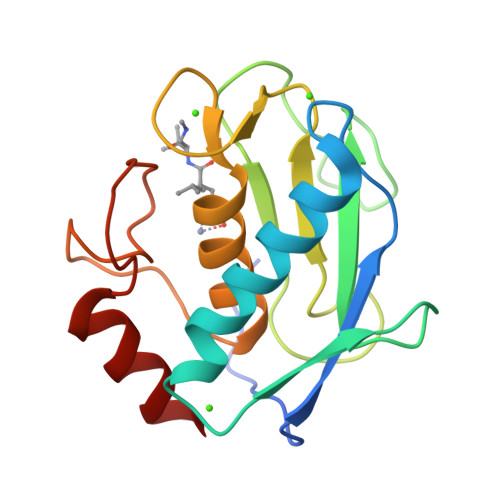 Click to view 3D structure | Matrix metalloproteinase-9 | P14780 | Humans | Predicted (SEA) | - Prediction Confidence Score
- 0.228
- Applicability Domain
- 0.278 Low confidence
- Statistical Significance
- 0.255
- Supporting Reference Compounds
- 292
- E-value
- 1984.84
|
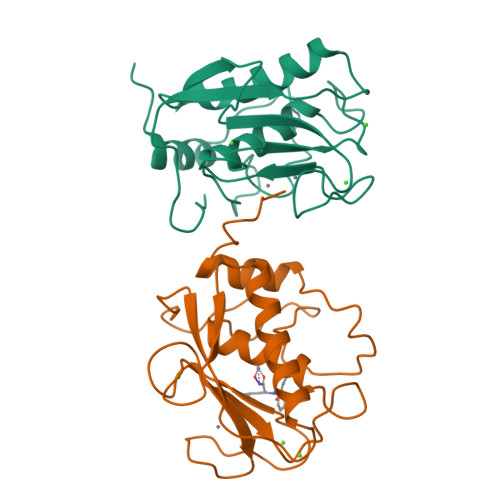 Click to view 3D structure | Stromelysin-1 | P08254 | Humans | Predicted (SEA) | - Prediction Confidence Score
- 0.227
- Applicability Domain
- 0.265 Low confidence
- Statistical Significance
- 0.203
- Supporting Reference Compounds
- 200
- E-value
- 1580.11
|
 Click to view 3D structure | 3',5'-cyclic-AMP phosphodiesterase 4D | Q08499 | Humans | Predicted (SEA) | - Prediction Confidence Score
- 0.221
- Applicability Domain
- 0.245 Low confidence
- Statistical Significance
- 0.2154
- Supporting Reference Compounds
- 170
- E-value
- 1676.56
|
| Click to view 3D structure | Phosphodiesterase 4A | O77823 | Sus scrofa | Predicted (SEA) | - Prediction Confidence Score
- 0.218
- Applicability Domain
- 0.231 Low confidence
- Statistical Significance
- 0.0275
- Supporting Reference Compounds
- 9
- E-value
- 214.085
|
| Click to view 3D structure | Carnitine palmitoyltransferase 1A | Q9MYX2 | Sus scrofa | Predicted (SEA) | - Prediction Confidence Score
- 0.218
- Applicability Domain
- 0.225 Low confidence
- Statistical Significance
- 0.0029
- Supporting Reference Compounds
- 2
- E-value
- 22.9655
|

