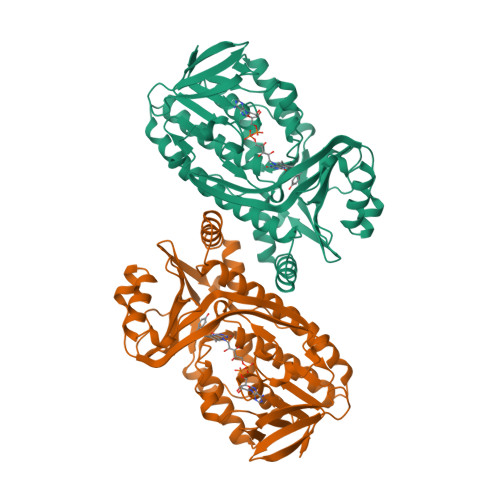
 Click to view 3D structure | p-hydroxybenzoate hydroxylase | P00438 | Pseudomonas fluorescens | Predicted (SEA) | - Prediction Confidence Score
- 0.364
- Applicability Domain
- 0.364
- Statistical Significance
- 7.50e-04
- Supporting Reference Compounds
- 1
- E-value
- 5.83869
|
 Click to view 3D structure | Hepatocyte nuclear factor 4-alpha | P22449 | Rattus norvegicus | Predicted (SEA) | - Prediction Confidence Score
- 0.357
- Applicability Domain
- 0.545
- Statistical Significance
- 1.10e-04
- Supporting Reference Compounds
- 2
- E-value
- 0.856341
|
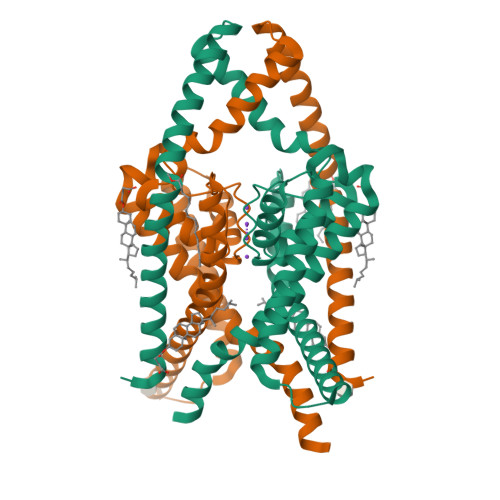 Click to view 3D structure | Potassium channel subfamily K member 3 | O14649 | Humans | Predicted (SEA) | - Prediction Confidence Score
- 0.344
- Applicability Domain
- 0.438
- Statistical Significance
- 0.0016
- Supporting Reference Compounds
- 15
- E-value
- 12.7673
|
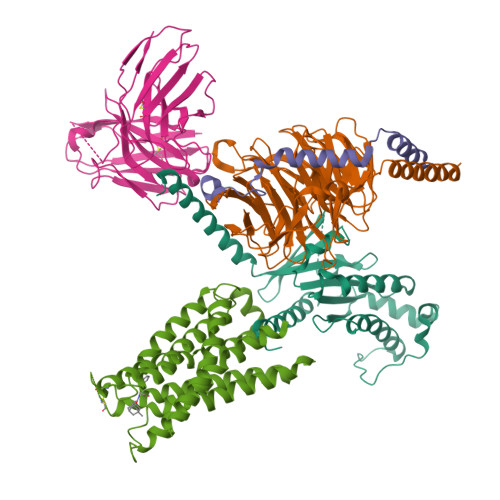 Click to view 3D structure | Mas-related G-protein coupled receptor member X4 | Q96LA9 | Humans | Predicted (SEA) | - Prediction Confidence Score
- 0.333
- Applicability Domain
- 0.432
- Statistical Significance
- 0.0012
- Supporting Reference Compounds
- 7
- E-value
- 9.73115
|
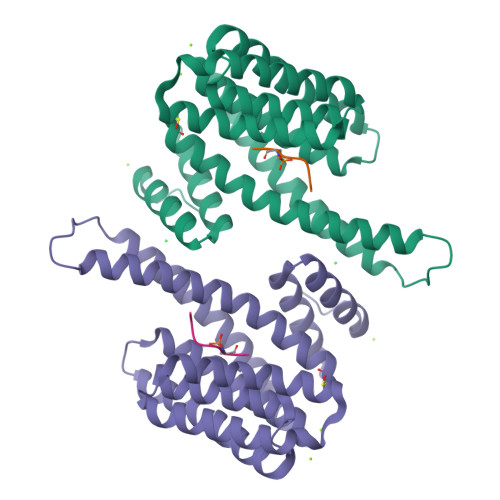 Click to view 3D structure | Potassium channel subfamily K member 9 | Q9NPC2 | Humans | Predicted (SEA) | - Prediction Confidence Score
- 0.332
- Applicability Domain
- 0.438
- Statistical Significance
- 0.0014
- Supporting Reference Compounds
- 10
- E-value
- 10.7432
|
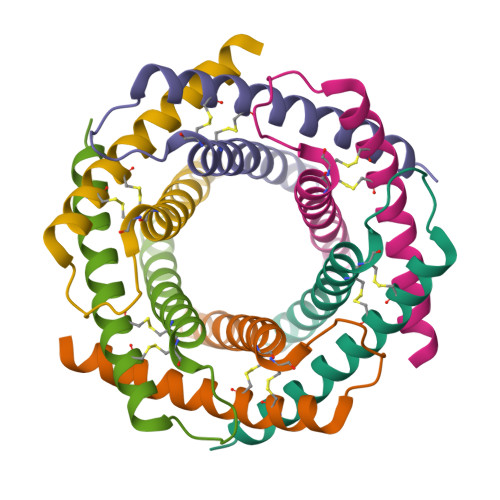 Click to view 3D structure | Mitochondrial import inner membrane translocase subunit TIM10 | P87108 | Saccharomyces cerevisiae S288c | Predicted (SEA) | - Prediction Confidence Score
- 0.33
- Applicability Domain
- 0.396
- Statistical Significance
- 4.60e-04
- Supporting Reference Compounds
- 64
- E-value
- 3.58106
|
 Click to view 3D structure | Retinoic acid receptor RXR-alpha | P19793 | Humans | Predicted (SEA) | - Prediction Confidence Score
- 0.33
- Applicability Domain
- 0.545
- Statistical Significance
- 0.0021
- Supporting Reference Compounds
- 82
- E-value
- 16.4262
|
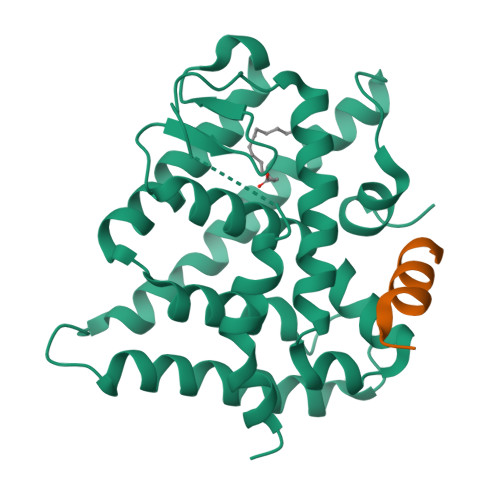 Click to view 3D structure | Hepatocyte nuclear factor 4-alpha | P41235 | Humans | Predicted (SEA) | - Prediction Confidence Score
- 0.329
- Applicability Domain
- 0.545
- Statistical Significance
- 2.80e-04
- Supporting Reference Compounds
- 37
- E-value
- 2.17978
|
 Click to view 3D structure | Heat shock factor protein 1 | P38532 | Mus musculus | Predicted (SEA) | - Prediction Confidence Score
- 0.329
- Applicability Domain
- 0.432
- Statistical Significance
- 0.0023
- Supporting Reference Compounds
- 166
- E-value
- 18.061
|
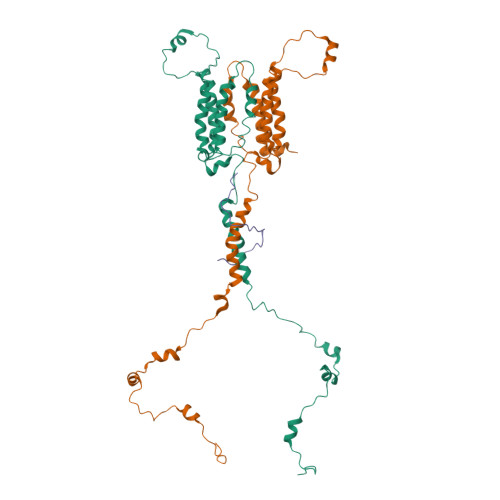 Click to view 3D structure | Mitochondrial import inner membrane translocase subunit TIM23 | P32897 | Saccharomyces cerevisiae S288c | Predicted (SEA) | - Prediction Confidence Score
- 0.326
- Applicability Domain
- 0.396
- Statistical Significance
- 0.0016
- Supporting Reference Compounds
- 75
- E-value
- 12.7673
|
 Click to view 3D structure | Epidermal growth factor receptor | P00533 | Humans | Predicted (SEA) | - Prediction Confidence Score
- 0.319
- Applicability Domain
- 0.35
- Statistical Significance
- 0.091
- Supporting Reference Compounds
- 1301
- E-value
- 708.817
|
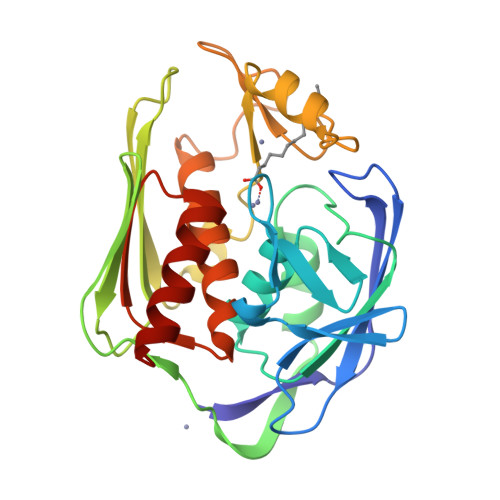 Click to view 3D structure | UDP-3-O-acyl-N-acetylglucosamine deacetylase | O67648 | Aquifex aeolicus (strain VF5) | Predicted (SEA) | - Prediction Confidence Score
- 0.318
- Applicability Domain
- 0.318
- Statistical Significance
- 0.0031
- Supporting Reference Compounds
- 1
- E-value
- 24.2111
|
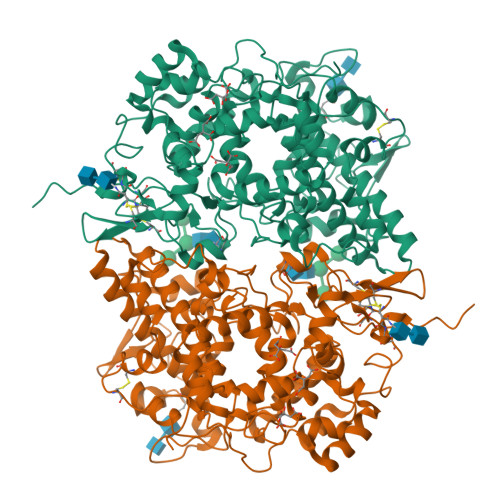 Click to view 3D structure | Prostaglandin G/H synthase 1 | P23219 | Humans | Predicted (SEA) | - Prediction Confidence Score
- 0.317
- Applicability Domain
- 0.35
- Statistical Significance
- 0.0067
- Supporting Reference Compounds
- 136
- E-value
- 52.159
|
 Click to view 3D structure | Induced myeloid leukemia cell differentiation protein Mcl-1 | Q07820 | Humans | Predicted (SEA) | - Prediction Confidence Score
- 0.316
- Applicability Domain
- 0.354
- Statistical Significance
- 0.0132
- Supporting Reference Compounds
- 343
- E-value
- 102.761
|
| Click to view 3D structure | Potassium channel subfamily K member 3 | O54912 | Rattus norvegicus | Predicted (SEA) | - Prediction Confidence Score
- 0.316
- Applicability Domain
- 0.438
- Statistical Significance
- 8.10e-04
- Supporting Reference Compounds
- 5
- E-value
- 6.30579
|
| Click to view 3D structure | DNA damage-inducible transcript 3 protein | P35639 | Mus musculus | Predicted (SEA) | - Prediction Confidence Score
- 0.309
- Applicability Domain
- 0.34
- Statistical Significance
- 0.005
- Supporting Reference Compounds
- 226
- E-value
- 39.0025
|
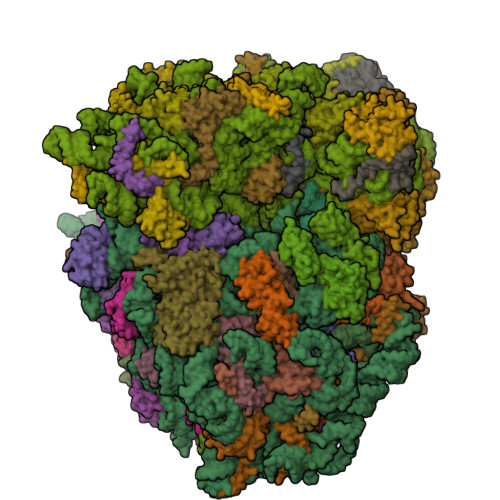 Click to view 3D structure | X-box-binding protein 1 | P17861 | Humans | Predicted (SEA) | - Prediction Confidence Score
- 0.309
- Applicability Domain
- 0.34
- Statistical Significance
- 0.005
- Supporting Reference Compounds
- 227
- E-value
- 39.0025
|
 Click to view 3D structure | Luciferin 4-monooxygenase | P08659 | Photinus pyralis | Predicted (SEA) | - Prediction Confidence Score
- 0.309
- Applicability Domain
- 0.333
- Statistical Significance
- 0.0074
- Supporting Reference Compounds
- 114
- E-value
- 57.4527
|
| Click to view 3D structure | Streptokinase A | P10520 | Streptococcus pyogenes serotype M1 | Predicted (SEA) | - Prediction Confidence Score
- 0.306
- Applicability Domain
- 0.333
- Statistical Significance
- 0.0175
- Supporting Reference Compounds
- 425
- E-value
- 136.548
|
| Click to view 3D structure | Complement factor D | P32038 | Rattus norvegicus | Predicted (SEA) | - Prediction Confidence Score
- 0.302
- Applicability Domain
- 0.302
- Statistical Significance
- 3.50e-04
- Supporting Reference Compounds
- 1
- E-value
- 2.72472
|
 Click to view 3D structure | Segment polarity protein dishevelled homolog DVL-1 | O14640 | Humans | Predicted (SEA) | - Prediction Confidence Score
- 0.302
- Applicability Domain
- 0.302
- Statistical Significance
- 1.80e-04
- Supporting Reference Compounds
- 1
- E-value
- 1.40129
|
 Click to view 3D structure | Prostaglandin G/H synthase 2 | P35354 | Humans | Predicted (SEA) | - Prediction Confidence Score
- 0.301
- Applicability Domain
- 0.35
- Statistical Significance
- 0.0156
- Supporting Reference Compounds
- 201
- E-value
- 121.834
|
 Click to view 3D structure | Prostaglandin G/H synthase 1 | P05979 | Ovis aries | Predicted (SEA) | - Prediction Confidence Score
- 0.3
- Applicability Domain
- 0.35
- Statistical Significance
- 0.0064
- Supporting Reference Compounds
- 106
- E-value
- 50.2127
|
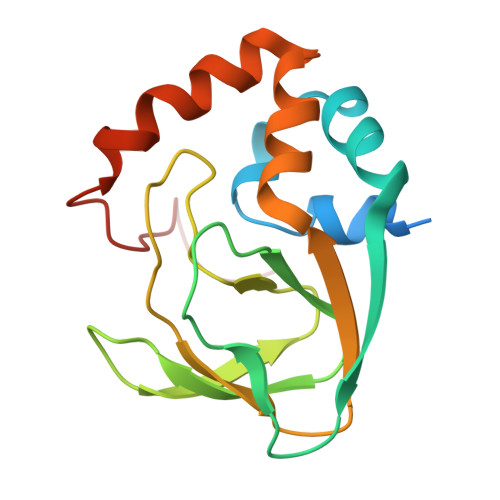 Click to view 3D structure | Potassium/sodium hyperpolarization-activated cyclic nucleotide-gated channel 2 | Q9UL51 | Humans | Predicted (SEA) | - Prediction Confidence Score
- 0.3
- Applicability Domain
- 0.3
- Statistical Significance
- 6.00e-04
- Supporting Reference Compounds
- 1
- E-value
- 4.67095
|
 Click to view 3D structure | Sigma non-opioid intracellular receptor 1 | Q99720 | Humans | Predicted (SEA) | - Prediction Confidence Score
- 0.299
- Applicability Domain
- 0.317
- Statistical Significance
- 0.0644
- Supporting Reference Compounds
- 562
- E-value
- 501.038
|

