 Click to view 3D structure | Beta-lactamase II | Q93T40 | Bacillus anthracis | Predicted (SEA) | - Prediction Confidence Score
- 0.442
- Applicability Domain
- 0.442
- Statistical Significance
- 1.00e-05
- Supporting Reference Compounds
- 1
- E-value
- 0.0778492
|
| Click to view 3D structure | 17-beta-hydroxysteroid dehydrogenase type 1 | Q9GME2 | Callithrix jacchus | Predicted (SEA) | - Prediction Confidence Score
- 0.356
- Applicability Domain
- 0.368
- Statistical Significance
- 1.20e-04
- Supporting Reference Compounds
- 2
- E-value
- 0.934191
|
 Click to view 3D structure | Amyloid-beta precursor protein | P05067 | Humans | Predicted (SEA) | - Prediction Confidence Score
- 0.334
- Applicability Domain
- 0.449
- Statistical Significance
- 0.0071
- Supporting Reference Compounds
- 109
- E-value
- 55.4286
|
 Click to view 3D structure | Sulfotransferase 1A1 | P50225 | Humans | Predicted (SEA) | - Prediction Confidence Score
- 0.326
- Applicability Domain
- 0.449
- Statistical Significance
- 4.00e-05
- Supporting Reference Compounds
- 5
- E-value
- 0.311397
|
 Click to view 3D structure | 17-beta-hydroxysteroid dehydrogenase type 1 | P14061 | Humans | Predicted (SEA) | - Prediction Confidence Score
- 0.305
- Applicability Domain
- 0.368
- Statistical Significance
- 0.0024
- Supporting Reference Compounds
- 42
- E-value
- 18.3724
|
| Click to view 3D structure | 17-beta-hydroxysteroid dehydrogenase type 2 | P37059 | Humans | Predicted (SEA) | - Prediction Confidence Score
- 0.295
- Applicability Domain
- 0.368
- Statistical Significance
- 0.003
- Supporting Reference Compounds
- 44
- E-value
- 23.2769
|
 Click to view 3D structure | Cytochrome P450 1A2 | P05177 | Humans | Predicted (SEA) | - Prediction Confidence Score
- 0.292
- Applicability Domain
- 0.368
- Statistical Significance
- 0.0909
- Supporting Reference Compounds
- 793
- E-value
- 707.883
|
 Click to view 3D structure | Carbonic anhydrase 2 | P00918 | Humans | Predicted (SEA) | - Prediction Confidence Score
- 0.285
- Applicability Domain
- 0.4
- Statistical Significance
- 0.0671
- Supporting Reference Compounds
- 472
- E-value
- 522.057
|
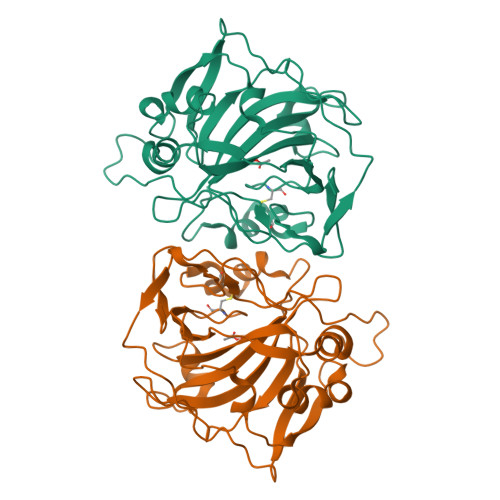 Click to view 3D structure | Carbonic anhydrase 12 | O43570 | Humans | Predicted (SEA) | - Prediction Confidence Score
- 0.28
- Applicability Domain
- 0.4
- Statistical Significance
- 0.0519
- Supporting Reference Compounds
- 332
- E-value
- 403.726
|
 Click to view 3D structure | Carbonic anhydrase 1 | P00915 | Humans | Predicted (SEA) | - Prediction Confidence Score
- 0.28
- Applicability Domain
- 0.4
- Statistical Significance
- 0.062
- Supporting Reference Compounds
- 407
- E-value
- 483.054
|
 Click to view 3D structure | Amine oxidase [flavin-containing] B | P27338 | Humans | Predicted (SEA) | - Prediction Confidence Score
- 0.276
- Applicability Domain
- 0.373
- Statistical Significance
- 0.0637
- Supporting Reference Compounds
- 315
- E-value
- 496.055
|
 Click to view 3D structure | Luciferin 4-monooxygenase | P08659 | Photinus pyralis | Predicted (SEA) | - Prediction Confidence Score
- 0.276
- Applicability Domain
- 0.34
- Statistical Significance
- 0.024
- Supporting Reference Compounds
- 114
- E-value
- 186.682
|
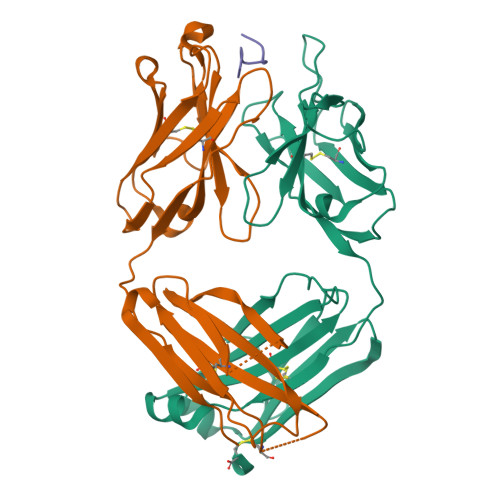 Click to view 3D structure | Carbonic anhydrase 9 | Q16790 | Humans | Predicted (SEA) | - Prediction Confidence Score
- 0.273
- Applicability Domain
- 0.4
- Statistical Significance
- 0.0688
- Supporting Reference Compounds
- 372
- E-value
- 535.291
|
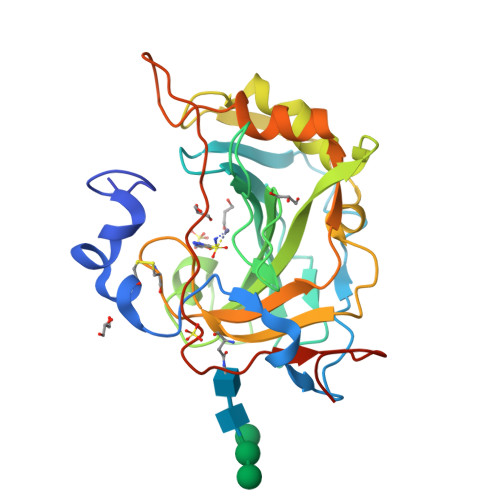 Click to view 3D structure | Carbonic anhydrase 14 | Q9ULX7 | Humans | Predicted (SEA) | - Prediction Confidence Score
- 0.273
- Applicability Domain
- 0.4
- Statistical Significance
- 0.0312
- Supporting Reference Compounds
- 172
- E-value
- 242.967
|
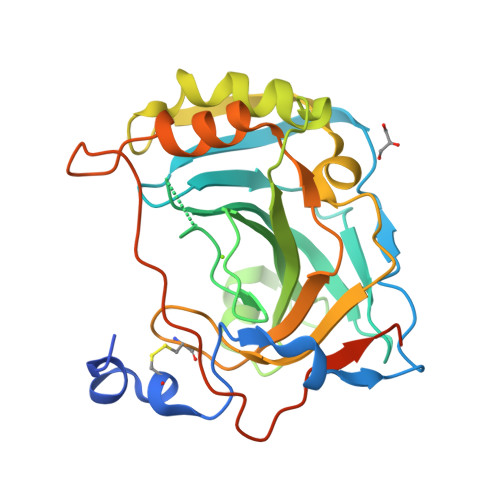 Click to view 3D structure | Carbonic anhydrase 6 | P23280 | Humans | Predicted (SEA) | - Prediction Confidence Score
- 0.271
- Applicability Domain
- 0.4
- Statistical Significance
- 0.0238
- Supporting Reference Compounds
- 151
- E-value
- 185.437
|
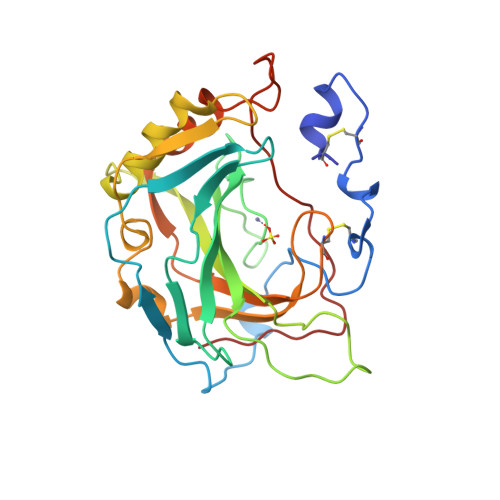 Click to view 3D structure | Carbonic anhydrase 4 | P22748 | Humans | Predicted (SEA) | - Prediction Confidence Score
- 0.271
- Applicability Domain
- 0.4
- Statistical Significance
- 0.029
- Supporting Reference Compounds
- 193
- E-value
- 225.529
|
| Click to view 3D structure | Carbonic anhydrase 5B, mitochondrial | Q9Y2D0 | Humans | Predicted (SEA) | - Prediction Confidence Score
- 0.263
- Applicability Domain
- 0.4
- Statistical Significance
- 0.0308
- Supporting Reference Compounds
- 157
- E-value
- 240.165
|
| Click to view 3D structure | Carbonic anhydrase 5A, mitochondrial | P35218 | Humans | Predicted (SEA) | - Prediction Confidence Score
- 0.263
- Applicability Domain
- 0.4
- Statistical Significance
- 0.0425
- Supporting Reference Compounds
- 165
- E-value
- 330.781
|
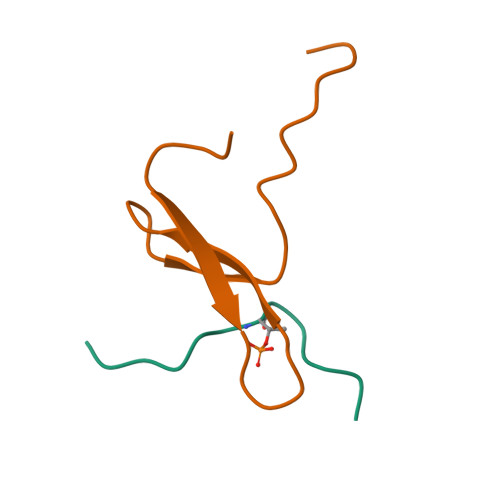 Click to view 3D structure | Microtubule-associated protein tau | P10636 | Humans | Predicted (SEA) | - Prediction Confidence Score
- 0.261
- Applicability Domain
- 0.423
- Statistical Significance
- 0.0044
- Supporting Reference Compounds
- 26
- E-value
- 34.1758
|
| Click to view 3D structure | Carbonic anhydrase 15 | Q99N23 | Mus musculus | Predicted (SEA) | - Prediction Confidence Score
- 0.259
- Applicability Domain
- 0.4
- Statistical Significance
- 0.0198
- Supporting Reference Compounds
- 78
- E-value
- 154.453
|
| Click to view 3D structure | Amine oxidase [flavin-containing] A | Q6Q2J0 | Sus scrofa | Predicted (SEA) | - Prediction Confidence Score
- 0.254
- Applicability Domain
- 0.254 Low confidence
- Statistical Significance
- 0.0047
- Supporting Reference Compounds
- 1
- E-value
- 36.667
|
 Click to view 3D structure | Voltage-gated inwardly rectifying potassium channel KCNH2 | Q12809 | Humans | Predicted (SEA) | - Prediction Confidence Score
- 0.247
- Applicability Domain
- 0.28 Low confidence
- Statistical Significance
- 0.5808
- Supporting Reference Compounds
- 1498
- E-value
- 4521.48
|
 Click to view 3D structure | Dual specificity tyrosine-phosphorylation-regulated kinase 1A | Q13627 | Humans | Predicted (SEA) | - Prediction Confidence Score
- 0.247
- Applicability Domain
- 0.281 Low confidence
- Statistical Significance
- 0.3757
- Supporting Reference Compounds
- 906
- E-value
- 2924.48
|
 Click to view 3D structure | Cytochrome P450 3A4 | P08684 | Humans | Predicted (SEA) | - Prediction Confidence Score
- 0.247
- Applicability Domain
- 0.262 Low confidence
- Statistical Significance
- 0.5964
- Supporting Reference Compounds
- 1538
- E-value
- 4642.62
|
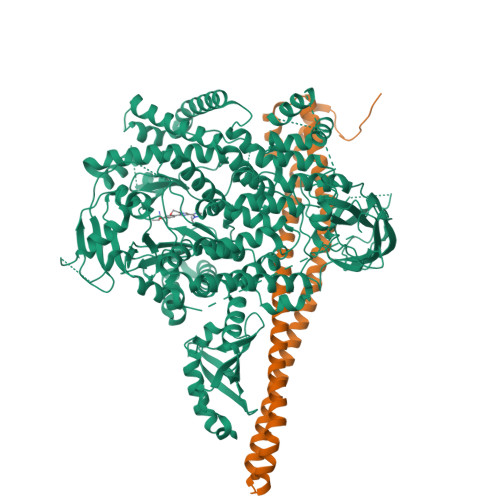 Click to view 3D structure | Phosphatidylinositol 4,5-bisphosphate 3-kinase catalytic subunit delta isoform | O00329 | Humans | Predicted (SEA) | - Prediction Confidence Score
- 0.244
- Applicability Domain
- 0.333
- Statistical Significance
- 0.2036
- Supporting Reference Compounds
- 459
- E-value
- 1584.85
|

