Methylphenylvinylsilane (CED0085115)

Record Information
Version1.0
Creation Date2026-04-05 00:33:35 UTC
Update Date2026-04-05 00:33:35 UTC
SynCED IDCED0085115
Secondary Accession Numbers
  • CHEM086802
Identification
Common NameMethylphenylvinylsilane
ClassSmall Molecule
Description
Methylphenylvinylsilane is an organosilicon compound with the chemical formula C9H12Si and an average molecular weight of 148.28 g/mol. Methylphenylvinylsilane belongs to the organosilicon compounds, a subclass of organometalloid compounds within the organic compounds. This substance is identified as being found in or released from seven recorded sources. Within the category of electrical and electronic equipment, it is associated with antennas, contacts, electric hearing aids, emergency protective devices, and power cables. Additionally, it is found in household cleaning and consumer products, specifically in other smoking requisites and non-electric simulated smoking devices.
Contaminant TypeNot Available
Chemical Structure
SynonymsNot Available
Chemical FormulaC9H12Si
Average Molecular Mass148.280 g/mol
Monoisotopic Mass148.071 g/mol
CAS Registry NumberNot Available
IUPAC NameNot Available
Traditional NameNot Available
SMILESC[SiH](C=C)C1=CC=CC=C1
InChI IdentifierInChI=1/C9H12Si/c1-3-10(2)9-7-5-4-6-8-9/h3-8,10H,1H2,2H3
InChI KeyJNRFDZNGKYQSKV-UHFFFAOYSA-N
Chemical Taxonomy
ClassificationNot classified
Biological Properties
StatusDetected and Not Quantified
OriginNot Available
Cellular LocationsNot Available
Biofluid LocationsNot Available
Tissue LocationsNot Available
ApplicationsNot Available
Biological RolesNot Available
Chemical RolesNot Available
Organoleptic EffectsNot Available
Physical Properties
StateNot Available
AppearanceNot Available
Experimental Properties
PropertyValue
Melting PointNot Available
Boiling PointNot Available
SolubilityNot Available
Predicted PropertiesNot Available
Spectra
SpectraNot Available
Toxicity Profile
Toxicity Values
Toxicity ValueOrganismDose DescriptorRoute of ExposurePredicted or ExperimentalToxicity RatingReference
2529.0 Log mg/kg [1400:4500]RatLD50oralpredictedNot AvailableNot Available
Toxicity / Toxin ClassNot Available
Mechanism of ToxicityNot Available
Carcinogenicity (IARC Classification)Not Available
Minimum Risk LevelNot Available
SymptomsNot Available
TreatmentNot Available
Health Effects
Health EffectRelationshipDirectionDescriptionReference
Exposure Sources
Source IDSourceSectorReference
CEDs000233Brushes?Brushes used in personal care and cosmetics can be a source of synthetic chemical contamination due to the materials and coatings used in their manufacturing.Personal care & cosmeticsPubChem
CEDs000506Antennas?Antennas, commonly used in communication technologies, can be a source of synthetic chemical contamination through the materials and coatings used in their construction.Electrical & Electronic EquipmentPubChem
CEDs000511Conductors Or Conductive Bodies Characterised By The Conductive Materials?Conductors, or conductive bodies, are materials that allow the flow of electrical current, typically made from metals such as copper, aluminum, or silver.Electrical & Electronic EquipmentPubChem
CEDs000512Contacts?Contacts in electrical and electronic equipment are components that facilitate the flow of electricity between circuits.Electrical & Electronic EquipmentPubChem
CEDs000516Electric Hearing Aids?Electric hearing aids are small electronic devices designed to amplify sound for individuals with hearing loss.Electrical & Electronic EquipmentPubChem
CEDs000517Electric Switches?Electric switches, integral components in numerous devices, can be a source of synthetic chemical contamination due to the materials and manufacturing processes involved in their production.Electrical & Electronic EquipmentPubChem
CEDs000518Electrically Stimulated Smoking Devices?Electrically stimulated smoking devices, commonly known as e-cigarettes or vape pens, utilize electrical components to heat a liquid solution, often containing nicotine, flavorings, and other additives, to produce an aerosol for inhalation.Electrical & Electronic EquipmentPubChem
CEDs000519Electrodes?Electrodes, used in various electrical and electronic applications, can be a source of synthetic chemical contamination due to the materials from which they are constructed and the processes involved in their manufacturing.Electrical & Electronic EquipmentPubChem
CEDs000520Emergency Protective Devices?Emergency protective devices, such as circuit breakers and surge protectors, are essential components in electrical systems designed to prevent damage from overcurrent and surges.Electrical & Electronic EquipmentPubChem
CEDs000521Fixed Capacitors And Their Manufacture?Fixed capacitors are passive electronic components used to store and release electrical energy, playing a critical role in various circuits.Electrical & Electronic EquipmentPubChem
CEDs000529Power Cables?Power cables are used to transmit electrical energy and are typically composed of conductive materials, insulation, and protective coatings.Electrical & Electronic EquipmentPubChem
CEDs000556Cigar Cigarettes?Cigar cigarettes are a source of synthetic chemical contamination due to the combustion of various tobacco blends and additives.Household cleaning & consumer productsPubChem
CEDs000559Non Electric Simulated Smoking Devices?Non-electric simulated smoking devices, often designed to mimic the experience of smoking without combustion, can be sources of synthetic chemical contamination due to the materials and chemicals used in their construction and operation.Household cleaning & consumer productsPubChem
CEDs000560Other Smoking Requisites?Other smoking requisites, including items such as lighters, matches, and rolling papers, can introduce synthetic chemical contamination through various components and additives.Household cleaning & consumer productsPubChem
CEDs000632Apparel?Apparel production often involves the use of various synthetic chemicals, including dyes, finishing agents, and preservatives.Textiles, leather & furnishingsPubChem
CEDs000642Footwear?Footwear production often involves the use of various synthetic chemicals, such as adhesives, dyes, and treatments, which can contribute to environmental contamination.Textiles, leather & furnishingsPubChem
CEDs000650Purses Luggage Hand Bags?Purses, luggage, and handbags are often manufactured using synthetic materials such as polyvinyl chloride (PVC), polyurethane, and various types of nylon.Textiles, leather & furnishingsPubChem
CEDs000685Ceramics?Ceramics can be a source of synthetic chemical contamination through various additives and processing agents used in their production.Building & ConstructionPubChem
CEDs000686Clay Wares?Clay wares are ceramic products made from natural clay, often utilized in various construction applications such as tiles, bricks, and sanitary ware.Building & ConstructionPubChem
CEDs000688Glass Coatings?Glass coatings are synthetic chemical formulations applied to glass surfaces to enhance properties such as durability, UV resistance, and aesthetic appeal.Building & ConstructionPubChem
CEDs000696Nanotechnology?Nanotechnology involves the manipulation of materials at the molecular or atomic level, typically within the range of 1 to 100 nanometers.Industrial manufacturing & chemical processingPubChem
CEDs000698Jewellery?Jewellery production often involves the use of various synthetic chemicals during the extraction and processing of metals.Mining & metal processingPubChem
CEDs000727Printing Machines Or Presses?Printing machines or presses commonly utilize synthetic chemicals such as inks, solvents, and cleaning agents.Paper, pulp & fiber productsPubChem
CEDs000734Coating Compositions?Coating compositions, which include paints, sealants, and varnishes, are formulated with a variety of synthetic chemicals such as solvents, resins, pigments, and additives.Building & ConstructionPubChem
CEDs000739Inks?Inks are complex mixtures composed of pigments or dyes, solvents, resins, and additives used primarily for printing and writing applications.Paper, pulp & fiber productsPubChem
CEDs000740Paper?Paper production involves the processing of wood fibers and the use of various chemicals, which can lead to synthetic chemical contamination.Paper, pulp & fiber productsPubChem
Pathways
0 pathwaysPathway Source: PathBank

No pathways found

No metabolic pathways have been associated with this synthetic chemical

Targets
StructureProteinUniProt IDOrganismRelationshipDetails
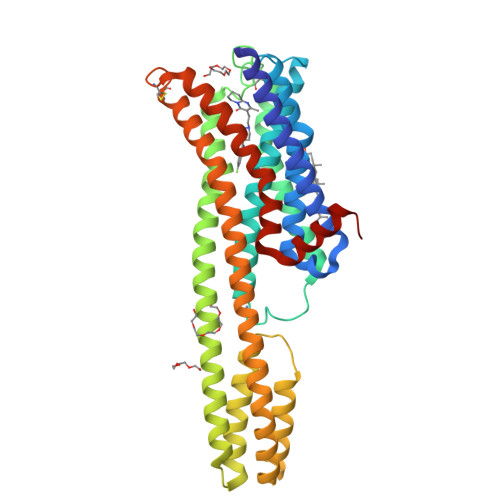
Transient receptor potential cation channel subfamily V member 1 structureClick to view 3D structureTransient receptor potential cation channel subfamily V member 1Q8NER1HumansPredicted (SEA)
Prediction Confidence Score
0.208
Applicability Domain
0.235 Low confidence
Statistical Significance
0.2871
Supporting Reference Compounds
104
E-value
2235.44
Indoleamine 2,3-dioxygenase 1 structureClick to view 3D structureIndoleamine 2,3-dioxygenase 1P14902HumansPredicted (SEA)
Prediction Confidence Score
0.208
Applicability Domain
0.269 Low confidence
Statistical Significance
0.1807
Supporting Reference Compounds
108
E-value
1406.81
Click to view 3D structureSodium-dependent serotonin transporterP31652Rattus norvegicusPredicted (SEA)
Prediction Confidence Score
0.207
Applicability Domain
0.229 Low confidence
Statistical Significance
0.3902
Supporting Reference Compounds
297
E-value
3037.6
Sortase A structureClick to view 3D structureSortase AQ8CM62Streptococcus mutansPredicted (SEA)
Prediction Confidence Score
0.206
Applicability Domain
0.206 Low confidence
Statistical Significance
0.0125
Supporting Reference Compounds
1
E-value
97.6229
Polyunsaturated fatty acid lipoxygenase ALOX15 structureClick to view 3D structurePolyunsaturated fatty acid lipoxygenase ALOX15P12530Oryctolagus cuniculusPredicted (SEA)
Prediction Confidence Score
0.205
Applicability Domain
0.231 Low confidence
Statistical Significance
0.0448
Supporting Reference Compounds
47
E-value
348.531
Sodium-dependent noradrenaline transporter structureClick to view 3D structureSodium-dependent noradrenaline transporterP23975HumansPredicted (SEA)
Prediction Confidence Score
0.204
Applicability Domain
0.231 Low confidence
Statistical Significance
0.6438
Supporting Reference Compounds
451
E-value
5011.62
5-hydroxytryptamine receptor 2B structureClick to view 3D structure5-hydroxytryptamine receptor 2BP41595HumansPredicted (SEA)
Prediction Confidence Score
0.204
Applicability Domain
0.231 Low confidence
Statistical Significance
0.7681
Supporting Reference Compounds
686
E-value
5979.83
Nicotinate phosphoribosyltransferase structureClick to view 3D structureNicotinate phosphoribosyltransferaseQ6XQN6HumansPredicted (SEA)
Prediction Confidence Score
0.203
Applicability Domain
0.269 Low confidence
Statistical Significance
0.0291
Supporting Reference Compounds
12
E-value
226.463
Transient receptor potential cation channel subfamily A member 1 structureClick to view 3D structureTransient receptor potential cation channel subfamily A member 1O75762HumansPredicted (SEA)
Prediction Confidence Score
0.201
Applicability Domain
0.233 Low confidence
Statistical Significance
0.1715
Supporting Reference Compounds
70
E-value
1335.5
Amine oxidase [flavin-containing] B structureClick to view 3D structureAmine oxidase [flavin-containing] BP27338HumansPredicted (SEA)
Prediction Confidence Score
0.2
Applicability Domain
0.212 Low confidence
Statistical Significance
0.5289
Supporting Reference Compounds
315
E-value
4117.76
Click to view 3D structureLignostilbene alpha, beta-dioxygenaseO87171Sphingomonas paucimobilisPredicted (SEA)
Prediction Confidence Score
0.229
Applicability Domain
0.229 Low confidence
Statistical Significance
0.0021
Supporting Reference Compounds
1
E-value
16.4262
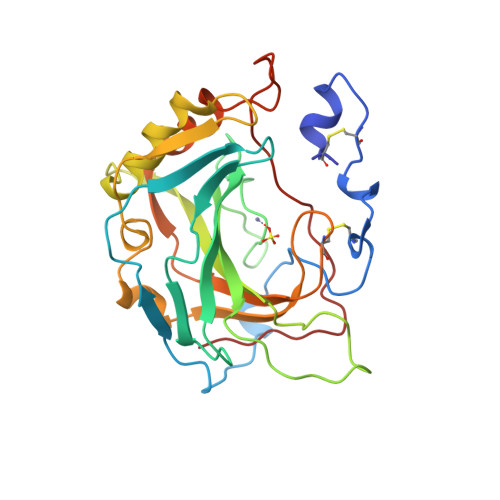
Carbonic anhydrase 2 structureClick to view 3D structureCarbonic anhydrase 2P00918HumansPredicted (SEA)
Prediction Confidence Score
0.225
Applicability Domain
0.25 Low confidence
Statistical Significance
0.3315
Supporting Reference Compounds
472
E-value
2580.62
Click to view 3D structureSodium-dependent dopamine transporterP23977Rattus norvegicusPredicted (SEA)
Prediction Confidence Score
0.224
Applicability Domain
0.229 Low confidence
Statistical Significance
0.1512
Supporting Reference Compounds
203
E-value
1176.92
Click to view 3D structureAldehyde dehydrogenase 1A1P51647Rattus norvegicusPredicted (SEA)
Prediction Confidence Score
0.222
Applicability Domain
0.222 Low confidence
Statistical Significance
7.30e-04
Supporting Reference Compounds
1
E-value
5.68299
Cytochrome P450 2A6 structureClick to view 3D structureCytochrome P450 2A6P11509HumansPredicted (SEA)
Prediction Confidence Score
0.219
Applicability Domain
0.269 Low confidence
Statistical Significance
0.0261
Supporting Reference Compounds
68
E-value
203.031
Carbonic anhydrase 12 structureClick to view 3D structureCarbonic anhydrase 12O43570HumansPredicted (SEA)
Prediction Confidence Score
0.219
Applicability Domain
0.25 Low confidence
Statistical Significance
0.3017
Supporting Reference Compounds
332
E-value
2349.1
Click to view 3D structureCytochrome P450 2A5P20852Mus musculusPredicted (SEA)
Prediction Confidence Score
0.218
Applicability Domain
0.269 Low confidence
Statistical Significance
0.0048
Supporting Reference Compounds
11
E-value
37.5233
Click to view 3D structureTransient receptor potential cation channel subfamily A member 1Q6RI86Rattus norvegicusPredicted (SEA)
Prediction Confidence Score
0.216
Applicability Domain
0.235 Low confidence
Statistical Significance
0.0539
Supporting Reference Compounds
56
E-value
419.374
Trace amine-associated receptor 1 structureClick to view 3D structureTrace amine-associated receptor 1Q96RJ0HumansPredicted (SEA)
Prediction Confidence Score
0.216
Applicability Domain
0.226 Low confidence
Statistical Significance
0.1125
Supporting Reference Compounds
63
E-value
875.648
CXXC-type zinc finger protein 5 structureClick to view 3D structureCXXC-type zinc finger protein 5Q7LFL8HumansPredicted (SEA)
Prediction Confidence Score
0.214
Applicability Domain
0.214 Low confidence
Statistical Significance
0.0091
Supporting Reference Compounds
1
E-value
70.8428
Carbonic anhydrase 9 structureClick to view 3D structureCarbonic anhydrase 9Q16790HumansPredicted (SEA)
Prediction Confidence Score
0.214
Applicability Domain
0.25 Low confidence
Statistical Significance
0.369
Supporting Reference Compounds
372
E-value
2872.32
5-hydroxytryptamine receptor 2A structureClick to view 3D structure5-hydroxytryptamine receptor 2AP28223HumansPredicted (SEA)
Prediction Confidence Score
0.213
Applicability Domain
0.229 Low confidence
Statistical Significance
0.6969
Supporting Reference Compounds
955
E-value
5425.16
Carbonic anhydrase 4 structureClick to view 3D structureCarbonic anhydrase 4P22748HumansPredicted (SEA)
Prediction Confidence Score
0.212
Applicability Domain
0.25 Low confidence
Statistical Significance
0.2291
Supporting Reference Compounds
193
E-value
1783.29
Carbonic anhydrase 1 structureClick to view 3D structureCarbonic anhydrase 1P00915HumansPredicted (SEA)
Prediction Confidence Score
0.211
Applicability Domain
0.222 Low confidence
Statistical Significance
0.4106
Supporting Reference Compounds
407
E-value
3196.18
Metabotropic glutamate receptor 5 structureClick to view 3D structureMetabotropic glutamate receptor 5P41594HumansPredicted (SEA)
Prediction Confidence Score
0.21
Applicability Domain
0.269 Low confidence
Statistical Significance
0.1804
Supporting Reference Compounds
89
E-value
1404.56
Concentrations
Not Available
External Links
IdentifiersNot Available
References
Synthesis ReferenceNot Available
MSDSNot Available
General ReferencesNot Available