Trimethyl-3-(trimethoxysilyl)propylammonium chloride (CED0066885)

Record Information
Version1.0
Creation Date2026-04-05 02:05:34 UTC
Update Date2026-08-25 16:10:02 UTC
SynCED IDCED0066885
Secondary Accession Numbers
  • CHEM089258
Identification
Common NameTrimethyl-3-(trimethoxysilyl)propylammonium chloride
ClassSmall Molecule
Description
Trimethyl-3-(trimethoxysilyl)propylammonium chloride (C9H24NO3Si) is a chemical compound with an average molecular weight of 257.83 g/mol. Trimethyl-3-(trimethoxysilyl)propylammonium chloride belongs to the organosilicon compounds, a subclass of organometalloid compounds within the organic compounds. In industrial applications, this compound serves as a wetting agent for non-aqueous environments and acts as an adhesion/cohesion promoter. It has been recorded as being released from or found in electrical and electronic equipment, specifically within adjustable resistors.
Contaminant TypeNot Available
Chemical Structure
SynonymsNot Available
Chemical FormulaC9H24NO3Si
Average Molecular Mass257.830 g/mol
Monoisotopic Mass222.153 g/mol
CAS Registry Number35141-36-7
IUPAC NameNot Available
Traditional NameNot Available
SMILES[Cl-].CO[Si](CCC[N+](C)(C)C)(OC)OC
InChI IdentifierInChI=1/C9H24NO3Si.ClH/c1-10(2,3)8-7-9-14(11-4,12-5)13-6;/h7-9H2,1-6H3;1H/q+1;/p-1
InChI KeyFYZFRYWTMMVDLR-UHFFFAOYSA-M
Chemical Taxonomy
ClassificationNot classified
Biological Properties
StatusDetected and Not Quantified
OriginNot Available
Cellular LocationsNot Available
Biofluid LocationsNot Available
Tissue LocationsNot Available
ApplicationsNot Available
Biological RolesNot Available
Chemical RolesNot Available
Organoleptic EffectsNot Available
Physical Properties
StateNot Available
AppearanceNot Available
Experimental Properties
PropertyValue
Melting PointNot Available
Boiling PointNot Available
SolubilityNot Available
Predicted PropertiesNot Available
Spectra
SpectraNot Available
Toxicity Profile
Toxicity Values
Toxicity ValueOrganismDose DescriptorRoute of ExposurePredicted or ExperimentalToxicity RatingReference
1383.0 Log mg/kg [780:2500]RatLD50oralpredictedNot AvailableNot Available
Toxicity / Toxin ClassNot Available
Mechanism of ToxicityNot Available
Carcinogenicity (IARC Classification)Not Available
Minimum Risk LevelNot Available
SymptomsNot Available
TreatmentNot Available
Health Effects
Health EffectRelationshipDirectionDescriptionReference
Exposure Sources
Source IDSourceSectorReference
CEDs000181Ballast water?Ballast water, taken on by ships to maintain stability and balance, often contains a diverse array of microorganisms, including bacteria, viruses, and plankton.Marine, shipping & aquaculturePubChem
CEDs000182Bilge water?Bilge water is a byproduct generated from the accumulation of water in the lowest part of a ship's hull, which may include a mixture of seawater, oil, fuel residues, and various contaminants.Marine, shipping & aquaculturePubChem
CEDs000504Adjustable Resistors?Adjustable resistors, commonly used in various electronic devices, can contribute to synthetic chemical contamination through the materials and substances used in their manufacturing and disposal.Electrical & Electronic EquipmentPubChem
CEDs000511Conductors Or Conductive Bodies Characterised By The Conductive Materials?Conductors, or conductive bodies, are materials that allow the flow of electrical current, typically made from metals such as copper, aluminum, or silver.Electrical & Electronic EquipmentPubChem
CEDs000519Electrodes?Electrodes, used in various electrical and electronic applications, can be a source of synthetic chemical contamination due to the materials from which they are constructed and the processes involved in their manufacturing.Electrical & Electronic EquipmentPubChem
CEDs000524Hybrid Capacitors?Hybrid capacitors are energy storage devices that combine the properties of electrolytic and supercapacitors, utilizing a combination of electrochemical principles to achieve higher energy density and power density.Electrical & Electronic EquipmentPubChem
CEDs000545Food Preservation?Food preservation often involves the use of synthetic chemicals, such as preservatives, flavor enhancers, and color additives, to extend shelf life and enhance the sensory qualities of food products.Food, food processing & cookwarePubChem
CEDs000600Herbicides And Algicides?Herbicides and algicides are synthetic chemicals primarily used to control unwanted plants and algae in various environments.Agriculture & land managementPubChem
CEDs000611Anti Perspirants Or Body Deoderants?Antiperspirants and body deodorants commonly contain synthetic chemicals such as aluminum compounds, parabens, and synthetic fragrances.Personal care & cosmeticsPubChem
CEDs000618Lip Makeup Products?Lip makeup products, such as lipsticks, lip glosses, and lip liners, often contain a variety of synthetic chemicals, including pigments, preservatives, and emollients.Personal care & cosmeticsPubChem
CEDs000632Apparel?Apparel production often involves the use of various synthetic chemicals, including dyes, finishing agents, and preservatives.Textiles, leather & furnishingsPubChem
CEDs000662Yarns Or Threads?Yarns or threads used in textiles can be a source of synthetic chemical contamination due to the production processes and treatments they undergo.Textiles, leather & furnishingsPubChem
CEDs000678Nitrogenous Fertilisers?Nitrogenous fertilizers are synthetic chemical compounds primarily used to enhance plant growth by supplying essential nitrogen, a crucial nutrient for photosynthesis and protein synthesis.Agriculture & land managementPubChem
CEDs000685Ceramics?Ceramics can be a source of synthetic chemical contamination through various additives and processing agents used in their production.Building & ConstructionPubChem
CEDs000686Clay Wares?Clay wares are ceramic products made from natural clay, often utilized in various construction applications such as tiles, bricks, and sanitary ware.Building & ConstructionPubChem
CEDs000688Glass Coatings?Glass coatings are synthetic chemical formulations applied to glass surfaces to enhance properties such as durability, UV resistance, and aesthetic appeal.Building & ConstructionPubChem
CEDs000696Nanotechnology?Nanotechnology involves the manipulation of materials at the molecular or atomic level, typically within the range of 1 to 100 nanometers.Industrial manufacturing & chemical processingPubChem
CEDs000734Coating Compositions?Coating compositions, which include paints, sealants, and varnishes, are formulated with a variety of synthetic chemicals such as solvents, resins, pigments, and additives.Building & ConstructionPubChem
CEDs000739Inks?Inks are complex mixtures composed of pigments or dyes, solvents, resins, and additives used primarily for printing and writing applications.Paper, pulp & fiber productsPubChem
CEDs000740Paper?Paper production involves the processing of wood fibers and the use of various chemicals, which can lead to synthetic chemical contamination.Paper, pulp & fiber productsPubChem
CEDs000744Water, Wastewater, & Sewage Treatment?Water, wastewater, and sewage treatment processes are critical for managing and mitigating pollutants in water systems.Wastewater, sanitation & biosolidsPubChem
Pathways
0 pathwaysPathway Source: PathBank

No pathways found

No metabolic pathways have been associated with this synthetic chemical

Targets
StructureProteinUniProt IDOrganismRelationshipDetails
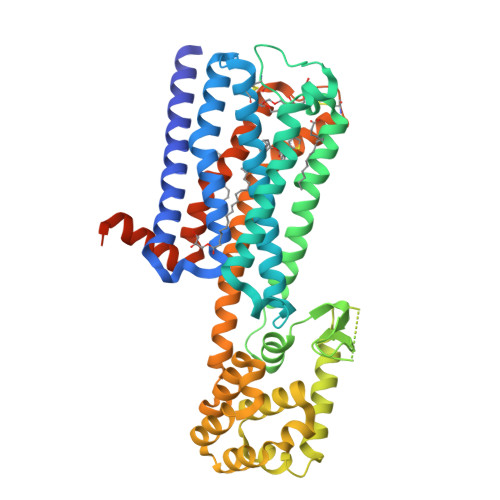
Muscarinic acetylcholine receptor M1 structureClick to view 3D structureMuscarinic acetylcholine receptor M1P11229HumansPredicted (SEA)
Prediction Confidence Score
0.226
Applicability Domain
0.29 Low confidence
Statistical Significance
0.3375
Supporting Reference Compounds
385
E-value
2627.64
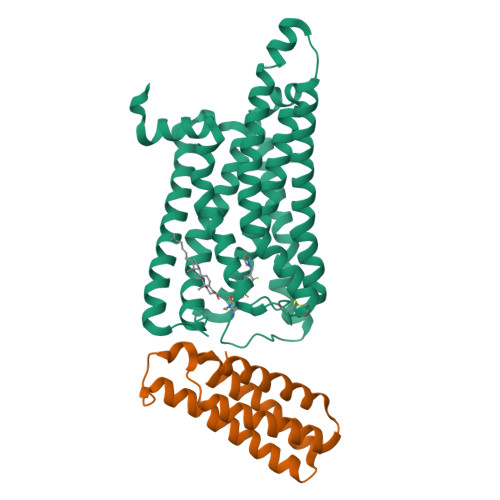
Muscarinic acetylcholine receptor M3 structureClick to view 3D structureMuscarinic acetylcholine receptor M3P20309HumansPredicted (SEA)
Prediction Confidence Score
0.221
Applicability Domain
0.29 Low confidence
Statistical Significance
0.3406
Supporting Reference Compounds
310
E-value
2651.31
Muscarinic acetylcholine receptor M5 structureClick to view 3D structureMuscarinic acetylcholine receptor M5P08912HumansPredicted (SEA)
Prediction Confidence Score
0.22
Applicability Domain
0.29 Low confidence
Statistical Significance
0.2998
Supporting Reference Compounds
266
E-value
2333.84
Click to view 3D structurePhospholipase BQ9P8P2Cryptococcus neoformansPredicted (SEA)
Prediction Confidence Score
0.214
Applicability Domain
0.214 Low confidence
Statistical Significance
9.90e-04
Supporting Reference Compounds
1
E-value
7.70707
Acetylcholinesterase structureClick to view 3D structureAcetylcholinesteraseP21836Mus musculusPredicted (SEA)
Prediction Confidence Score
0.204
Applicability Domain
0.409
Statistical Significance
0.1696
Supporting Reference Compounds
58
E-value
1320.17
Muscarinic acetylcholine receptor M2 structureClick to view 3D structureMuscarinic acetylcholine receptor M2P08172HumansPredicted (SEA)
Prediction Confidence Score
0.199
Applicability Domain
0.281 Low confidence
Statistical Significance
0.676
Supporting Reference Compounds
373
E-value
5262.45
Muscarinic acetylcholine receptor M4 structureClick to view 3D structureMuscarinic acetylcholine receptor M4P08173HumansPredicted (SEA)
Prediction Confidence Score
0.197
Applicability Domain
0.281 Low confidence
Statistical Significance
0.6134
Supporting Reference Compounds
297
E-value
4775.04
Acetylcholinesterase structureClick to view 3D structureAcetylcholinesteraseP22303HumansPredicted (SEA)
Prediction Confidence Score
0.194
Applicability Domain
0.409
Statistical Significance
0.7078
Supporting Reference Compounds
406
E-value
5509.86
Short transient receptor potential channel 4 structureClick to view 3D structureShort transient receptor potential channel 4Q9QUQ5Mus musculusPredicted (SEA)
Prediction Confidence Score
0.179
Applicability Domain
0.29 Low confidence
Statistical Significance
0.7208
Supporting Reference Compounds
128
E-value
5611.76
Click to view 3D structureSodium- and chloride-dependent creatine transporter 1P28570Rattus norvegicusPredicted (SEA)
Prediction Confidence Score
0.176
Applicability Domain
0.176 Low confidence
Statistical Significance
0.0029
Supporting Reference Compounds
1
E-value
22.732
Phospholipase C structureClick to view 3D structurePhospholipase CP09598Bacillus cereusPredicted (SEA)
Prediction Confidence Score
0.175
Applicability Domain
0.175 Low confidence
Statistical Significance
0.0588
Supporting Reference Compounds
1
E-value
457.753
Click to view 3D structureMuscarinic acetylcholine receptor M1P08482Rattus norvegicusPredicted (SEA)
Prediction Confidence Score
0.171
Applicability Domain
0.281 Low confidence
Statistical Significance
0.6558
Supporting Reference Compounds
109
E-value
5105.04
Histamine H3 receptor structureClick to view 3D structureHistamine H3 receptorQ9Y5N1HumansPredicted (SEA)
Prediction Confidence Score
0.17
Applicability Domain
0.409
Statistical Significance
0.9065
Supporting Reference Compounds
294
E-value
7056.95
Click to view 3D structureMuscarinic acetylcholine receptor M3Q8VH26Cavia porcellusPredicted (SEA)
Prediction Confidence Score
0.169
Applicability Domain
0.281 Low confidence
Statistical Significance
0.3648
Supporting Reference Compounds
52
E-value
2840.1
Click to view 3D structureMuscarinic acetylcholine receptor M4P08485Rattus norvegicusPredicted (SEA)
Prediction Confidence Score
0.169
Applicability Domain
0.281 Low confidence
Statistical Significance
0.5101
Supporting Reference Compounds
38
E-value
3970.93
Click to view 3D structureMuscarinic acetylcholine receptor M2P10980Rattus norvegicusPredicted (SEA)
Prediction Confidence Score
0.168
Applicability Domain
0.281 Low confidence
Statistical Significance
0.5851
Supporting Reference Compounds
98
E-value
4555.11
Muscarinic acetylcholine receptor M3 structureClick to view 3D structureMuscarinic acetylcholine receptor M3P08483Rattus norvegicusPredicted (SEA)
Prediction Confidence Score
0.164
Applicability Domain
0.281 Low confidence
Statistical Significance
0.5723
Supporting Reference Compounds
55
E-value
4455.47
RAC-alpha serine/threonine-protein kinase structureClick to view 3D structureRAC-alpha serine/threonine-protein kinaseP31749HumansPredicted (SEA)
Prediction Confidence Score
0.152
Applicability Domain
0.208 Low confidence
Statistical Significance
0.9901
Supporting Reference Compounds
797
E-value
7708.08
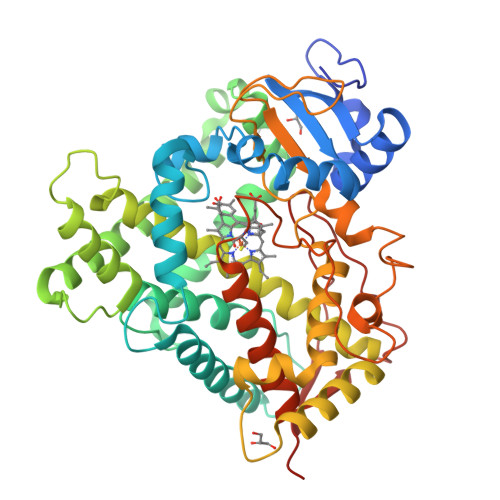
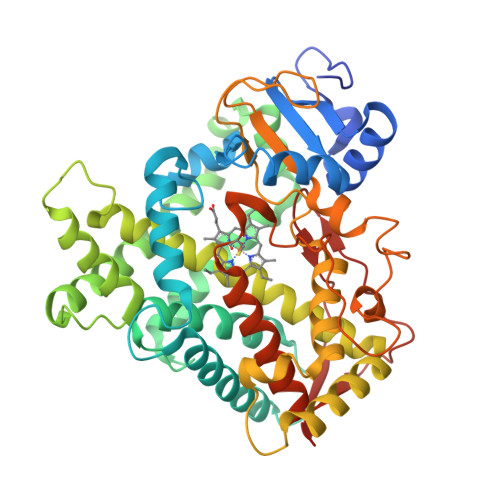
Cytochrome P450 2C19 structureClick to view 3D structureCytochrome P450 2C19P33261HumansPredicted (SEA)
Prediction Confidence Score
0.15
Applicability Domain
0.159 Low confidence
Statistical Significance
0.995
Supporting Reference Compounds
825
E-value
7746.39
Click to view 3D structureMitochondrial carnitine/acylcarnitine carrier proteinO43772HumansPredicted (SEA)
Prediction Confidence Score
0.149
Applicability Domain
0.149 Low confidence
Statistical Significance
0.0121
Supporting Reference Compounds
1
E-value
94.1197
Glycogen synthase kinase-3 beta structureClick to view 3D structureGlycogen synthase kinase-3 betaP49841HumansPredicted (SEA)
Prediction Confidence Score
0.148
Applicability Domain
0.157 Low confidence
Statistical Significance
0.9915
Supporting Reference Compounds
1157
E-value
7718.98
Cytochrome P450 2C9 structureClick to view 3D structureCytochrome P450 2C9P11712HumansPredicted (SEA)
Prediction Confidence Score
0.147
Applicability Domain
0.154 Low confidence
Statistical Significance
0.9972
Supporting Reference Compounds
1245
E-value
7762.97
Cytochrome P450 1A2 structureClick to view 3D structureCytochrome P450 1A2P05177HumansPredicted (SEA)
Prediction Confidence Score
0.146
Applicability Domain
0.154 Low confidence
Statistical Significance
0.995
Supporting Reference Compounds
793
E-value
7746.39
Cytochrome P450 2D6 structureClick to view 3D structureCytochrome P450 2D6P10635HumansPredicted (SEA)
Prediction Confidence Score
0.145
Applicability Domain
0.154 Low confidence
Statistical Significance
0.9971
Supporting Reference Compounds
1130
E-value
7762.19
Dual specificity tyrosine-phosphorylation-regulated kinase 1A structureClick to view 3D structureDual specificity tyrosine-phosphorylation-regulated kinase 1AQ13627HumansPredicted (SEA)
Prediction Confidence Score
0.145
Applicability Domain
0.151 Low confidence
Statistical Significance
0.9888
Supporting Reference Compounds
906
E-value
7697.89
Concentrations
Not Available
External Links
IdentifiersNot Available
References
Synthesis ReferenceNot Available
MSDSNot Available
General ReferencesNot Available