 Click to view 3D structure | Neuraminidase | Q9IGQ6 | Influenza A virus (strain A/Brevig Mission/1/1918 H1N1) (Influenza Avirus (strain A/South Carolina/1/1918 H1N1)) | Predicted (SEA) | - Prediction Confidence Score
- 0.658
- Applicability Domain
- 0.681
- Statistical Significance
- 1.00e-05
- Supporting Reference Compounds
- 2
- E-value
- 0.0778492
|
 Click to view 3D structure | Neuraminidase | B4URF0 | Influenza A virus | Predicted (SEA) | - Prediction Confidence Score
- 0.358
- Applicability Domain
- 0.635
- Statistical Significance
- 7.50e-04
- Supporting Reference Compounds
- 42
- E-value
- 5.83869
|
| Click to view 3D structure | Neuraminidase | A5Z252 | Influenza A virus | Predicted (SEA) | - Prediction Confidence Score
- 0.327
- Applicability Domain
- 0.635
- Statistical Significance
- 6.80e-04
- Supporting Reference Compounds
- 18
- E-value
- 5.29375
|
| Click to view 3D structure | Neuraminidase | P03470 | Influenza A virus (strain A/Wilson-Smith/1933 H1N1) (Influenza A virus(strain A/WS/1933 H1N1)) | Predicted (SEA) | - Prediction Confidence Score
- 0.326
- Applicability Domain
- 0.635
- Statistical Significance
- 6.80e-04
- Supporting Reference Compounds
- 10
- E-value
- 5.29375
|
| Click to view 3D structure | Neuraminidase | C4LRQ6 | Influenza A virus | Predicted (SEA) | - Prediction Confidence Score
- 0.322
- Applicability Domain
- 0.635
- Statistical Significance
- 6.40e-04
- Supporting Reference Compounds
- 9
- E-value
- 4.98235
|
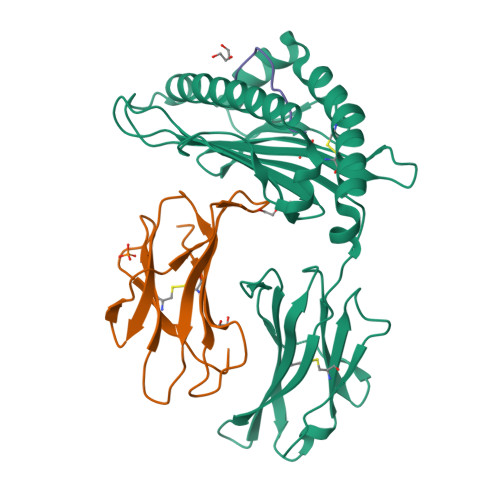 Click to view 3D structure | Neuraminidase | P03468 | Influenza A virus (A/Puerto Rico/8/1934(H1N1)) | Predicted (SEA) | - Prediction Confidence Score
- 0.321
- Applicability Domain
- 0.635
- Statistical Significance
- 7.70e-04
- Supporting Reference Compounds
- 34
- E-value
- 5.99439
|
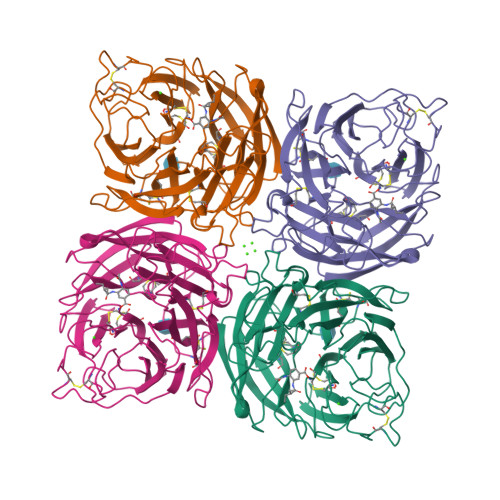 Click to view 3D structure | Neuraminidase | P03474 | Influenza B virus (strain B/Lee/1940) | Predicted (SEA) | - Prediction Confidence Score
- 0.319
- Applicability Domain
- 0.635
- Statistical Significance
- 7.70e-04
- Supporting Reference Compounds
- 13
- E-value
- 5.99439
|
| Click to view 3D structure | Neuraminidase | P03471 | Influenza A virus (A/Memphis/1/1971(H3N2)) | Predicted (SEA) | - Prediction Confidence Score
- 0.316
- Applicability Domain
- 0.635
- Statistical Significance
- 6.70e-04
- Supporting Reference Compounds
- 13
- E-value
- 5.2159
|
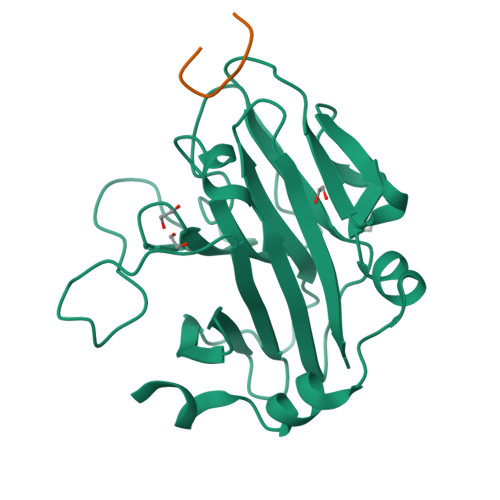 Click to view 3D structure | SPRY domain-containing SOCS box protein 2 | Q99619 | Humans | Predicted (SEA) | - Prediction Confidence Score
- 0.262
- Applicability Domain
- 0.262 Low confidence
- Statistical Significance
- 0.0044
- Supporting Reference Compounds
- 1
- E-value
- 34.3315
|
| Click to view 3D structure | Sialidase | P10481 | Clostridium perfringens | Predicted (SEA) | - Prediction Confidence Score
- 0.231
- Applicability Domain
- 0.318
- Statistical Significance
- 0.0033
- Supporting Reference Compounds
- 22
- E-value
- 26.0016
|
| Click to view 3D structure | Melanocortin receptor 5 | P41149 | Mus musculus | Predicted (SEA) | - Prediction Confidence Score
- 0.22
- Applicability Domain
- 0.22 Low confidence
- Statistical Significance
- 0.0433
- Supporting Reference Compounds
- 29
- E-value
- 337.321
|
| Click to view 3D structure | Synaptic vesicle glycoprotein 2A | Q02563 | Rattus norvegicus | Predicted (SEA) | - Prediction Confidence Score
- 0.217
- Applicability Domain
- 0.217 Low confidence
- Statistical Significance
- 4.80e-04
- Supporting Reference Compounds
- 1
- E-value
- 3.73676
|
| Click to view 3D structure | Melanocortin receptor 4 | P56450 | Mus musculus | Predicted (SEA) | - Prediction Confidence Score
- 0.214
- Applicability Domain
- 0.22 Low confidence
- Statistical Significance
- 0.0577
- Supporting Reference Compounds
- 34
- E-value
- 448.956
|
| Click to view 3D structure | Melanocyte-stimulating hormone receptor | Q01727 | Mus musculus | Predicted (SEA) | - Prediction Confidence Score
- 0.211
- Applicability Domain
- 0.22 Low confidence
- Statistical Significance
- 0.0522
- Supporting Reference Compounds
- 31
- E-value
- 406.139
|
| Click to view 3D structure | Neuraminidase | P03469 | Influenza A virus (strain A/USSR/90/1977 H1N1) | Predicted (SEA) | - Prediction Confidence Score
- 0.21
- Applicability Domain
- 0.224 Low confidence
- Statistical Significance
- 0.0067
- Supporting Reference Compounds
- 13
- E-value
- 51.9254
|
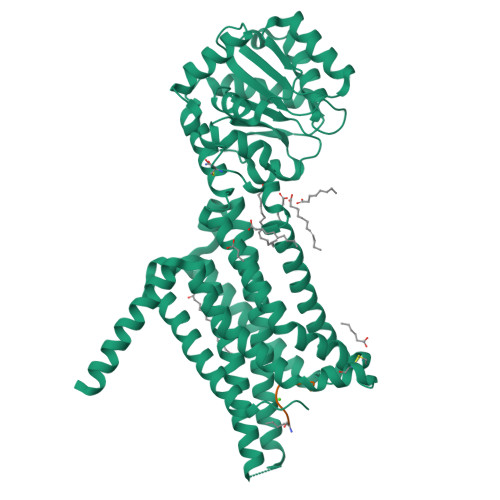 Click to view 3D structure | Melanocortin receptor 4 | P32245 | Humans | Predicted (SEA) | - Prediction Confidence Score
- 0.209
- Applicability Domain
- 0.22 Low confidence
- Statistical Significance
- 0.1787
- Supporting Reference Compounds
- 96
- E-value
- 1390.93
|
 Click to view 3D structure | Thrombospondin-1 | P07996 | Humans | Predicted (SEA) | - Prediction Confidence Score
- 0.209
- Applicability Domain
- 0.209 Low confidence
- Statistical Significance
- 0.0155
- Supporting Reference Compounds
- 1
- E-value
- 120.9
|
| Click to view 3D structure | Dihydroxyacetone phosphate acyltransferase | O15228 | Humans | Predicted (SEA) | - Prediction Confidence Score
- 0.206
- Applicability Domain
- 0.206 Low confidence
- Statistical Significance
- 0.0099
- Supporting Reference Compounds
- 1
- E-value
- 77.3043
|
| Click to view 3D structure | Metabotropic glutamate receptor 8 | P70579 | Rattus norvegicus | Predicted (SEA) | - Prediction Confidence Score
- 0.204
- Applicability Domain
- 0.235 Low confidence
- Statistical Significance
- 0.0554
- Supporting Reference Compounds
- 28
- E-value
- 431.674
|
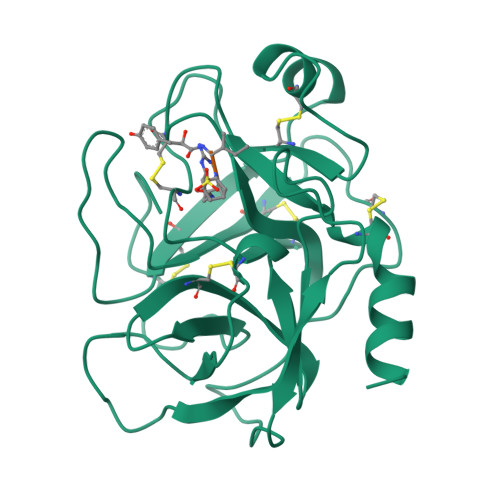 Click to view 3D structure | Serine protease 1 | P00760 | Bos taurus | Predicted (SEA) | - Prediction Confidence Score
- 0.204
- Applicability Domain
- 0.23 Low confidence
- Statistical Significance
- 0.1558
- Supporting Reference Compounds
- 74
- E-value
- 1212.58
|
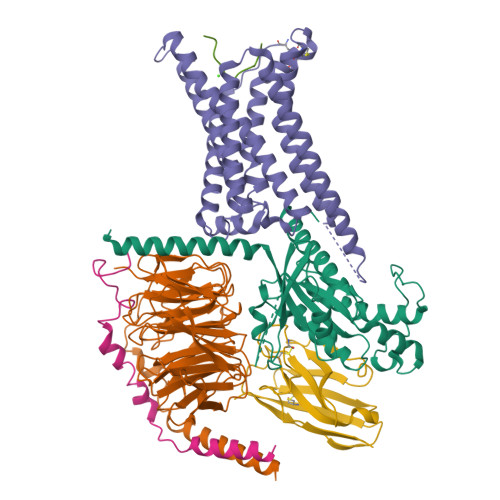 Click to view 3D structure | Melanocortin receptor 3 | P41968 | Humans | Predicted (SEA) | - Prediction Confidence Score
- 0.203
- Applicability Domain
- 0.22 Low confidence
- Statistical Significance
- 0.1063
- Supporting Reference Compounds
- 45
- E-value
- 827.537
|
| Click to view 3D structure | Putative inactive group IIC secretory phospholipase A2 | Q5R387 | Humans | Predicted (SEA) | - Prediction Confidence Score
- 0.203
- Applicability Domain
- 0.203 Low confidence
- Statistical Significance
- 0.007
- Supporting Reference Compounds
- 1
- E-value
- 54.6502
|
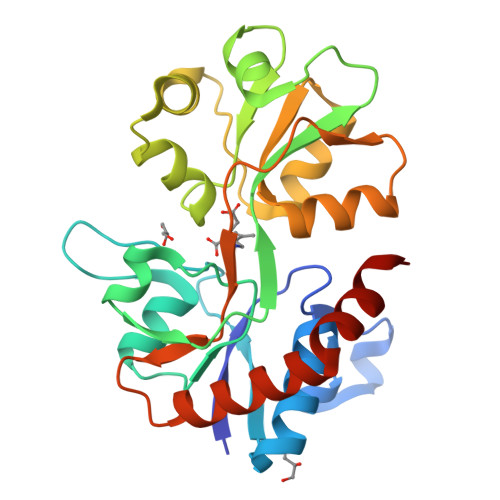 Click to view 3D structure | Glutamate receptor ionotropic, kainate 4 | Q01812 | Rattus norvegicus | Predicted (SEA) | - Prediction Confidence Score
- 0.203
- Applicability Domain
- 0.22 Low confidence
- Statistical Significance
- 9.00e-05
- Supporting Reference Compounds
- 2
- E-value
- 0.700643
|
 Click to view 3D structure | Melanocyte-stimulating hormone receptor | Q01726 | Humans | Predicted (SEA) | - Prediction Confidence Score
- 0.203
- Applicability Domain
- 0.22 Low confidence
- Statistical Significance
- 0.0802
- Supporting Reference Compounds
- 38
- E-value
- 624.662
|
| Click to view 3D structure | Metabotropic glutamate receptor 4 | P31423 | Rattus norvegicus | Predicted (SEA) | - Prediction Confidence Score
- 0.202
- Applicability Domain
- 0.235 Low confidence
- Statistical Significance
- 0.1107
- Supporting Reference Compounds
- 38
- E-value
- 861.635
|

