Ltd (CED0000216)

Record Information
Version1.0
Creation Date2026-04-05 12:00:06 UTC
Update Date2026-04-05 12:00:06 UTC
SynCED IDCED0000216
Secondary Accession Numbers
  • CHEM100876
Identification
Common NameLtd
ClassSmall Molecule
Description
Ltd is an organic compound with the formula C25H40N2O6S and an average molecular weight of 496.66 g/mol. Ltd belongs to the eicosanoids, a subclass of fatty acyls within the organic compounds. This substance has been found in or released from one recorded source, which is electrical and electronic equipment specifically antennas.
Contaminant TypeNot Available
Chemical Structure
SynonymsNot Available
Chemical FormulaC25H40N2O6S
Average Molecular Mass496.660 g/mol
Monoisotopic Mass496.261 g/mol
CAS Registry Number73836-78-9
IUPAC NameNot Available
Traditional NameNot Available
SMILESNot Available
InChI IdentifierInChI=1S/C25H40N2O6S/c1-2-3-4-5-6-7-8-9-10-11-12-13-16-22(21(28)15-14-17-23(29)30)34-19-20(26)25(33)27-18-24(31)32/h6-7,9-13,16,20-22,28H,2-5,8,14-15,17-19,26H2,1H3,(H,27,33)(H,29,30)(H,31,32)/b7-6-,10-9-,12-11+,16-13+/t20-,21-,22+/m0/s1
InChI KeyYEESKJGWJFYOOK-IJHYULJSSA-N
Chemical Taxonomy
ClassificationNot classified
Biological Properties
StatusDetected and Not Quantified
OriginNot Available
Cellular LocationsNot Available
Biofluid LocationsNot Available
Tissue LocationsNot Available
ApplicationsNot Available
Biological RolesNot Available
Chemical RolesNot Available
Organoleptic EffectsNot Available
Physical Properties
StateNot Available
AppearanceNot Available
Experimental Properties
PropertyValue
Melting PointNot Available
Boiling PointNot Available
SolubilityNot Available
Predicted PropertiesNot Available
Spectra
Spectra
Spectrum TypeDescriptionSplash KeyDeposition DateView
Predicted GC-MSPredicted GC-MS Spectrumsplash10-002f-8318900000-91190bec2dc8a7c28c8bNot AvailableView Spectrum
Predicted GC-MSPredicted GC-MS Spectrumsplash10-00bl-9222555000-5956dd7aa924eaaf2c69Not AvailableView Spectrum
Predicted GC-MSPredicted GC-MS SpectrumNot AvailableNot AvailableView Spectrum
Predicted LC-MS/MSPredicted LC-MS/MS Spectrumsplash10-00ba-5203900000-020fb8d6f8e7819b95dbNot AvailableView Spectrum
Predicted LC-MS/MSPredicted LC-MS/MS Spectrumsplash10-00di-9202000000-c97059cae6f9b15bcf59Not AvailableView Spectrum
Predicted LC-MS/MSPredicted LC-MS/MS Spectrumsplash10-00fr-9001000000-d0b5b22bf211a9204e69Not AvailableView Spectrum
Predicted LC-MS/MSPredicted LC-MS/MS Spectrumsplash10-0f92-0304900000-60819ea0217759ba2a49Not AvailableView Spectrum
Predicted LC-MS/MSPredicted LC-MS/MS Spectrumsplash10-0fai-2429100000-ca5e17f7b76919b96464Not AvailableView Spectrum
Predicted LC-MS/MSPredicted LC-MS/MS Spectrumsplash10-0h93-4901000000-aa2c814d3b9e96a3371bNot AvailableView Spectrum
Predicted LC-MS/MSPredicted LC-MS/MS Spectrumsplash10-0frj-3809500000-1fad24846026912b2dd5Not AvailableView Spectrum
Predicted LC-MS/MSPredicted LC-MS/MS Spectrumsplash10-00ku-2901000000-a8762a15dda0a1813f32Not AvailableView Spectrum
Predicted LC-MS/MSPredicted LC-MS/MS Spectrumsplash10-0apl-2900000000-ed212e649a95dd29d6a3Not AvailableView Spectrum
Predicted LC-MS/MSPredicted LC-MS/MS Spectrumsplash10-002b-0900800000-810396517553a9d1b101Not AvailableView Spectrum
Predicted LC-MS/MSPredicted LC-MS/MS Spectrumsplash10-054n-4902100000-0be7daf7806419664ffdNot AvailableView Spectrum
Predicted LC-MS/MSPredicted LC-MS/MS Spectrumsplash10-0007-9210000000-ce5f84ca171c71ed671bNot AvailableView Spectrum
Toxicity Profile
Toxicity Values
Toxicity ValueOrganismDose DescriptorRoute of ExposurePredicted or ExperimentalToxicity RatingReference
3127.0 Log mg/kg [1800:5600]RatLD50oralpredictedNot AvailableNot Available
Toxicity / Toxin ClassNot Available
Mechanism of ToxicityNot Available
Carcinogenicity (IARC Classification)Not Available
Minimum Risk LevelNot Available
SymptomsNot Available
TreatmentNot Available
Health Effects
Health EffectRelationshipDirectionDescriptionReference
asthmaElevated in Blood InincreaseA bronchial disease that is characterized by chronic inflammation and narrowing of the airways, which is caused by a combination of environmental and genetic factors. The disease has symptom recurring periods of wheezing (a whistling sound while breathing), has symptom chest tightness, has symptom shortness of breath, has symptom mucus production and has symptom coughing. The symptoms appear due to a variety of triggers such as allergens, irritants, respiratory infections, weather changes, exercise, stress, reflux disease, medications, foods and emotional anxiety. (DO)PMC10669396
painAssociated With?increaseA disorder characterized by the sensation of marked discomfort, distress or agony. (NCI CTCAE)PMC5908978
edemaAssociated With?Not AvailableA disorder characterized by swelling due to an excessive accumulation of fluid (NCI CTCAE)PMC7173497 , PMC7173439
anaphylaxisAssociated With?Not AvailableNot AvailablePMC7173497 , PMC7173439
BronchoconstrictionAssociated With?Not AvailableNot AvailablePMC7173497 , PMC7173439
Exposure Sources
Source IDSourceSectorReference
CEDs000506Antennas?Antennas, commonly used in communication technologies, can be a source of synthetic chemical contamination through the materials and coatings used in their construction.Electrical & Electronic EquipmentPubChem
CEDs000537Television Systems?Television systems can be a source of synthetic chemical contamination due to the various materials and components used in their manufacture and operation.Electrical & Electronic EquipmentPubChem
CEDs000603Nematocides?Nematocides are synthetic chemicals specifically designed to control nematodes, which are microscopic roundworms that can cause significant damage to crops and plants.Agriculture & land managementPubChem
CEDs000610Aftersun Products?Aftersun products are designed to soothe and hydrate the skin after sun exposure, often containing various synthetic chemicals such as emollients, preservatives, and fragrances.Personal care & cosmeticsPubChem
CEDs000615Eye Makeup Products?Eye makeup products, including mascaras, eyeliners, and eyeshadows, often contain a variety of synthetic chemicals such as pigments, preservatives, and film-forming agents.Personal care & cosmeticsPubChem
CEDs000632Apparel?Apparel production often involves the use of various synthetic chemicals, including dyes, finishing agents, and preservatives.Textiles, leather & furnishingsPubChem
CEDs000671Airplanes And Helicopters?Airplanes and helicopters are significant sources of synthetic chemical contamination primarily through the use of aviation fuels, lubricants, and de-icing agents.Aviation & AerospacePubChem
CEDs000685Ceramics?Ceramics can be a source of synthetic chemical contamination through various additives and processing agents used in their production.Building & ConstructionPubChem
CEDs000693Silica Glass?Silica glass, primarily composed of silicon dioxide (SiO2), is widely used in various applications, including windows, glass facades, and insulation materials.Building & ConstructionPubChem
CEDs000696Nanotechnology?Nanotechnology involves the manipulation of materials at the molecular or atomic level, typically within the range of 1 to 100 nanometers.Industrial manufacturing & chemical processingPubChem
Pathways
42 pathwaysPathway Source: PathBank
Targets
StructureProteinUniProt IDOrganismRelationshipDetails
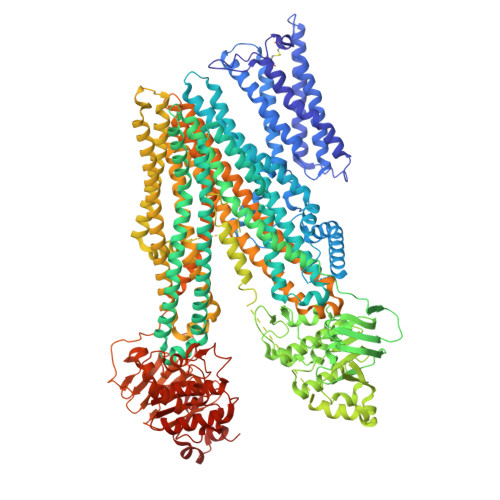
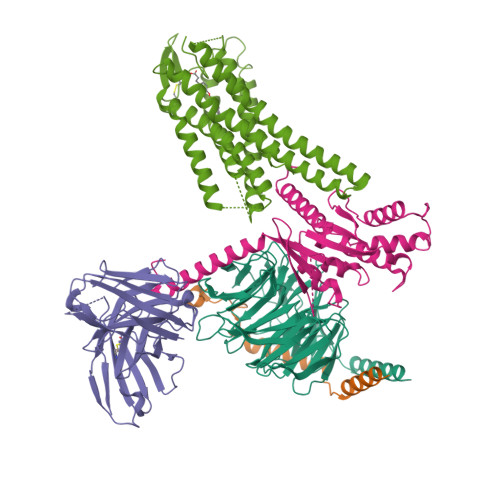
Click to view 3D structureCysteinyl leukotriene receptor 2Q9NS75HumansPredicted (SEA)
Prediction Confidence Score
0.481
Applicability Domain
0.8
Statistical Significance
1.00e-05
Supporting Reference Compounds
10
E-value
0.0778492
Cysteinyl leukotriene receptor 1 structureClick to view 3D structureCysteinyl leukotriene receptor 1Q9Y271HumansPredicted (SEA)
Prediction Confidence Score
0.475
Applicability Domain
0.8
Statistical Significance
1.00e-04
Supporting Reference Compounds
26
E-value
0.778492
Peroxisome proliferator-activated receptor gamma structureClick to view 3D structurePeroxisome proliferator-activated receptor gammaP37231HumansPredicted (SEA)
Prediction Confidence Score
0.401
Applicability Domain
0.422
Statistical Significance
0.0033
Supporting Reference Compounds
192
E-value
25.5345
Peroxisome proliferator-activated receptor alpha structureClick to view 3D structurePeroxisome proliferator-activated receptor alphaQ07869HumansPredicted (SEA)
Prediction Confidence Score
0.388
Applicability Domain
0.414
Statistical Significance
0.0032
Supporting Reference Compounds
127
E-value
24.6004
Peroxisome proliferator-activated receptor delta structureClick to view 3D structurePeroxisome proliferator-activated receptor deltaQ03181HumansPredicted (SEA)
Prediction Confidence Score
0.388
Applicability Domain
0.414
Statistical Significance
0.0024
Supporting Reference Compounds
89
E-value
18.3724
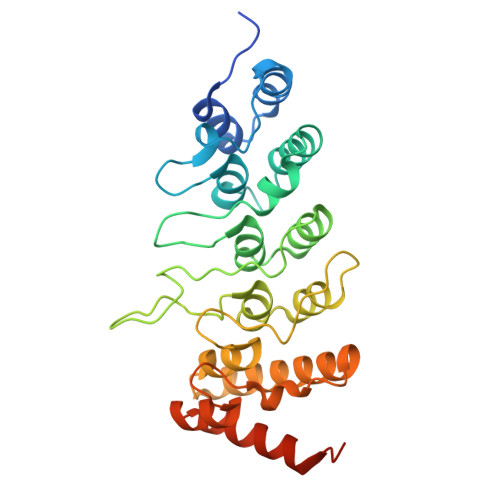
ATP-binding cassette sub-family C member 2 structureClick to view 3D structureATP-binding cassette sub-family C member 2Q63120Rattus norvegicusPredicted (SEA)
Prediction Confidence Score
0.383
Applicability Domain
0.8
Statistical Significance
1.00e-05
Supporting Reference Compounds
12
E-value
0.0778492
Click to view 3D structureCysteinyl leukotriene receptor 1Q2NNR5Cavia porcellusPredicted (SEA)
Prediction Confidence Score
0.343
Applicability Domain
0.75
Statistical Significance
7.60e-04
Supporting Reference Compounds
24
E-value
5.91654
Click to view 3D structureFatty-acid amide hydrolase 1O00519HumansPredicted (SEA)
Prediction Confidence Score
0.333
Applicability Domain
0.37
Statistical Significance
0.0069
Supporting Reference Compounds
106
E-value
53.8717
Transient receptor potential cation channel subfamily V member 2 structureClick to view 3D structureTransient receptor potential cation channel subfamily V member 2Q9WUD2Rattus norvegicusPredicted (SEA)
Prediction Confidence Score
0.327
Applicability Domain
0.414
Statistical Significance
0.0016
Supporting Reference Compounds
21
E-value
12.6894
Click to view 3D structureCannabinoid receptor 1P20272Rattus norvegicusPredicted (SEA)
Prediction Confidence Score
0.324
Applicability Domain
0.37
Statistical Significance
0.0047
Supporting Reference Compounds
83
E-value
36.3556
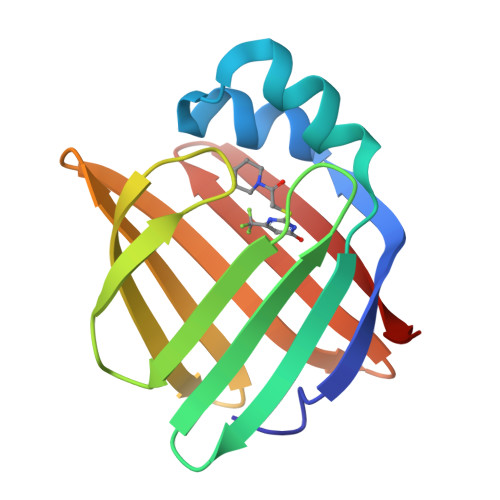
Fatty acid-binding protein, adipocyte structureClick to view 3D structureFatty acid-binding protein, adipocyteP15090HumansPredicted (SEA)
Prediction Confidence Score
0.312
Applicability Domain
0.414
Statistical Significance
0.0011
Supporting Reference Compounds
19
E-value
8.32987
Click to view 3D structureCannabinoid receptor 2Q9QZN9Rattus norvegicusPredicted (SEA)
Prediction Confidence Score
0.311
Applicability Domain
0.37
Statistical Significance
8.20e-04
Supporting Reference Compounds
20
E-value
6.38364
Cannabinoid receptor 2 structureClick to view 3D structureCannabinoid receptor 2P34972HumansPredicted (SEA)
Prediction Confidence Score
0.303
Applicability Domain
0.333
Statistical Significance
0.0133
Supporting Reference Compounds
175
E-value
103.773
Cannabinoid receptor 1 structureClick to view 3D structureCannabinoid receptor 1P21554HumansPredicted (SEA)
Prediction Confidence Score
0.3
Applicability Domain
0.333
Statistical Significance
0.0179
Supporting Reference Compounds
200
E-value
139.35
Click to view 3D structureCannabinoid receptor 2P47936Mus musculusPredicted (SEA)
Prediction Confidence Score
0.3
Applicability Domain
0.304
Statistical Significance
0.0036
Supporting Reference Compounds
39
E-value
28.1814
Click to view 3D structureSolute carrier organic anion transporter family member 2A1Q9EPT5Mus musculusPredicted (SEA)
Prediction Confidence Score
0.298
Applicability Domain
0.304
Statistical Significance
3.80e-04
Supporting Reference Compounds
2
E-value
2.95827
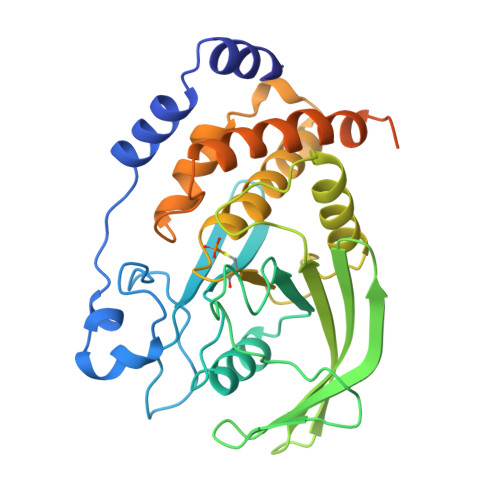
Tyrosine-protein phosphatase non-receptor type 1 structureClick to view 3D structureTyrosine-protein phosphatase non-receptor type 1P18031HumansPredicted (SEA)
Prediction Confidence Score
0.295
Applicability Domain
0.356
Statistical Significance
0.0125
Supporting Reference Compounds
197
E-value
97.078
Click to view 3D structureOxoeicosanoid receptor 1Q8TDS5HumansPredicted (SEA)
Prediction Confidence Score
0.29
Applicability Domain
0.407
Statistical Significance
5.50e-04
Supporting Reference Compounds
4
E-value
4.28171
Free fatty acid receptor 4 structureClick to view 3D structureFree fatty acid receptor 4Q5NUL3HumansPredicted (SEA)
Prediction Confidence Score
0.29
Applicability Domain
0.407
Statistical Significance
0.0074
Supporting Reference Compounds
63
E-value
57.3749
Fatty-acid amide hydrolase 1 structureClick to view 3D structureFatty-acid amide hydrolase 1P97612Rattus norvegicusPredicted (SEA)
Prediction Confidence Score
0.285
Applicability Domain
0.303
Statistical Significance
0.0145
Supporting Reference Compounds
102
E-value
112.648
Click to view 3D structureCannabinoid receptor 1P47746Mus musculusPredicted (SEA)
Prediction Confidence Score
0.281
Applicability Domain
0.29 Low confidence
Statistical Significance
0.004
Supporting Reference Compounds
42
E-value
30.984
Transient receptor potential cation channel subfamily V member 1 structureClick to view 3D structureTransient receptor potential cation channel subfamily V member 1Q8NER1HumansPredicted (SEA)
Prediction Confidence Score
0.275
Applicability Domain
0.29 Low confidence
Statistical Significance
0.0189
Supporting Reference Compounds
104
E-value
147.135
Click to view 3D structureSolute carrier organic anion transporter family member 2B1Q9JHI3Rattus norvegicusPredicted (SEA)
Prediction Confidence Score
0.272
Applicability Domain
0.304
Statistical Significance
4.80e-04
Supporting Reference Compounds
2
E-value
3.73676
Prostaglandin E2 receptor EP2 subtype structureClick to view 3D structureProstaglandin E2 receptor EP2 subtypeP43116HumansPredicted (SEA)
Prediction Confidence Score
0.27
Applicability Domain
0.304
Statistical Significance
0.01
Supporting Reference Compounds
95
E-value
78.2385
Free fatty acid receptor 1 structureClick to view 3D structureFree fatty acid receptor 1O14842HumansPredicted (SEA)
Prediction Confidence Score
0.268
Applicability Domain
0.407
Statistical Significance
0.0178
Supporting Reference Compounds
56
E-value
138.883
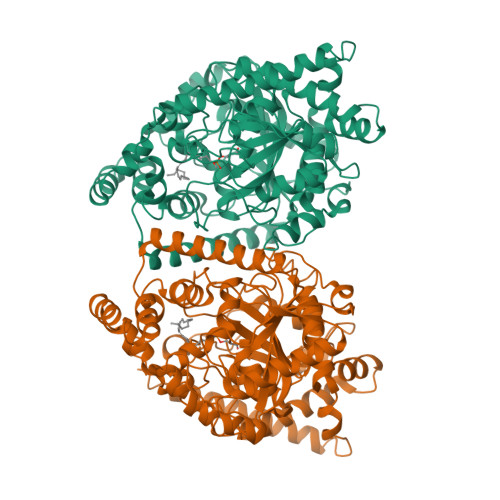
Click to view 3D structureDipeptidase 2Q9H4A9HumansKnownNot Available
Concentrations
Not Available
External Links
IdentifiersNot Available
References
Synthesis ReferenceNot Available
MSDSNot Available
General ReferencesNot Available