 Click to view 3D structure Click to view 3D structure | Cannabinoid receptor 1 | P20272 | Rattus norvegicus | Predicted (SEA) | - Prediction Confidence Score
- 0.496
- Applicability Domain
- 0.521
- Statistical Significance
- 0.001
- Supporting Reference Compounds
- 83
- E-value
- 7.86277
|
 Click to view 3D structure Click to view 3D structure | Cannabinoid receptor 2 | P34972 | Humans | Predicted (SEA) | - Prediction Confidence Score
- 0.464
- Applicability Domain
- 0.521
- Statistical Significance
- 0.0015
- Supporting Reference Compounds
- 175
- E-value
- 11.5217
|
 Click to view 3D structure Click to view 3D structure | Transient receptor potential cation channel subfamily V member 2 | Q9WUD2 | Rattus norvegicus | Predicted (SEA) | - Prediction Confidence Score
- 0.455
- Applicability Domain
- 0.5
- Statistical Significance
- 5.10e-04
- Supporting Reference Compounds
- 21
- E-value
- 3.97031
|
 Click to view 3D structure Click to view 3D structure | Cannabinoid receptor 1 | P21554 | Humans | Predicted (SEA) | - Prediction Confidence Score
- 0.454
- Applicability Domain
- 0.5
- Statistical Significance
- 0.0019
- Supporting Reference Compounds
- 200
- E-value
- 14.9471
|
| Click to view 3D structure | Cannabinoid receptor 2 | P47936 | Mus musculus | Predicted (SEA) | - Prediction Confidence Score
- 0.452
- Applicability Domain
- 0.521
- Statistical Significance
- 6.90e-04
- Supporting Reference Compounds
- 39
- E-value
- 5.3716
|
 Click to view 3D structure Click to view 3D structure | Transient receptor potential cation channel subfamily V member 1 | Q8NER1 | Humans | Predicted (SEA) | - Prediction Confidence Score
- 0.451
- Applicability Domain
- 0.5
- Statistical Significance
- 6.50e-04
- Supporting Reference Compounds
- 104
- E-value
- 5.0602
|
 Click to view 3D structure Click to view 3D structure | Peroxisome proliferator-activated receptor alpha | Q07869 | Humans | Predicted (SEA) | - Prediction Confidence Score
- 0.442
- Applicability Domain
- 0.5
- Statistical Significance
- 0.0017
- Supporting Reference Compounds
- 127
- E-value
- 13.2344
|
 Click to view 3D structure Click to view 3D structure | Peroxisome proliferator-activated receptor delta | Q03181 | Humans | Predicted (SEA) | - Prediction Confidence Score
- 0.442
- Applicability Domain
- 0.5
- Statistical Significance
- 0.0012
- Supporting Reference Compounds
- 89
- E-value
- 9.6533
|
 Click to view 3D structure Click to view 3D structure | Peroxisome proliferator-activated receptor gamma | P37231 | Humans | Predicted (SEA) | - Prediction Confidence Score
- 0.428
- Applicability Domain
- 0.442
- Statistical Significance
- 0.0023
- Supporting Reference Compounds
- 192
- E-value
- 18.2167
|
| Click to view 3D structure | Fatty-acid amide hydrolase 1 | O00519 | Humans | Predicted (SEA) | - Prediction Confidence Score
- 0.417
- Applicability Domain
- 0.442
- Statistical Significance
- 0.0019
- Supporting Reference Compounds
- 106
- E-value
- 14.6357
|
| Click to view 3D structure | Lysophosphatidic acid receptor 3 | Q9UBY5 | Humans | Predicted (SEA) | - Prediction Confidence Score
- 0.407
- Applicability Domain
- 0.509
- Statistical Significance
- 3.00e-04
- Supporting Reference Compounds
- 21
- E-value
- 2.33548
|
| Click to view 3D structure | Cannabinoid receptor 2 | Q9QZN9 | Rattus norvegicus | Predicted (SEA) | - Prediction Confidence Score
- 0.403
- Applicability Domain
- 0.42
- Statistical Significance
- 3.40e-04
- Supporting Reference Compounds
- 20
- E-value
- 2.64687
|
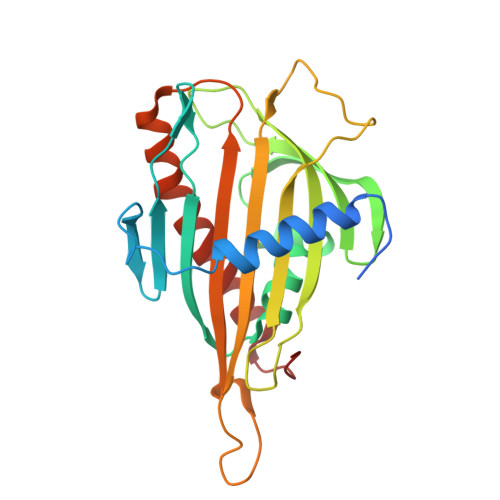 Click to view 3D structure Click to view 3D structure | Ceramide transfer protein | Q9Y5P4 | Humans | Predicted (SEA) | - Prediction Confidence Score
- 0.393
- Applicability Domain
- 0.393
- Statistical Significance
- 1.30e-04
- Supporting Reference Compounds
- 1
- E-value
- 1.01204
|
| Click to view 3D structure | Lysophosphatidic acid receptor 4 | Q8BLG2 | Mus musculus | Predicted (SEA) | - Prediction Confidence Score
- 0.393
- Applicability Domain
- 0.393
- Statistical Significance
- 2.90e-04
- Supporting Reference Compounds
- 1
- E-value
- 2.25763
|
 Click to view 3D structure Click to view 3D structure | Fatty-acid amide hydrolase 1 | P97612 | Rattus norvegicus | Predicted (SEA) | - Prediction Confidence Score
- 0.391
- Applicability Domain
- 0.469
- Statistical Significance
- 0.0019
- Supporting Reference Compounds
- 102
- E-value
- 14.7135
|
| Click to view 3D structure | Cannabinoid receptor 1 | P47746 | Mus musculus | Predicted (SEA) | - Prediction Confidence Score
- 0.374
- Applicability Domain
- 0.42
- Statistical Significance
- 0.0011
- Supporting Reference Compounds
- 42
- E-value
- 8.64126
|
 Click to view 3D structure Click to view 3D structure | Lysophosphatidic acid receptor 1 | Q92633 | Humans | Predicted (SEA) | - Prediction Confidence Score
- 0.371
- Applicability Domain
- 0.393
- Statistical Significance
- 4.50e-04
- Supporting Reference Compounds
- 31
- E-value
- 3.50322
|
| Click to view 3D structure | Alkaline ceramidase 2 | Q5QJU3 | Humans | Predicted (SEA) | - Prediction Confidence Score
- 0.37
- Applicability Domain
- 0.37
- Statistical Significance
- 2.90e-04
- Supporting Reference Compounds
- 1
- E-value
- 2.25763
|
 Click to view 3D structure Click to view 3D structure | Sphingomyelinase C | P11889 | Bacillus cereus | Predicted (SEA) | - Prediction Confidence Score
- 0.37
- Applicability Domain
- 0.37
- Statistical Significance
- 8.00e-05
- Supporting Reference Compounds
- 1
- E-value
- 0.622794
|
 Click to view 3D structure Click to view 3D structure | Transient receptor potential cation channel subfamily V member 1 | O35433 | Rattus norvegicus | Predicted (SEA) | - Prediction Confidence Score
- 0.36
- Applicability Domain
- 0.42
- Statistical Significance
- 6.50e-04
- Supporting Reference Compounds
- 21
- E-value
- 5.0602
|
 Click to view 3D structure Click to view 3D structure | Tyrosine-protein phosphatase non-receptor type 1 | P18031 | Humans | Predicted (SEA) | - Prediction Confidence Score
- 0.358
- Applicability Domain
- 0.442
- Statistical Significance
- 0.0031
- Supporting Reference Compounds
- 197
- E-value
- 24.4447
|
 Click to view 3D structure Click to view 3D structure | Lysophosphatidic acid receptor 2 | Q9HBW0 | Humans | Predicted (SEA) | - Prediction Confidence Score
- 0.341
- Applicability Domain
- 0.393
- Statistical Significance
- 6.20e-04
- Supporting Reference Compounds
- 30
- E-value
- 4.82665
|
| Click to view 3D structure | Group VII phospholipase A2 | Q6UB75 | Sus scrofa | Predicted (SEA) | - Prediction Confidence Score
- 0.335
- Applicability Domain
- 0.375
- Statistical Significance
- 1.00e-04
- Supporting Reference Compounds
- 7
- E-value
- 0.778492
|
 Click to view 3D structure Click to view 3D structure | Fatty acid-binding protein, adipocyte | P15090 | Humans | Predicted (SEA) | - Prediction Confidence Score
- 0.327
- Applicability Domain
- 0.442
- Statistical Significance
- 7.70e-04
- Supporting Reference Compounds
- 19
- E-value
- 5.99439
|
| Click to view 3D structure | CAI-1 autoinducer sensor kinase/phosphatase CqsS | Q9KM66 | Vibrio cholerae serotype O1 (strain ATCC 39315 / El Tor Inaba N16961) | Predicted (SEA) | - Prediction Confidence Score
- 0.326
- Applicability Domain
- 0.326
- Statistical Significance
- 2.90e-04
- Supporting Reference Compounds
- 1
- E-value
- 2.25763
|

