 Click to view 3D structure Click to view 3D structure | Cannabinoid receptor 2 | P34972 | Humans | Predicted (SEA) | - Prediction Confidence Score
- 0.728
- Applicability Domain
- 1.0
- Statistical Significance
- 5.00e-05
- Supporting Reference Compounds
- 175
- E-value
- 0.389246
|
 Click to view 3D structure Click to view 3D structure | Cannabinoid receptor 1 | P21554 | Humans | Predicted (SEA) | - Prediction Confidence Score
- 0.707
- Applicability Domain
- 1.0
- Statistical Significance
- 1.10e-04
- Supporting Reference Compounds
- 200
- E-value
- 0.856341
|
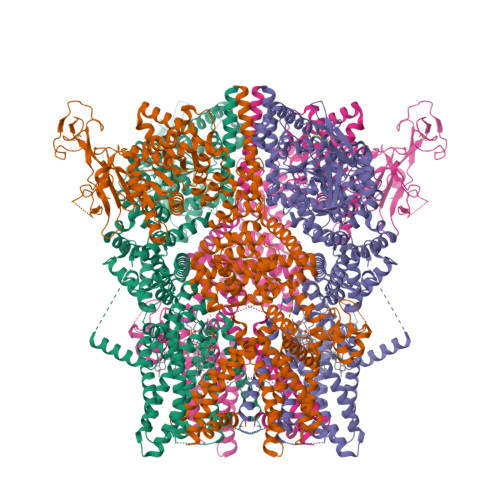 Click to view 3D structure Click to view 3D structure | Transient receptor potential cation channel subfamily M member 8 | Q7Z2W7 | Humans | Predicted (SEA) | - Prediction Confidence Score
- 0.707
- Applicability Domain
- 1.0
- Statistical Significance
- 1.00e-05
- Supporting Reference Compounds
- 43
- E-value
- 0.0778492
|
 Click to view 3D structure Click to view 3D structure | G-protein coupled receptor 55 | Q9Y2T6 | Humans | Predicted (SEA) | - Prediction Confidence Score
- 0.637
- Applicability Domain
- 1.0
- Statistical Significance
- 1.00e-04
- Supporting Reference Compounds
- 125
- E-value
- 0.778492
|
 Click to view 3D structure Click to view 3D structure | Cannabinoid receptor 1 | P20272 | Rattus norvegicus | Predicted (SEA) | - Prediction Confidence Score
- 0.598
- Applicability Domain
- 1.0
- Statistical Significance
- 3.20e-04
- Supporting Reference Compounds
- 83
- E-value
- 2.49118
|
| Click to view 3D structure | Cannabinoid receptor 1 | P47746 | Mus musculus | Predicted (SEA) | - Prediction Confidence Score
- 0.593
- Applicability Domain
- 1.0
- Statistical Significance
- 5.00e-05
- Supporting Reference Compounds
- 42
- E-value
- 0.389246
|
 Click to view 3D structure Click to view 3D structure | Transient receptor potential cation channel subfamily V member 1 | Q8NER1 | Humans | Predicted (SEA) | - Prediction Confidence Score
- 0.578
- Applicability Domain
- 0.857
- Statistical Significance
- 1.60e-04
- Supporting Reference Compounds
- 104
- E-value
- 1.24559
|
| Click to view 3D structure | Transient receptor potential cation channel subfamily A member 1 | Q6RI86 | Rattus norvegicus | Predicted (SEA) | - Prediction Confidence Score
- 0.577
- Applicability Domain
- 1.0
- Statistical Significance
- 3.00e-05
- Supporting Reference Compounds
- 56
- E-value
- 0.233548
|
 Click to view 3D structure Click to view 3D structure | Gamma-aminobutyric acid receptor subunit beta-2 | P47870 | Humans | Predicted (SEA) | - Prediction Confidence Score
- 0.571
- Applicability Domain
- 0.571
- Statistical Significance
- 1.00e-04
- Supporting Reference Compounds
- 1
- E-value
- 0.778492
|
| Click to view 3D structure | Cannabinoid receptor 2 | P47936 | Mus musculus | Predicted (SEA) | - Prediction Confidence Score
- 0.556
- Applicability Domain
- 1.0
- Statistical Significance
- 2.00e-04
- Supporting Reference Compounds
- 39
- E-value
- 1.55698
|
 Click to view 3D structure Click to view 3D structure | Transient receptor potential cation channel subfamily V member 5 | Q9NQA5 | Humans | Predicted (SEA) | - Prediction Confidence Score
- 0.489
- Applicability Domain
- 0.857
- Statistical Significance
- 1.00e-05
- Supporting Reference Compounds
- 2
- E-value
- 0.0778492
|
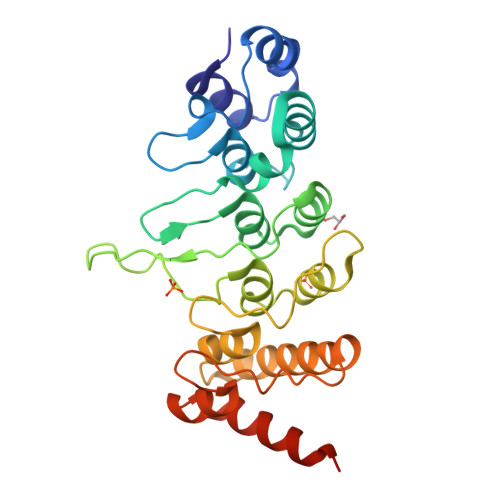 Click to view 3D structure Click to view 3D structure | Transient receptor potential cation channel subfamily V member 4 | Q9HBA0 | Humans | Predicted (SEA) | - Prediction Confidence Score
- 0.487
- Applicability Domain
- 0.857
- Statistical Significance
- 2.10e-04
- Supporting Reference Compounds
- 32
- E-value
- 1.63483
|
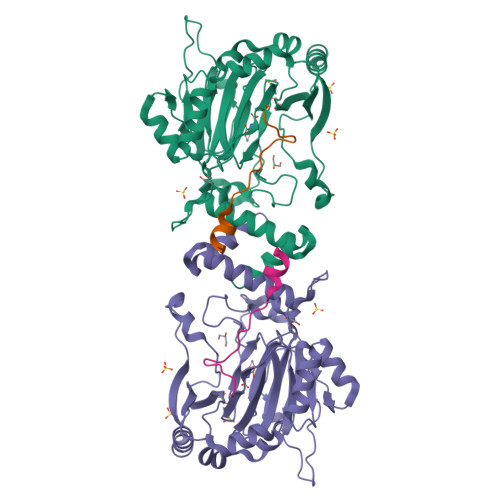 Click to view 3D structure Click to view 3D structure | Transient receptor potential cation channel subfamily V member 3 | Q8NET8 | Humans | Predicted (SEA) | - Prediction Confidence Score
- 0.487
- Applicability Domain
- 0.857
- Statistical Significance
- 1.00e-05
- Supporting Reference Compounds
- 15
- E-value
- 0.0778492
|
 Click to view 3D structure Click to view 3D structure | Transient receptor potential cation channel subfamily A member 1 | O75762 | Humans | Predicted (SEA) | - Prediction Confidence Score
- 0.487
- Applicability Domain
- 0.857
- Statistical Significance
- 2.00e-05
- Supporting Reference Compounds
- 70
- E-value
- 0.155698
|
 Click to view 3D structure Click to view 3D structure | Mu-type opioid receptor | P35372 | Humans | Predicted (SEA) | - Prediction Confidence Score
- 0.486
- Applicability Domain
- 0.571
- Statistical Significance
- 0.011
- Supporting Reference Compounds
- 527
- E-value
- 86.0234
|
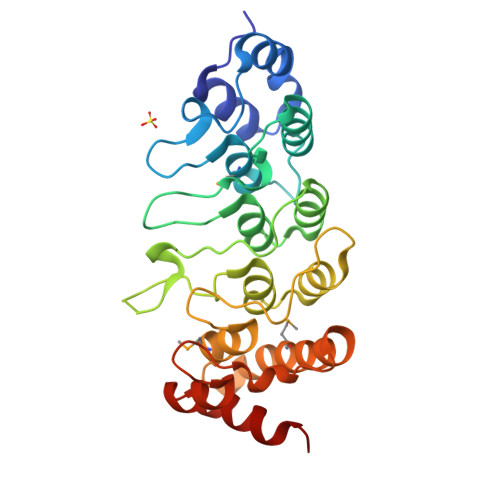 Click to view 3D structure Click to view 3D structure | Transient receptor potential cation channel subfamily V member 2 | Q9Y5S1 | Humans | Predicted (SEA) | - Prediction Confidence Score
- 0.463
- Applicability Domain
- 0.857
- Statistical Significance
- 1.00e-05
- Supporting Reference Compounds
- 6
- E-value
- 0.0778492
|
| Click to view 3D structure | Transient receptor potential cation channel subfamily M member 8 | Q8R455 | Rattus norvegicus | Predicted (SEA) | - Prediction Confidence Score
- 0.46
- Applicability Domain
- 0.571
- Statistical Significance
- 6.00e-05
- Supporting Reference Compounds
- 23
- E-value
- 0.467095
|
 Click to view 3D structure Click to view 3D structure | Transient receptor potential cation channel subfamily V member 2 | Q9WUD2 | Rattus norvegicus | Predicted (SEA) | - Prediction Confidence Score
- 0.452
- Applicability Domain
- 0.571
- Statistical Significance
- 5.30e-04
- Supporting Reference Compounds
- 21
- E-value
- 4.12601
|
 Click to view 3D structure Click to view 3D structure | D(2) dopamine receptor | P14416 | Humans | Predicted (SEA) | - Prediction Confidence Score
- 0.446
- Applicability Domain
- 0.571
- Statistical Significance
- 0.0134
- Supporting Reference Compounds
- 1103
- E-value
- 104.629
|
 Click to view 3D structure Click to view 3D structure | 5-hydroxytryptamine receptor 2B | P41595 | Humans | Predicted (SEA) | - Prediction Confidence Score
- 0.443
- Applicability Domain
- 0.492
- Statistical Significance
- 0.0047
- Supporting Reference Compounds
- 686
- E-value
- 36.7448
|
 Click to view 3D structure Click to view 3D structure | 5-hydroxytryptamine receptor 1A | P08908 | Humans | Predicted (SEA) | - Prediction Confidence Score
- 0.44
- Applicability Domain
- 0.857
- Statistical Significance
- 0.0116
- Supporting Reference Compounds
- 953
- E-value
- 90.3829
|
| Click to view 3D structure | Transient receptor potential cation channel subfamily V member 4 | Q9ERZ8 | Rattus norvegicus | Predicted (SEA) | - Prediction Confidence Score
- 0.432
- Applicability Domain
- 0.571
- Statistical Significance
- 1.30e-04
- Supporting Reference Compounds
- 18
- E-value
- 1.01204
|
 Click to view 3D structure Click to view 3D structure | D(3) dopamine receptor | P35462 | Humans | Predicted (SEA) | - Prediction Confidence Score
- 0.42
- Applicability Domain
- 1.0
- Statistical Significance
- 0.0125
- Supporting Reference Compounds
- 861
- E-value
- 97.2337
|
| Click to view 3D structure | Heat sensitive channel TRPV3 | Q4QYD9 | Rattus norvegicus | Predicted (SEA) | - Prediction Confidence Score
- 0.405
- Applicability Domain
- 0.571
- Statistical Significance
- 1.20e-04
- Supporting Reference Compounds
- 3
- E-value
- 0.934191
|
 Click to view 3D structure Click to view 3D structure | Sodium-dependent noradrenaline transporter | P23975 | Humans | Predicted (SEA) | - Prediction Confidence Score
- 0.394
- Applicability Domain
- 0.466
- Statistical Significance
- 0.0058
- Supporting Reference Compounds
- 451
- E-value
- 45.0747
|

