 Click to view 3D structure | Inositol 1,4,5-trisphosphate-gated calcium channel ITPR3 | Q8WN95 | Bos taurus | Predicted (SEA) | - Prediction Confidence Score
- 0.059
- Applicability Domain
- 0.059 Low confidence
- Statistical Significance
- 0.1791
- Supporting Reference Compounds
- 1
- E-value
- 1394.36
|
 Click to view 3D structure | Inositol-trisphosphate 3-kinase A | P17105 | Rattus norvegicus | Predicted (SEA) | - Prediction Confidence Score
- 0.053
- Applicability Domain
- 0.053 Low confidence
- Statistical Significance
- 0.264
- Supporting Reference Compounds
- 1
- E-value
- 2054.91
|
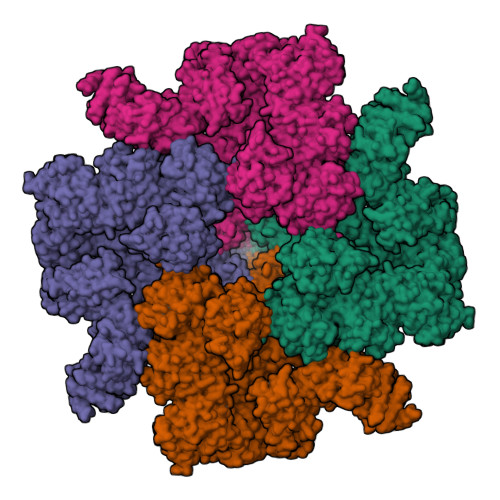 Click to view 3D structure | Inositol 1,4,5-trisphosphate-gated calcium channel ITPR3 | Q14573 | Humans | Predicted (SEA) | - Prediction Confidence Score
- 0.048
- Applicability Domain
- 0.056 Low confidence
- Statistical Significance
- 0.4325
- Supporting Reference Compounds
- 4
- E-value
- 3366.98
|
 Click to view 3D structure | All-trans-retinol dehydrogenase [NAD(+)] ADH4 | P08319 | Humans | Predicted (SEA) | - Prediction Confidence Score
- 0.048
- Applicability Domain
- 0.048 Low confidence
- Statistical Significance
- 0.6017
- Supporting Reference Compounds
- 1
- E-value
- 4684.03
|
| Click to view 3D structure | Type 1 InsP3 receptor isoform S2 | P79248 | Sus scrofa | Predicted (SEA) | - Prediction Confidence Score
- 0.047
- Applicability Domain
- 0.053 Low confidence
- Statistical Significance
- 0.3898
- Supporting Reference Compounds
- 2
- E-value
- 3034.95
|
| Click to view 3D structure | Inositol 1,4,5-trisphosphate binding protein | Q62688 | Rattus norvegicus | Predicted (SEA) | - Prediction Confidence Score
- 0.046
- Applicability Domain
- 0.053 Low confidence
- Statistical Significance
- 0.5225
- Supporting Reference Compounds
- 2
- E-value
- 4067.54
|
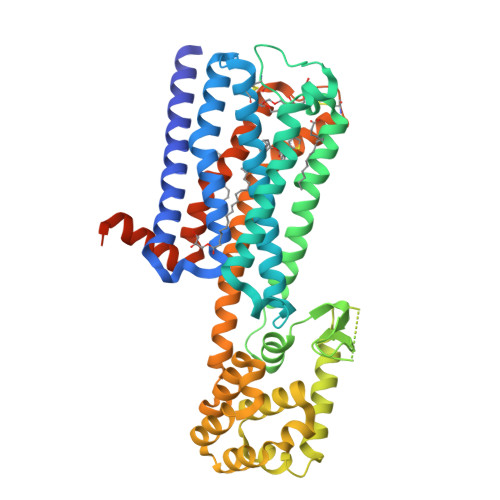 Click to view 3D structure | Muscarinic acetylcholine receptor M5 | P08912 | Humans | Predicted (SEA) | - Prediction Confidence Score
- 0.043
- Applicability Domain
- 0.053 Low confidence
- Statistical Significance
- 1.0
- Supporting Reference Compounds
- 266
- E-value
- 7784.77
|
 Click to view 3D structure | Inositol 1,4,5-trisphosphate-gated calcium channel ITPR1 | P29994 | Rattus norvegicus | Predicted (SEA) | - Prediction Confidence Score
- 0.042
- Applicability Domain
- 0.053 Low confidence
- Statistical Significance
- 0.5946
- Supporting Reference Compounds
- 2
- E-value
- 4628.6
|
| Click to view 3D structure | Sigma non-opioid intracellular receptor 1 | Q9R0C9 | Rattus norvegicus | Predicted (SEA) | - Prediction Confidence Score
- 0.041
- Applicability Domain
- 0.053 Low confidence
- Statistical Significance
- 1.0
- Supporting Reference Compounds
- 207
- E-value
- 7784.61
|
 Click to view 3D structure | Muscarinic acetylcholine receptor M2 | P08172 | Humans | Predicted (SEA) | - Prediction Confidence Score
- 0.04
- Applicability Domain
- 0.053 Low confidence
- Statistical Significance
- 1.0
- Supporting Reference Compounds
- 373
- E-value
- 7784.77
|
 Click to view 3D structure | Acetylcholinesterase | P22303 | Humans | Predicted (SEA) | - Prediction Confidence Score
- 0.04
- Applicability Domain
- 0.041 Low confidence
- Statistical Significance
- 1.0
- Supporting Reference Compounds
- 406
- E-value
- 7784.84
|
 Click to view 3D structure | 5-hydroxytryptamine receptor 4 | Q13639 | Humans | Predicted (SEA) | - Prediction Confidence Score
- 0.04
- Applicability Domain
- 0.041 Low confidence
- Statistical Significance
- 1.0
- Supporting Reference Compounds
- 101
- E-value
- 7784.69
|
| Click to view 3D structure | 5-hydroxytryptamine receptor 4 | O70528 | Cavia porcellus | Predicted (SEA) | - Prediction Confidence Score
- 0.04
- Applicability Domain
- 0.041 Low confidence
- Statistical Significance
- 1.0
- Supporting Reference Compounds
- 94
- E-value
- 7784.61
|
 Click to view 3D structure | Muscarinic acetylcholine receptor M4 | P08173 | Humans | Predicted (SEA) | - Prediction Confidence Score
- 0.04
- Applicability Domain
- 0.053 Low confidence
- Statistical Significance
- 1.0
- Supporting Reference Compounds
- 297
- E-value
- 7784.69
|
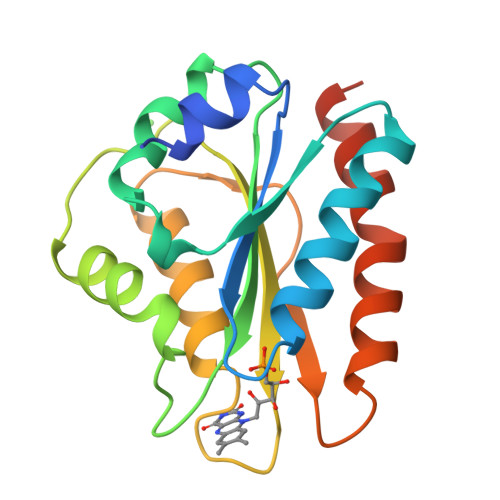 Click to view 3D structure | NADPH--cytochrome P450 reductase | P16435 | Humans | Predicted (SEA) | - Prediction Confidence Score
- 0.038
- Applicability Domain
- 0.038 Low confidence
- Statistical Significance
- 0.9875
- Supporting Reference Compounds
- 1
- E-value
- 7687.84
|
 Click to view 3D structure | Camphor 5-monooxygenase | P00183 | Pseudomonas putida | Predicted (SEA) | - Prediction Confidence Score
- 0.038
- Applicability Domain
- 0.038 Low confidence
- Statistical Significance
- 0.88
- Supporting Reference Compounds
- 1
- E-value
- 6850.58
|
 Click to view 3D structure | Glycogen synthase kinase-3 beta | P49841 | Humans | Predicted (SEA) | - Prediction Confidence Score
- 0.038
- Applicability Domain
- 0.044 Low confidence
- Statistical Significance
- 1.0
- Supporting Reference Compounds
- 1157
- E-value
- 7784.77
|
 Click to view 3D structure | Kappa-type opioid receptor | P41145 | Humans | Predicted (SEA) | - Prediction Confidence Score
- 0.037
- Applicability Domain
- 0.045 Low confidence
- Statistical Significance
- 1.0
- Supporting Reference Compounds
- 532
- E-value
- 7784.69
|
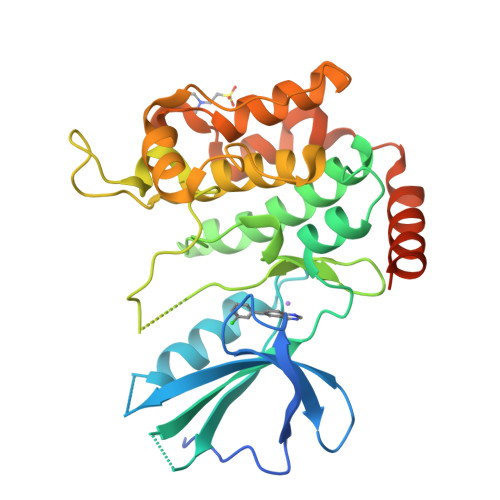 Click to view 3D structure | Mitogen-activated protein kinase kinase kinase kinase 4 | O95819 | Humans | Predicted (SEA) | - Prediction Confidence Score
- 0.037
- Applicability Domain
- 0.044 Low confidence
- Statistical Significance
- 1.0
- Supporting Reference Compounds
- 714
- E-value
- 7784.69
|
| Click to view 3D structure | Cholinesterase | P81908 | Equus caballus | Predicted (SEA) | - Prediction Confidence Score
- 0.037
- Applicability Domain
- 0.04 Low confidence
- Statistical Significance
- 1.0
- Supporting Reference Compounds
- 201
- E-value
- 7784.69
|
 Click to view 3D structure | Serine/threonine-protein kinase pim-1 | P11309 | Humans | Predicted (SEA) | - Prediction Confidence Score
- 0.036
- Applicability Domain
- 0.044 Low confidence
- Statistical Significance
- 1.0
- Supporting Reference Compounds
- 967
- E-value
- 7784.77
|
 Click to view 3D structure | Lysine-specific demethylase 4A | O75164 | Humans | Predicted (SEA) | - Prediction Confidence Score
- 0.036
- Applicability Domain
- 0.043 Low confidence
- Statistical Significance
- 1.0
- Supporting Reference Compounds
- 54
- E-value
- 7784.77
|
 Click to view 3D structure | Phosphatidylinositol 4-kinase type 2-beta | Q8TCG2 | Humans | Predicted (SEA) | - Prediction Confidence Score
- 0.036
- Applicability Domain
- 0.036 Low confidence
- Statistical Significance
- 0.9994
- Supporting Reference Compounds
- 1
- E-value
- 7780.17
|
 Click to view 3D structure | Mitogen-activated protein kinase 14 | Q16539 | Humans | Predicted (SEA) | - Prediction Confidence Score
- 0.036
- Applicability Domain
- 0.042 Low confidence
- Statistical Significance
- 1.0
- Supporting Reference Compounds
- 668
- E-value
- 7784.84
|
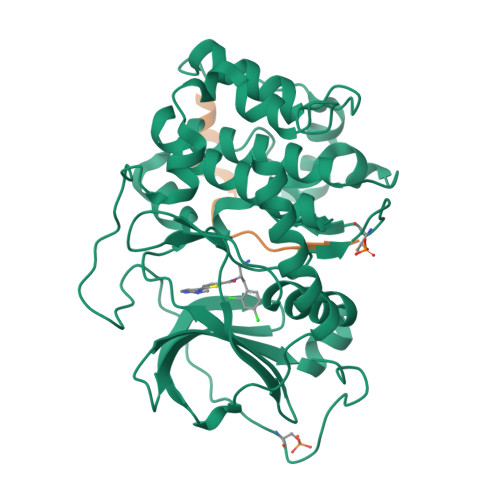 Click to view 3D structure | cAMP-dependent protein kinase catalytic subunit alpha | P17612 | Humans | Predicted (SEA) | - Prediction Confidence Score
- 0.036
- Applicability Domain
- 0.044 Low confidence
- Statistical Significance
- 1.0
- Supporting Reference Compounds
- 735
- E-value
- 7784.84
|

