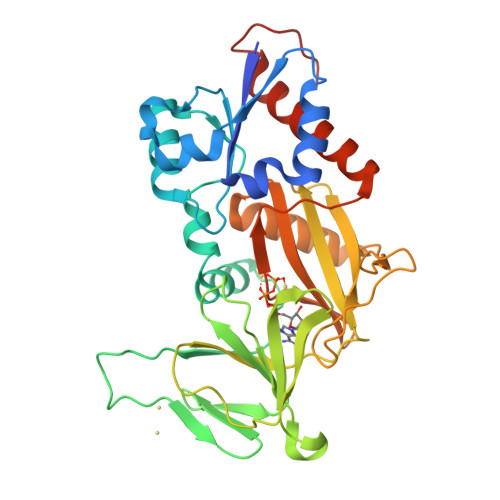
 Click to view 3D structure | Inositol hexakisphosphate and diphosphoinositol-pentakisphosphate kinase 2 | O43314 | Humans | Predicted (SEA) | - Prediction Confidence Score
- 0.25
- Applicability Domain
- 0.25 Low confidence
- Statistical Significance
- 8.00e-05
- Supporting Reference Compounds
- 1
- E-value
- 0.622794
|
 Click to view 3D structure | 1-deoxy-D-xylulose-5-phosphate synthase | B7UJP3 | Escherichia coli O127:H6 (strain E2348/69 / EPEC) | Predicted (SEA) | - Prediction Confidence Score
- 0.216
- Applicability Domain
- 0.22 Low confidence
- Statistical Significance
- 6.50e-04
- Supporting Reference Compounds
- 2
- E-value
- 5.0602
|
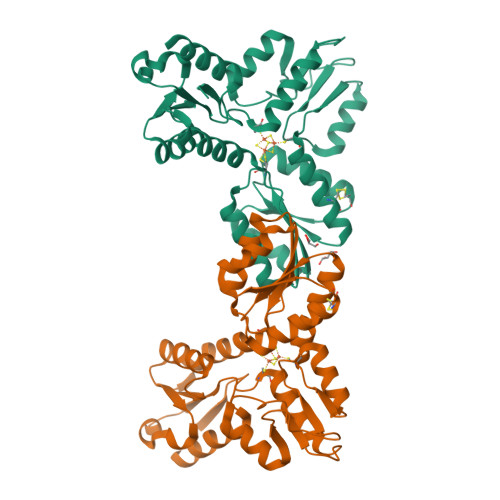 Click to view 3D structure | 4-hydroxy-3-methylbut-2-enyl diphosphate reductase | O67625 | Aquifex aeolicus (strain VF5) | Predicted (SEA) | - Prediction Confidence Score
- 0.216
- Applicability Domain
- 0.216 Low confidence
- Statistical Significance
- 2.10e-04
- Supporting Reference Compounds
- 1
- E-value
- 1.63483
|
| Click to view 3D structure | Fructose-bisphosphate aldolase class II | A0A380PJR2 | Yersinia pestis | Predicted (SEA) | - Prediction Confidence Score
- 0.2
- Applicability Domain
- 0.2 Low confidence
- Statistical Significance
- 3.70e-04
- Supporting Reference Compounds
- 1
- E-value
- 2.88042
|
 Click to view 3D structure | Fructose-bisphosphate aldolase | Q9URB4 | Candida albicans (strain SC5314 / ATCC MYA-2876) (Yeast) | Predicted (SEA) | - Prediction Confidence Score
- 0.195
- Applicability Domain
- 0.203 Low confidence
- Statistical Significance
- 5.10e-04
- Supporting Reference Compounds
- 3
- E-value
- 3.97031
|
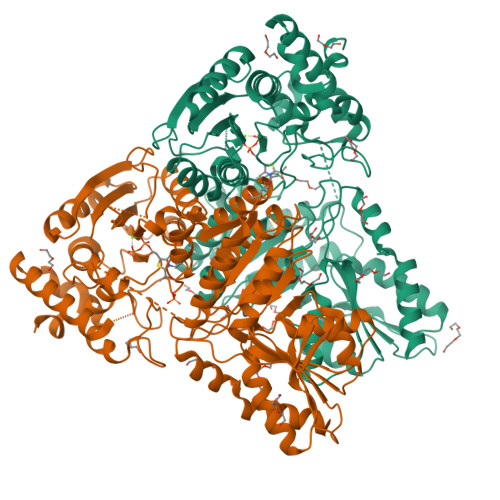 Click to view 3D structure | 1-deoxy-D-xylulose-5-phosphate synthase | P9WNS3 | Mycobacterium tuberculosis | Predicted (SEA) | - Prediction Confidence Score
- 0.193
- Applicability Domain
- 0.22 Low confidence
- Statistical Significance
- 6.00e-04
- Supporting Reference Compounds
- 2
- E-value
- 4.67095
|
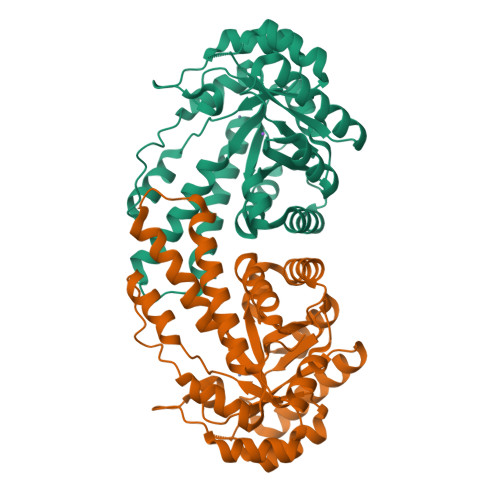 Click to view 3D structure | Fructose-bisphosphate aldolase | P56109 | Helicobacter pylori (strain ATCC 700392 / 26695) (Campylobacterpylori) | Predicted (SEA) | - Prediction Confidence Score
- 0.191
- Applicability Domain
- 0.2 Low confidence
- Statistical Significance
- 4.00e-04
- Supporting Reference Compounds
- 2
- E-value
- 3.11397
|
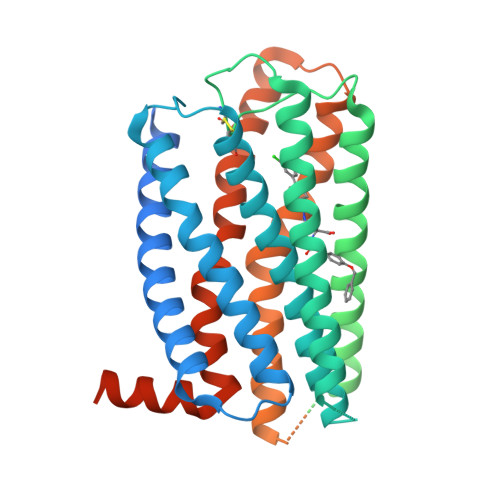 Click to view 3D structure | Probable G-protein coupled receptor 34 | Q9UPC5 | Humans | Predicted (SEA) | - Prediction Confidence Score
- 0.188
- Applicability Domain
- 0.197 Low confidence
- Statistical Significance
- 0.048
- Supporting Reference Compounds
- 11
- E-value
- 373.365
|
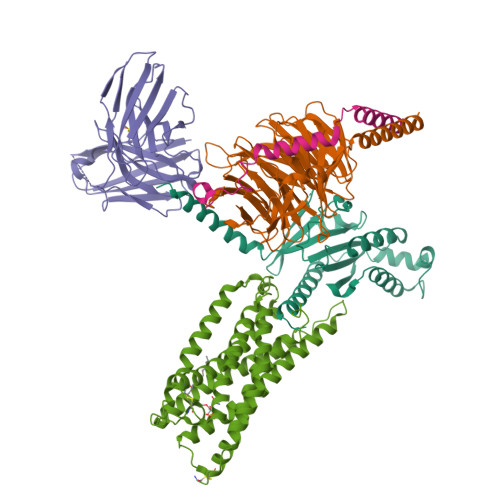 Click to view 3D structure | Putative P2Y purinoceptor 10 | O00398 | Humans | Predicted (SEA) | - Prediction Confidence Score
- 0.188
- Applicability Domain
- 0.197 Low confidence
- Statistical Significance
- 0.0127
- Supporting Reference Compounds
- 10
- E-value
- 98.9464
|
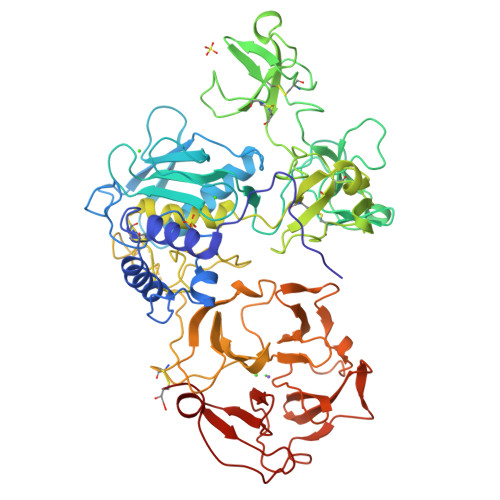 Click to view 3D structure | 72 kDa type IV collagenase | P08253 | Humans | Predicted (SEA) | - Prediction Confidence Score
- 0.187
- Applicability Domain
- 0.286 Low confidence
- Statistical Significance
- 0.7476
- Supporting Reference Compounds
- 400
- E-value
- 5820.16
|
 Click to view 3D structure | Carbonic anhydrase 2 | P00918 | Humans | Predicted (SEA) | - Prediction Confidence Score
- 0.183
- Applicability Domain
- 0.286 Low confidence
- Statistical Significance
- 0.7662
- Supporting Reference Compounds
- 472
- E-value
- 5964.81
|
 Click to view 3D structure | Carbonic anhydrase 1 | P00915 | Humans | Predicted (SEA) | - Prediction Confidence Score
- 0.183
- Applicability Domain
- 0.286 Low confidence
- Statistical Significance
- 0.7181
- Supporting Reference Compounds
- 407
- E-value
- 5590.74
|
 Click to view 3D structure | Farnesyl pyrophosphate synthase | P14324 | Humans | Predicted (SEA) | - Prediction Confidence Score
- 0.181
- Applicability Domain
- 0.2 Low confidence
- Statistical Significance
- 0.0801
- Supporting Reference Compounds
- 22
- E-value
- 623.961
|
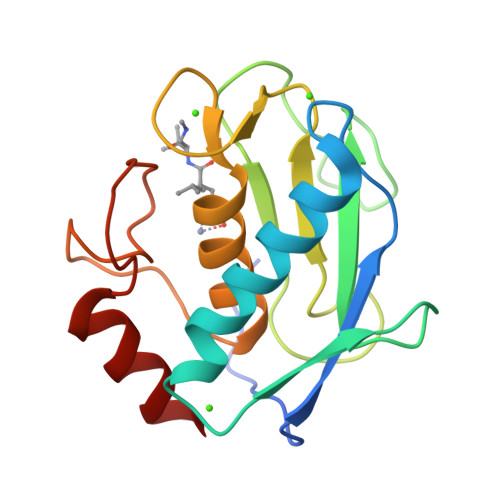 Click to view 3D structure | Matrix metalloproteinase-9 | P14780 | Humans | Predicted (SEA) | - Prediction Confidence Score
- 0.181
- Applicability Domain
- 0.286 Low confidence
- Statistical Significance
- 0.7479
- Supporting Reference Compounds
- 292
- E-value
- 5822.03
|
| Click to view 3D structure | Putative P2Y purinoceptor 10 | Q8BFU7 | Mus musculus | Predicted (SEA) | - Prediction Confidence Score
- 0.178
- Applicability Domain
- 0.197 Low confidence
- Statistical Significance
- 0.0321
- Supporting Reference Compounds
- 8
- E-value
- 250.052
|
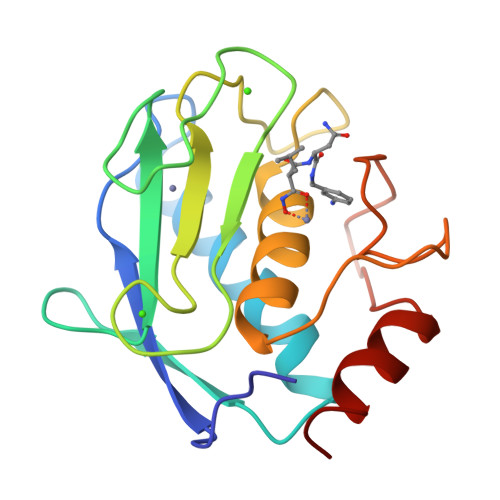 Click to view 3D structure | Neutrophil collagenase | P22894 | Humans | Predicted (SEA) | - Prediction Confidence Score
- 0.177
- Applicability Domain
- 0.286 Low confidence
- Statistical Significance
- 0.646
- Supporting Reference Compounds
- 176
- E-value
- 5028.75
|
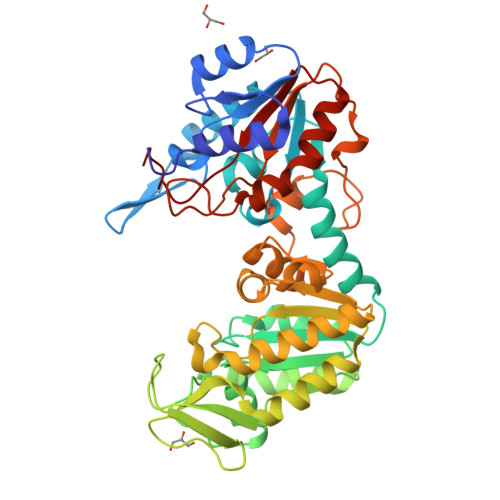 Click to view 3D structure | Phosphoglycerate kinase | P00560 | Saccharomyces cerevisiae S288c | Predicted (SEA) | - Prediction Confidence Score
- 0.176
- Applicability Domain
- 0.176 Low confidence
- Statistical Significance
- 5.20e-04
- Supporting Reference Compounds
- 1
- E-value
- 4.04816
|
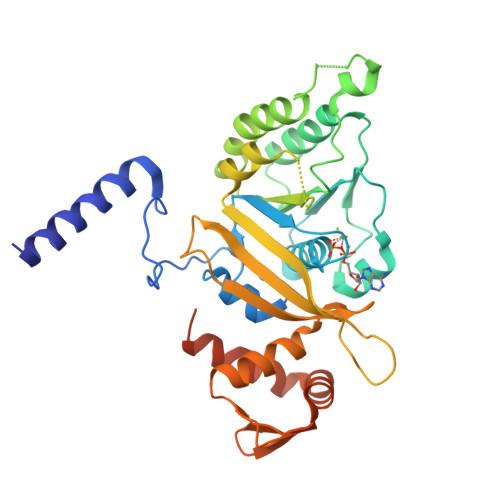 Click to view 3D structure | Protein RecA | P9WHJ3 | Mycobacterium tuberculosis | Predicted (SEA) | - Prediction Confidence Score
- 0.176
- Applicability Domain
- 0.2 Low confidence
- Statistical Significance
- 0.7901
- Supporting Reference Compounds
- 296
- E-value
- 6150.71
|
| Click to view 3D structure | Organic anion transporter 3 | O88909 | Mus musculus | Predicted (SEA) | - Prediction Confidence Score
- 0.175
- Applicability Domain
- 0.175 Low confidence
- Statistical Significance
- 0.0449
- Supporting Reference Compounds
- 1
- E-value
- 349.854
|
 Click to view 3D structure | Liver carboxylesterase 1 | P23141 | Humans | Predicted (SEA) | - Prediction Confidence Score
- 0.174
- Applicability Domain
- 0.204 Low confidence
- Statistical Significance
- 0.2608
- Supporting Reference Compounds
- 55
- E-value
- 2030.62
|
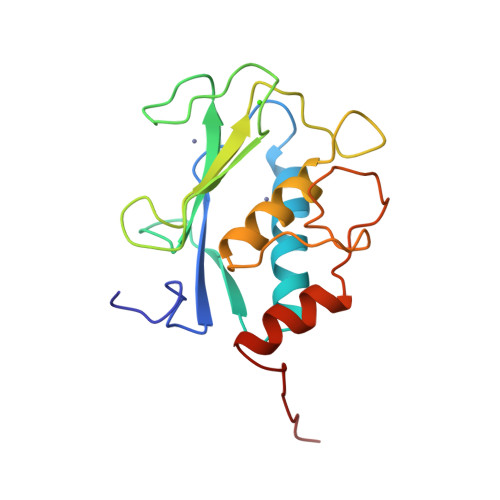 Click to view 3D structure | Interstitial collagenase | P03956 | Humans | Predicted (SEA) | - Prediction Confidence Score
- 0.173
- Applicability Domain
- 0.286 Low confidence
- Statistical Significance
- 0.8144
- Supporting Reference Compounds
- 258
- E-value
- 6340.27
|
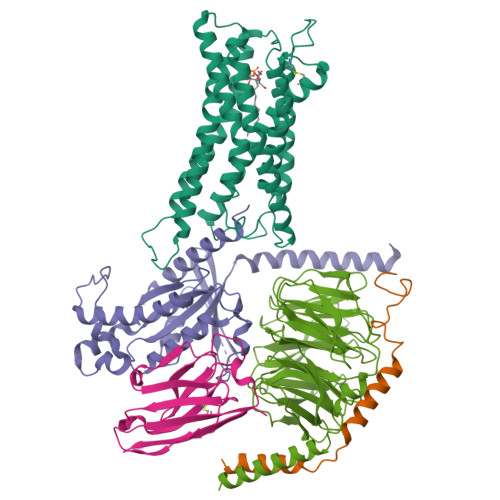 Click to view 3D structure | Probable G-protein coupled receptor 174 | Q9BXC1 | Humans | Predicted (SEA) | - Prediction Confidence Score
- 0.173
- Applicability Domain
- 0.193 Low confidence
- Statistical Significance
- 0.0166
- Supporting Reference Compounds
- 8
- E-value
- 129.463
|
| Click to view 3D structure | Lysophosphatidic acid receptor 3 | Q9UBY5 | Humans | Predicted (SEA) | - Prediction Confidence Score
- 0.173
- Applicability Domain
- 0.204 Low confidence
- Statistical Significance
- 0.1225
- Supporting Reference Compounds
- 21
- E-value
- 953.653
|
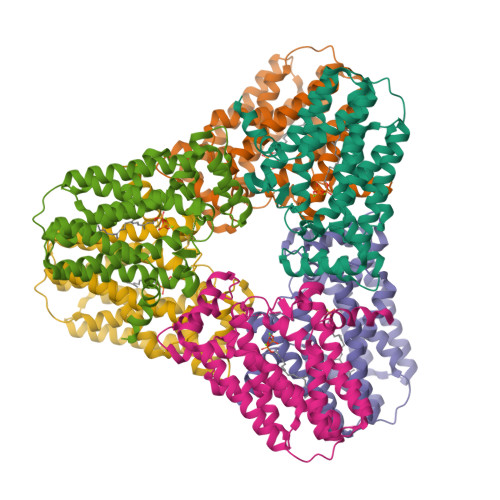 Click to view 3D structure | Geranylgeranyl pyrophosphate synthase | O95749 | Humans | Predicted (SEA) | - Prediction Confidence Score
- 0.172
- Applicability Domain
- 0.176 Low confidence
- Statistical Significance
- 0.0425
- Supporting Reference Compounds
- 15
- E-value
- 331.171
|
| Click to view 3D structure | Farnesyl pyrophosphate synthase | Q0GKD7 | Leishmania donovani | Predicted (SEA) | - Prediction Confidence Score
- 0.172
- Applicability Domain
- 0.176 Low confidence
- Statistical Significance
- 0.0211
- Supporting Reference Compounds
- 14
- E-value
- 164.262
|

