4H-pyran-4-one, 2,3-dihydro-3,5-dihydroxy-6-methyl- (CED0095749)

Record Information
Version1.0
Creation Date2026-04-06 02:54:23 UTC
Update Date2026-04-17 16:34:54 UTC
SynCED IDCED0095749
Secondary Accession Numbers
  • CHEM115752
Identification
Common Name4H-pyran-4-one, 2,3-dihydro-3,5-dihydroxy-6-methyl-
ClassSmall Molecule
Description
4H-pyran-4-one, 2,3-dihydro-3,5-dihydroxy-6-methyl- is an organoheterocyclic compound with the formula C6H8O4 and an average molecular weight of 144.13 g/mol. 4H-pyran-4-one, 2,3-dihydro-3,5-dihydroxy-6-methyl- belongs to the pyranones and derivatives, a subclass of pyrans within the organic compounds. The substance is associated with six recorded sources. Within the category of food, food processing, and cookware, it is linked to food contact materials, the treatment of hops, and the preparation of wine or sparkling wine. Additionally, it is found in household cleaning and consumer products, specifically pipe accessories, other smoking requisites, and non-electric simulated smoking devices. Recorded exposure routes for this compound include oral, inhalation, and touch.
Contaminant TypeNot Available
Chemical Structure
SynonymsNot Available
Chemical FormulaC6H8O4
Average Molecular Mass144.126 g/mol
Monoisotopic Mass144.042 g/mol
CAS Registry Number28564-83-2
IUPAC NameNot Available
Traditional NameNot Available
SMILESCC1=C(O)C(=O)C(O)CO1
InChI IdentifierInChI=1/C6H8O4/c1-3-5(8)6(9)4(7)2-10-3/h4,7-8H,2H2,1H3
InChI KeyVOLMSPGWNYJHQQ-UHFFFAOYSA-N
Chemical Taxonomy
ClassificationNot classified
Biological Properties
StatusDetected and Not Quantified
OriginNot Available
Cellular LocationsNot Available
Biofluid LocationsNot Available
Tissue LocationsNot Available
ApplicationsNot Available
Biological Roles
Chemical RolesNot Available
Organoleptic Effects
  • fruity odour ?
  • caramel odour ?
Physical Properties
StateNot Available
AppearanceNot Available
Experimental Properties
PropertyValue
Melting PointNot Available
Boiling PointNot Available
SolubilityNot Available
Predicted PropertiesNot Available
Spectra
Spectra
Spectrum TypeDescriptionSplash KeyDeposition DateView
Predicted GC-MSPredicted GC-MS Spectrumsplash10-004i-9100000000-950fc4e1089344795704Not AvailableView Spectrum
Predicted LC-MS/MSPredicted LC-MS/MS Spectrumsplash10-0002-1900000000-03e7ab7a0ca34cbb1cd3Not AvailableView Spectrum
Predicted LC-MS/MSPredicted LC-MS/MS Spectrumsplash10-002b-1900000000-9f6dfee5f5635a9a8806Not AvailableView Spectrum
Predicted LC-MS/MSPredicted LC-MS/MS Spectrumsplash10-0a4i-9000000000-24c00e71286448d33209Not AvailableView Spectrum
Predicted LC-MS/MSPredicted LC-MS/MS Spectrumsplash10-0006-1900000000-827226ad5eadcc98f56fNot AvailableView Spectrum
Predicted LC-MS/MSPredicted LC-MS/MS Spectrumsplash10-0006-6900000000-4ffb8dbc5569cd709f58Not AvailableView Spectrum
Predicted LC-MS/MSPredicted LC-MS/MS Spectrumsplash10-0a4i-9000000000-af8889a54ea7352fee96Not AvailableView Spectrum
1D NMR13C NMR Spectrum (1D, H2O, predicted)Not AvailableNot AvailableView Spectrum
1D NMR1H NMR Spectrum (1D, H2O, predicted)Not AvailableNot AvailableView Spectrum
Toxicity Profile
Toxicity Values
Toxicity ValueOrganismDose DescriptorRoute of ExposurePredicted or ExperimentalToxicity RatingReference
2840.0 Log mg/kg [1600:5100]RatLD50oralpredictedNot AvailableNot Available
Toxicity / Toxin ClassNot Available
Mechanism of ToxicityNot Available
Carcinogenicity (IARC Classification)Not Available
Minimum Risk LevelNot Available
SymptomsNot Available
TreatmentNot Available
Health Effects
Health EffectRelationshipDirectionDescriptionReference
Exposure Sources
Source IDSourceSectorReference
CEDs000010Insecticides?Insecticides are synthetic chemicals designed to control or eliminate insect pests that threaten crops and other agricultural products.Agriculture & land managementPubChem
CEDs000494Food contact materials?Food contact materials refer to substances and products that are intended to come into contact with food during processing, packaging, or preparation.Food, food processing & cookwareNot Available
CEDs000511Conductors Or Conductive Bodies Characterised By The Conductive Materials?Conductors, or conductive bodies, are materials that allow the flow of electrical current, typically made from metals such as copper, aluminum, or silver.Electrical & Electronic EquipmentPubChem
CEDs000518Electrically Stimulated Smoking Devices?Electrically stimulated smoking devices, commonly known as e-cigarettes or vape pens, utilize electrical components to heat a liquid solution, often containing nicotine, flavorings, and other additives, to produce an aerosol for inhalation.Electrical & Electronic EquipmentPubChem
CEDs000519Electrodes?Electrodes, used in various electrical and electronic applications, can be a source of synthetic chemical contamination due to the materials from which they are constructed and the processes involved in their manufacturing.Electrical & Electronic EquipmentPubChem
CEDs000544Fermentation Processes For Beer?Fermentation processes for beer involve the conversion of sugars into alcohol and carbon dioxide by yeast.Food, food processing & cookwarePubChem
CEDs000545Food Preservation?Food preservation often involves the use of synthetic chemicals, such as preservatives, flavor enhancers, and color additives, to extend shelf life and enhance the sensory qualities of food products.Food, food processing & cookwarePubChem
CEDs000549Preparation Of Wine Or Sparkling Wine?The preparation of wine or sparkling wine involves various stages, including fermentation, aging, and bottling, which can introduce potential sources of synthetic chemical contamination.Food, food processing & cookwarePubChem
CEDs000553Treatment Of Hops?Hops, a key ingredient in brewing and food flavoring, can be a source of synthetic chemical contamination due to various agricultural practices.Food, food processing & cookwarePubChem
CEDs000556Cigar Cigarettes?Cigar cigarettes are a source of synthetic chemical contamination due to the combustion of various tobacco blends and additives.Household cleaning & consumer productsPubChem
CEDs000559Non Electric Simulated Smoking Devices?Non-electric simulated smoking devices, often designed to mimic the experience of smoking without combustion, can be sources of synthetic chemical contamination due to the materials and chemicals used in their construction and operation.Household cleaning & consumer productsPubChem
CEDs000560Other Smoking Requisites?Other smoking requisites, including items such as lighters, matches, and rolling papers, can introduce synthetic chemical contamination through various components and additives.Household cleaning & consumer productsPubChem
CEDs000561Perfumes Within Detergents And Soaps?Perfumes within detergents and soaps are synthetic fragrance compounds added to enhance the sensory experience of cleaning products.Household cleaning & consumer productsPubChem
CEDs000562Pipe Accessories?Pipe accessories, such as fittings, connectors, and seals, are components used in plumbing systems to facilitate the flow of liquids and gases.Household cleaning & consumer productsPubChem
CEDs000569Tobacco Smoke Filters?Tobacco smoke filters are designed to reduce the inhalation of harmful substances in cigarette smoke, including tar and other particulate matter.Household cleaning & consumer productsPubChem
CEDs000578Making Cigars?The process of making cigars involves several steps, including the cultivation of tobacco, fermentation, and the application of various additives to enhance flavor and preservation.Industrial manufacturing & chemical processingPubChem
CEDs000580Manufacture Preparation Of Tobacco Products?The manufacture and preparation of tobacco products involve various processes that can result in the introduction of synthetic chemicals into the environment.Industrial manufacturing & chemical processingPubChem
CEDs000596Acaricides?Acaricides are synthetic chemicals specifically designed to target and control mite populations that can damage crops and plants.Agriculture & land managementPubChem
CEDs000600Herbicides And Algicides?Herbicides and algicides are synthetic chemicals primarily used to control unwanted plants and algae in various environments.Agriculture & land managementPubChem
CEDs000602Molluscicides?Molluscicides are synthetic chemicals specifically designed to control and eliminate mollusks, such as snails and slugs, which can be detrimental to crops and agricultural productivity.Agriculture & land managementPubChem
CEDs000603Nematocides?Nematocides are synthetic chemicals specifically designed to control nematodes, which are microscopic roundworms that can cause significant damage to crops and plants.Agriculture & land managementPubChem
CEDs000604Pest Attractants?Pest attractants are synthetic chemicals designed to lure specific pests for monitoring or control purposes.Agriculture & land managementPubChem
CEDs000606Plant Growth Regulators?Plant Growth Regulators (PGRs) are synthetic chemicals designed to influence the growth and development of plants.Agriculture & land managementPubChem
CEDs000611Anti Perspirants Or Body Deoderants?Antiperspirants and body deodorants commonly contain synthetic chemicals such as aluminum compounds, parabens, and synthetic fragrances.Personal care & cosmeticsPubChem
CEDs000614Essential Oils Or Perfumes?Essential oils and perfumes are complex mixtures of volatile compounds derived from natural or synthetic sources, commonly used for their aromatic properties.Personal care & cosmeticsPubChem
CEDs000642Footwear?Footwear production often involves the use of various synthetic chemicals, such as adhesives, dyes, and treatments, which can contribute to environmental contamination.Textiles, leather & furnishingsPubChem
CEDs000678Nitrogenous Fertilisers?Nitrogenous fertilizers are synthetic chemical compounds primarily used to enhance plant growth by supplying essential nitrogen, a crucial nutrient for photosynthesis and protein synthesis.Agriculture & land managementPubChem
CEDs000679Phosphatic Fertilisers?Phosphatic fertilizers are synthetic chemical products primarily composed of phosphorus, which is essential for plant growth.Agriculture & land managementPubChem
CEDs000696Nanotechnology?Nanotechnology involves the manipulation of materials at the molecular or atomic level, typically within the range of 1 to 100 nanometers.Industrial manufacturing & chemical processingPubChem
CEDs000739Inks?Inks are complex mixtures composed of pigments or dyes, solvents, resins, and additives used primarily for printing and writing applications.Paper, pulp & fiber productsPubChem
CEDs000740Paper?Paper production involves the processing of wood fibers and the use of various chemicals, which can lead to synthetic chemical contamination.Paper, pulp & fiber productsPubChem
CEDs000741Pigment Pastes?Pigment pastes are concentrated dispersions of pigments used to impart color and properties to materials.Paper, pulp & fiber productsPubChem
CEDs000743Sludge Treatment?Sludge treatment involves the processing of waste materials generated from wastewater treatment plants, which often contain a variety of organic and inorganic substances.Wastewater, sanitation & biosolidsPubChem
CEDs000744Water, Wastewater, & Sewage Treatment?Water, wastewater, and sewage treatment processes are critical for managing and mitigating pollutants in water systems.Wastewater, sanitation & biosolidsPubChem
Pathways
0 pathwaysPathway Source: PathBank

No pathways found

No metabolic pathways have been associated with this synthetic chemical

Targets
StructureProteinUniProt IDOrganismRelationshipDetails
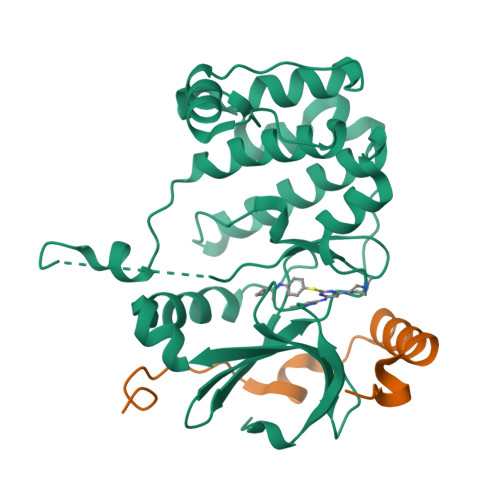
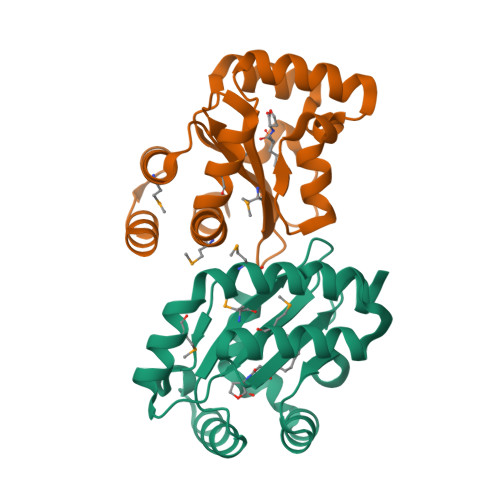
Hepatocyte growth factor receptor structureClick to view 3D structureHepatocyte growth factor receptorP08581HumansPredicted (SEA)
Prediction Confidence Score
0.201
Applicability Domain
0.263 Low confidence
Statistical Significance
0.8386
Supporting Reference Compounds
934
E-value
6528.36
Tyrosine-protein kinase receptor UFO structureClick to view 3D structureTyrosine-protein kinase receptor UFOP30530HumansPredicted (SEA)
Prediction Confidence Score
0.201
Applicability Domain
0.263 Low confidence
Statistical Significance
0.7334
Supporting Reference Compounds
475
E-value
5709.77
ALK tyrosine kinase receptor structureClick to view 3D structureALK tyrosine kinase receptorQ9UM73HumansPredicted (SEA)
Prediction Confidence Score
0.199
Applicability Domain
0.263 Low confidence
Statistical Significance
0.8255
Supporting Reference Compounds
708
E-value
6426.76
Insulin-like growth factor 1 receptor structureClick to view 3D structureInsulin-like growth factor 1 receptorP08069HumansPredicted (SEA)
Prediction Confidence Score
0.199
Applicability Domain
0.263 Low confidence
Statistical Significance
0.8279
Supporting Reference Compounds
785
E-value
6445.21
Aurora kinase B structureClick to view 3D structureAurora kinase BQ96GD4HumansPredicted (SEA)
Prediction Confidence Score
0.194
Applicability Domain
0.263 Low confidence
Statistical Significance
0.8866
Supporting Reference Compounds
1017
E-value
6901.8
Vascular endothelial growth factor receptor 2 structureClick to view 3D structureVascular endothelial growth factor receptor 2P35968HumansPredicted (SEA)
Prediction Confidence Score
0.193
Applicability Domain
0.263 Low confidence
Statistical Significance
0.9244
Supporting Reference Compounds
1660
E-value
7196.23
Click to view 3D structureRegulatory protein E2P03118Human papillomavirus type 1aPredicted (SEA)
Prediction Confidence Score
0.19
Applicability Domain
0.19 Low confidence
Statistical Significance
0.0063
Supporting Reference Compounds
1
E-value
48.7336
Click to view 3D structureDNA topoisomerase 2P15348Drosophila melanogasterPredicted (SEA)
Prediction Confidence Score
0.19
Applicability Domain
0.19 Low confidence
Statistical Significance
0.0017
Supporting Reference Compounds
1
E-value
13.1565
Serine/threonine-protein phosphatase 2A 65 kDa regulatory subunit A alpha isoform structureClick to view 3D structureSerine/threonine-protein phosphatase 2A 65 kDa regulatory subunit A alpha isoformQ76MZ3Mus musculusPredicted (SEA)
Prediction Confidence Score
0.189
Applicability Domain
0.189 Low confidence
Statistical Significance
2.10e-04
Supporting Reference Compounds
1
E-value
1.63483
Proto-oncogene tyrosine-protein kinase Src structureClick to view 3D structureProto-oncogene tyrosine-protein kinase SrcP12931HumansPredicted (SEA)
Prediction Confidence Score
0.189
Applicability Domain
0.263 Low confidence
Statistical Significance
0.9262
Supporting Reference Compounds
1158
E-value
7210.16
Acetylcholinesterase structureClick to view 3D structureAcetylcholinesteraseP22303HumansPredicted (SEA)
Prediction Confidence Score
0.189
Applicability Domain
0.244 Low confidence
Statistical Significance
0.7711
Supporting Reference Compounds
406
E-value
6002.72
Click to view 3D structureGag-Pol polyproteinQ7ZJM1Human immunodeficiency virus 1Predicted (SEA)
Prediction Confidence Score
0.186
Applicability Domain
0.222 Low confidence
Statistical Significance
0.2481
Supporting Reference Compounds
96
E-value
1931.59
Serine/threonine-protein kinase Nek2 structureClick to view 3D structureSerine/threonine-protein kinase Nek2P51955HumansPredicted (SEA)
Prediction Confidence Score
0.185
Applicability Domain
0.263 Low confidence
Statistical Significance
0.9086
Supporting Reference Compounds
660
E-value
7073.15
HTH-type quorum-sensing regulator RhlR structureClick to view 3D structureHTH-type quorum-sensing regulator RhlRP54292Pseudomonas aeruginosa (strain ATCC 15692 / PAO1 / 1C / PRS 101 / LMG12228)Predicted (SEA)
Prediction Confidence Score
0.184
Applicability Domain
0.184 Low confidence
Statistical Significance
0.0104
Supporting Reference Compounds
1
E-value
81.2746
Click to view 3D structureStreptokinase AP10520Streptococcus pyogenes serotype M1Predicted (SEA)
Prediction Confidence Score
0.183
Applicability Domain
0.188 Low confidence
Statistical Significance
0.7994
Supporting Reference Compounds
425
E-value
6223.66
Aromatase structureClick to view 3D structureAromataseP11511HumansPredicted (SEA)
Prediction Confidence Score
0.183
Applicability Domain
0.222 Low confidence
Statistical Significance
0.3789
Supporting Reference Compounds
127
E-value
2949.86
Focal adhesion kinase 1 structureClick to view 3D structureFocal adhesion kinase 1Q05397HumansPredicted (SEA)
Prediction Confidence Score
0.182
Applicability Domain
0.263 Low confidence
Statistical Significance
0.9159
Supporting Reference Compounds
615
E-value
7129.98
Click to view 3D structureNUAK family SNF1-like kinase 1O60285HumansPredicted (SEA)
Prediction Confidence Score
0.182
Applicability Domain
0.263 Low confidence
Statistical Significance
0.6867
Supporting Reference Compounds
143
E-value
5345.75
Replicase polyprotein 1ab structureClick to view 3D structureReplicase polyprotein 1abP0DTD1SARS-CoV-2Predicted (SEA)
Prediction Confidence Score
0.181
Applicability Domain
0.196 Low confidence
Statistical Significance
0.6807
Supporting Reference Compounds
215
E-value
5298.89
Induced myeloid leukemia cell differentiation protein Mcl-1 structureClick to view 3D structureInduced myeloid leukemia cell differentiation protein Mcl-1Q07820HumansPredicted (SEA)
Prediction Confidence Score
0.18
Applicability Domain
0.188 Low confidence
Statistical Significance
0.7159
Supporting Reference Compounds
343
E-value
5573.38
Tyrosine-protein phosphatase non-receptor type 1 structureClick to view 3D structureTyrosine-protein phosphatase non-receptor type 1P18031HumansPredicted (SEA)
Prediction Confidence Score
0.179
Applicability Domain
0.196 Low confidence
Statistical Significance
0.5371
Supporting Reference Compounds
197
E-value
4181.36
Click to view 3D structureAldo-keto reductase family 1 member B1P07943Rattus norvegicusPredicted (SEA)
Prediction Confidence Score
0.177
Applicability Domain
0.196 Low confidence
Statistical Significance
0.31
Supporting Reference Compounds
70
E-value
2413.01
Signal transducer and activator of transcription 3 structureClick to view 3D structureSignal transducer and activator of transcription 3P40763HumansPredicted (SEA)
Prediction Confidence Score
0.176
Applicability Domain
0.213 Low confidence
Statistical Significance
0.6769
Supporting Reference Compounds
93
E-value
5269.77
Transcriptional activator protein TraR structureClick to view 3D structureTranscriptional activator protein TraRP33905Agrobacterium tumefaciensPredicted (SEA)
Prediction Confidence Score
0.176
Applicability Domain
0.192 Low confidence
Statistical Significance
0.0394
Supporting Reference Compounds
8
E-value
306.492
Transcriptional activator protein LasR structureClick to view 3D structureTranscriptional activator protein LasRP25084Pseudomonas aeruginosa (strain ATCC 15692 / PAO1 / 1C / PRS 101 / LMG 12228)Predicted (SEA)
Prediction Confidence Score
0.175
Applicability Domain
0.188 Low confidence
Statistical Significance
0.0312
Supporting Reference Compounds
12
E-value
242.578
Concentrations
Not Available
External Links
IdentifiersNot Available
References
Synthesis ReferenceNot Available
MSDSNot Available
General ReferencesNot Available