1,2,3,4-Butanetetracarboxylic acid, 1,2,3,4-tetrakis(1,2,2,6,6-pentamethyl-4-piperidinyl) ester (CED0153663)

Record Information
Version1.0
Creation Date2026-04-06 07:32:14 UTC
Update Date2026-08-22 15:07:25 UTC
SynCED IDCED0153663
Secondary Accession Numbers
  • CHEM119970
Identification
Common Name1,2,3,4-Butanetetracarboxylic acid, 1,2,3,4-tetrakis(1,2,2,6,6-pentamethyl-4-piperidinyl) ester
ClassSmall Molecule
Description
1,2,3,4-Butanetetracarboxylic acid, 1,2,3,4-tetrakis(1,2,2,6,6-pentamethyl-4-piperidinyl) ester belongs to the tetracarboxylic acids and derivatives, a subclass of carboxylic acids and derivatives within the organic compounds. With an average molecular weight of 847.24 g/mol, 1,2,3,4-Butanetetracarboxylic acid, 1,2,3,4-tetrakis(1,2,2,6,6-pentamethyl-4-piperidinyl) ester is a heavy molecule. It has the chemical formula C48H86N4O8. This compound is used in polypropylene plastics. It has been recorded as being found in or released from electrical and electronic equipment, specifically antennas and auxiliary devices.
Contaminant TypeNot Available
Chemical Structure
SynonymsNot Available
Chemical FormulaC48H86N4O8
Average Molecular Mass847.236 g/mol
Monoisotopic Mass846.645 g/mol
CAS Registry Number91788-83-9
IUPAC NameNot Available
Traditional NameNot Available
SMILESCN1C(C)(C)CC(CC1(C)C)OC(=O)CC(C(CC(=O)OC1CC(C)(C)N(C)C(C)(C)C1)C(=O)OC1CC(C)(C)N(C)C(C)(C)C1)C(=O)OC1CC(C)(C)N(C)C(C)(C)C1
InChI IdentifierInChI=1/C48H86N4O8/c1-41(2)23-31(24-42(3,4)49(41)17)57-37(53)21-35(39(55)59-33-27-45(9,10)51(19)46(11,12)28-33)36(40(56)60-34-29-47(13,14)52(20)48(15,16)30-34)22-38(54)58-32-25-43(5,6)50(18)44(7,8)26-32/h31-36H,21-30H2,1-20H3
InChI KeyWUPCFMITFBVJMS-UHFFFAOYSA-N
Chemical Taxonomy
ClassificationNot classified
Biological Properties
StatusDetected and Not Quantified
OriginNot Available
Cellular LocationsNot Available
Biofluid LocationsNot Available
Tissue LocationsNot Available
ApplicationsNot Available
Biological RolesNot Available
Chemical RolesNot Available
Organoleptic EffectsNot Available
Physical Properties
StateNot Available
AppearanceNot Available
Experimental Properties
PropertyValue
Melting PointNot Available
Boiling PointNot Available
SolubilityNot Available
Predicted PropertiesNot Available
Spectra
SpectraNot Available
Toxicity Profile
Toxicity Values
Toxicity ValueOrganismDose DescriptorRoute of ExposurePredicted or ExperimentalToxicity RatingReference
1321.0 Log mg/kg [740:2300]RatLD50oralpredictedNot AvailableNot Available
Toxicity / Toxin ClassNot Available
Mechanism of ToxicityNot Available
Carcinogenicity (IARC Classification)Not Available
Minimum Risk LevelNot Available
SymptomsNot Available
TreatmentNot Available
Health Effects
Health EffectRelationshipDirectionDescriptionReference
Exposure Sources
Source IDSourceSectorReference
CEDs000506Antennas?Antennas, commonly used in communication technologies, can be a source of synthetic chemical contamination through the materials and coatings used in their construction.Electrical & Electronic EquipmentPubChem
CEDs000507Auxiliary Devices?Auxiliary devices, such as capacitors, transformers, and circuit breakers, are integral components in various electronic systems.Electrical & Electronic EquipmentPubChem
CEDs000511Conductors Or Conductive Bodies Characterised By The Conductive Materials?Conductors, or conductive bodies, are materials that allow the flow of electrical current, typically made from metals such as copper, aluminum, or silver.Electrical & Electronic EquipmentPubChem
CEDs000514Discharge Lamps?Discharge lamps, including fluorescent and high-intensity discharge (HID) lamps, are commonly used for lighting applications due to their energy efficiency and brightness.Electrical & Electronic EquipmentPubChem
CEDs000519Electrodes?Electrodes, used in various electrical and electronic applications, can be a source of synthetic chemical contamination due to the materials from which they are constructed and the processes involved in their manufacturing.Electrical & Electronic EquipmentPubChem
CEDs000610Aftersun Products?Aftersun products are designed to soothe and hydrate the skin after sun exposure, often containing various synthetic chemicals such as emollients, preservatives, and fragrances.Personal care & cosmeticsPubChem
CEDs000611Anti Perspirants Or Body Deoderants?Antiperspirants and body deodorants commonly contain synthetic chemicals such as aluminum compounds, parabens, and synthetic fragrances.Personal care & cosmeticsPubChem
CEDs000613Depilatories?Depilatories are products designed to remove unwanted hair through the application of synthetic chemicals that break down the protein structure of hair, facilitating its removal.Personal care & cosmeticsPubChem
CEDs000615Eye Makeup Products?Eye makeup products, including mascaras, eyeliners, and eyeshadows, often contain a variety of synthetic chemicals such as pigments, preservatives, and film-forming agents.Personal care & cosmeticsPubChem
CEDs000618Lip Makeup Products?Lip makeup products, such as lipsticks, lip glosses, and lip liners, often contain a variety of synthetic chemicals, including pigments, preservatives, and emollients.Personal care & cosmeticsPubChem
CEDs000631Anthraquinone Dyes?Anthraquinone dyes are a class of synthetic organic compounds characterized by their vibrant colors and stability, making them widely used in various applications, particularly in coloring textiles and leather.Textiles, leather & furnishingsPubChem
CEDs000642Footwear?Footwear production often involves the use of various synthetic chemicals, such as adhesives, dyes, and treatments, which can contribute to environmental contamination.Textiles, leather & furnishingsPubChem
CEDs000662Yarns Or Threads?Yarns or threads used in textiles can be a source of synthetic chemical contamination due to the production processes and treatments they undergo.Textiles, leather & furnishingsPubChem
CEDs000684Cements?Cements are a composite material primarily used as a binding agent in construction applications, formed by the calcination of limestone and clay minerals at high temperatures.Building & ConstructionPubChem
CEDs000685Ceramics?Ceramics can be a source of synthetic chemical contamination through various additives and processing agents used in their production.Building & ConstructionPubChem
CEDs000688Glass Coatings?Glass coatings are synthetic chemical formulations applied to glass surfaces to enhance properties such as durability, UV resistance, and aesthetic appeal.Building & ConstructionPubChem
CEDs000696Nanotechnology?Nanotechnology involves the manipulation of materials at the molecular or atomic level, typically within the range of 1 to 100 nanometers.Industrial manufacturing & chemical processingPubChem
CEDs000716Erasers?Erasers, commonly used in writing and drawing applications, are often made from synthetic rubber or thermoplastic materials, which can contain various additives such as plasticizers, fillers, and colorants.Paper, pulp & fiber productsPubChem
CEDs000726Pens?Pens, commonly utilized for writing and marking, can be a source of synthetic chemical contamination primarily due to the materials used in their manufacturing.Paper, pulp & fiber productsPubChem
CEDs000734Coating Compositions?Coating compositions, which include paints, sealants, and varnishes, are formulated with a variety of synthetic chemicals such as solvents, resins, pigments, and additives.Building & ConstructionPubChem
CEDs000739Inks?Inks are complex mixtures composed of pigments or dyes, solvents, resins, and additives used primarily for printing and writing applications.Paper, pulp & fiber productsPubChem
CEDs000740Paper?Paper production involves the processing of wood fibers and the use of various chemicals, which can lead to synthetic chemical contamination.Paper, pulp & fiber productsPubChem
CEDs000741Pigment Pastes?Pigment pastes are concentrated dispersions of pigments used to impart color and properties to materials.Paper, pulp & fiber productsPubChem
CEDs000744Water, Wastewater, & Sewage Treatment?Water, wastewater, and sewage treatment processes are critical for managing and mitigating pollutants in water systems.Wastewater, sanitation & biosolidsPubChem
Pathways
0 pathwaysPathway Source: PathBank

No pathways found

No metabolic pathways have been associated with this synthetic chemical

Targets
StructureProteinUniProt IDOrganismRelationshipDetails
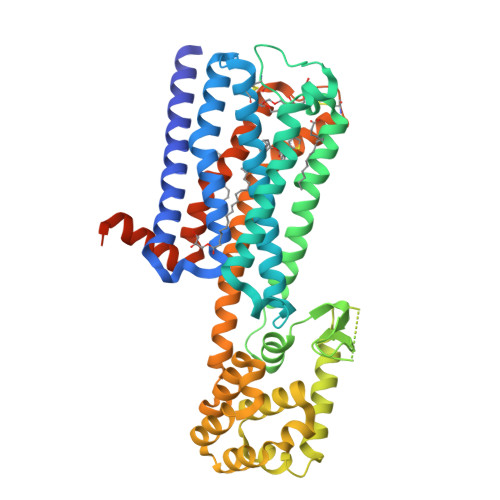
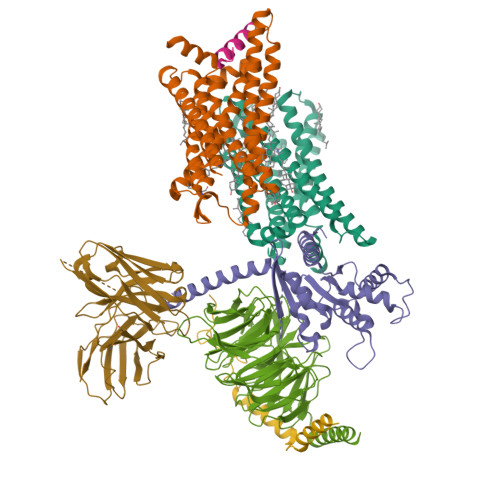
Muscarinic acetylcholine receptor M3 structureClick to view 3D structureMuscarinic acetylcholine receptor M3P08483Rattus norvegicusPredicted (SEA)
Prediction Confidence Score
0.255
Applicability Domain
0.273 Low confidence
Statistical Significance
0.0092
Supporting Reference Compounds
55
E-value
72.0105
Muscarinic acetylcholine receptor M1 structureClick to view 3D structureMuscarinic acetylcholine receptor M1P11229HumansPredicted (SEA)
Prediction Confidence Score
0.249
Applicability Domain
0.273 Low confidence
Statistical Significance
0.1508
Supporting Reference Compounds
385
E-value
1174.2
Muscarinic acetylcholine receptor M2 structureClick to view 3D structureMuscarinic acetylcholine receptor M2P08172HumansPredicted (SEA)
Prediction Confidence Score
0.249
Applicability Domain
0.273 Low confidence
Statistical Significance
0.1444
Supporting Reference Compounds
373
E-value
1124.14
Click to view 3D structureMuscarinic acetylcholine receptor M1P08482Rattus norvegicusPredicted (SEA)
Prediction Confidence Score
0.249
Applicability Domain
0.273 Low confidence
Statistical Significance
0.0397
Supporting Reference Compounds
109
E-value
308.75
Click to view 3D structureMuscarinic acetylcholine receptor M2P10980Rattus norvegicusPredicted (SEA)
Prediction Confidence Score
0.249
Applicability Domain
0.273 Low confidence
Statistical Significance
0.0235
Supporting Reference Compounds
98
E-value
183.335
Muscarinic acetylcholine receptor M5 structureClick to view 3D structureMuscarinic acetylcholine receptor M5P08912HumansPredicted (SEA)
Prediction Confidence Score
0.248
Applicability Domain
0.273 Low confidence
Statistical Significance
0.112
Supporting Reference Compounds
266
E-value
871.833
Muscarinic acetylcholine receptor M3 structureClick to view 3D structureMuscarinic acetylcholine receptor M3P20309HumansPredicted (SEA)
Prediction Confidence Score
0.248
Applicability Domain
0.273 Low confidence
Statistical Significance
0.1255
Supporting Reference Compounds
310
E-value
977.319
Potassium-transporting ATPase subunit beta structureClick to view 3D structurePotassium-transporting ATPase subunit betaP18434Sus scrofaPredicted (SEA)
Prediction Confidence Score
0.246
Applicability Domain
0.246 Low confidence
Statistical Significance
1.00e-04
Supporting Reference Compounds
1
E-value
0.778492
Muscarinic acetylcholine receptor M4 structureClick to view 3D structureMuscarinic acetylcholine receptor M4P08173HumansPredicted (SEA)
Prediction Confidence Score
0.237
Applicability Domain
0.273 Low confidence
Statistical Significance
0.1745
Supporting Reference Compounds
297
E-value
1358.31
Click to view 3D structureMuscarinic acetylcholine receptor M4P08485Rattus norvegicusPredicted (SEA)
Prediction Confidence Score
0.23
Applicability Domain
0.273 Low confidence
Statistical Significance
0.0195
Supporting Reference Compounds
38
E-value
151.572
Click to view 3D structureMuscarinic acetylcholine receptor M3Q8VH26Cavia porcellusPredicted (SEA)
Prediction Confidence Score
0.229
Applicability Domain
0.273 Low confidence
Statistical Significance
0.0208
Supporting Reference Compounds
52
E-value
162.082
Click to view 3D structureMuscarinic receptor 4Q8VH25Cavia porcellusPredicted (SEA)
Prediction Confidence Score
0.213
Applicability Domain
0.213 Low confidence
Statistical Significance
0.0055
Supporting Reference Compounds
1
E-value
42.8949
5-hydroxytryptamine receptor 2C structureClick to view 3D structure5-hydroxytryptamine receptor 2CP28335HumansPredicted (SEA)
Prediction Confidence Score
0.201
Applicability Domain
0.273 Low confidence
Statistical Significance
0.7936
Supporting Reference Compounds
823
E-value
6177.96
Click to view 3D structureSodium-dependent dopamine transporterP23977Rattus norvegicusPredicted (SEA)
Prediction Confidence Score
0.201
Applicability Domain
0.231 Low confidence
Statistical Significance
0.3141
Supporting Reference Compounds
203
E-value
2445.24
Click to view 3D structureMuscarinic acetylcholine receptor M1Q8WMX0Bos taurusPredicted (SEA)
Prediction Confidence Score
0.196
Applicability Domain
0.273 Low confidence
Statistical Significance
0.0535
Supporting Reference Compounds
18
E-value
416.338
Click to view 3D structureSodium-dependent serotonin transporterP31652Rattus norvegicusPredicted (SEA)
Prediction Confidence Score
0.196
Applicability Domain
0.203 Low confidence
Statistical Significance
0.5307
Supporting Reference Compounds
297
E-value
4131.22
Click to view 3D structureSigma non-opioid intracellular receptor 1Q60492Cavia porcellusPredicted (SEA)
Prediction Confidence Score
0.189
Applicability Domain
0.2 Low confidence
Statistical Significance
0.5683
Supporting Reference Compounds
229
E-value
4424.25
Click to view 3D structureSynaptic vesicle glycoprotein 2AQ02563Rattus norvegicusPredicted (SEA)
Prediction Confidence Score
0.189
Applicability Domain
0.189 Low confidence
Statistical Significance
0.003
Supporting Reference Compounds
1
E-value
23.1212
Protein kinase C alpha type structureClick to view 3D structureProtein kinase C alpha typeP17252HumansPredicted (SEA)
Prediction Confidence Score
0.189
Applicability Domain
0.2 Low confidence
Statistical Significance
0.692
Supporting Reference Compounds
258
E-value
5387.48
Mu-type opioid receptor structureClick to view 3D structureMu-type opioid receptorP35372HumansPredicted (SEA)
Prediction Confidence Score
0.188
Applicability Domain
0.2 Low confidence
Statistical Significance
0.8222
Supporting Reference Compounds
527
E-value
6401.07
Sigma non-opioid intracellular receptor 1 structureClick to view 3D structureSigma non-opioid intracellular receptor 1Q99720HumansPredicted (SEA)
Prediction Confidence Score
0.188
Applicability Domain
0.2 Low confidence
Statistical Significance
0.8516
Supporting Reference Compounds
562
E-value
6629.72
Protein kinase C delta type structureClick to view 3D structureProtein kinase C delta typeP28867Mus musculusPredicted (SEA)
Prediction Confidence Score
0.187
Applicability Domain
0.2 Low confidence
Statistical Significance
0.0081
Supporting Reference Compounds
12
E-value
63.3693
Click to view 3D structureMuscarinic acetylcholine receptor M5P08911Rattus norvegicusPredicted (SEA)
Prediction Confidence Score
0.186
Applicability Domain
0.273 Low confidence
Statistical Significance
0.1769
Supporting Reference Compounds
23
E-value
1377.31
Click to view 3D structureSigma intracellular receptor 2Q5U3Y7Rattus norvegicusPredicted (SEA)
Prediction Confidence Score
0.186
Applicability Domain
0.2 Low confidence
Statistical Significance
0.466
Supporting Reference Compounds
110
E-value
3628.01
Voltage-gated inwardly rectifying potassium channel KCNH2 structureClick to view 3D structureVoltage-gated inwardly rectifying potassium channel KCNH2Q12809HumansPredicted (SEA)
Prediction Confidence Score
0.186
Applicability Domain
0.203 Low confidence
Statistical Significance
0.9723
Supporting Reference Compounds
1498
E-value
7569.44
Concentrations
Not Available
External Links
IdentifiersNot Available
References
Synthesis ReferenceNot Available
MSDSNot Available
General ReferencesNot Available