 Click to view 3D structure Click to view 3D structure | Peroxisome proliferator-activated receptor gamma | P37231 | Humans | Predicted (SEA) | - Prediction Confidence Score
- 0.582
- Applicability Domain
- 0.613
- Statistical Significance
- 2.40e-04
- Supporting Reference Compounds
- 192
- E-value
- 1.86838
|
 Click to view 3D structure Click to view 3D structure | Peroxisome proliferator-activated receptor alpha | Q07869 | Humans | Predicted (SEA) | - Prediction Confidence Score
- 0.58
- Applicability Domain
- 0.613
- Statistical Significance
- 3.80e-04
- Supporting Reference Compounds
- 127
- E-value
- 2.95827
|
 Click to view 3D structure Click to view 3D structure | Peroxisome proliferator-activated receptor delta | Q03181 | Humans | Predicted (SEA) | - Prediction Confidence Score
- 0.566
- Applicability Domain
- 0.613
- Statistical Significance
- 3.60e-04
- Supporting Reference Compounds
- 89
- E-value
- 2.80257
|
 Click to view 3D structure Click to view 3D structure | Tyrosine-protein phosphatase non-receptor type 1 | P18031 | Humans | Predicted (SEA) | - Prediction Confidence Score
- 0.497
- Applicability Domain
- 0.613
- Statistical Significance
- 7.50e-04
- Supporting Reference Compounds
- 197
- E-value
- 5.83869
|
 Click to view 3D structure Click to view 3D structure | Transient receptor potential cation channel subfamily V member 2 | Q9WUD2 | Rattus norvegicus | Predicted (SEA) | - Prediction Confidence Score
- 0.482
- Applicability Domain
- 0.613
- Statistical Significance
- 3.80e-04
- Supporting Reference Compounds
- 21
- E-value
- 2.95827
|
 Click to view 3D structure Click to view 3D structure | Fatty acid-binding protein, adipocyte | P15090 | Humans | Predicted (SEA) | - Prediction Confidence Score
- 0.443
- Applicability Domain
- 0.613
- Statistical Significance
- 1.40e-04
- Supporting Reference Compounds
- 19
- E-value
- 1.08989
|
 Click to view 3D structure Click to view 3D structure | Cytochrome P450 4A4 | P10611 | Oryctolagus cuniculus | Predicted (SEA) | - Prediction Confidence Score
- 0.421
- Applicability Domain
- 0.421
- Statistical Significance
- 1.00e-05
- Supporting Reference Compounds
- 1
- E-value
- 0.0778492
|
 Click to view 3D structure Click to view 3D structure | Free fatty acid receptor 1 | O14842 | Humans | Predicted (SEA) | - Prediction Confidence Score
- 0.41
- Applicability Domain
- 0.559
- Statistical Significance
- 0.0011
- Supporting Reference Compounds
- 56
- E-value
- 8.56341
|
 Click to view 3D structure Click to view 3D structure | Free fatty acid receptor 4 | Q5NUL3 | Humans | Predicted (SEA) | - Prediction Confidence Score
- 0.408
- Applicability Domain
- 0.559
- Statistical Significance
- 6.70e-04
- Supporting Reference Compounds
- 63
- E-value
- 5.2159
|
| Click to view 3D structure | Oxoeicosanoid receptor 1 | Q8TDS5 | Humans | Predicted (SEA) | - Prediction Confidence Score
- 0.387
- Applicability Domain
- 0.559
- Statistical Significance
- 1.30e-04
- Supporting Reference Compounds
- 4
- E-value
- 1.01204
|
| Click to view 3D structure | Esterase | A3QR02 | Chilo suppressalis | Predicted (SEA) | - Prediction Confidence Score
- 0.385
- Applicability Domain
- 0.385
- Statistical Significance
- 9.00e-05
- Supporting Reference Compounds
- 1
- E-value
- 0.700643
|
| Click to view 3D structure | Fatty-acid amide hydrolase 1 | O00519 | Humans | Predicted (SEA) | - Prediction Confidence Score
- 0.379
- Applicability Domain
- 0.613
- Statistical Significance
- 0.0031
- Supporting Reference Compounds
- 106
- E-value
- 23.8997
|
| Click to view 3D structure | Lysophosphatidic acid receptor 4 | Q8BLG2 | Mus musculus | Predicted (SEA) | - Prediction Confidence Score
- 0.375
- Applicability Domain
- 0.375
- Statistical Significance
- 3.60e-04
- Supporting Reference Compounds
- 1
- E-value
- 2.80257
|
| Click to view 3D structure | Cannabinoid receptor 1 | P20272 | Rattus norvegicus | Predicted (SEA) | - Prediction Confidence Score
- 0.369
- Applicability Domain
- 0.471
- Statistical Significance
- 0.0029
- Supporting Reference Compounds
- 83
- E-value
- 22.6541
|
| Click to view 3D structure | Solute carrier organic anion transporter family member 2A1 | Q9EPT5 | Mus musculus | Predicted (SEA) | - Prediction Confidence Score
- 0.367
- Applicability Domain
- 0.377
- Statistical Significance
- 1.00e-04
- Supporting Reference Compounds
- 2
- E-value
- 0.778492
|
| Click to view 3D structure | Solute carrier organic anion transporter family member 2B1 | Q9JHI3 | Rattus norvegicus | Predicted (SEA) | - Prediction Confidence Score
- 0.352
- Applicability Domain
- 0.377
- Statistical Significance
- 1.00e-04
- Supporting Reference Compounds
- 2
- E-value
- 0.778492
|
| Click to view 3D structure | Lysophosphatidic acid receptor 3 | Q9UBY5 | Humans | Predicted (SEA) | - Prediction Confidence Score
- 0.348
- Applicability Domain
- 0.375
- Statistical Significance
- 6.10e-04
- Supporting Reference Compounds
- 21
- E-value
- 4.7488
|
| Click to view 3D structure | Histone deacetylase 11 | Q96DB2 | Humans | Predicted (SEA) | - Prediction Confidence Score
- 0.344
- Applicability Domain
- 0.419
- Statistical Significance
- 0.0069
- Supporting Reference Compounds
- 149
- E-value
- 54.0274
|
 Click to view 3D structure Click to view 3D structure | Prostaglandin E2 receptor EP2 subtype | P43116 | Humans | Predicted (SEA) | - Prediction Confidence Score
- 0.342
- Applicability Domain
- 0.377
- Statistical Significance
- 0.0016
- Supporting Reference Compounds
- 95
- E-value
- 12.2223
|
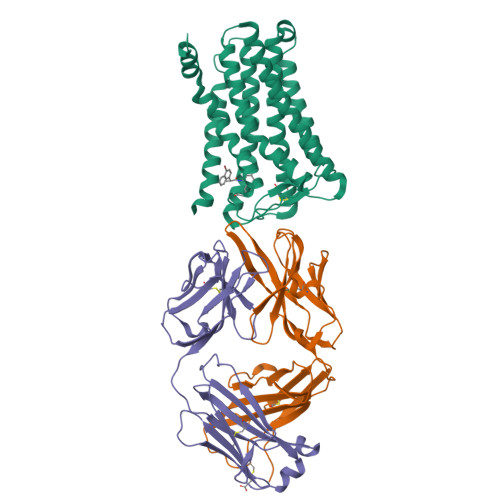 Click to view 3D structure Click to view 3D structure | Prostaglandin E2 receptor EP4 subtype | P35408 | Humans | Predicted (SEA) | - Prediction Confidence Score
- 0.341
- Applicability Domain
- 0.377
- Statistical Significance
- 0.002
- Supporting Reference Compounds
- 92
- E-value
- 15.8812
|
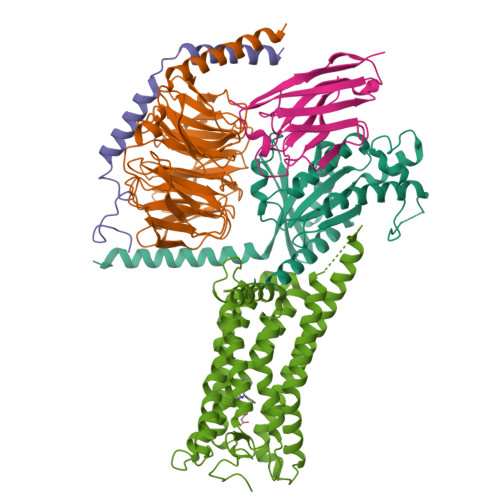 Click to view 3D structure Click to view 3D structure | Prostacyclin receptor | P43119 | Humans | Predicted (SEA) | - Prediction Confidence Score
- 0.341
- Applicability Domain
- 0.377
- Statistical Significance
- 9.90e-04
- Supporting Reference Compounds
- 63
- E-value
- 7.70707
|
 Click to view 3D structure Click to view 3D structure | Cannabinoid receptor 1 | P21554 | Humans | Predicted (SEA) | - Prediction Confidence Score
- 0.34
- Applicability Domain
- 0.357
- Statistical Significance
- 0.0071
- Supporting Reference Compounds
- 200
- E-value
- 55.0394
|
 Click to view 3D structure Click to view 3D structure | Cannabinoid receptor 2 | P34972 | Humans | Predicted (SEA) | - Prediction Confidence Score
- 0.338
- Applicability Domain
- 0.357
- Statistical Significance
- 0.0064
- Supporting Reference Compounds
- 175
- E-value
- 50.2127
|
 Click to view 3D structure Click to view 3D structure | Transient receptor potential cation channel subfamily V member 1 | Q8NER1 | Humans | Predicted (SEA) | - Prediction Confidence Score
- 0.336
- Applicability Domain
- 0.375
- Statistical Significance
- 0.0043
- Supporting Reference Compounds
- 104
- E-value
- 33.3973
|
| Click to view 3D structure | Nuclear receptor subfamily 4 group A member 2 | Q07917 | Rattus norvegicus | Predicted (SEA) | - Prediction Confidence Score
- 0.331
- Applicability Domain
- 0.34
- Statistical Significance
- 1.60e-04
- Supporting Reference Compounds
- 3
- E-value
- 1.24559
|

