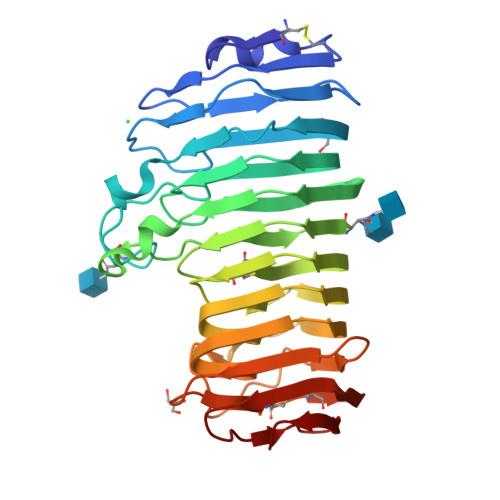
 Click to view 3D structure | Endopolygalactyuronase | P79074 | Chondrostereum purpureum | Predicted (SEA) | - Prediction Confidence Score
- 0.352
- Applicability Domain
- 0.352
- Statistical Significance
- 1.00e-05
- Supporting Reference Compounds
- 1
- E-value
- 0.0778492
|
 Click to view 3D structure | ATP-binding cassette sub-family C member 3 | O88563 | Rattus norvegicus | Predicted (SEA) | - Prediction Confidence Score
- 0.329
- Applicability Domain
- 0.329
- Statistical Significance
- 4.00e-05
- Supporting Reference Compounds
- 1
- E-value
- 0.311397
|
| Click to view 3D structure | Multidrug resistance associated protein | Q96QA9 | Homo sapiens | Predicted (SEA) | - Prediction Confidence Score
- 0.329
- Applicability Domain
- 0.329
- Statistical Significance
- 4.00e-05
- Supporting Reference Compounds
- 1
- E-value
- 0.311397
|
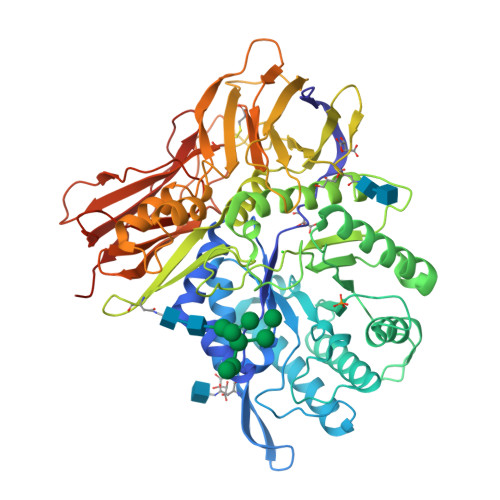 Click to view 3D structure | Alpha-L-iduronidase | P35475 | Humans | Predicted (SEA) | - Prediction Confidence Score
- 0.311
- Applicability Domain
- 0.311
- Statistical Significance
- 6.00e-05
- Supporting Reference Compounds
- 1
- E-value
- 0.467095
|
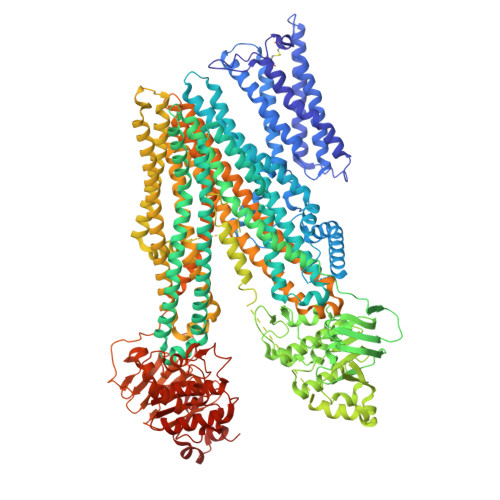 Click to view 3D structure | ATP-binding cassette sub-family C member 2 | Q63120 | Rattus norvegicus | Predicted (SEA) | - Prediction Confidence Score
- 0.297
- Applicability Domain
- 0.414
- Statistical Significance
- 3.00e-05
- Supporting Reference Compounds
- 12
- E-value
- 0.233548
|
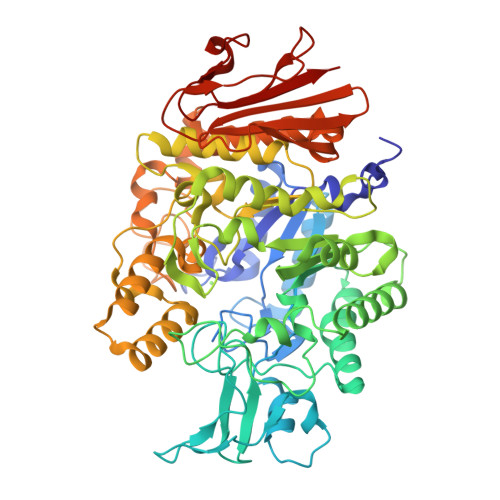 Click to view 3D structure | Oligo-1,6-glucosidase IMA1 | P53051 | Saccharomyces cerevisiae S288c | Predicted (SEA) | - Prediction Confidence Score
- 0.291
- Applicability Domain
- 0.291 Low confidence
- Statistical Significance
- 8.10e-04
- Supporting Reference Compounds
- 1
- E-value
- 6.30579
|
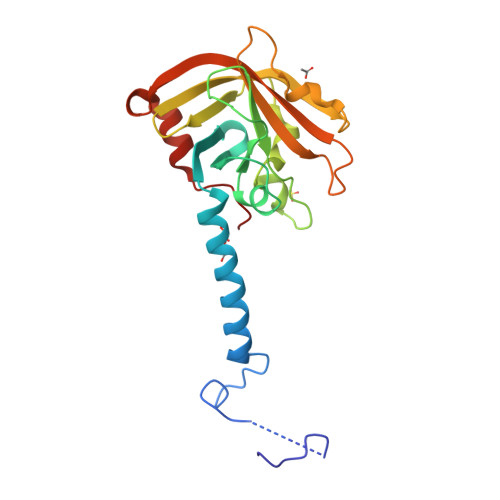 Click to view 3D structure | Sortase A | Q8CM62 | Streptococcus mutans | Predicted (SEA) | - Prediction Confidence Score
- 0.286
- Applicability Domain
- 0.286 Low confidence
- Statistical Significance
- 0.0022
- Supporting Reference Compounds
- 1
- E-value
- 17.2047
|
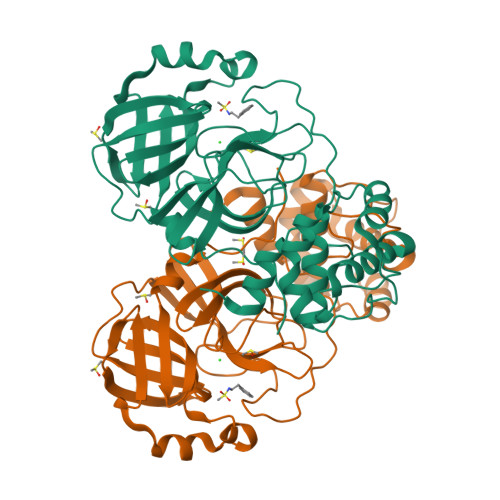 Click to view 3D structure | Replicase polyprotein 1ab | P0DTD1 | SARS-CoV-2 | Predicted (SEA) | - Prediction Confidence Score
- 0.276
- Applicability Domain
- 0.414
- Statistical Significance
- 0.0281
- Supporting Reference Compounds
- 215
- E-value
- 218.678
|
 Click to view 3D structure | Acetylcholine-binding protein | P58154 | Lymnaea stagnalis | Predicted (SEA) | - Prediction Confidence Score
- 0.273
- Applicability Domain
- 0.362
- Statistical Significance
- 0.002
- Supporting Reference Compounds
- 20
- E-value
- 15.9591
|
| Click to view 3D structure | Squalene monooxygenase | P52020 | Rattus norvegicus | Predicted (SEA) | - Prediction Confidence Score
- 0.272
- Applicability Domain
- 0.309
- Statistical Significance
- 2.80e-04
- Supporting Reference Compounds
- 12
- E-value
- 2.17978
|
| Click to view 3D structure | Sodium-dependent dopamine transporter | P23977 | Rattus norvegicus | Predicted (SEA) | - Prediction Confidence Score
- 0.269
- Applicability Domain
- 0.362
- Statistical Significance
- 0.0405
- Supporting Reference Compounds
- 203
- E-value
- 315.289
|
| Click to view 3D structure | Niemann-Pick C1-like 1 protein | A0MJA4 | Canis lupus familiaris | Predicted (SEA) | - Prediction Confidence Score
- 0.265
- Applicability Domain
- 0.265 Low confidence
- Statistical Significance
- 6.00e-05
- Supporting Reference Compounds
- 1
- E-value
- 0.467095
|
| Click to view 3D structure | Niemann-Pick C1-like 1 protein | A0MJA5 | Macaca mulatta | Predicted (SEA) | - Prediction Confidence Score
- 0.265
- Applicability Domain
- 0.265 Low confidence
- Statistical Significance
- 6.00e-05
- Supporting Reference Compounds
- 1
- E-value
- 0.467095
|
 Click to view 3D structure | Fucose-binding lectin PA-IIL | Q9HYN5 | Pseudomonas aeruginosa (strain ATCC 15692 / PAO1 / 1C / PRS 101 / LMG 12228) | Predicted (SEA) | - Prediction Confidence Score
- 0.264
- Applicability Domain
- 0.362
- Statistical Significance
- 1.60e-04
- Supporting Reference Compounds
- 5
- E-value
- 1.24559
|
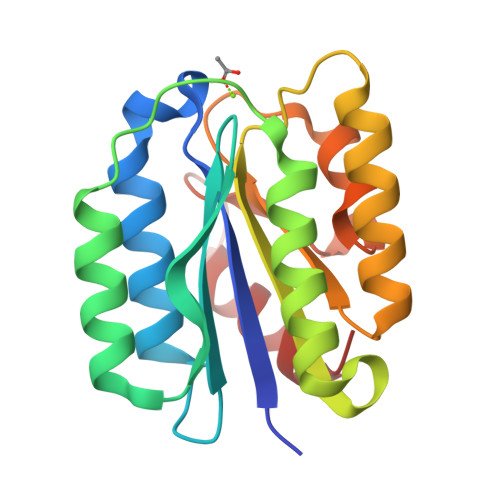 Click to view 3D structure | Anthrax toxin receptor 2 | P58335 | Humans | Predicted (SEA) | - Prediction Confidence Score
- 0.262
- Applicability Domain
- 0.273 Low confidence
- Statistical Significance
- 2.40e-04
- Supporting Reference Compounds
- 3
- E-value
- 1.86838
|
 Click to view 3D structure | Dipeptidyl peptidase 1 | P53634 | Humans | Predicted (SEA) | - Prediction Confidence Score
- 0.261
- Applicability Domain
- 0.309
- Statistical Significance
- 0.0179
- Supporting Reference Compounds
- 44
- E-value
- 139.584
|
 Click to view 3D structure | Luciferin 4-monooxygenase | P08659 | Photinus pyralis | Predicted (SEA) | - Prediction Confidence Score
- 0.261
- Applicability Domain
- 0.327
- Statistical Significance
- 0.0418
- Supporting Reference Compounds
- 114
- E-value
- 325.799
|
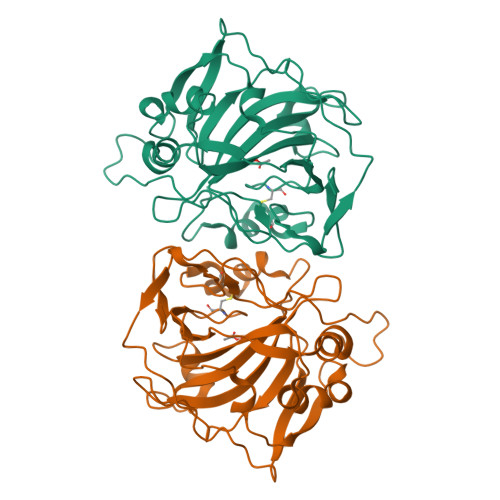 Click to view 3D structure | Carbonic anhydrase 12 | O43570 | Humans | Predicted (SEA) | - Prediction Confidence Score
- 0.261
- Applicability Domain
- 0.293 Low confidence
- Statistical Significance
- 0.0865
- Supporting Reference Compounds
- 332
- E-value
- 673.162
|
 Click to view 3D structure | Galectin-3 | P17931 | Humans | Predicted (SEA) | - Prediction Confidence Score
- 0.26
- Applicability Domain
- 0.3
- Statistical Significance
- 0.0016
- Supporting Reference Compounds
- 23
- E-value
- 12.8451
|
| Click to view 3D structure | NS3 | A3EZJ3 | Hepatitis C virus | Predicted (SEA) | - Prediction Confidence Score
- 0.259
- Applicability Domain
- 0.309
- Statistical Significance
- 0.0103
- Supporting Reference Compounds
- 70
- E-value
- 80.3404
|
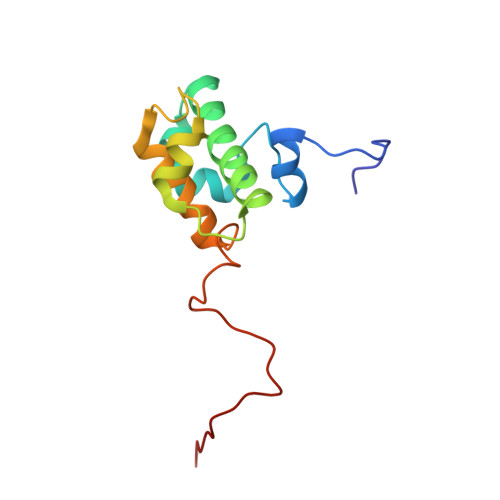 Click to view 3D structure | Lysine-specific histone demethylase 1A | O60341 | Humans | Predicted (SEA) | - Prediction Confidence Score
- 0.257
- Applicability Domain
- 0.414
- Statistical Significance
- 0.0395
- Supporting Reference Compounds
- 85
- E-value
- 307.504
|
 Click to view 3D structure | Metabotropic glutamate receptor 5 | P41594 | Humans | Predicted (SEA) | - Prediction Confidence Score
- 0.255
- Applicability Domain
- 0.321
- Statistical Significance
- 0.0185
- Supporting Reference Compounds
- 89
- E-value
- 143.943
|
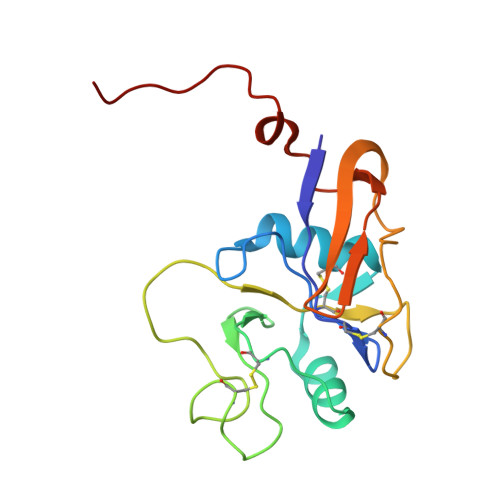 Click to view 3D structure | CD44 antigen | P16070 | Humans | Predicted (SEA) | - Prediction Confidence Score
- 0.254
- Applicability Domain
- 0.254 Low confidence
- Statistical Significance
- 5.00e-04
- Supporting Reference Compounds
- 1
- E-value
- 3.89246
|
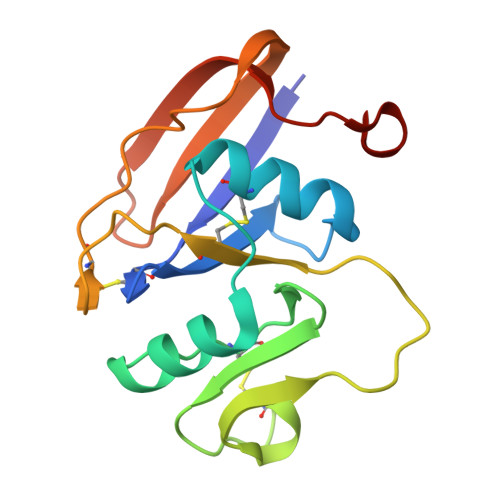 Click to view 3D structure | CD44 antigen | P15379 | Mus musculus | Predicted (SEA) | - Prediction Confidence Score
- 0.254
- Applicability Domain
- 0.254 Low confidence
- Statistical Significance
- 5.00e-04
- Supporting Reference Compounds
- 1
- E-value
- 3.89246
|
| Click to view 3D structure | Solute carrier organic anion transporter family member 1B2 | Q9QZX8 | Rattus norvegicus | Predicted (SEA) | - Prediction Confidence Score
- 0.253
- Applicability Domain
- 0.253 Low confidence
- Statistical Significance
- 5.00e-04
- Supporting Reference Compounds
- 1
- E-value
- 3.89246
|

