 Click to view 3D structure Click to view 3D structure | Lysophosphatidic acid receptor 4 | Q8BLG2 | Mus musculus | Predicted (SEA) | - Prediction Confidence Score
- 0.475
- Applicability Domain
- 0.475
- Statistical Significance
- 1.10e-04
- Supporting Reference Compounds
- 1
- E-value
- 0.856341
|
| Click to view 3D structure | Lysophosphatidic acid receptor 3 | Q9UBY5 | Humans | Predicted (SEA) | - Prediction Confidence Score
- 0.437
- Applicability Domain
- 0.475
- Statistical Significance
- 2.00e-04
- Supporting Reference Compounds
- 21
- E-value
- 1.55698
|
 Click to view 3D structure Click to view 3D structure | Lysophosphatidic acid receptor 1 | Q92633 | Humans | Predicted (SEA) | - Prediction Confidence Score
- 0.41
- Applicability Domain
- 0.475
- Statistical Significance
- 2.90e-04
- Supporting Reference Compounds
- 31
- E-value
- 2.25763
|
 Click to view 3D structure Click to view 3D structure | Lysophosphatidic acid receptor 2 | Q9HBW0 | Humans | Predicted (SEA) | - Prediction Confidence Score
- 0.405
- Applicability Domain
- 0.475
- Statistical Significance
- 2.80e-04
- Supporting Reference Compounds
- 30
- E-value
- 2.17978
|
 Click to view 3D structure Click to view 3D structure | Fatty-acid amide hydrolase 1 | P97612 | Rattus norvegicus | Predicted (SEA) | - Prediction Confidence Score
- 0.396
- Applicability Domain
- 0.491
- Statistical Significance
- 0.0018
- Supporting Reference Compounds
- 102
- E-value
- 14.1686
|
 Click to view 3D structure Click to view 3D structure | Autotaxin | Q13822 | Humans | Predicted (SEA) | - Prediction Confidence Score
- 0.387
- Applicability Domain
- 0.475
- Statistical Significance
- 7.80e-04
- Supporting Reference Compounds
- 40
- E-value
- 6.07224
|
 Click to view 3D structure Click to view 3D structure | Putative P2Y purinoceptor 10 | O00398 | Humans | Predicted (SEA) | - Prediction Confidence Score
- 0.384
- Applicability Domain
- 0.418
- Statistical Significance
- 2.60e-04
- Supporting Reference Compounds
- 10
- E-value
- 2.02408
|
| Click to view 3D structure | Lysophosphatidic acid receptor 4 | Q99677 | Humans | Predicted (SEA) | - Prediction Confidence Score
- 0.375
- Applicability Domain
- 0.475
- Statistical Significance
- 1.40e-04
- Supporting Reference Compounds
- 9
- E-value
- 1.08989
|
 Click to view 3D structure Click to view 3D structure | Transient receptor potential cation channel subfamily V member 1 | Q8NER1 | Humans | Predicted (SEA) | - Prediction Confidence Score
- 0.37
- Applicability Domain
- 0.475
- Statistical Significance
- 0.0023
- Supporting Reference Compounds
- 104
- E-value
- 17.8275
|
 Click to view 3D structure Click to view 3D structure | Peroxisome proliferator-activated receptor gamma | P37231 | Humans | Predicted (SEA) | - Prediction Confidence Score
- 0.37
- Applicability Domain
- 0.396
- Statistical Significance
- 0.005
- Supporting Reference Compounds
- 192
- E-value
- 39.0803
|
 Click to view 3D structure Click to view 3D structure | Peroxisome proliferator-activated receptor alpha | Q07869 | Humans | Predicted (SEA) | - Prediction Confidence Score
- 0.37
- Applicability Domain
- 0.396
- Statistical Significance
- 0.0038
- Supporting Reference Compounds
- 127
- E-value
- 29.6606
|
 Click to view 3D structure Click to view 3D structure | Peroxisome proliferator-activated receptor delta | Q03181 | Humans | Predicted (SEA) | - Prediction Confidence Score
- 0.37
- Applicability Domain
- 0.396
- Statistical Significance
- 0.0029
- Supporting Reference Compounds
- 89
- E-value
- 22.5763
|
| Click to view 3D structure | Cannabinoid receptor 1 | P20272 | Rattus norvegicus | Predicted (SEA) | - Prediction Confidence Score
- 0.367
- Applicability Domain
- 0.421
- Statistical Significance
- 0.0029
- Supporting Reference Compounds
- 83
- E-value
- 22.9655
|
 Click to view 3D structure Click to view 3D structure | Cannabinoid receptor 1 | P21554 | Humans | Predicted (SEA) | - Prediction Confidence Score
- 0.366
- Applicability Domain
- 0.421
- Statistical Significance
- 0.0045
- Supporting Reference Compounds
- 200
- E-value
- 35.2657
|
 Click to view 3D structure Click to view 3D structure | Cannabinoid receptor 2 | P34972 | Humans | Predicted (SEA) | - Prediction Confidence Score
- 0.366
- Applicability Domain
- 0.421
- Statistical Significance
- 0.0042
- Supporting Reference Compounds
- 175
- E-value
- 32.9302
|
| Click to view 3D structure | Fatty-acid amide hydrolase 1 | O00519 | Humans | Predicted (SEA) | - Prediction Confidence Score
- 0.363
- Applicability Domain
- 0.421
- Statistical Significance
- 0.0039
- Supporting Reference Compounds
- 106
- E-value
- 30.6726
|
| Click to view 3D structure | Cannabinoid receptor 2 | P47936 | Mus musculus | Predicted (SEA) | - Prediction Confidence Score
- 0.359
- Applicability Domain
- 0.421
- Statistical Significance
- 0.0018
- Supporting Reference Compounds
- 39
- E-value
- 13.7015
|
 Click to view 3D structure Click to view 3D structure | Probable G-protein coupled receptor 34 | Q9UPC5 | Humans | Predicted (SEA) | - Prediction Confidence Score
- 0.351
- Applicability Domain
- 0.418
- Statistical Significance
- 2.90e-04
- Supporting Reference Compounds
- 11
- E-value
- 2.25763
|
| Click to view 3D structure | Cannabinoid receptor 2 | Q9QZN9 | Rattus norvegicus | Predicted (SEA) | - Prediction Confidence Score
- 0.35
- Applicability Domain
- 0.421
- Statistical Significance
- 5.40e-04
- Supporting Reference Compounds
- 20
- E-value
- 4.20386
|
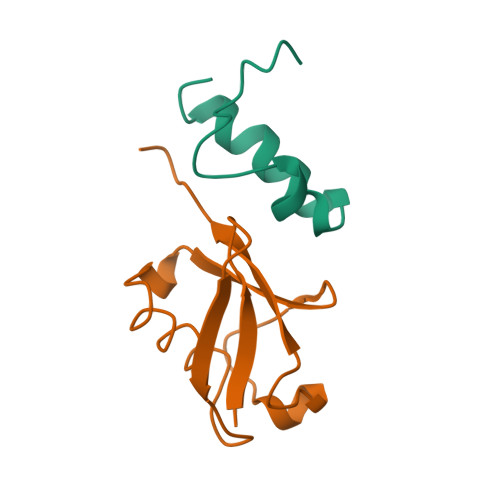 Click to view 3D structure Click to view 3D structure | DNA polymerase iota | Q6R3M4 | Mus musculus | Predicted (SEA) | - Prediction Confidence Score
- 0.348
- Applicability Domain
- 0.394
- Statistical Significance
- 6.00e-05
- Supporting Reference Compounds
- 2
- E-value
- 0.467095
|
 Click to view 3D structure Click to view 3D structure | Transient receptor potential cation channel subfamily V member 2 | Q9WUD2 | Rattus norvegicus | Predicted (SEA) | - Prediction Confidence Score
- 0.348
- Applicability Domain
- 0.377
- Statistical Significance
- 0.0014
- Supporting Reference Compounds
- 21
- E-value
- 10.7432
|
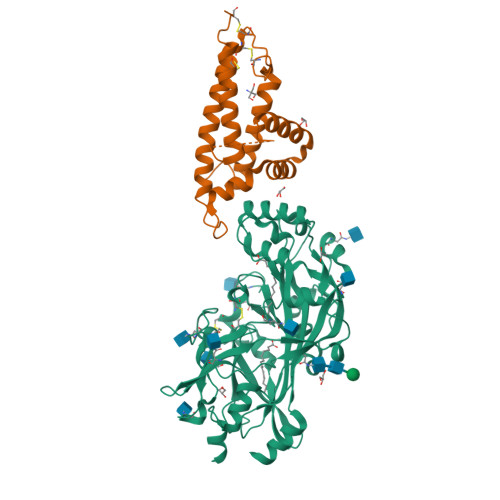 Click to view 3D structure Click to view 3D structure | Platelet glycoprotein 4 | P16671 | Humans | Predicted (SEA) | - Prediction Confidence Score
- 0.348
- Applicability Domain
- 0.348
- Statistical Significance
- 1.10e-04
- Supporting Reference Compounds
- 1
- E-value
- 0.856341
|
 Click to view 3D structure Click to view 3D structure | Transient receptor potential cation channel subfamily V member 1 | O35433 | Rattus norvegicus | Predicted (SEA) | - Prediction Confidence Score
- 0.339
- Applicability Domain
- 0.355
- Statistical Significance
- 9.40e-04
- Supporting Reference Compounds
- 21
- E-value
- 7.31783
|
| Click to view 3D structure | Cannabinoid receptor 1 | P47746 | Mus musculus | Predicted (SEA) | - Prediction Confidence Score
- 0.326
- Applicability Domain
- 0.339
- Statistical Significance
- 0.002
- Supporting Reference Compounds
- 42
- E-value
- 15.492
|
 Click to view 3D structure Click to view 3D structure | Lysophosphatidic acid receptor 6 | P43657 | Humans | Predicted (SEA) | - Prediction Confidence Score
- 0.324
- Applicability Domain
- 0.475
- Statistical Significance
- 1.90e-04
- Supporting Reference Compounds
- 3
- E-value
- 1.47914
|

