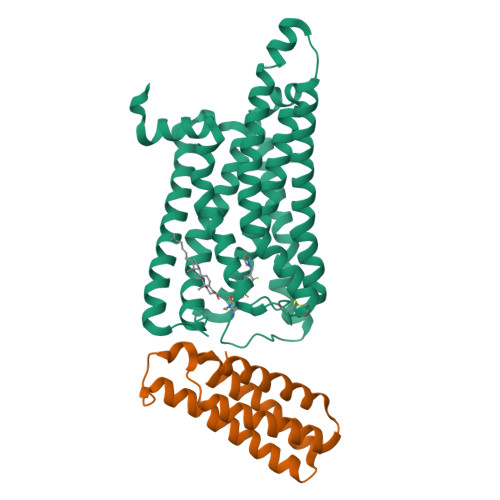
 Click to view 3D structure | Histamine H3 receptor | Q9Y5N1 | Humans | Predicted (SEA) | - Prediction Confidence Score
- 0.423
- Applicability Domain
- 0.455
- Statistical Significance
- 0.0039
- Supporting Reference Compounds
- 294
- E-value
- 30.1276
|
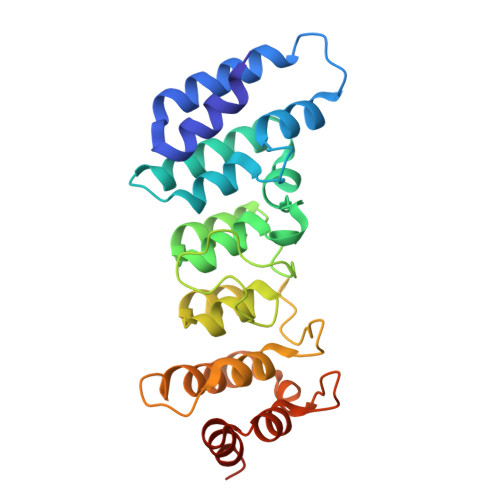 Click to view 3D structure | Transient receptor potential cation channel subfamily V member 3 | Q8K424 | Mus musculus | Predicted (SEA) | - Prediction Confidence Score
- 0.39
- Applicability Domain
- 0.39
- Statistical Significance
- 8.50e-04
- Supporting Reference Compounds
- 1
- E-value
- 6.61718
|
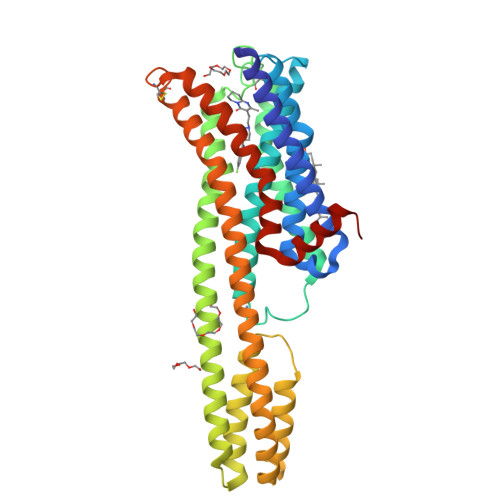 Click to view 3D structure | 5-hydroxytryptamine receptor 2A | P28223 | Humans | Predicted (SEA) | - Prediction Confidence Score
- 0.382
- Applicability Domain
- 0.455
- Statistical Significance
- 0.0227
- Supporting Reference Compounds
- 955
- E-value
- 176.64
|
 Click to view 3D structure | 5-hydroxytryptamine receptor 7 | P34969 | Humans | Predicted (SEA) | - Prediction Confidence Score
- 0.374
- Applicability Domain
- 0.455
- Statistical Significance
- 0.015
- Supporting Reference Compounds
- 565
- E-value
- 116.93
|
 Click to view 3D structure | Histamine H1 receptor | P35367 | Humans | Predicted (SEA) | - Prediction Confidence Score
- 0.374
- Applicability Domain
- 0.418
- Statistical Significance
- 0.0135
- Supporting Reference Compounds
- 507
- E-value
- 104.863
|
 Click to view 3D structure | Histamine H1 receptor | P31389 | Cavia porcellus | Predicted (SEA) | - Prediction Confidence Score
- 0.371
- Applicability Domain
- 0.455
- Statistical Significance
- 0.0036
- Supporting Reference Compounds
- 101
- E-value
- 27.7143
|
 Click to view 3D structure | 5-hydroxytryptamine receptor 6 | P50406 | Humans | Predicted (SEA) | - Prediction Confidence Score
- 0.359
- Applicability Domain
- 0.455
- Statistical Significance
- 0.0155
- Supporting Reference Compounds
- 536
- E-value
- 120.978
|
 Click to view 3D structure | Voltage-gated inwardly rectifying potassium channel KCNH2 | Q12809 | Humans | Predicted (SEA) | - Prediction Confidence Score
- 0.358
- Applicability Domain
- 0.407
- Statistical Significance
- 0.0555
- Supporting Reference Compounds
- 1498
- E-value
- 432.452
|
| Click to view 3D structure | Sigma non-opioid intracellular receptor 1 | Q60492 | Cavia porcellus | Predicted (SEA) | - Prediction Confidence Score
- 0.356
- Applicability Domain
- 0.382
- Statistical Significance
- 0.0138
- Supporting Reference Compounds
- 229
- E-value
- 107.432
|
| Click to view 3D structure | Sigma intracellular receptor 2 | Q5U3Y7 | Rattus norvegicus | Predicted (SEA) | - Prediction Confidence Score
- 0.34
- Applicability Domain
- 0.382
- Statistical Significance
- 0.009
- Supporting Reference Compounds
- 110
- E-value
- 70.1422
|
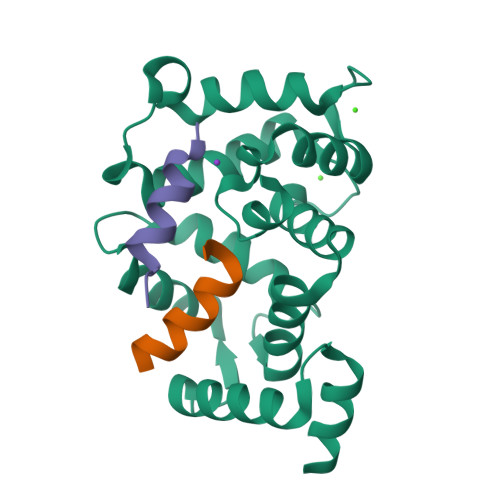 Click to view 3D structure | D(2) dopamine receptor | P14416 | Humans | Predicted (SEA) | - Prediction Confidence Score
- 0.336
- Applicability Domain
- 0.418
- Statistical Significance
- 0.0476
- Supporting Reference Compounds
- 1103
- E-value
- 370.251
|
 Click to view 3D structure | D(3) dopamine receptor | P35462 | Humans | Predicted (SEA) | - Prediction Confidence Score
- 0.335
- Applicability Domain
- 0.418
- Statistical Significance
- 0.0365
- Supporting Reference Compounds
- 861
- E-value
- 284.539
|
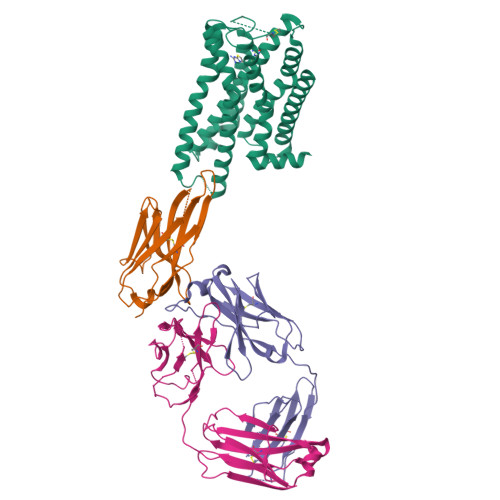 Click to view 3D structure | Histamine H2 receptor | P25021 | Humans | Predicted (SEA) | - Prediction Confidence Score
- 0.328
- Applicability Domain
- 0.382
- Statistical Significance
- 0.0109
- Supporting Reference Compounds
- 256
- E-value
- 85.167
|
 Click to view 3D structure | Sigma non-opioid intracellular receptor 1 | Q99720 | Humans | Predicted (SEA) | - Prediction Confidence Score
- 0.328
- Applicability Domain
- 0.343
- Statistical Significance
- 0.038
- Supporting Reference Compounds
- 562
- E-value
- 295.749
|
| Click to view 3D structure | Sigma non-opioid intracellular receptor 1 | Q9R0C9 | Rattus norvegicus | Predicted (SEA) | - Prediction Confidence Score
- 0.322
- Applicability Domain
- 0.343
- Statistical Significance
- 0.0138
- Supporting Reference Compounds
- 207
- E-value
- 107.588
|
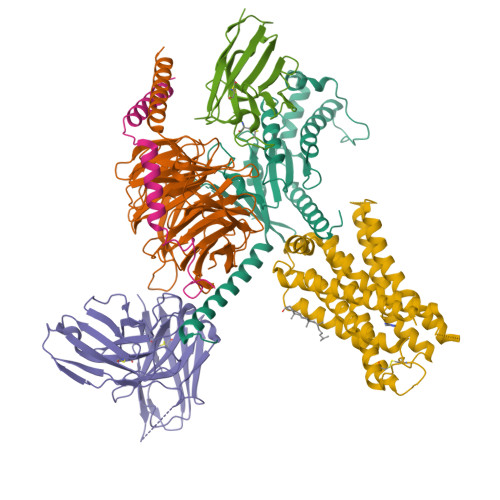 Click to view 3D structure | Histamine H4 receptor | Q9H3N8 | Humans | Predicted (SEA) | - Prediction Confidence Score
- 0.319
- Applicability Domain
- 0.382
- Statistical Significance
- 0.0101
- Supporting Reference Compounds
- 150
- E-value
- 78.5499
|
 Click to view 3D structure | D(1A) dopamine receptor | P21728 | Humans | Predicted (SEA) | - Prediction Confidence Score
- 0.318
- Applicability Domain
- 0.418
- Statistical Significance
- 0.0249
- Supporting Reference Compounds
- 425
- E-value
- 194.078
|
| Click to view 3D structure | Cholinesterase | P81908 | Equus caballus | Predicted (SEA) | - Prediction Confidence Score
- 0.318
- Applicability Domain
- 0.393
- Statistical Significance
- 0.0174
- Supporting Reference Compounds
- 201
- E-value
- 135.302
|
 Click to view 3D structure | 5-hydroxytryptamine receptor 1A | P08908 | Humans | Predicted (SEA) | - Prediction Confidence Score
- 0.317
- Applicability Domain
- 0.362
- Statistical Significance
- 0.0526
- Supporting Reference Compounds
- 953
- E-value
- 409.253
|
| Click to view 3D structure | Histamine H3 receptor | Q9QYN8 | Rattus norvegicus | Predicted (SEA) | - Prediction Confidence Score
- 0.314
- Applicability Domain
- 0.328
- Statistical Significance
- 0.007
- Supporting Reference Compounds
- 80
- E-value
- 54.1831
|
 Click to view 3D structure | Acetylcholinesterase | P22303 | Humans | Predicted (SEA) | - Prediction Confidence Score
- 0.311
- Applicability Domain
- 0.39
- Statistical Significance
- 0.0315
- Supporting Reference Compounds
- 406
- E-value
- 245.303
|
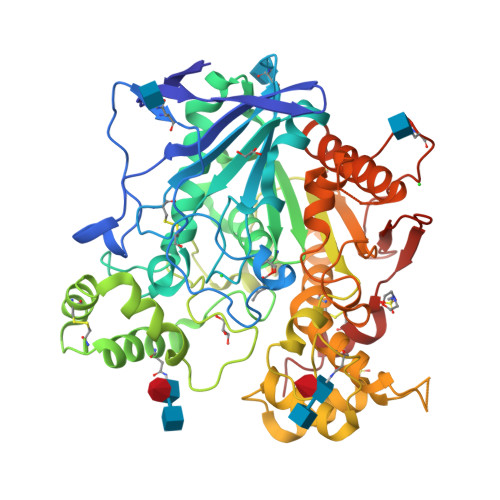 Click to view 3D structure | Cholinesterase | P06276 | Humans | Predicted (SEA) | - Prediction Confidence Score
- 0.309
- Applicability Domain
- 0.344
- Statistical Significance
- 0.0189
- Supporting Reference Compounds
- 234
- E-value
- 147.446
|
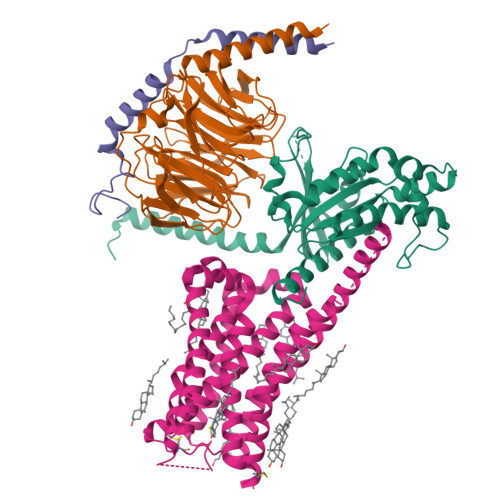 Click to view 3D structure | D(1B) dopamine receptor | P21918 | Humans | Predicted (SEA) | - Prediction Confidence Score
- 0.304
- Applicability Domain
- 0.418
- Statistical Significance
- 0.0208
- Supporting Reference Compounds
- 209
- E-value
- 161.849
|
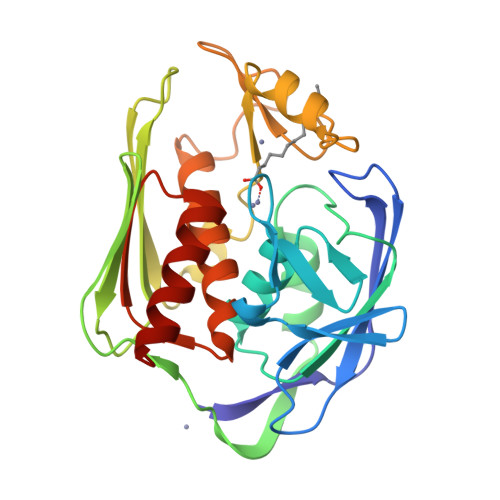 Click to view 3D structure | UDP-3-O-acyl-N-acetylglucosamine deacetylase | O67648 | Aquifex aeolicus (strain VF5) | Predicted (SEA) | - Prediction Confidence Score
- 0.304
- Applicability Domain
- 0.304
- Statistical Significance
- 0.0043
- Supporting Reference Compounds
- 1
- E-value
- 33.8644
|
 Click to view 3D structure | Muscarinic acetylcholine receptor M1 | P11229 | Humans | Predicted (SEA) | - Prediction Confidence Score
- 0.303
- Applicability Domain
- 0.344
- Statistical Significance
- 0.0278
- Supporting Reference Compounds
- 385
- E-value
- 216.187
|

