2,3-di(nonyl)naphthalene-1-sulfonic acid (CED0167501)

Record Information
Version1.0
Creation Date2026-08-22 08:39:17 UTC
Update Date2026-08-22 08:39:17 UTC
SynCED IDCED0167501
Secondary Accession Numbers
  • CHEM212160
Identification
Common Name2,3-di(nonyl)naphthalene-1-sulfonic acid
ClassSmall Molecule
Description
2,3-di(nonyl)naphthalene-1-sulfonic acid is an organic compound with the formula C28H44O3S and an average molecular weight of 460.70 g/mol. 2,3-di(nonyl)naphthalene-1-sulfonic acid belongs to the naphthalene sulfonic acids and derivatives, a subclass of naphthalenes within the organic compounds. This compound is classified under the superclass of benzenoids. It has been found in or released from two recorded sources, specifically electrical and electronic equipment such as magnets and thin magnetic films.
Contaminant TypeNot Available
Chemical Structure
SynonymsNot Available
Chemical FormulaC28H44O3S
Average Molecular Mass460.700 g/mol
Monoisotopic Mass460.301 g/mol
CAS Registry Number25322-17-2
IUPAC NameNot Available
Traditional NameNot Available
SMILESNot Available
InChI IdentifierInChI=1S/C28H44O3S/c1-3-5-7-9-11-13-15-19-24-23-25-20-17-18-22-27(25)28(32(29,30)31)26(24)21-16-14-12-10-8-6-4-2/h17-18,20,22-23H,3-16,19,21H2,1-2H3,(H,29,30,31)
InChI KeyWDNQRCVBPNOTNV-UHFFFAOYSA-N
Chemical Taxonomy
ClassificationNot classified
Biological Properties
StatusDetected and Not Quantified
OriginNot Available
Cellular LocationsNot Available
Biofluid LocationsNot Available
Tissue LocationsNot Available
ApplicationsNot Available
Biological RolesNot Available
Chemical RolesNot Available
Organoleptic EffectsNot Available
Physical Properties
StateNot Available
AppearanceNot Available
Experimental Properties
PropertyValue
Melting PointNot Available
Boiling PointNot Available
SolubilityNot Available
Predicted PropertiesNot Available
Spectra
SpectraNot Available
Toxicity Profile
Toxicity Values
Toxicity ValueOrganismDose DescriptorRoute of ExposurePredicted or ExperimentalToxicity RatingReference
2453.0 Log mg/kg [1400:4400]RatLD50oralpredictedNot AvailableNot Available
Toxicity / Toxin ClassNot Available
Mechanism of ToxicityNot Available
Carcinogenicity (IARC Classification)Not Available
Minimum Risk LevelNot Available
SymptomsNot Available
TreatmentNot Available
Health Effects
Health EffectRelationshipDirectionDescriptionReference
Exposure Sources
Source IDSourceSectorReference
CEDs000511Conductors Or Conductive Bodies Characterised By The Conductive Materials?Conductors, or conductive bodies, are materials that allow the flow of electrical current, typically made from metals such as copper, aluminum, or silver.Electrical & Electronic EquipmentPubChem
CEDs000519Electrodes?Electrodes, used in various electrical and electronic applications, can be a source of synthetic chemical contamination due to the materials from which they are constructed and the processes involved in their manufacturing.Electrical & Electronic EquipmentPubChem
CEDs000521Fixed Capacitors And Their Manufacture?Fixed capacitors are passive electronic components used to store and release electrical energy, playing a critical role in various circuits.Electrical & Electronic EquipmentPubChem
CEDs000524Hybrid Capacitors?Hybrid capacitors are energy storage devices that combine the properties of electrolytic and supercapacitors, utilizing a combination of electrochemical principles to achieve higher energy density and power density.Electrical & Electronic EquipmentPubChem
CEDs000527Magnets?Magnets, commonly used in various electrical and electronic applications, can be a source of synthetic chemical contamination due to the materials used in their production.Electrical & Electronic EquipmentPubChem
CEDs000538Thin Magnetic Films?Thin magnetic films are layers of magnetic material ranging from a few nanometers to several micrometers in thickness, commonly used in applications such as magnetic sensors, data storage devices, and electronic components.Electrical & Electronic EquipmentPubChem
CEDs000545Food Preservation?Food preservation often involves the use of synthetic chemicals, such as preservatives, flavor enhancers, and color additives, to extend shelf life and enhance the sensory qualities of food products.Food, food processing & cookwarePubChem
CEDs000555Bleaching Agents?Bleaching agents are chemical substances used to whiten or lighten materials, often employed in various cleaning products for their stain removal and disinfecting properties.Household cleaning & consumer productsPubChem
CEDs000561Perfumes Within Detergents And Soaps?Perfumes within detergents and soaps are synthetic fragrance compounds added to enhance the sensory experience of cleaning products.Household cleaning & consumer productsPubChem
CEDs000563Soap Detergents?Soap detergents are synthetic surfactants designed to enhance the cleaning efficacy of water by reducing surface tension, allowing for better interaction with dirt and grease.Household cleaning & consumer productsPubChem
CEDs000569Tobacco Smoke Filters?Tobacco smoke filters are designed to reduce the inhalation of harmful substances in cigarette smoke, including tar and other particulate matter.Household cleaning & consumer productsPubChem
CEDs000579Manufacture Of Iron Or Steel?The manufacture of iron or steel involves various processes, including smelting, refining, and alloying, which can result in the release of synthetic chemicals and contaminants.Industrial manufacturing & chemical processingPubChem
CEDs000611Anti Perspirants Or Body Deoderants?Antiperspirants and body deodorants commonly contain synthetic chemicals such as aluminum compounds, parabens, and synthetic fragrances.Personal care & cosmeticsPubChem
CEDs000624Merry Go Rounds?Merry-go-rounds, commonly found in playgrounds and recreational areas, can be a source of synthetic chemical contamination primarily due to the materials used in their construction.Recreation & sports surfacesPubChem
CEDs000632Apparel?Apparel production often involves the use of various synthetic chemicals, including dyes, finishing agents, and preservatives.Textiles, leather & furnishingsPubChem
CEDs000642Footwear?Footwear production often involves the use of various synthetic chemicals, such as adhesives, dyes, and treatments, which can contribute to environmental contamination.Textiles, leather & furnishingsPubChem
CEDs000652Ropes?Ropes manufactured from synthetic fibers, such as polypropylene, nylon, and polyester, are widely used in various applications, including marine, construction, and outdoor activities.Textiles, leather & furnishingsPubChem
CEDs000657Surface Finishing Of Leather?Surface finishing of leather often involves the use of various synthetic chemicals, including dyes, resins, and finishing agents.Textiles, leather & furnishingsPubChem
CEDs000662Yarns Or Threads?Yarns or threads used in textiles can be a source of synthetic chemical contamination due to the production processes and treatments they undergo.Textiles, leather & furnishingsPubChem
CEDs000671Airplanes And Helicopters?Airplanes and helicopters are significant sources of synthetic chemical contamination primarily through the use of aviation fuels, lubricants, and de-icing agents.Aviation & AerospacePubChem
CEDs000679Phosphatic Fertilisers?Phosphatic fertilizers are synthetic chemical products primarily composed of phosphorus, which is essential for plant growth.Agriculture & land managementPubChem
CEDs000684Cements?Cements are a composite material primarily used as a binding agent in construction applications, formed by the calcination of limestone and clay minerals at high temperatures.Building & ConstructionPubChem
CEDs000685Ceramics?Ceramics can be a source of synthetic chemical contamination through various additives and processing agents used in their production.Building & ConstructionPubChem
CEDs000686Clay Wares?Clay wares are ceramic products made from natural clay, often utilized in various construction applications such as tiles, bricks, and sanitary ware.Building & ConstructionPubChem
CEDs000688Glass Coatings?Glass coatings are synthetic chemical formulations applied to glass surfaces to enhance properties such as durability, UV resistance, and aesthetic appeal.Building & ConstructionPubChem
CEDs000696Nanotechnology?Nanotechnology involves the manipulation of materials at the molecular or atomic level, typically within the range of 1 to 100 nanometers.Industrial manufacturing & chemical processingPubChem
CEDs000697Submarines?Submarines, while essential for military and research purposes, can be a source of synthetic chemical contamination due to their use of various industrial chemicals.Marine, shipping & aquaculturePubChem
CEDs000727Printing Machines Or Presses?Printing machines or presses commonly utilize synthetic chemicals such as inks, solvents, and cleaning agents.Paper, pulp & fiber productsPubChem
CEDs000734Coating Compositions?Coating compositions, which include paints, sealants, and varnishes, are formulated with a variety of synthetic chemicals such as solvents, resins, pigments, and additives.Building & ConstructionPubChem
CEDs000739Inks?Inks are complex mixtures composed of pigments or dyes, solvents, resins, and additives used primarily for printing and writing applications.Paper, pulp & fiber productsPubChem
CEDs000740Paper?Paper production involves the processing of wood fibers and the use of various chemicals, which can lead to synthetic chemical contamination.Paper, pulp & fiber productsPubChem
CEDs000741Pigment Pastes?Pigment pastes are concentrated dispersions of pigments used to impart color and properties to materials.Paper, pulp & fiber productsPubChem
CEDs000744Water, Wastewater, & Sewage Treatment?Water, wastewater, and sewage treatment processes are critical for managing and mitigating pollutants in water systems.Wastewater, sanitation & biosolidsPubChem
Pathways
0 pathwaysPathway Source: PathBank

No pathways found

No metabolic pathways have been associated with this synthetic chemical

Targets
StructureProteinUniProt IDOrganismRelationshipDetails
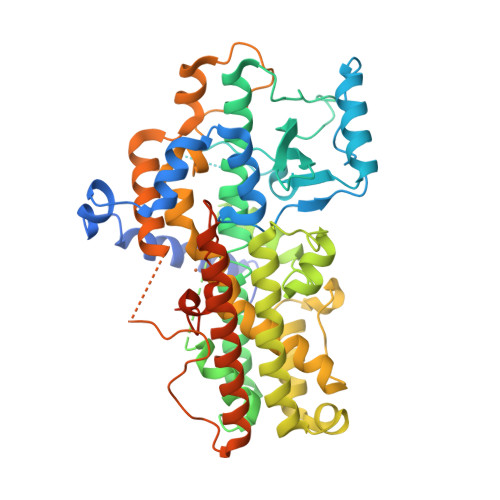
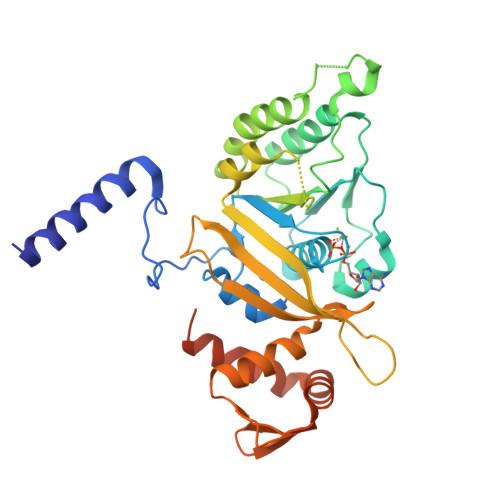
3-oxoacyl-[acyl-carrier-protein] synthase 1 structureClick to view 3D structure3-oxoacyl-[acyl-carrier-protein] synthase 1P9WQD9Mycobacterium tuberculosis (strain ATCC 25618 / H37Rv)Predicted (SEA)
Prediction Confidence Score
0.327
Applicability Domain
0.327
Statistical Significance
1.60e-04
Supporting Reference Compounds
1
E-value
1.24559
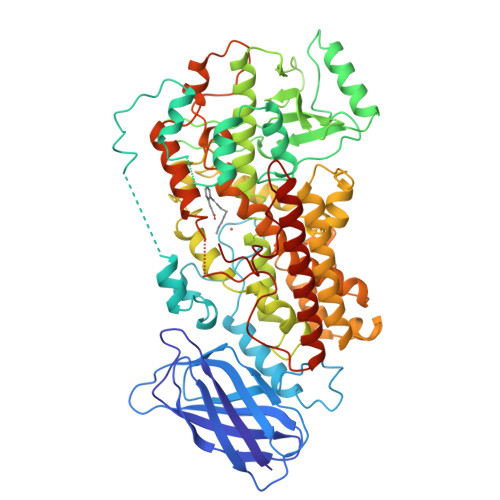
Polyunsaturated fatty acid 5-lipoxygenase structureClick to view 3D structurePolyunsaturated fatty acid 5-lipoxygenaseP09917HumansPredicted (SEA)
Prediction Confidence Score
0.317
Applicability Domain
0.362
Statistical Significance
0.0086
Supporting Reference Compounds
182
E-value
67.1839
Click to view 3D structureVitamin K epoxide reductase complex subunit 1Q6TEK4Rattus norvegicusPredicted (SEA)
Prediction Confidence Score
0.312
Applicability Domain
0.404
Statistical Significance
3.50e-04
Supporting Reference Compounds
2
E-value
2.72472
Fe(3+)-Zn(2+) purple acid phosphatase structureClick to view 3D structureFe(3+)-Zn(2+) purple acid phosphataseP80366Phaseolus vulgarisPredicted (SEA)
Prediction Confidence Score
0.311
Applicability Domain
0.311
Statistical Significance
8.00e-04
Supporting Reference Compounds
1
E-value
6.22794
1-phosphatidylinositol 4,5-bisphosphate phosphodiesterase gamma-1 structureClick to view 3D structure1-phosphatidylinositol 4,5-bisphosphate phosphodiesterase gamma-1P08487Bos taurusPredicted (SEA)
Prediction Confidence Score
0.309
Applicability Domain
0.316
Statistical Significance
6.90e-04
Supporting Reference Compounds
3
E-value
5.3716
Click to view 3D structureSarcoplasmic/endoplasmic reticulum calcium ATPase 3Q64518Mus musculusPredicted (SEA)
Prediction Confidence Score
0.304
Applicability Domain
0.304
Statistical Significance
0.0017
Supporting Reference Compounds
1
E-value
12.923
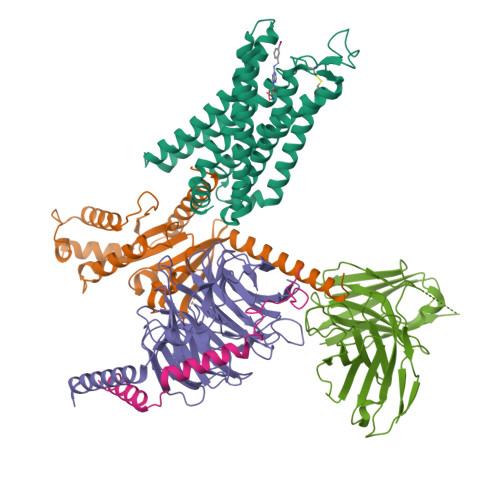
Cannabinoid receptor 2 structureClick to view 3D structureCannabinoid receptor 2P34972HumansPredicted (SEA)
Prediction Confidence Score
0.299
Applicability Domain
0.317
Statistical Significance
0.0144
Supporting Reference Compounds
175
E-value
112.414
Cannabinoid receptor 1 structureClick to view 3D structureCannabinoid receptor 1P21554HumansPredicted (SEA)
Prediction Confidence Score
0.292
Applicability Domain
0.317
Statistical Significance
0.0221
Supporting Reference Compounds
200
E-value
172.358
Click to view 3D structureCannabinoid receptor 1P20272Rattus norvegicusPredicted (SEA)
Prediction Confidence Score
0.288
Applicability Domain
0.317
Statistical Significance
0.0079
Supporting Reference Compounds
83
E-value
61.5009
Sodium-dependent dopamine transporter structureClick to view 3D structureSodium-dependent dopamine transporterQ01959HumansPredicted (SEA)
Prediction Confidence Score
0.282
Applicability Domain
0.317
Statistical Significance
0.0659
Supporting Reference Compounds
506
E-value
513.182
Polyunsaturated fatty acid lipoxygenase ALOX15 structureClick to view 3D structurePolyunsaturated fatty acid lipoxygenase ALOX15P12530Oryctolagus cuniculusPredicted (SEA)
Prediction Confidence Score
0.282
Applicability Domain
0.324
Statistical Significance
0.0024
Supporting Reference Compounds
47
E-value
18.9952
Polyunsaturated fatty acid lipoxygenase ALOX12 structureClick to view 3D structurePolyunsaturated fatty acid lipoxygenase ALOX12P18054HumansPredicted (SEA)
Prediction Confidence Score
0.281
Applicability Domain
0.362
Statistical Significance
0.0015
Supporting Reference Compounds
31
E-value
11.5217
Sodium-dependent serotonin transporter structureClick to view 3D structureSodium-dependent serotonin transporterP31645HumansPredicted (SEA)
Prediction Confidence Score
0.281
Applicability Domain
0.304
Statistical Significance
0.0791
Supporting Reference Compounds
593
E-value
615.787
Click to view 3D structurePutative amino acid permease/transporterD5FGE8Trypanosoma cruziPredicted (SEA)
Prediction Confidence Score
0.273
Applicability Domain
0.273 Low confidence
Statistical Significance
3.70e-04
Supporting Reference Compounds
1
E-value
2.88042
Prostaglandin G/H synthase 2 structureClick to view 3D structureProstaglandin G/H synthase 2P35354HumansPredicted (SEA)
Prediction Confidence Score
0.271
Applicability Domain
0.308
Statistical Significance
0.0399
Supporting Reference Compounds
201
E-value
310.541
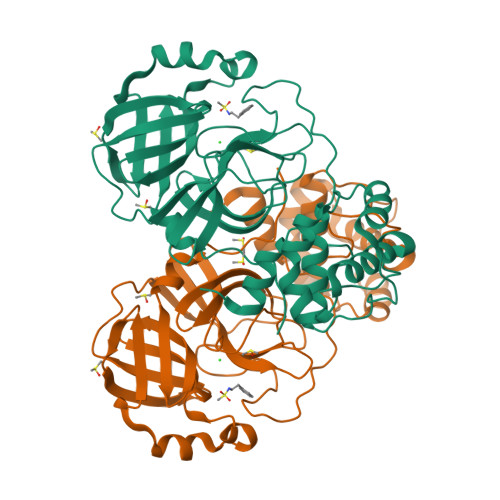
Replicase polyprotein 1ab structureClick to view 3D structureReplicase polyprotein 1abP0DTD1SARS-CoV-2Predicted (SEA)
Prediction Confidence Score
0.271
Applicability Domain
0.353
Statistical Significance
0.032
Supporting Reference Compounds
215
E-value
248.962
Click to view 3D structurePolyunsaturated fatty acid lipoxygenase ALOX15P16050HumansPredicted (SEA)
Prediction Confidence Score
0.269
Applicability Domain
0.362
Statistical Significance
0.0037
Supporting Reference Compounds
46
E-value
28.9599
Trehalose-phosphatase structureClick to view 3D structureTrehalose-phosphataseA8NS89Brugia malayiPredicted (SEA)
Prediction Confidence Score
0.269
Applicability Domain
0.269 Low confidence
Statistical Significance
0.0011
Supporting Reference Compounds
1
E-value
8.79696
Click to view 3D structureAcidic phospholipase A2 CM-IP00602Naja mossambicaPredicted (SEA)
Prediction Confidence Score
0.267
Applicability Domain
0.267 Low confidence
Statistical Significance
0.0041
Supporting Reference Compounds
1
E-value
31.8403
Click to view 3D structureCytosolic phospholipase A2A4IFJ5Bos taurusPredicted (SEA)
Prediction Confidence Score
0.266
Applicability Domain
0.266 Low confidence
Statistical Significance
0.0026
Supporting Reference Compounds
1
E-value
20.63
Click to view 3D structureAcetylcholinesteraseO42275Electrophorus electricusPredicted (SEA)
Prediction Confidence Score
0.265
Applicability Domain
0.316
Statistical Significance
0.0622
Supporting Reference Compounds
206
E-value
484.534
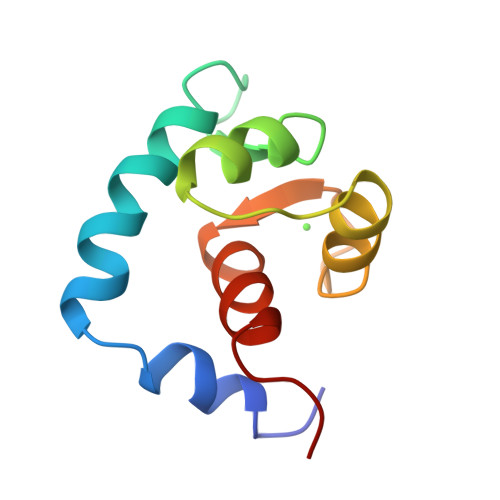
Troponin C, slow skeletal and cardiac muscles structureClick to view 3D structureTroponin C, slow skeletal and cardiac musclesP63316HumansPredicted (SEA)
Prediction Confidence Score
0.264
Applicability Domain
0.264 Low confidence
Statistical Significance
0.0016
Supporting Reference Compounds
2
E-value
12.8451
Click to view 3D structureAlkaline ceramidase 2Q5QJU3HumansPredicted (SEA)
Prediction Confidence Score
0.259
Applicability Domain
0.259 Low confidence
Statistical Significance
0.0074
Supporting Reference Compounds
1
E-value
57.7641
Protein RecA structureClick to view 3D structureProtein RecAP9WHJ3Mycobacterium tuberculosisPredicted (SEA)
Prediction Confidence Score
0.259
Applicability Domain
0.273 Low confidence
Statistical Significance
0.0687
Supporting Reference Compounds
296
E-value
534.668
Adenosine receptor A3 structureClick to view 3D structureAdenosine receptor A3P0DMS8HumansPredicted (SEA)
Prediction Confidence Score
0.258
Applicability Domain
0.304
Statistical Significance
0.0914
Supporting Reference Compounds
391
E-value
711.542
Concentrations
Not Available
External Links
IdentifiersNot Available
References
Synthesis ReferenceNot Available
MSDSNot Available
General ReferencesNot Available