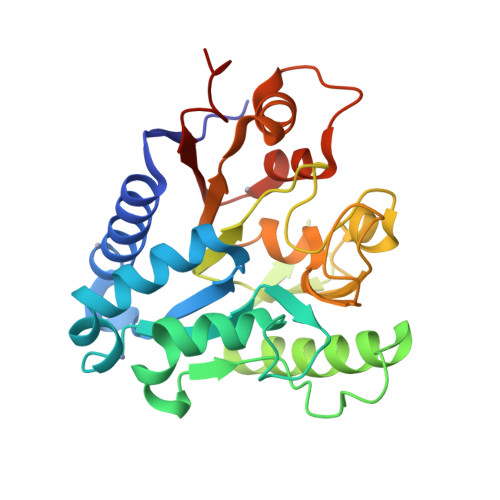
 Click to view 3D structure | 6-phosphogluconolactonase | Q9GRG6 | Trypanosoma brucei | Predicted (SEA) | - Prediction Confidence Score
- 0.226
- Applicability Domain
- 0.226 Low confidence
- Statistical Significance
- 1.50e-04
- Supporting Reference Compounds
- 1
- E-value
- 1.16774
|
 Click to view 3D structure | Fructose-bisphosphate aldolase, glycosomal | P07752 | Trypanosoma brucei brucei | Predicted (SEA) | - Prediction Confidence Score
- 0.22
- Applicability Domain
- 0.258 Low confidence
- Statistical Significance
- 9.00e-05
- Supporting Reference Compounds
- 2
- E-value
- 0.700643
|
 Click to view 3D structure | Ribose-5-phosphate isomerase B | P9WKD7 | Mycobacterium tuberculosis (strain ATCC 25618 / H37Rv) | Predicted (SEA) | - Prediction Confidence Score
- 0.194
- Applicability Domain
- 0.194 Low confidence
- Statistical Significance
- 4.90e-04
- Supporting Reference Compounds
- 1
- E-value
- 3.81461
|
 Click to view 3D structure | Phosphoheptose isomerase | Q93UJ2 | Burkholderia pseudomallei (strain K96243) | Predicted (SEA) | - Prediction Confidence Score
- 0.182
- Applicability Domain
- 0.182 Low confidence
- Statistical Significance
- 5.80e-04
- Supporting Reference Compounds
- 1
- E-value
- 4.51525
|
 Click to view 3D structure | Glucose-6-phosphate isomerase | Q9N1E2 | Oryctolagus cuniculus | Predicted (SEA) | - Prediction Confidence Score
- 0.176
- Applicability Domain
- 0.176 Low confidence
- Statistical Significance
- 0.0011
- Supporting Reference Compounds
- 1
- E-value
- 8.48557
|
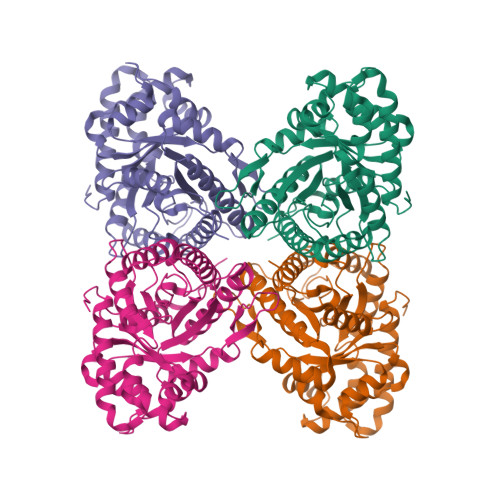 Click to view 3D structure | Fructose-bisphosphate aldolase A | P00883 | Oryctolagus cuniculus | Predicted (SEA) | - Prediction Confidence Score
- 0.162
- Applicability Domain
- 0.258 Low confidence
- Statistical Significance
- 0.001
- Supporting Reference Compounds
- 2
- E-value
- 8.01847
|
 Click to view 3D structure | TyR1 | H9TVJ1 | Chilo suppressalis | Predicted (SEA) | - Prediction Confidence Score
- 0.138
- Applicability Domain
- 0.138 Low confidence
- Statistical Significance
- 0.032
- Supporting Reference Compounds
- 1
- E-value
- 249.04
|
| Click to view 3D structure | CAI-1 autoinducer sensor kinase/phosphatase CqsS | Q9KM66 | Vibrio cholerae serotype O1 (strain ATCC 39315 / El Tor Inaba N16961) | Predicted (SEA) | - Prediction Confidence Score
- 0.133
- Applicability Domain
- 0.133 Low confidence
- Statistical Significance
- 0.0255
- Supporting Reference Compounds
- 1
- E-value
- 198.516
|
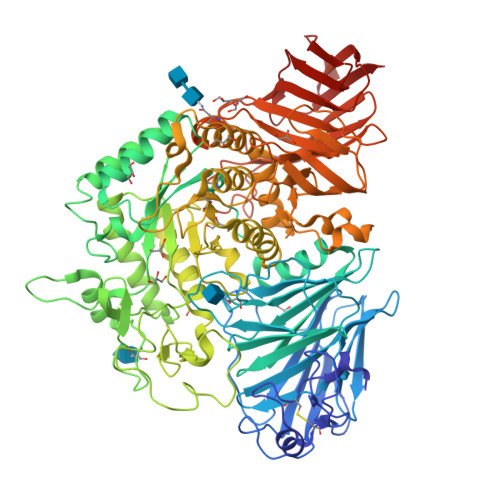 Click to view 3D structure | Maltase-glucoamylase | O43451 | Humans | Predicted (SEA) | - Prediction Confidence Score
- 0.132
- Applicability Domain
- 0.194 Low confidence
- Statistical Significance
- 0.3633
- Supporting Reference Compounds
- 30
- E-value
- 2828.03
|
| Click to view 3D structure | Lysosomal alpha-glucosidase | Q6P7A9 | Rattus norvegicus | Predicted (SEA) | - Prediction Confidence Score
- 0.13
- Applicability Domain
- 0.194 Low confidence
- Statistical Significance
- 0.0229
- Supporting Reference Compounds
- 21
- E-value
- 178.586
|
| Click to view 3D structure | Alpha-2A adrenergic receptor | Q01338 | Mus musculus | Predicted (SEA) | - Prediction Confidence Score
- 0.129
- Applicability Domain
- 0.129 Low confidence
- Statistical Significance
- 0.0649
- Supporting Reference Compounds
- 1
- E-value
- 505.397
|
| Click to view 3D structure | Alpha-2C adrenergic receptor | Q01337 | Mus musculus | Predicted (SEA) | - Prediction Confidence Score
- 0.129
- Applicability Domain
- 0.129 Low confidence
- Statistical Significance
- 0.0649
- Supporting Reference Compounds
- 1
- E-value
- 505.397
|
| Click to view 3D structure | S-ribosylhomocysteine lyase | P45578 | Escherichia coli K-12 | Predicted (SEA) | - Prediction Confidence Score
- 0.128
- Applicability Domain
- 0.128 Low confidence
- Statistical Significance
- 0.0199
- Supporting Reference Compounds
- 1
- E-value
- 155.309
|
| Click to view 3D structure | S-ribosylhomocysteine lyase | Q9Z5X1 | Vibrio campbellii | Predicted (SEA) | - Prediction Confidence Score
- 0.128
- Applicability Domain
- 0.128 Low confidence
- Statistical Significance
- 0.0199
- Supporting Reference Compounds
- 1
- E-value
- 155.309
|
| Click to view 3D structure | Sucrase-isomaltase, intestinal | P23739 | Rattus norvegicus | Predicted (SEA) | - Prediction Confidence Score
- 0.125
- Applicability Domain
- 0.194 Low confidence
- Statistical Significance
- 0.0485
- Supporting Reference Compounds
- 25
- E-value
- 377.724
|
| Click to view 3D structure | Asc-type amino acid transporter 1 | P63116 | Rat | Predicted (SEA) | - Prediction Confidence Score
- 0.125
- Applicability Domain
- 0.125 Low confidence
- Statistical Significance
- 0.019
- Supporting Reference Compounds
- 2
- E-value
- 148.303
|
| Click to view 3D structure | Beta-1 adrenergic receptor | P18090 | Rattus norvegicus | Predicted (SEA) | - Prediction Confidence Score
- 0.12
- Applicability Domain
- 0.129 Low confidence
- Statistical Significance
- 0.9553
- Supporting Reference Compounds
- 43
- E-value
- 7436.62
|
| Click to view 3D structure | Beta-2 adrenergic receptor | P54833 | Canis lupus familiaris | Predicted (SEA) | - Prediction Confidence Score
- 0.12
- Applicability Domain
- 0.129 Low confidence
- Statistical Significance
- 0.8503
- Supporting Reference Compounds
- 19
- E-value
- 6619.52
|
| Click to view 3D structure | Beta-1 adrenergic receptor | B0FL73 | Cavia porcellus | Predicted (SEA) | - Prediction Confidence Score
- 0.119
- Applicability Domain
- 0.129 Low confidence
- Statistical Significance
- 0.8777
- Supporting Reference Compounds
- 37
- E-value
- 6833.14
|
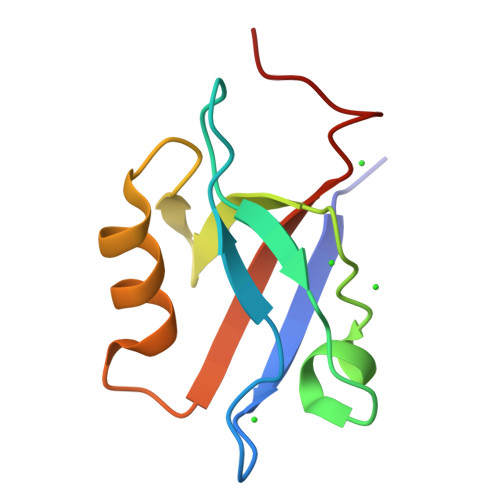 Click to view 3D structure | Beta-2 adrenergic receptor | P07550 | Humans | Predicted (SEA) | - Prediction Confidence Score
- 0.118
- Applicability Domain
- 0.129 Low confidence
- Statistical Significance
- 0.9981
- Supporting Reference Compounds
- 258
- E-value
- 7770.52
|
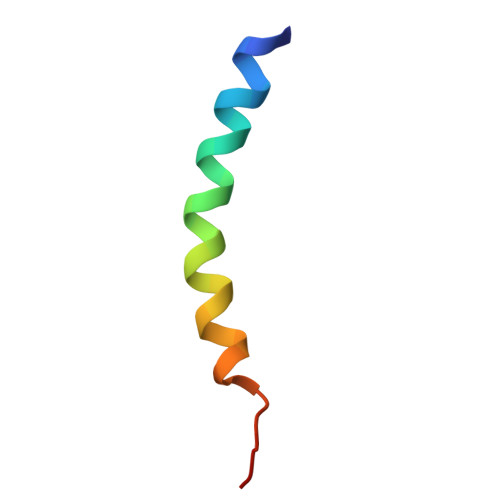 Click to view 3D structure | Alpha-2A adrenergic receptor | P08913 | Humans | Predicted (SEA) | - Prediction Confidence Score
- 0.118
- Applicability Domain
- 0.129 Low confidence
- Statistical Significance
- 0.9994
- Supporting Reference Compounds
- 487
- E-value
- 7780.17
|
| Click to view 3D structure | Beta-2 adrenergic receptor | Q28044 | Bos taurus | Predicted (SEA) | - Prediction Confidence Score
- 0.117
- Applicability Domain
- 0.129 Low confidence
- Statistical Significance
- 0.5316
- Supporting Reference Compounds
- 16
- E-value
- 4138.46
|
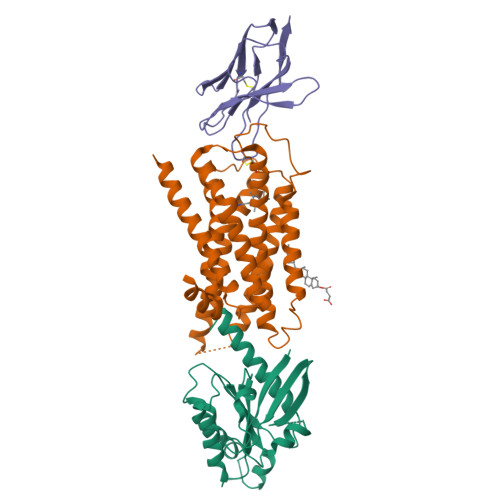 Click to view 3D structure | Alpha-1A adrenergic receptor | P35348 | Humans | Predicted (SEA) | - Prediction Confidence Score
- 0.117
- Applicability Domain
- 0.129 Low confidence
- Statistical Significance
- 0.9986
- Supporting Reference Compounds
- 376
- E-value
- 7774.02
|
| Click to view 3D structure | Arabinose 5-phosphate isomerase KdsD | Q5NGP7 | Francisella tularensis subsp. tularensis (strain SCHU S4 / Schu 4) | Predicted (SEA) | - Prediction Confidence Score
- 0.117
- Applicability Domain
- 0.161 Low confidence
- Statistical Significance
- 0.0187
- Supporting Reference Compounds
- 2
- E-value
- 145.5
|
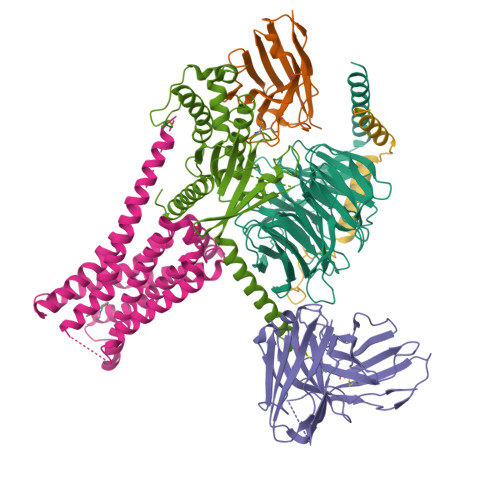 Click to view 3D structure | Beta-3 adrenergic receptor | P13945 | Humans | Predicted (SEA) | - Prediction Confidence Score
- 0.117
- Applicability Domain
- 0.129 Low confidence
- Statistical Significance
- 0.997
- Supporting Reference Compounds
- 145
- E-value
- 7761.41
|

