(acetyloxy-ethenyl-methylsilyl) acetate (CED0201605)

Record Information
Version1.0
Creation Date2026-08-23 19:32:05 UTC
Update Date2026-08-23 19:32:05 UTC
SynCED IDCED0201605
Secondary Accession Numbers
  • CHEM238164
Identification
Common Name(acetyloxy-ethenyl-methylsilyl) acetate
ClassSmall Molecule
Description
(acetyloxy-ethenyl-methylsilyl) acetate is an organic compound with the formula C7H12O4Si and an average molecular weight of 188.25 g/mol. (acetyloxy-ethenyl-methylsilyl) acetate belongs to the dicarboxylic acids and derivatives, a subclass of carboxylic acids and derivatives within the organic compounds. This substance is associated with three recorded sources. It is found in or released from building and construction materials, specifically fencing, as well as electrical and electronic equipment, including discharge lamps and antennas.
Contaminant TypeNot Available
Chemical Structure
SynonymsNot Available
Chemical FormulaC7H12O4Si
Average Molecular Mass188.250 g/mol
Monoisotopic Mass188.050 g/mol
CAS Registry Number2944-70-9
IUPAC NameNot Available
Traditional NameNot Available
SMILESNot Available
InChI IdentifierInChI=1S/C7H12O4Si/c1-5-12(4,10-6(2)8)11-7(3)9/h5H,1H2,2-4H3
InChI KeyIDXCKOANSQIPGX-UHFFFAOYSA-N
Chemical Taxonomy
ClassificationNot classified
Biological Properties
StatusDetected and Not Quantified
OriginNot Available
Cellular LocationsNot Available
Biofluid LocationsNot Available
Tissue LocationsNot Available
ApplicationsNot Available
Biological RolesNot Available
Chemical RolesNot Available
Organoleptic EffectsNot Available
Physical Properties
StateNot Available
AppearanceNot Available
Experimental Properties
PropertyValue
Melting PointNot Available
Boiling PointNot Available
SolubilityNot Available
Predicted PropertiesNot Available
Spectra
SpectraNot Available
Toxicity Profile
Toxicity Values
Toxicity ValueOrganismDose DescriptorRoute of ExposurePredicted or ExperimentalToxicity RatingReference
2585.0 Log mg/kg [1500:4600]RatLD50oralpredictedNot AvailableNot Available
Toxicity / Toxin ClassNot Available
Mechanism of ToxicityNot Available
Carcinogenicity (IARC Classification)Not Available
Minimum Risk LevelNot Available
SymptomsNot Available
TreatmentNot Available
Health Effects
Health EffectRelationshipDirectionDescriptionReference
Exposure Sources
Source IDSourceSectorReference
CEDs000496Fencing?Fencing materials, particularly those used in construction and landscaping, can be a source of synthetic chemical contamination due to the treatments and coatings applied for durability and weather resistance.Building & ConstructionPubChem
CEDs000506Antennas?Antennas, commonly used in communication technologies, can be a source of synthetic chemical contamination through the materials and coatings used in their construction.Electrical & Electronic EquipmentPubChem
CEDs000511Conductors Or Conductive Bodies Characterised By The Conductive Materials?Conductors, or conductive bodies, are materials that allow the flow of electrical current, typically made from metals such as copper, aluminum, or silver.Electrical & Electronic EquipmentPubChem
CEDs000514Discharge Lamps?Discharge lamps, including fluorescent and high-intensity discharge (HID) lamps, are commonly used for lighting applications due to their energy efficiency and brightness.Electrical & Electronic EquipmentPubChem
CEDs000519Electrodes?Electrodes, used in various electrical and electronic applications, can be a source of synthetic chemical contamination due to the materials from which they are constructed and the processes involved in their manufacturing.Electrical & Electronic EquipmentPubChem
CEDs000632Apparel?Apparel production often involves the use of various synthetic chemicals, including dyes, finishing agents, and preservatives.Textiles, leather & furnishingsPubChem
CEDs000657Surface Finishing Of Leather?Surface finishing of leather often involves the use of various synthetic chemicals, including dyes, resins, and finishing agents.Textiles, leather & furnishingsPubChem
CEDs000659Transfer Printing?Transfer printing is a process used to apply designs and patterns onto various substrates, commonly utilizing synthetic dyes and inks that can contain hazardous chemicals.Textiles, leather & furnishingsPubChem
CEDs000684Cements?Cements are a composite material primarily used as a binding agent in construction applications, formed by the calcination of limestone and clay minerals at high temperatures.Building & ConstructionPubChem
CEDs000685Ceramics?Ceramics can be a source of synthetic chemical contamination through various additives and processing agents used in their production.Building & ConstructionPubChem
CEDs000688Glass Coatings?Glass coatings are synthetic chemical formulations applied to glass surfaces to enhance properties such as durability, UV resistance, and aesthetic appeal.Building & ConstructionPubChem
CEDs000692Silica Free Oxide Glass?Silica Free Oxide Glass is a type of glass that is produced using alternative materials to traditional silica-based formulations.Building & ConstructionPubChem
CEDs000693Silica Glass?Silica glass, primarily composed of silicon dioxide (SiO2), is widely used in various applications, including windows, glass facades, and insulation materials.Building & ConstructionPubChem
CEDs000696Nanotechnology?Nanotechnology involves the manipulation of materials at the molecular or atomic level, typically within the range of 1 to 100 nanometers.Industrial manufacturing & chemical processingPubChem
CEDs000705Bookbinding?Bookbinding involves the use of various synthetic chemicals, including adhesives, inks, and coatings, which can contribute to environmental contamination.Paper, pulp & fiber productsPubChem
CEDs000707Books?Books can be a source of synthetic chemical contamination due to the use of various chemicals in their production and preservation processes.Paper, pulp & fiber productsPubChem
CEDs000727Printing Machines Or Presses?Printing machines or presses commonly utilize synthetic chemicals such as inks, solvents, and cleaning agents.Paper, pulp & fiber productsPubChem
CEDs000734Coating Compositions?Coating compositions, which include paints, sealants, and varnishes, are formulated with a variety of synthetic chemicals such as solvents, resins, pigments, and additives.Building & ConstructionPubChem
CEDs000735Explosives?Explosives are chemical compounds or mixtures designed to undergo rapid decomposition, releasing energy in the form of gas and heat.Defense & military infrastructurePubChem
CEDs000739Inks?Inks are complex mixtures composed of pigments or dyes, solvents, resins, and additives used primarily for printing and writing applications.Paper, pulp & fiber productsPubChem
CEDs000740Paper?Paper production involves the processing of wood fibers and the use of various chemicals, which can lead to synthetic chemical contamination.Paper, pulp & fiber productsPubChem
CEDs000741Pigment Pastes?Pigment pastes are concentrated dispersions of pigments used to impart color and properties to materials.Paper, pulp & fiber productsPubChem
CEDs000743Sludge Treatment?Sludge treatment involves the processing of waste materials generated from wastewater treatment plants, which often contain a variety of organic and inorganic substances.Wastewater, sanitation & biosolidsPubChem
CEDs000744Water, Wastewater, & Sewage Treatment?Water, wastewater, and sewage treatment processes are critical for managing and mitigating pollutants in water systems.Wastewater, sanitation & biosolidsPubChem
Pathways
0 pathwaysPathway Source: PathBank

No pathways found

No metabolic pathways have been associated with this synthetic chemical

Targets
StructureProteinUniProt IDOrganismRelationshipDetails
Muscarinic acetylcholine receptor M1 structureClick to view 3D structureMuscarinic acetylcholine receptor M1P11229HumansPredicted (SEA)
Prediction Confidence Score
0.196
Applicability Domain
0.226 Low confidence
Statistical Significance
0.7322
Supporting Reference Compounds
385
E-value
5700.04
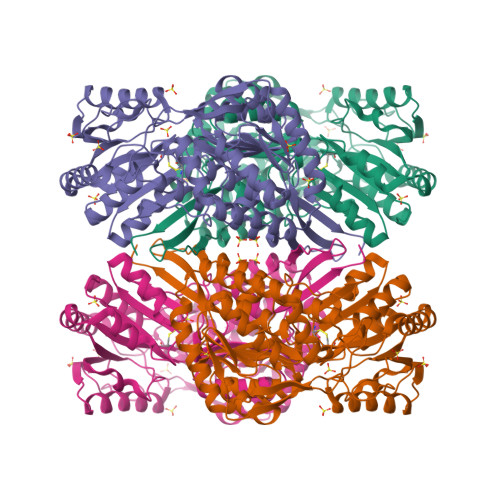
Click to view 3D structureProlyl oligopeptidase family proteinA6H249Flavobacterium psychrophilum (strain JIP02/86 / ATCC 49511)Predicted (SEA)
Prediction Confidence Score
0.19
Applicability Domain
0.19 Low confidence
Statistical Significance
0.0033
Supporting Reference Compounds
2
E-value
25.6902
Muscarinic acetylcholine receptor M2 structureClick to view 3D structureMuscarinic acetylcholine receptor M2P08172HumansPredicted (SEA)
Prediction Confidence Score
0.185
Applicability Domain
0.226 Low confidence
Statistical Significance
0.8382
Supporting Reference Compounds
373
E-value
6525.24
Muscarinic acetylcholine receptor M4 structureClick to view 3D structureMuscarinic acetylcholine receptor M4P08173HumansPredicted (SEA)
Prediction Confidence Score
0.185
Applicability Domain
0.226 Low confidence
Statistical Significance
0.7654
Supporting Reference Compounds
297
E-value
5958.58
Click to view 3D structureComplement factor DP32038Rattus norvegicusPredicted (SEA)
Prediction Confidence Score
0.184
Applicability Domain
0.184 Low confidence
Statistical Significance
0.0299
Supporting Reference Compounds
1
E-value
233.081
Succinate-semialdehyde dehydrogenase, mitochondrial structureClick to view 3D structureSuccinate-semialdehyde dehydrogenase, mitochondrialP51649HumansPredicted (SEA)
Prediction Confidence Score
0.182
Applicability Domain
0.182 Low confidence
Statistical Significance
0.0085
Supporting Reference Compounds
1
E-value
65.8604
Muscarinic acetylcholine receptor M3 structureClick to view 3D structureMuscarinic acetylcholine receptor M3P20309HumansPredicted (SEA)
Prediction Confidence Score
0.18
Applicability Domain
0.226 Low confidence
Statistical Significance
0.8443
Supporting Reference Compounds
310
E-value
6573.2
Click to view 3D structureMuscarinic acetylcholine receptor M1P08482Rattus norvegicusPredicted (SEA)
Prediction Confidence Score
0.178
Applicability Domain
0.212 Low confidence
Statistical Significance
0.5665
Supporting Reference Compounds
109
E-value
4410.24
Click to view 3D structure1-deoxy-D-xylulose-5-phosphate synthaseB7UJP3Escherichia coli O127:H6 (strain E2348/69 / EPEC)Predicted (SEA)
Prediction Confidence Score
0.177
Applicability Domain
0.188 Low confidence
Statistical Significance
0.0026
Supporting Reference Compounds
2
E-value
20.0072
Muscarinic acetylcholine receptor M5 structureClick to view 3D structureMuscarinic acetylcholine receptor M5P08912HumansPredicted (SEA)
Prediction Confidence Score
0.169
Applicability Domain
0.226 Low confidence
Statistical Significance
0.8996
Supporting Reference Compounds
266
E-value
7003.47
Epidermal growth factor receptor structureClick to view 3D structureEpidermal growth factor receptorP00533HumansPredicted (SEA)
Prediction Confidence Score
0.168
Applicability Domain
0.194 Low confidence
Statistical Significance
0.9816
Supporting Reference Compounds
1301
E-value
7641.37
3-oxoacyl-[acyl-carrier-protein] synthase 2 structureClick to view 3D structure3-oxoacyl-[acyl-carrier-protein] synthase 2P9WQD7Mycobacterium tuberculosisPredicted (SEA)
Prediction Confidence Score
0.167
Applicability Domain
0.167 Low confidence
Statistical Significance
5.60e-04
Supporting Reference Compounds
1
E-value
4.35956
Click to view 3D structureCarnitine palmitoyltransferase 1AQ9MYX2Sus scrofaPredicted (SEA)
Prediction Confidence Score
0.166
Applicability Domain
0.175 Low confidence
Statistical Significance
0.0132
Supporting Reference Compounds
2
E-value
102.917
Click to view 3D structureMuscarinic acetylcholine receptor M2P10980Rattus norvegicusPredicted (SEA)
Prediction Confidence Score
0.165
Applicability Domain
0.212 Low confidence
Statistical Significance
0.6216
Supporting Reference Compounds
98
E-value
4838.95
Cytochrome P450 2C9 structureClick to view 3D structureCytochrome P450 2C9P11712HumansPredicted (SEA)
Prediction Confidence Score
0.165
Applicability Domain
0.182 Low confidence
Statistical Significance
0.9919
Supporting Reference Compounds
1245
E-value
7721.55
Click to view 3D structureMuscarinic acetylcholine receptor M4P08485Rattus norvegicusPredicted (SEA)
Prediction Confidence Score
0.165
Applicability Domain
0.212 Low confidence
Statistical Significance
0.5789
Supporting Reference Compounds
38
E-value
4506.38
Nuclear factor erythroid 2-related factor 2 structureClick to view 3D structureNuclear factor erythroid 2-related factor 2Q16236HumansPredicted (SEA)
Prediction Confidence Score
0.16
Applicability Domain
0.231 Low confidence
Statistical Significance
0.156
Supporting Reference Compounds
19
E-value
1214.14
Short transient receptor potential channel 4 structureClick to view 3D structureShort transient receptor potential channel 4Q9QUQ5Mus musculusPredicted (SEA)
Prediction Confidence Score
0.158
Applicability Domain
0.219 Low confidence
Statistical Significance
0.9043
Supporting Reference Compounds
128
E-value
7039.98
Muscarinic acetylcholine receptor M3 structureClick to view 3D structureMuscarinic acetylcholine receptor M3P08483Rattus norvegicusPredicted (SEA)
Prediction Confidence Score
0.156
Applicability Domain
0.212 Low confidence
Statistical Significance
0.686
Supporting Reference Compounds
55
E-value
5340.77
Click to view 3D structureCytochrome P450 2C23P24470Rattus norvegicusPredicted (SEA)
Prediction Confidence Score
0.154
Applicability Domain
0.154 Low confidence
Statistical Significance
0.0106
Supporting Reference Compounds
1
E-value
82.8316
Transcription factor EB structureClick to view 3D structureTranscription factor EBP19484HumansPredicted (SEA)
Prediction Confidence Score
0.154
Applicability Domain
0.154 Low confidence
Statistical Significance
0.129
Supporting Reference Compounds
1
E-value
1004.33
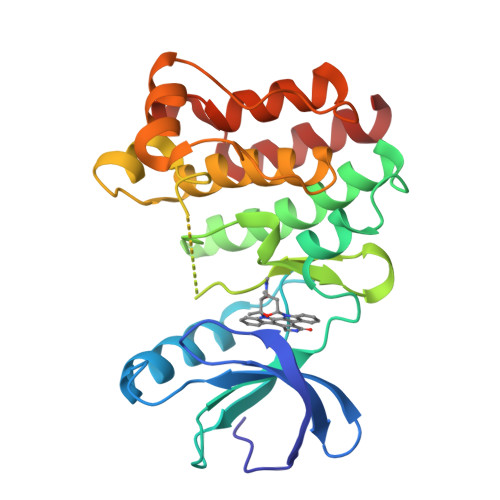
Tyrosine-protein kinase BTK structureClick to view 3D structureTyrosine-protein kinase BTKQ06187HumansPredicted (SEA)
Prediction Confidence Score
0.154
Applicability Domain
0.167 Low confidence
Statistical Significance
0.9818
Supporting Reference Compounds
798
E-value
7643.0
Cytochrome P450 3A4 structureClick to view 3D structureCytochrome P450 3A4P08684HumansPredicted (SEA)
Prediction Confidence Score
0.153
Applicability Domain
0.167 Low confidence
Statistical Significance
0.9972
Supporting Reference Compounds
1538
E-value
7762.97
Tyrosine-protein kinase ITK/TSK structureClick to view 3D structureTyrosine-protein kinase ITK/TSKQ08881HumansPredicted (SEA)
Prediction Confidence Score
0.152
Applicability Domain
0.174 Low confidence
Statistical Significance
0.9784
Supporting Reference Compounds
570
E-value
7617.16
Cytochrome P450 2C19 structureClick to view 3D structureCytochrome P450 2C19P33261HumansPredicted (SEA)
Prediction Confidence Score
0.15
Applicability Domain
0.167 Low confidence
Statistical Significance
0.9948
Supporting Reference Compounds
825
E-value
7744.75
Concentrations
Not Available
External Links
IdentifiersNot Available
References
Synthesis ReferenceNot Available
MSDSNot Available
General ReferencesNot Available