4-prop-2-enylmorpholine (CED0201923)

Record Information
Version1.0
Creation Date2026-08-23 20:05:38 UTC
Update Date2026-08-23 20:05:38 UTC
SynCED IDCED0201923
Secondary Accession Numbers
  • CHEM238528
Identification
Common Name4-prop-2-enylmorpholine
ClassSmall Molecule
Description
4-prop-2-enylmorpholine is an organic compound with the formula C7H13NO and an average molecular weight of 127.18 g/mol. 4-prop-2-enylmorpholine belongs to the morpholines, a subclass of oxazinanes within the organic compounds. It is further classified as an organoheterocyclic compound. This substance is found in or released from one recorded source: electrical and electronic equipment, specifically relays.
Contaminant TypeNot Available
Chemical Structure
SynonymsNot Available
Chemical FormulaC7H13NO
Average Molecular Mass127.180 g/mol
Monoisotopic Mass127.100 g/mol
CAS Registry Number696-57-1
IUPAC NameNot Available
Traditional NameNot Available
SMILESNot Available
InChI IdentifierInChI=1S/C7H13NO/c1-2-3-8-4-6-9-7-5-8/h2H,1,3-7H2
InChI KeySUSANAYXICMXBL-UHFFFAOYSA-N
Chemical Taxonomy
ClassificationNot classified
Biological Properties
StatusDetected and Not Quantified
OriginNot Available
Cellular LocationsNot Available
Biofluid LocationsNot Available
Tissue LocationsNot Available
ApplicationsNot Available
Biological RolesNot Available
Chemical RolesNot Available
Organoleptic EffectsNot Available
Physical Properties
StateNot Available
AppearanceNot Available
Experimental Properties
PropertyValue
Melting PointNot Available
Boiling PointNot Available
SolubilityNot Available
Predicted PropertiesNot Available
Spectra
SpectraNot Available
Toxicity Profile
Toxicity Values
Toxicity ValueOrganismDose DescriptorRoute of ExposurePredicted or ExperimentalToxicity RatingReference
289.0 Log mg/kg [160:510]RatLD50oralpredictedNot AvailableNot Available
Toxicity / Toxin ClassNot Available
Mechanism of ToxicityNot Available
Carcinogenicity (IARC Classification)Not Available
Minimum Risk LevelNot Available
SymptomsNot Available
TreatmentNot Available
Health Effects
Health EffectRelationshipDirectionDescriptionReference
Exposure Sources
Source IDSourceSectorReference
CEDs000511Conductors Or Conductive Bodies Characterised By The Conductive Materials?Conductors, or conductive bodies, are materials that allow the flow of electrical current, typically made from metals such as copper, aluminum, or silver.Electrical & Electronic EquipmentPubChem
CEDs000517Electric Switches?Electric switches, integral components in numerous devices, can be a source of synthetic chemical contamination due to the materials and manufacturing processes involved in their production.Electrical & Electronic EquipmentPubChem
CEDs000519Electrodes?Electrodes, used in various electrical and electronic applications, can be a source of synthetic chemical contamination due to the materials from which they are constructed and the processes involved in their manufacturing.Electrical & Electronic EquipmentPubChem
CEDs000524Hybrid Capacitors?Hybrid capacitors are energy storage devices that combine the properties of electrolytic and supercapacitors, utilizing a combination of electrochemical principles to achieve higher energy density and power density.Electrical & Electronic EquipmentPubChem
CEDs000531Relays?Relays are electromechanical switches used to control circuits and manage electrical loads.Electrical & Electronic EquipmentPubChem
CEDs000545Food Preservation?Food preservation often involves the use of synthetic chemicals, such as preservatives, flavor enhancers, and color additives, to extend shelf life and enhance the sensory qualities of food products.Food, food processing & cookwarePubChem
CEDs000555Bleaching Agents?Bleaching agents are chemical substances used to whiten or lighten materials, often employed in various cleaning products for their stain removal and disinfecting properties.Household cleaning & consumer productsPubChem
CEDs000561Perfumes Within Detergents And Soaps?Perfumes within detergents and soaps are synthetic fragrance compounds added to enhance the sensory experience of cleaning products.Household cleaning & consumer productsPubChem
CEDs000563Soap Detergents?Soap detergents are synthetic surfactants designed to enhance the cleaning efficacy of water by reducing surface tension, allowing for better interaction with dirt and grease.Household cleaning & consumer productsPubChem
CEDs000581Paper Making Machines?Paper making machines utilize various synthetic chemicals throughout the production process, including additives, coatings, and bleaching agents.Industrial manufacturing & chemical processingPubChem
CEDs000611Anti Perspirants Or Body Deoderants?Antiperspirants and body deodorants commonly contain synthetic chemicals such as aluminum compounds, parabens, and synthetic fragrances.Personal care & cosmeticsPubChem
CEDs000613Depilatories?Depilatories are products designed to remove unwanted hair through the application of synthetic chemicals that break down the protein structure of hair, facilitating its removal.Personal care & cosmeticsPubChem
CEDs000657Surface Finishing Of Leather?Surface finishing of leather often involves the use of various synthetic chemicals, including dyes, resins, and finishing agents.Textiles, leather & furnishingsPubChem
CEDs000659Transfer Printing?Transfer printing is a process used to apply designs and patterns onto various substrates, commonly utilizing synthetic dyes and inks that can contain hazardous chemicals.Textiles, leather & furnishingsPubChem
CEDs000678Nitrogenous Fertilisers?Nitrogenous fertilizers are synthetic chemical compounds primarily used to enhance plant growth by supplying essential nitrogen, a crucial nutrient for photosynthesis and protein synthesis.Agriculture & land managementPubChem
CEDs000679Phosphatic Fertilisers?Phosphatic fertilizers are synthetic chemical products primarily composed of phosphorus, which is essential for plant growth.Agriculture & land managementPubChem
CEDs000685Ceramics?Ceramics can be a source of synthetic chemical contamination through various additives and processing agents used in their production.Building & ConstructionPubChem
CEDs000696Nanotechnology?Nanotechnology involves the manipulation of materials at the molecular or atomic level, typically within the range of 1 to 100 nanometers.Industrial manufacturing & chemical processingPubChem
CEDs000734Coating Compositions?Coating compositions, which include paints, sealants, and varnishes, are formulated with a variety of synthetic chemicals such as solvents, resins, pigments, and additives.Building & ConstructionPubChem
CEDs000739Inks?Inks are complex mixtures composed of pigments or dyes, solvents, resins, and additives used primarily for printing and writing applications.Paper, pulp & fiber productsPubChem
CEDs000740Paper?Paper production involves the processing of wood fibers and the use of various chemicals, which can lead to synthetic chemical contamination.Paper, pulp & fiber productsPubChem
CEDs000741Pigment Pastes?Pigment pastes are concentrated dispersions of pigments used to impart color and properties to materials.Paper, pulp & fiber productsPubChem
CEDs000743Sludge Treatment?Sludge treatment involves the processing of waste materials generated from wastewater treatment plants, which often contain a variety of organic and inorganic substances.Wastewater, sanitation & biosolidsPubChem
CEDs000744Water, Wastewater, & Sewage Treatment?Water, wastewater, and sewage treatment processes are critical for managing and mitigating pollutants in water systems.Wastewater, sanitation & biosolidsPubChem
Pathways
0 pathwaysPathway Source: PathBank

No pathways found

No metabolic pathways have been associated with this synthetic chemical

Targets
StructureProteinUniProt IDOrganismRelationshipDetails
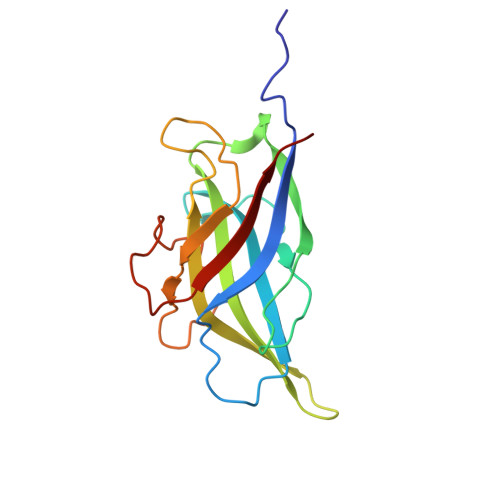
Click to view 3D structureTumor necrosis factor receptor superfamily member 16Q9Z0W1Mus musculusPredicted (SEA)
Prediction Confidence Score
0.25
Applicability Domain
0.25 Low confidence
Statistical Significance
0.002
Supporting Reference Compounds
1
E-value
15.492
5-hydroxytryptamine receptor 1A structureClick to view 3D structure5-hydroxytryptamine receptor 1AP08908HumansPredicted (SEA)
Prediction Confidence Score
0.245
Applicability Domain
0.26 Low confidence
Statistical Significance
0.3096
Supporting Reference Compounds
953
E-value
2410.52
Plasma membrane ATPase 1 structureClick to view 3D structurePlasma membrane ATPase 1P05030Saccharomyces cerevisiae (strain ATCC 204508 / S288c) (Baker's yeast)Predicted (SEA)
Prediction Confidence Score
0.244
Applicability Domain
0.244 Low confidence
Statistical Significance
0.0028
Supporting Reference Compounds
1
E-value
22.1092
Sigma non-opioid intracellular receptor 1 structureClick to view 3D structureSigma non-opioid intracellular receptor 1Q99720HumansPredicted (SEA)
Prediction Confidence Score
0.226
Applicability Domain
0.256 Low confidence
Statistical Significance
0.4189
Supporting Reference Compounds
562
E-value
3261.34
Prostaglandin-H2 D-isomerase structureClick to view 3D structureProstaglandin-H2 D-isomeraseO09114Mus musculusPredicted (SEA)
Prediction Confidence Score
0.218
Applicability Domain
0.245 Low confidence
Statistical Significance
0.0197
Supporting Reference Compounds
7
E-value
153.207
Delta-type opioid receptor structureClick to view 3D structureDelta-type opioid receptorP41143HumansPredicted (SEA)
Prediction Confidence Score
0.217
Applicability Domain
0.255 Low confidence
Statistical Significance
0.4085
Supporting Reference Compounds
427
E-value
3180.53
Kappa-type opioid receptor structureClick to view 3D structureKappa-type opioid receptorP41145HumansPredicted (SEA)
Prediction Confidence Score
0.216
Applicability Domain
0.255 Low confidence
Statistical Significance
0.5427
Supporting Reference Compounds
532
E-value
4225.11
Click to view 3D structureCannabinoid receptor 1P20272Rattus norvegicusPredicted (SEA)
Prediction Confidence Score
0.215
Applicability Domain
0.245 Low confidence
Statistical Significance
0.0916
Supporting Reference Compounds
83
E-value
712.865
D(2) dopamine receptor structureClick to view 3D structureD(2) dopamine receptorP14416HumansPredicted (SEA)
Prediction Confidence Score
0.214
Applicability Domain
0.245 Low confidence
Statistical Significance
0.6814
Supporting Reference Compounds
1103
E-value
5304.65
Click to view 3D structureMu-type opioid receptorP33535Rattus norvegicusPredicted (SEA)
Prediction Confidence Score
0.214
Applicability Domain
0.255 Low confidence
Statistical Significance
0.2023
Supporting Reference Compounds
229
E-value
1574.66
Click to view 3D structureSigma non-opioid intracellular receptor 1Q60492Cavia porcellusPredicted (SEA)
Prediction Confidence Score
0.212
Applicability Domain
0.222 Low confidence
Statistical Significance
0.3239
Supporting Reference Compounds
229
E-value
2521.46
B-cell lymphoma 3 protein structureClick to view 3D structureB-cell lymphoma 3 proteinP20749HumansPredicted (SEA)
Prediction Confidence Score
0.212
Applicability Domain
0.212 Low confidence
Statistical Significance
0.044
Supporting Reference Compounds
1
E-value
342.537
Click to view 3D structureAcetyl-CoA carboxylaseQ3V4E6Zea maysPredicted (SEA)
Prediction Confidence Score
0.209
Applicability Domain
0.209 Low confidence
Statistical Significance
0.0039
Supporting Reference Compounds
1
E-value
30.0498
Click to view 3D structureSigma intracellular receptor 2Q5BJF2HumansPredicted (SEA)
Prediction Confidence Score
0.209
Applicability Domain
0.256 Low confidence
Statistical Significance
0.5317
Supporting Reference Compounds
308
E-value
4139.17
Click to view 3D structureKappa-type opioid receptorP41144Cavia porcellusPredicted (SEA)
Prediction Confidence Score
0.206
Applicability Domain
0.255 Low confidence
Statistical Significance
0.2581
Supporting Reference Compounds
199
E-value
2009.68
Mu-type opioid receptor structureClick to view 3D structureMu-type opioid receptorP35372HumansPredicted (SEA)
Prediction Confidence Score
0.204
Applicability Domain
0.255 Low confidence
Statistical Significance
0.6549
Supporting Reference Compounds
527
E-value
5098.42
Click to view 3D structureD(2) dopamine receptorP61169RatPredicted (SEA)
Prediction Confidence Score
0.203
Applicability Domain
0.22 Low confidence
Statistical Significance
0.57
Supporting Reference Compounds
528
E-value
4437.41
Click to view 3D structureD(1A) dopamine receptorP18901Rattus norvegicusPredicted (SEA)
Prediction Confidence Score
0.202
Applicability Domain
0.245 Low confidence
Statistical Significance
0.3481
Supporting Reference Compounds
206
E-value
2709.78
Click to view 3D structure5-hydroxytryptamine receptor 1BP28564Rattus norvegicusPredicted (SEA)
Prediction Confidence Score
0.2
Applicability Domain
0.26 Low confidence
Statistical Significance
0.3487
Supporting Reference Compounds
154
E-value
2714.29
Cannabinoid receptor 1 structureClick to view 3D structureCannabinoid receptor 1P21554HumansPredicted (SEA)
Prediction Confidence Score
0.199
Applicability Domain
0.24 Low confidence
Statistical Significance
0.5736
Supporting Reference Compounds
200
E-value
4465.67
5-hydroxytryptamine receptor 2C structureClick to view 3D structure5-hydroxytryptamine receptor 2CP28335HumansPredicted (SEA)
Prediction Confidence Score
0.199
Applicability Domain
0.26 Low confidence
Statistical Significance
0.8216
Supporting Reference Compounds
823
E-value
6396.4
Phosphatidylinositol 4,5-bisphosphate 3-kinase catalytic subunit alpha isoform structureClick to view 3D structurePhosphatidylinositol 4,5-bisphosphate 3-kinase catalytic subunit alpha isoformP42336HumansPredicted (SEA)
Prediction Confidence Score
0.197
Applicability Domain
0.22 Low confidence
Statistical Significance
0.7439
Supporting Reference Compounds
536
E-value
5790.89
Click to view 3D structurePhosphatidylinositol 4,5-bisphosphate 3-kinase catalytic subunit beta isoformP42338HumansPredicted (SEA)
Prediction Confidence Score
0.197
Applicability Domain
0.22 Low confidence
Statistical Significance
0.67
Supporting Reference Compounds
372
E-value
5215.98
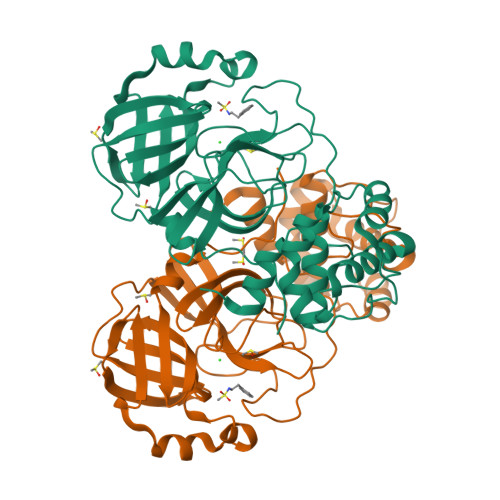
Replicase polyprotein 1ab structureClick to view 3D structureReplicase polyprotein 1abP0DTD1SARS-CoV-2Predicted (SEA)
Prediction Confidence Score
0.196
Applicability Domain
0.31
Statistical Significance
0.4454
Supporting Reference Compounds
215
E-value
3467.72
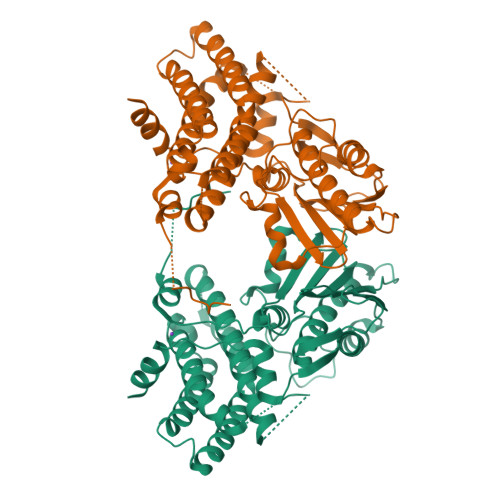
[Pyruvate dehydrogenase (acetyl-transferring)] kinase isozyme 1, mitochondrial structureClick to view 3D structure[Pyruvate dehydrogenase (acetyl-transferring)] kinase isozyme 1, mitochondrialQ15118HumansPredicted (SEA)
Prediction Confidence Score
0.196
Applicability Domain
0.31
Statistical Significance
0.4323
Supporting Reference Compounds
100
E-value
3365.11
Concentrations
Not Available
External Links
IdentifiersNot Available
References
Synthesis ReferenceNot Available
MSDSNot Available
General ReferencesNot Available