 Click to view 3D structure Click to view 3D structure | Guanine nucleotide-binding protein G(i) subunit alpha-1 | P63096 | Humans | Predicted (SEA) | - Prediction Confidence Score
- 0.34
- Applicability Domain
- 0.346
- Statistical Significance
- 4.00e-05
- Supporting Reference Compounds
- 2
- E-value
- 0.311397
|
 Click to view 3D structure Click to view 3D structure | Non-lysosomal glucosylceramidase | Q9HCG7 | Humans | Predicted (SEA) | - Prediction Confidence Score
- 0.299
- Applicability Domain
- 0.304
- Statistical Significance
- 4.10e-04
- Supporting Reference Compounds
- 21
- E-value
- 3.19182
|
| Click to view 3D structure | Ceramide glucosyltransferase | O88693 | Mus musculus | Predicted (SEA) | - Prediction Confidence Score
- 0.299
- Applicability Domain
- 0.304
- Statistical Significance
- 2.60e-04
- Supporting Reference Compounds
- 14
- E-value
- 2.02408
|
| Click to view 3D structure | Sucrase-isomaltase | B5THE3 | Mus musculus | Predicted (SEA) | - Prediction Confidence Score
- 0.295
- Applicability Domain
- 0.304
- Statistical Significance
- 2.40e-04
- Supporting Reference Compounds
- 7
- E-value
- 1.86838
|
 Click to view 3D structure Click to view 3D structure | Tyrosine-protein phosphatase non-receptor type 1 | P18031 | Humans | Predicted (SEA) | - Prediction Confidence Score
- 0.294
- Applicability Domain
- 0.31
- Statistical Significance
- 0.0128
- Supporting Reference Compounds
- 197
- E-value
- 99.4913
|
 Click to view 3D structure Click to view 3D structure | Peroxisome proliferator-activated receptor alpha | Q07869 | Humans | Predicted (SEA) | - Prediction Confidence Score
- 0.294
- Applicability Domain
- 0.31
- Statistical Significance
- 0.0167
- Supporting Reference Compounds
- 127
- E-value
- 129.852
|
 Click to view 3D structure Click to view 3D structure | Transient receptor potential cation channel subfamily V member 2 | Q9WUD2 | Rattus norvegicus | Predicted (SEA) | - Prediction Confidence Score
- 0.285
- Applicability Domain
- 0.31
- Statistical Significance
- 0.0028
- Supporting Reference Compounds
- 21
- E-value
- 22.1092
|
| Click to view 3D structure | Lysosomal alpha-glucosidase | P70699 | Mus musculus | Predicted (SEA) | - Prediction Confidence Score
- 0.284
- Applicability Domain
- 0.304
- Statistical Significance
- 3.60e-04
- Supporting Reference Compounds
- 7
- E-value
- 2.80257
|
 Click to view 3D structure Click to view 3D structure | Peroxisome proliferator-activated receptor delta | Q03181 | Humans | Predicted (SEA) | - Prediction Confidence Score
- 0.283
- Applicability Domain
- 0.31
- Statistical Significance
- 0.0149
- Supporting Reference Compounds
- 89
- E-value
- 115.84
|
| Click to view 3D structure | Putative inactive group IIC secretory phospholipase A2 | Q5R387 | Humans | Predicted (SEA) | - Prediction Confidence Score
- 0.281
- Applicability Domain
- 0.281 Low confidence
- Statistical Significance
- 6.80e-04
- Supporting Reference Compounds
- 1
- E-value
- 5.29375
|
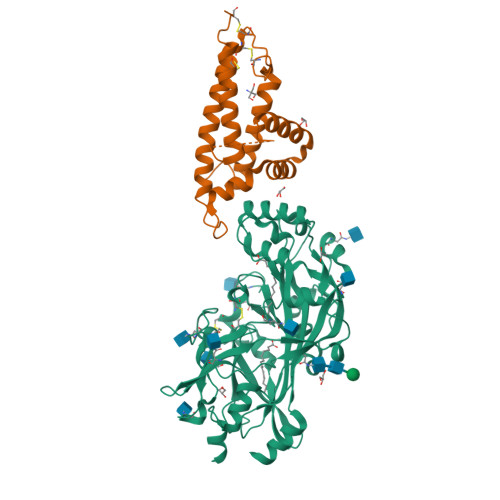 Click to view 3D structure Click to view 3D structure | Platelet glycoprotein 4 | P16671 | Humans | Predicted (SEA) | - Prediction Confidence Score
- 0.277
- Applicability Domain
- 0.277 Low confidence
- Statistical Significance
- 8.10e-04
- Supporting Reference Compounds
- 1
- E-value
- 6.30579
|
| Click to view 3D structure | CAI-1 autoinducer sensor kinase/phosphatase CqsS | Q9KM66 | Vibrio cholerae serotype O1 (strain ATCC 39315 / El Tor Inaba N16961) | Predicted (SEA) | - Prediction Confidence Score
- 0.277
- Applicability Domain
- 0.277 Low confidence
- Statistical Significance
- 8.40e-04
- Supporting Reference Compounds
- 1
- E-value
- 6.53933
|
 Click to view 3D structure Click to view 3D structure | Lysosomal acid glucosylceramidase | P04062 | Humans | Predicted (SEA) | - Prediction Confidence Score
- 0.276
- Applicability Domain
- 0.304
- Statistical Significance
- 7.80e-04
- Supporting Reference Compounds
- 35
- E-value
- 6.07224
|
 Click to view 3D structure Click to view 3D structure | Peroxisome proliferator-activated receptor gamma | P37231 | Humans | Predicted (SEA) | - Prediction Confidence Score
- 0.272
- Applicability Domain
- 0.31
- Statistical Significance
- 0.0437
- Supporting Reference Compounds
- 192
- E-value
- 340.045
|
| Click to view 3D structure | Histone deacetylase 11 | Q96DB2 | Humans | Predicted (SEA) | - Prediction Confidence Score
- 0.27
- Applicability Domain
- 0.31
- Statistical Significance
- 0.0425
- Supporting Reference Compounds
- 149
- E-value
- 330.626
|
 Click to view 3D structure Click to view 3D structure | UDP-3-O-acyl-N-acetylglucosamine deacetylase | O67648 | Aquifex aeolicus (strain VF5) | Predicted (SEA) | - Prediction Confidence Score
- 0.269
- Applicability Domain
- 0.269 Low confidence
- Statistical Significance
- 0.0089
- Supporting Reference Compounds
- 1
- E-value
- 69.1301
|
| Click to view 3D structure | Cocaine esterase | O00748 | Humans | Predicted (SEA) | - Prediction Confidence Score
- 0.268
- Applicability Domain
- 0.286 Low confidence
- Statistical Significance
- 0.0023
- Supporting Reference Compounds
- 40
- E-value
- 18.1389
|
 Click to view 3D structure Click to view 3D structure | Cannabinoid receptor 1 | P21554 | Humans | Predicted (SEA) | - Prediction Confidence Score
- 0.267
- Applicability Domain
- 0.315
- Statistical Significance
- 0.0496
- Supporting Reference Compounds
- 200
- E-value
- 386.132
|
 Click to view 3D structure Click to view 3D structure | Cannabinoid receptor 2 | P34972 | Humans | Predicted (SEA) | - Prediction Confidence Score
- 0.267
- Applicability Domain
- 0.315
- Statistical Significance
- 0.0402
- Supporting Reference Compounds
- 175
- E-value
- 313.187
|
 Click to view 3D structure Click to view 3D structure | Guanine nucleotide-binding protein G(o) subunit alpha | P09471 | Humans | Predicted (SEA) | - Prediction Confidence Score
- 0.265
- Applicability Domain
- 0.333
- Statistical Significance
- 2.30e-04
- Supporting Reference Compounds
- 2
- E-value
- 1.79053
|
 Click to view 3D structure Click to view 3D structure | G-protein coupled receptor 84 | Q9NQS5 | Humans | Predicted (SEA) | - Prediction Confidence Score
- 0.264
- Applicability Domain
- 0.31
- Statistical Significance
- 0.002
- Supporting Reference Compounds
- 15
- E-value
- 15.8034
|
 Click to view 3D structure Click to view 3D structure | Transient receptor potential cation channel subfamily V member 1 | Q8NER1 | Humans | Predicted (SEA) | - Prediction Confidence Score
- 0.263
- Applicability Domain
- 0.315
- Statistical Significance
- 0.0295
- Supporting Reference Compounds
- 104
- E-value
- 229.577
|
 Click to view 3D structure Click to view 3D structure | Fatty-acid amide hydrolase 1 | P97612 | Rattus norvegicus | Predicted (SEA) | - Prediction Confidence Score
- 0.261
- Applicability Domain
- 0.283 Low confidence
- Statistical Significance
- 0.0333
- Supporting Reference Compounds
- 102
- E-value
- 259.471
|
| Click to view 3D structure | Lysophosphatidic acid receptor 3 | Q9UBY5 | Humans | Predicted (SEA) | - Prediction Confidence Score
- 0.261
- Applicability Domain
- 0.283 Low confidence
- Statistical Significance
- 0.0033
- Supporting Reference Compounds
- 21
- E-value
- 26.0016
|
| Click to view 3D structure | M-phase inducer phosphatase 2 | P30306 | Mus musculus | Predicted (SEA) | - Prediction Confidence Score
- 0.258
- Applicability Domain
- 0.345
- Statistical Significance
- 7.90e-04
- Supporting Reference Compounds
- 4
- E-value
- 6.15009
|

